
Pinterest made the room look effortless, but in my tiny rental the exact same throw and lamp felt like props. After swapping scale, dialing back the number of pieces, and testing things across three rentals, I started copying the look in a way that actually lives with kids, floors that creak, and a landlord who says no to nails.
These ideas are practical and mostly renter-friendly, meant for people who want modern rooms that feel lived-in without a contractor or a huge budget. Expect a mix of quick swaps and weekend projects, time from 10 minutes to a few hours, and materials that work in small apartments or family homes.
1. Layered Neutrals With One Accent Color
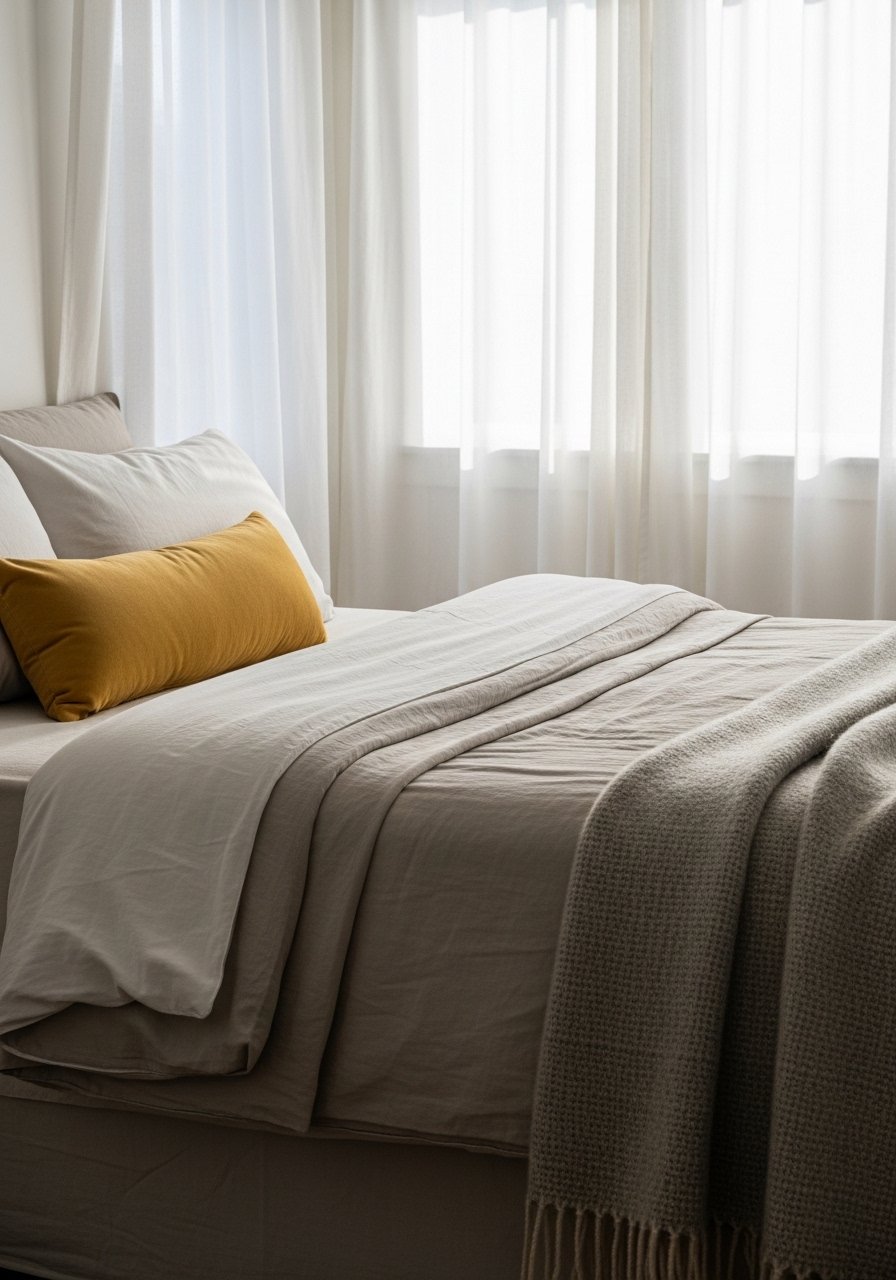
The trick that finally made my bedroom stop feeling flat was a single accent color used in three places, not one. Pick a muted accent like mustard, forest green, or ink blue, then echo it in a pillow, a small object on a shelf, and one piece of art to keep the eye moving. A neutral duvet, a linen duvet cover and a wool throw create texture without pattern overload. For balance, leave 18 to 24 inches of floor visible around the rug edge so the room reads larger.
Mistake to Avoid: Using the accent color only once and expecting it to register visually.
2. Gallery Ledge, Not Gallery Wall

Hanging a full gallery wall scared me until I tried a single picture ledge. It lets you layer frames and swap art without patching holes. Lean a mix of sizes and use a consistent mat or frame color to unify the collection. I use two 24-inch ledges, spaced about 6 inches apart, which creates a structured look even with casual mixing. For renter-friendly anchors try removable adhesive picture ledges and black picture frames to keep costs low.
Mistake to Avoid: Measuring once and hammering multiple holes before you like the arrangement.
3. Floating Nightstand With Hidden Storage
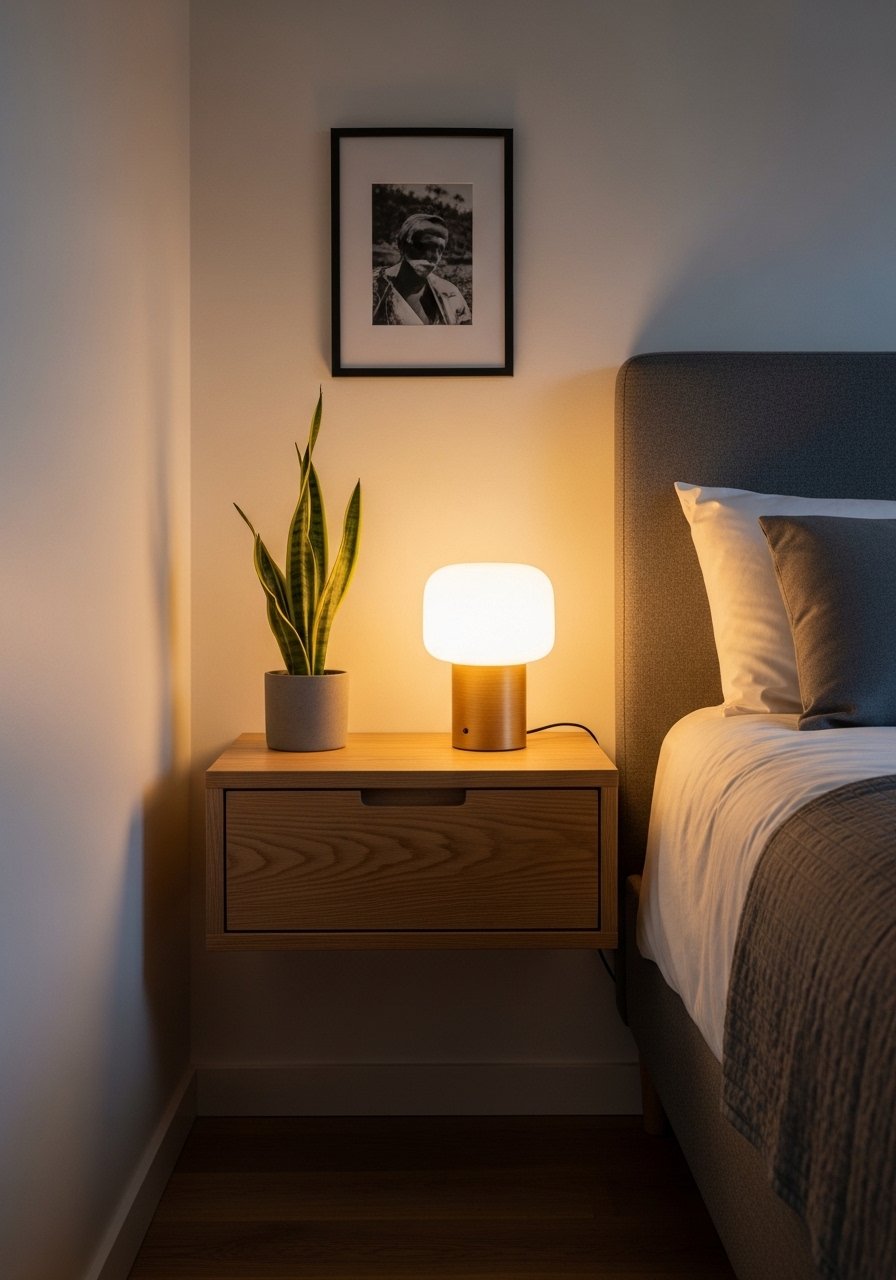
Floating nightstands free up floor space and feel modern, but the real win is hidden storage. Mount a shallow floating shelf at bed height, add a slim drawer tray for chargers, and keep surface clutter minimal. If drilling is off-limits, use a furniture-grade command shelf rated for 15 pounds and a narrow wall-mounted shelf. I mounted one 8 inches from the mattress and found my bedside table no longer became a junk catch.
Mistake to Avoid: Choosing a floating unit without checking stud placement or weight limits first.
4. Oversized Rug Anchoring Small Seating Areas
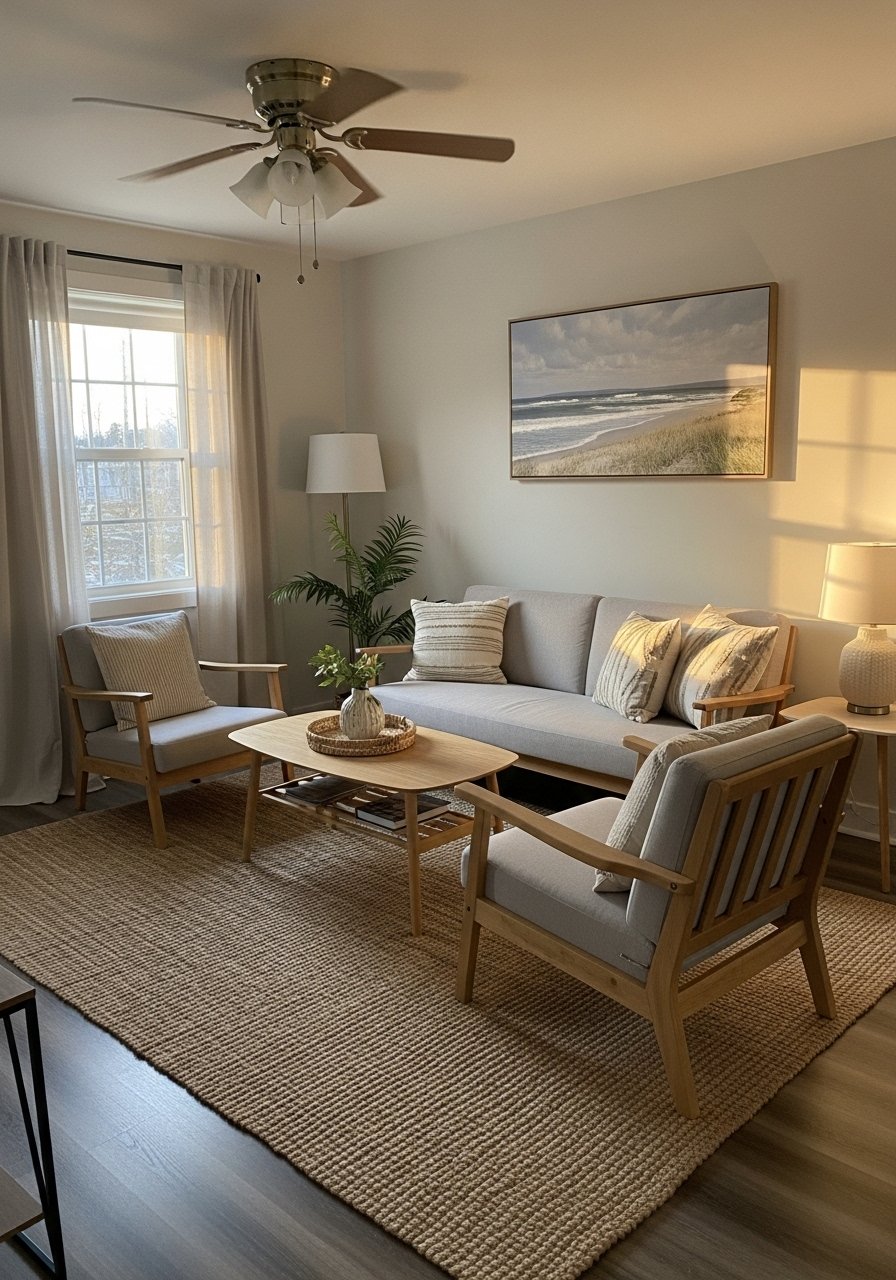
Rugs that are too small make rooms feel disjointed. Aim for a rug that sits under at least the front legs of your sofa and chairs. In a standard living room that usually means leaving 10 to 18 inches of bare floor at the walls. I learned this after swapping a 5×7 for an 8×10 and the space instantly read larger and more intentional. Try a jute area rug for texture and durability under foot traffic.
Mistake to Avoid: Buying a rug that only lives in the middle of the room with furniture floating around it.
5. Multi-Use Console With a Statement Lamp
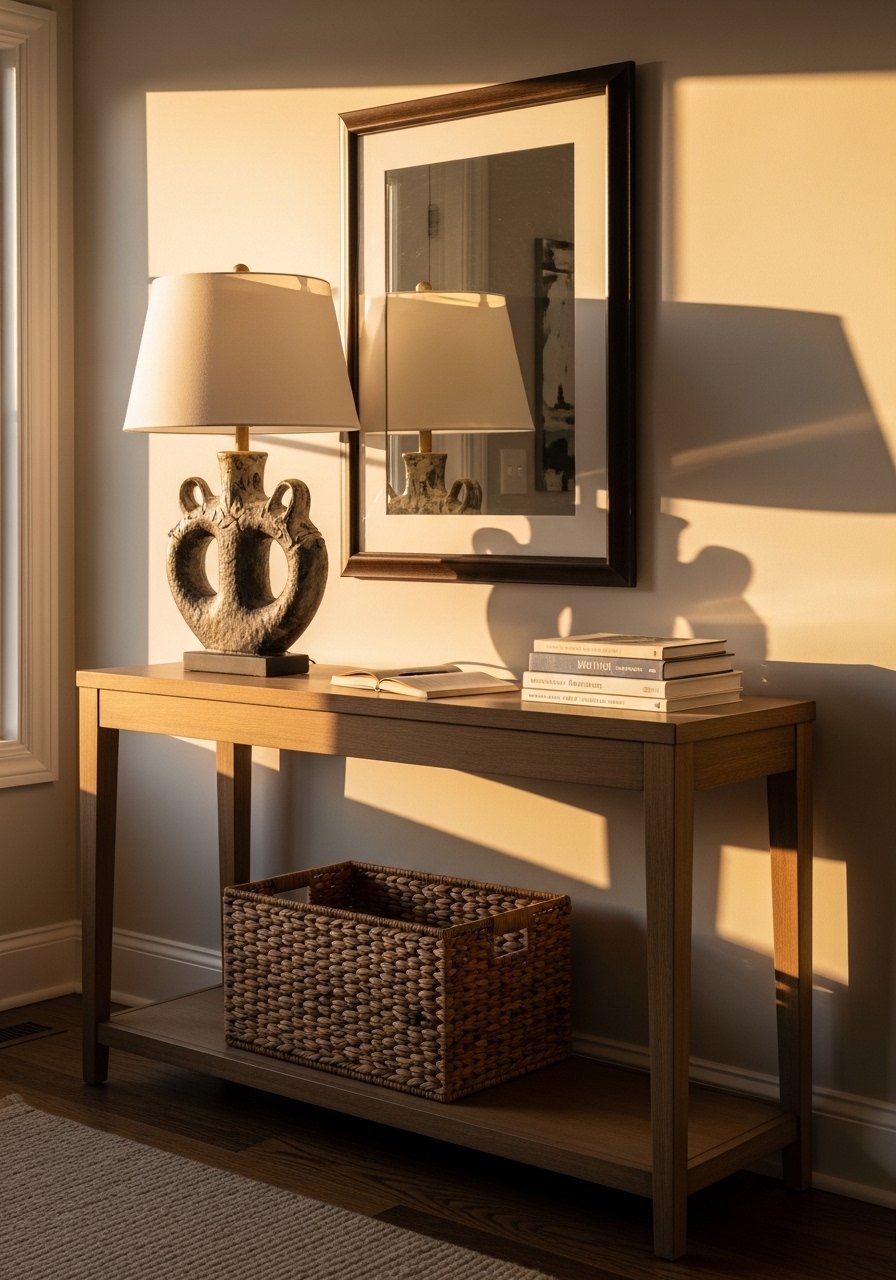
A slim console can double as a desk, drop spot, and entry station. Choose one with a lower shelf for baskets and keep a single statement lamp as an anchor. Statement lamps add personality and remove the need for multiple table lamps. I swapped a tiny lamp for a taller ceramic table lamp and suddenly the whole corner read finished. Keep the surface to one essential tray for keys and one plant.
Mistake to Avoid: Layering three tabletop lamps and creating a cluttered look.
6. Removable Wallpaper as an Accent Nook
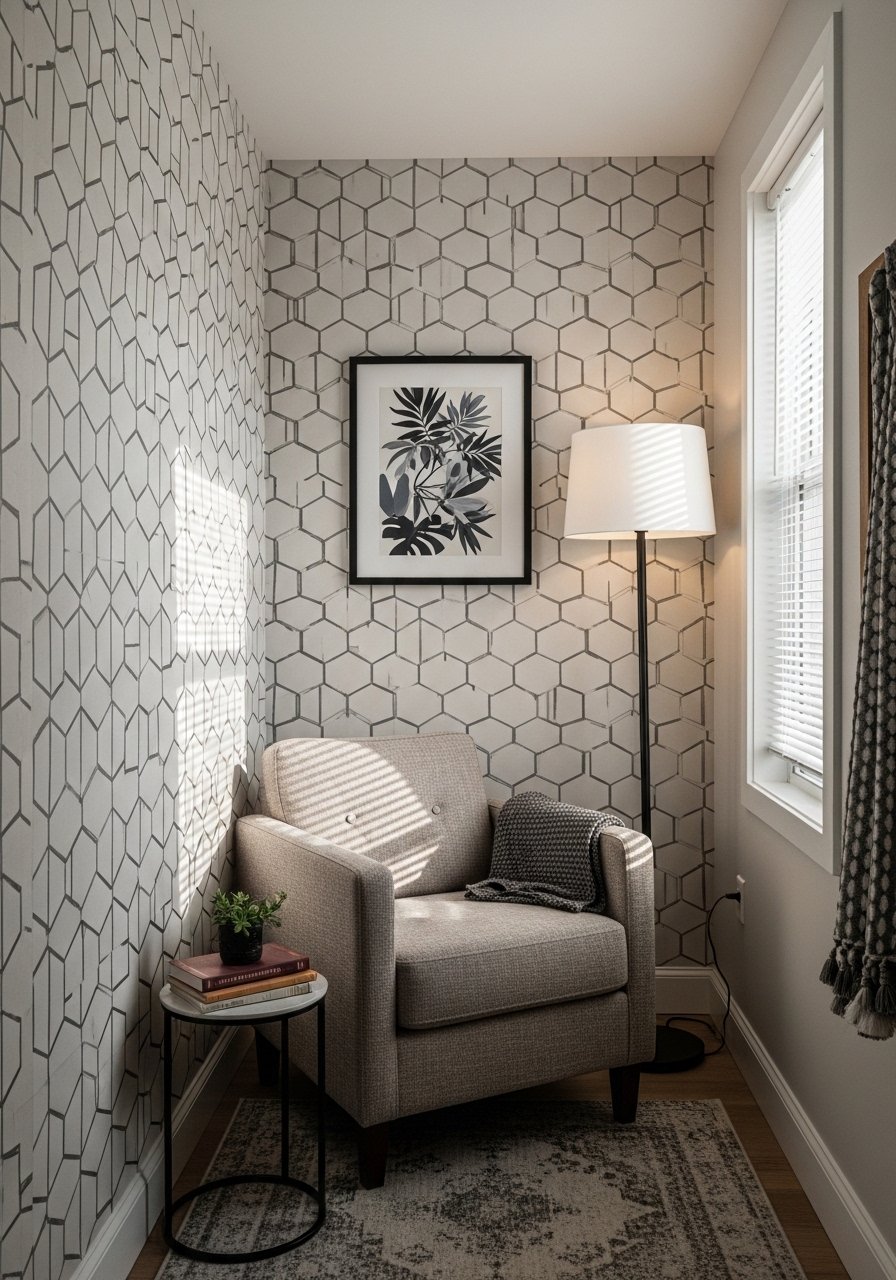
Peel-and-stick wallpaper makes a bold statement without commitment. Use it behind a headboard, in a closet, or on a single wall to create depth. Match the scale of the pattern to the wall size, and remember small rooms prefer smaller repeats. I tested a geometric peel-and-stick in a rental and the landlord never complained because it removed cleanly. Pair with a peel-and-stick wallpaper and a simple wood frame to make the effect feel built-in.
Mistake to Avoid: Applying full-room wallpaper in a small space with a large repeat pattern.
7. Layered Lighting With Dimmers
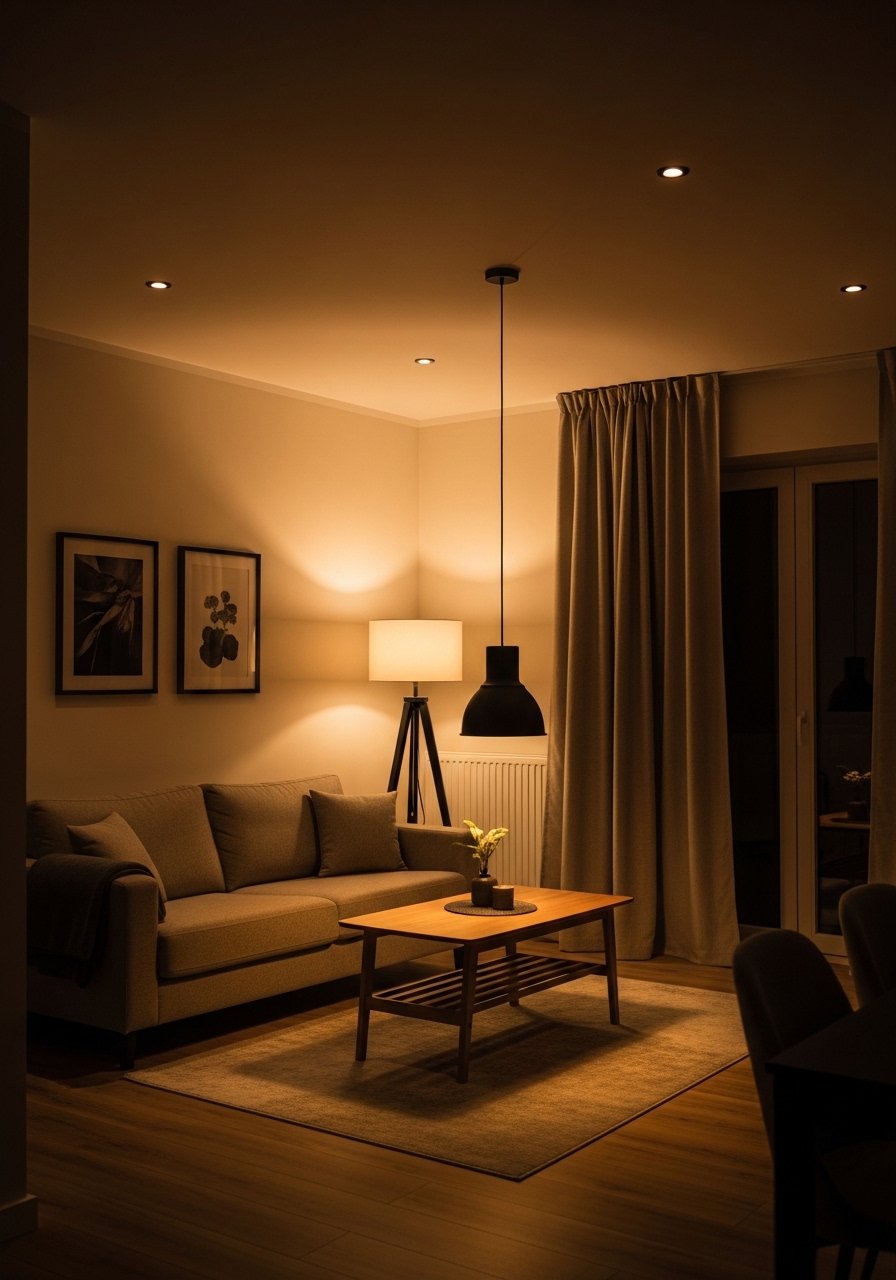
Layered lighting is the thing most mood photos skip. Combine overhead, task, and accent lighting and put main fixtures on dimmers. I replaced one harsh overhead fixture with a soft dimmer and added a floor lamp for reading. A plug-in pendant solves rooms where wiring is fixed, and a smart dimmer switch lets you control mood without rewiring. For practical depth, place a lamp within 2 feet of seating for comfortable reading.
Mistake to Avoid: Relying on a single overhead light that flattens everything.
If any of these pieces are the thing stopping you, here are the items I reach for most often.
Essentials For Modern Rooms
Textiles & Soft Goods:
- linen duvet cover (~$60-120). A breathable neutral that layers well.
- wool throw (~$30-70). Texture without bulk.
- velvet pillow covers (~$12 each). Swap seasonally.
Storage & Furniture:
- wall-mounted-shelf (~$40-80). Useful as a nightstand alternative.
- black-picture-frames (~$20-50). Uniform framing simplifies mixing prints.
- oversized-floor-cushion (~$45-90). Anchors a casual corner.
Lighting & Rugs:
- ceramic-table-lamp (~$50-150). Acts as a focal point.
- jute-area-rug (~$120-300). Durable and neutral.
8. Open Shelving Styled With Purpose
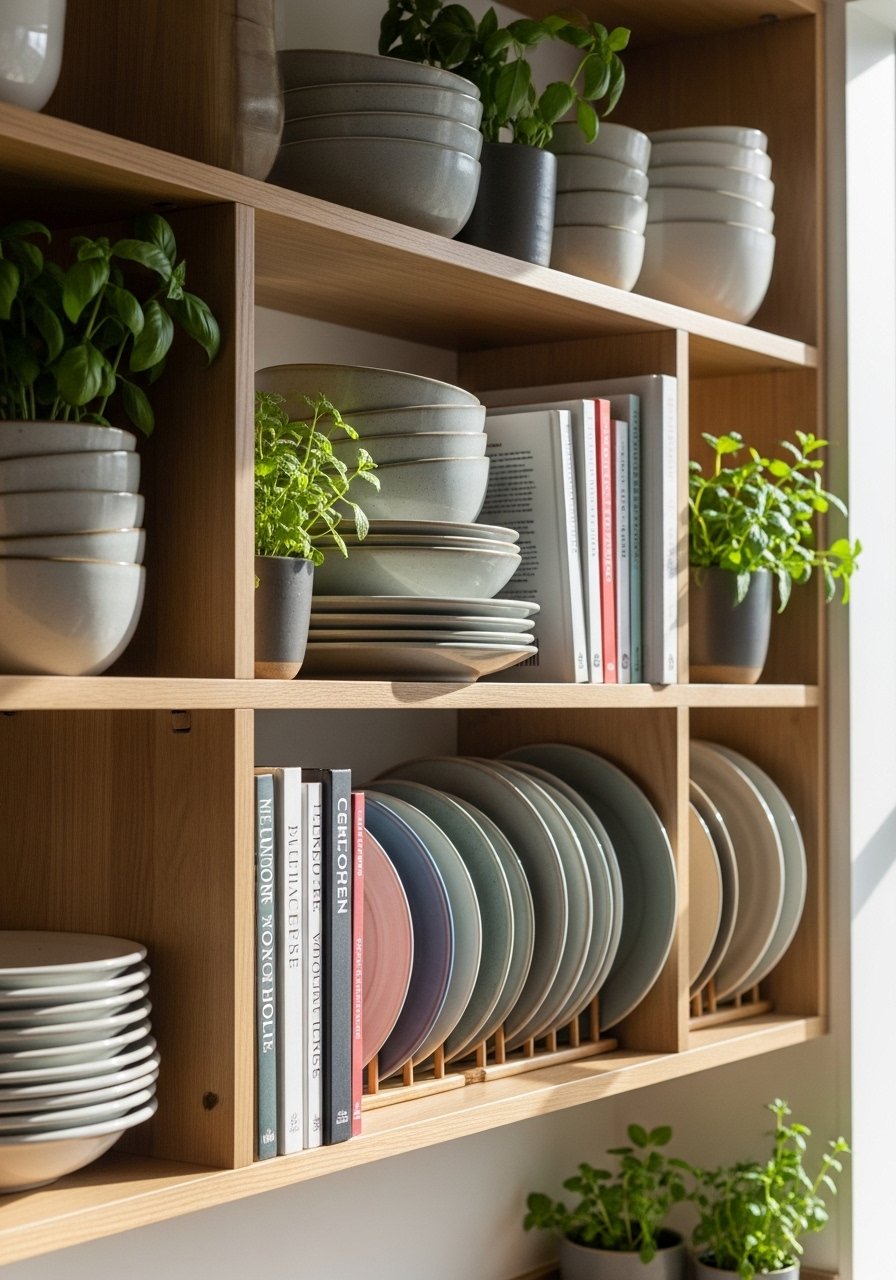
Open shelving looks designer until it looks like dust collectors. Keep three types of objects ratio: dishes, objects, and greenery. I use a 3:2:1 ratio across shelves which keeps things simple. Store everyday items within easy reach and rotate decorative pieces seasonally. Use matching ceramic sets like a white dinnerware set for cohesion. For rentals choose floating brackets that use existing studs or high-strength anchors.
Mistake to Avoid: Filling every shelf with random items and creating visual chaos.
9. Monochrome Bathroom With Warm Metals
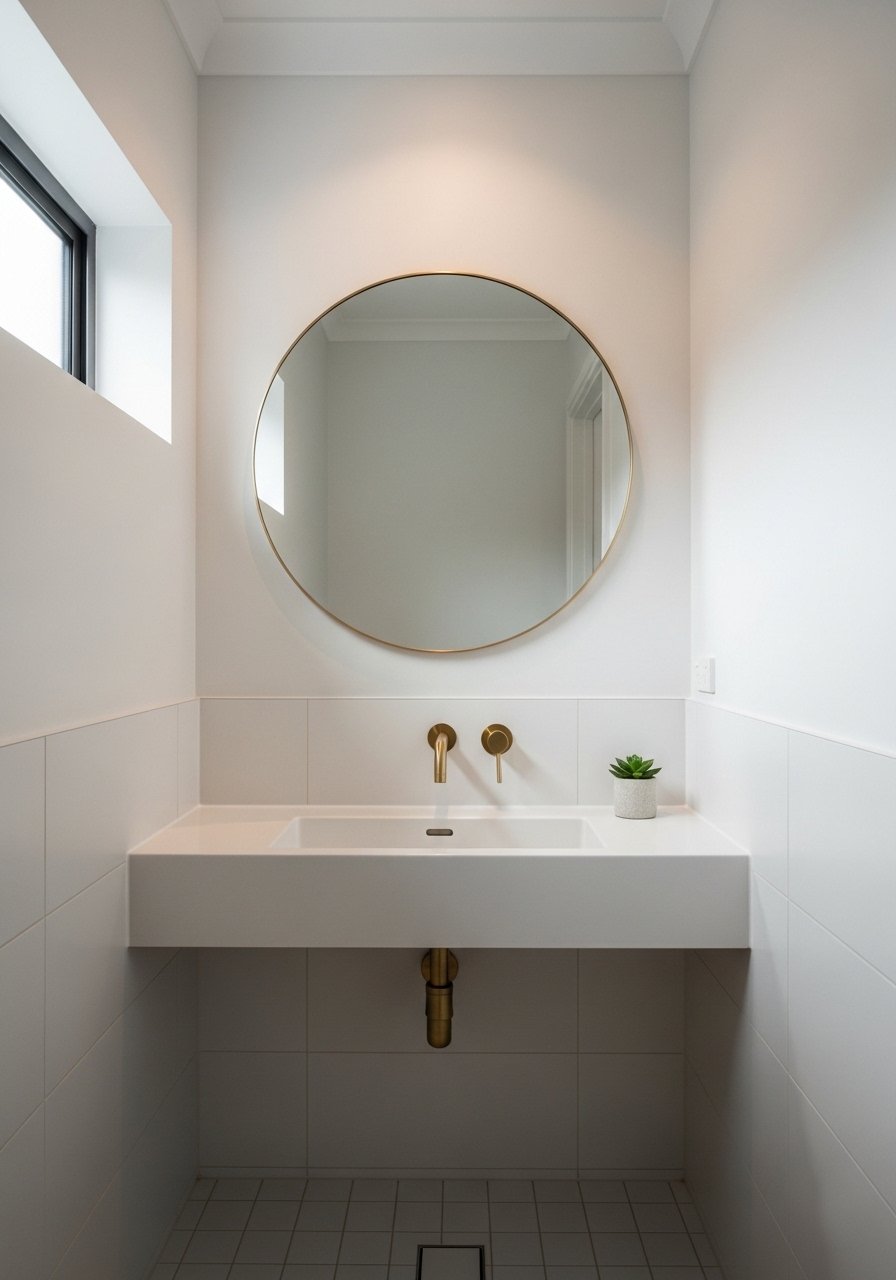
A small bathroom gains a modern feel when you commit to a monochrome base and one warm metal. I went all-white tiles and added brass hardware and a round mirror, which made the space feel collected and intentional. Swap mismatched towel bars for a single brass finish and pick a brass faucet with a simple silhouette. Keep towels in two neutral tones to read intentional without clutter.
Mistake to Avoid: Mixing more than two metal finishes in a small room.
10. Hidden Cords and Clean Corners

Nothing ruins modern lines like a tangle of cords. Use cord raceways behind furniture, small cable clips, and a media console with a back panel. I measured cable runs and used a cord management kit to keep everything tidy and accessible. For renters, a slim console with a removable back panel works well. Keeping corners clear of unnecessary furniture makes small rooms feel more open.
Mistake to Avoid: Tucking cords under rugs where they become a trip hazard and still show.
11. Compact Plants That Look Purposeful
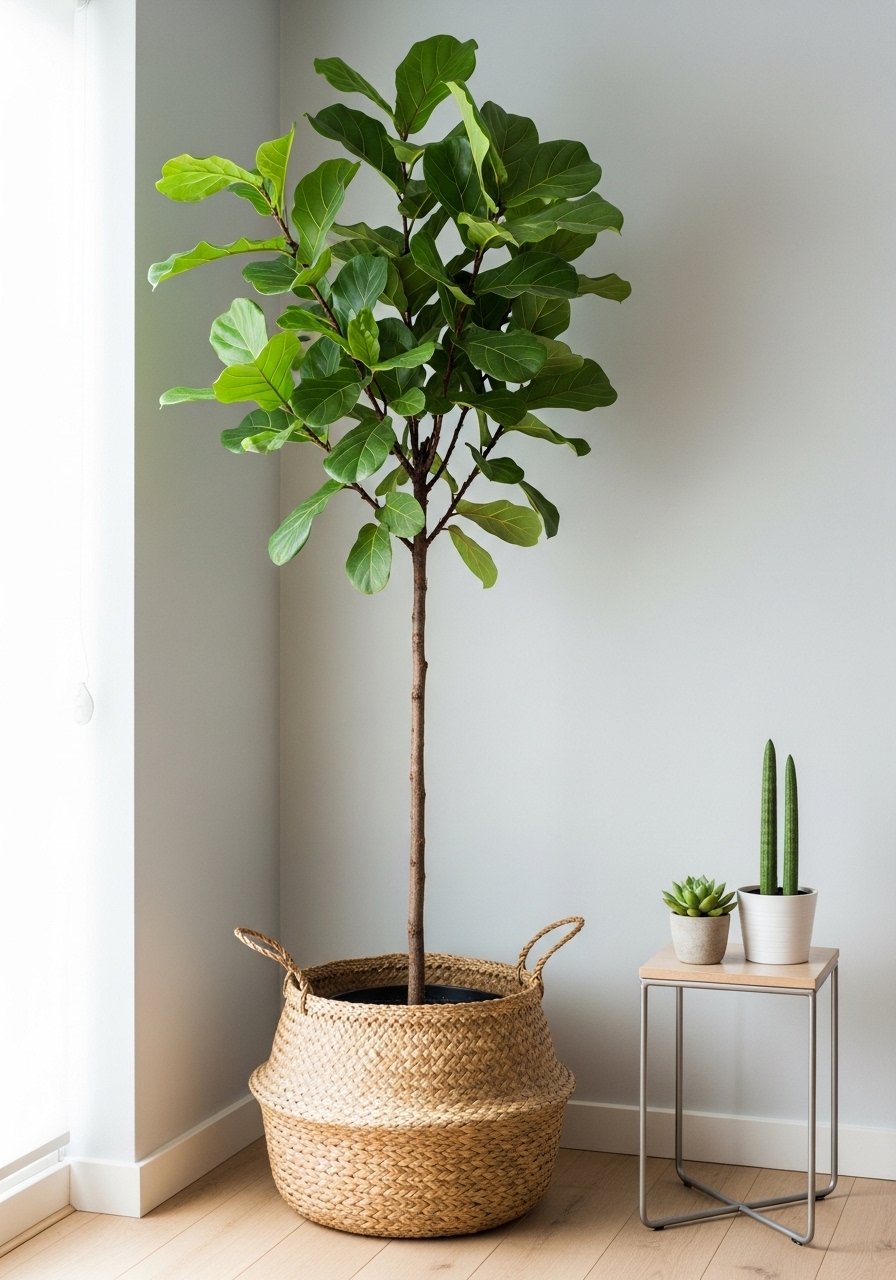
Plants add life, but busy plant groupings look like clutter when scales are off. Pick one large statement plant like a fiddle leaf fig and a couple of small companions. Use consistent containers, such as woven baskets or matte pots, to unify the look. I use a self-watering planter for plants in dim corners to avoid overwatering. Rotate plant placement seasonally to avoid one side of the room becoming overly green.
Mistake to Avoid: Buying five medium plants without a single statement specimen to anchor the group.
12. Small-Scale Accent Furniture for Flow

Scale is the thing I misjudged most. Large furniture blocks pathways and makes rooms feel crowded. Opt for narrow benches, armless chairs, and thin-turned leg tables to maintain sightlines. A 12-inch deep console works in most narrow hallways and a slim entry bench with storage keeps shoes tidy. Measure twice and leave at least 30 inches of walking space where possible.
Mistake to Avoid: Choosing pieces that look great online without checking real-world clearance and pathways.
13. Swap Trendy for Timeless Details
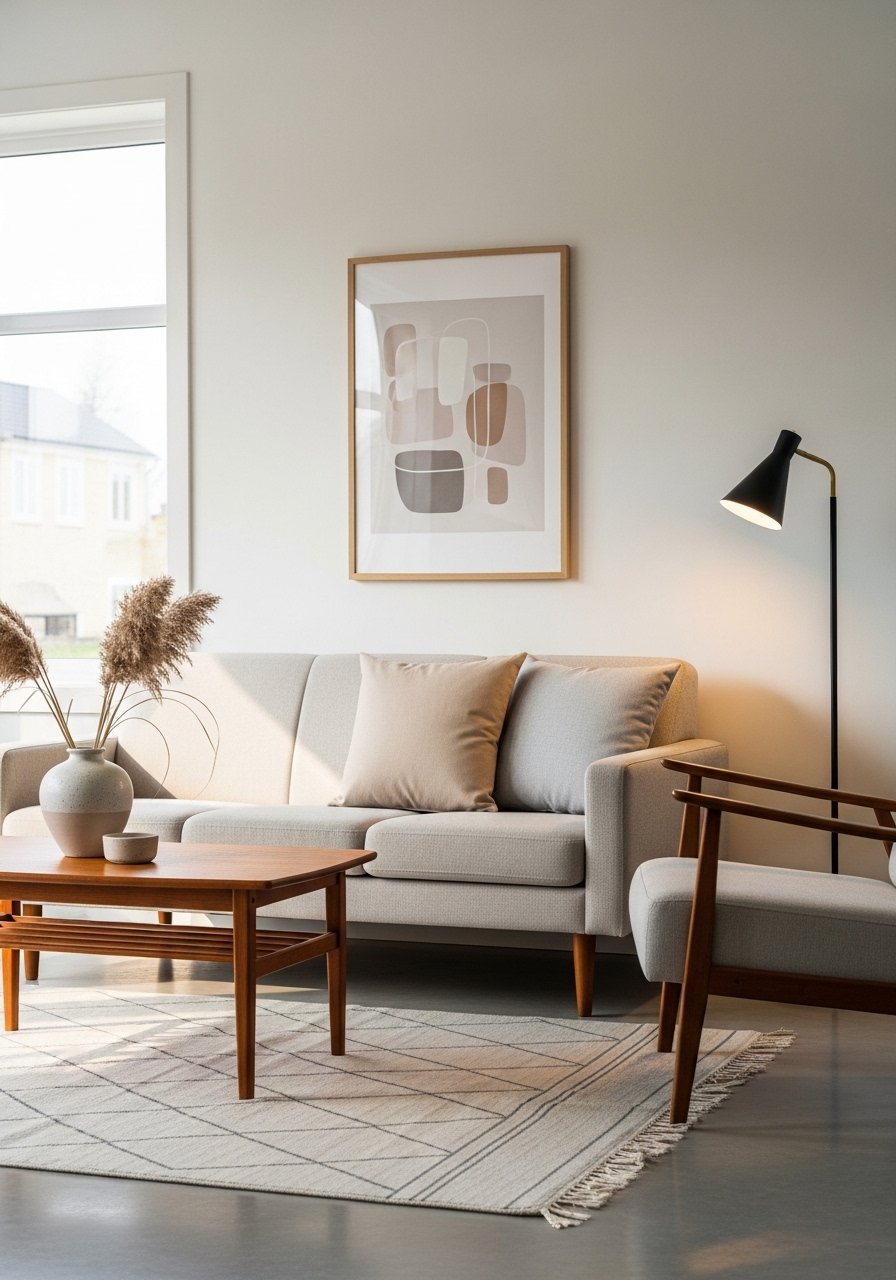
Trends date quickly while small classic choices last. Swap out a trendy print pillow for a solid textured cushion and keep a single trendy accessory that can be replaced later, like a removable pillow cover. I keep a small box of seasonal accents that rotate so the main furniture stays neutral. A solid linen pillow cover is easy to switch and stores flat between seasons.
Mistake to Avoid: Redecorating with too many trend pieces so the room needs a full refresh every year.
Little Things That Change Rooms
Day-one trick: Thin layers of texture read richer than many patterns. Replace one patterned pillow with two textured solids and you get more depth. Try a woven throw blanket and notice the change.
Grab adhesive picture ledges for renter walls. They let you experiment without nails and cost less than a framed gallery.
Putting lamps on dimmers is worth the small effort. A smart dimmer switch costs under $50 and lets you go from task to mood lighting in one flick.
Everyone buys five small throw pillows. One single oversized floor cushion anchors a reading corner better than five small ones combined.
When measuring for rugs, leave 10 to 18 inches of bare floor at the walls. A larger rug visually expands the space, so size up if you can and pick a neutral area rug.