
I kept buying the widest console the store had, thinking more surface would solve the clutter, and every small entry still felt jammed. The turning point was swapping large pieces for narrow, vertical, and multiuse items, then testing them in three rentals until they worked. These ideas are all small-scale, mostly renter-friendly, and meant to be installed in an hour or less for budgets from a few dollars to about $200.
This list is not about a big renovation or custom millwork. It is for people in apartments and small houses who want an entry that reads intentional without heavy carpentry. Most projects are inexpensive, require basic tools, and include small-space alternates. I tested many of these setups in three rentals, so you get what actually holds up.
1. Slim Console With Hidden Storage
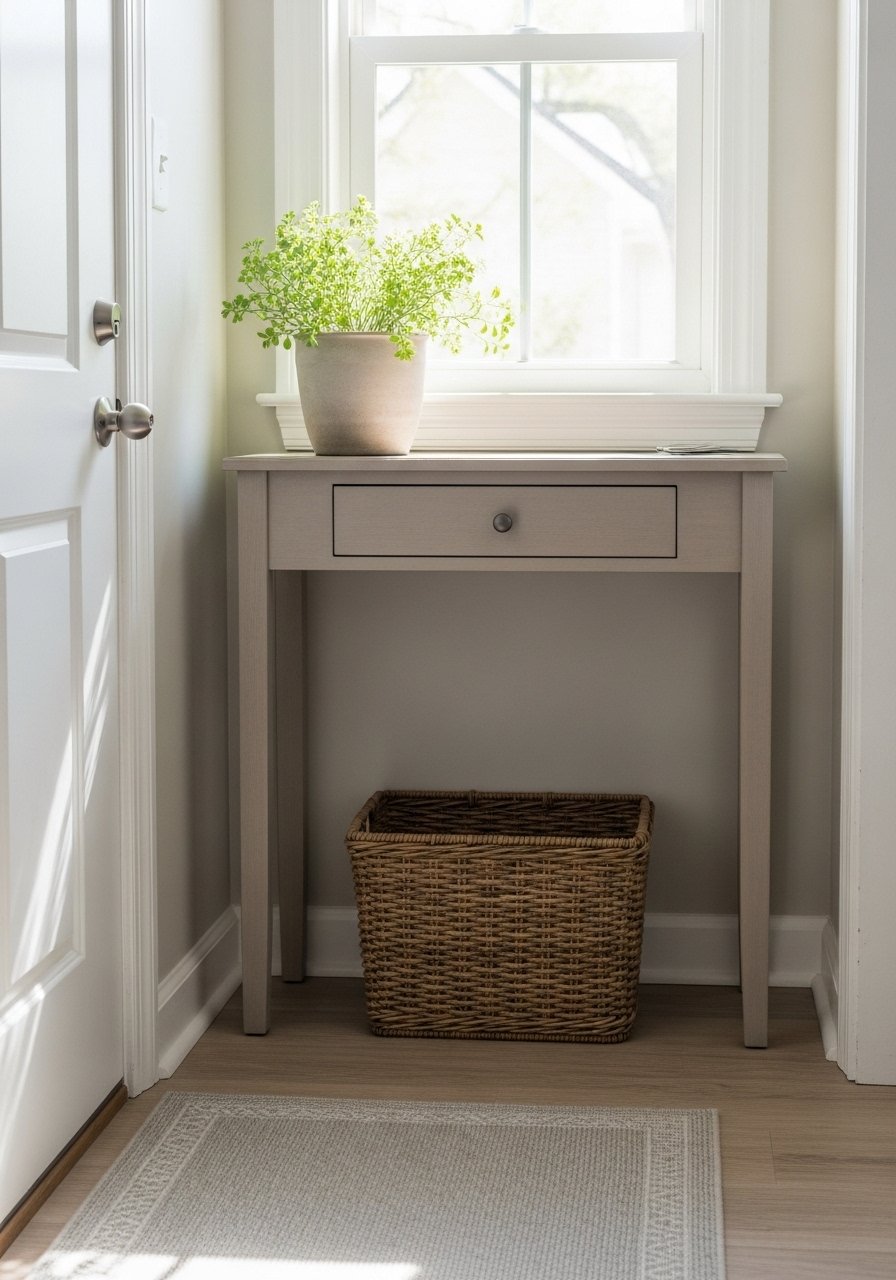
A console under 30 inches deep makes the difference in a narrow foyer. I use a 24-inch deep table so shoes and mail tuck out of sight while the top stays usable. It reads clean and feels balanced because the depth matches a typical entry width, and the drawer hides keys. For renters, pick a freestanding unit and secure it with an anti-tip strap. Try a slim console table paired with a woven storage basket. Budget friendly and beginner level.
Mistake to Avoid: Buying a console as deep as a dining table, which blocks walkway clearance and looks oversized.
2. Vertical Peg Rail Drop Zone
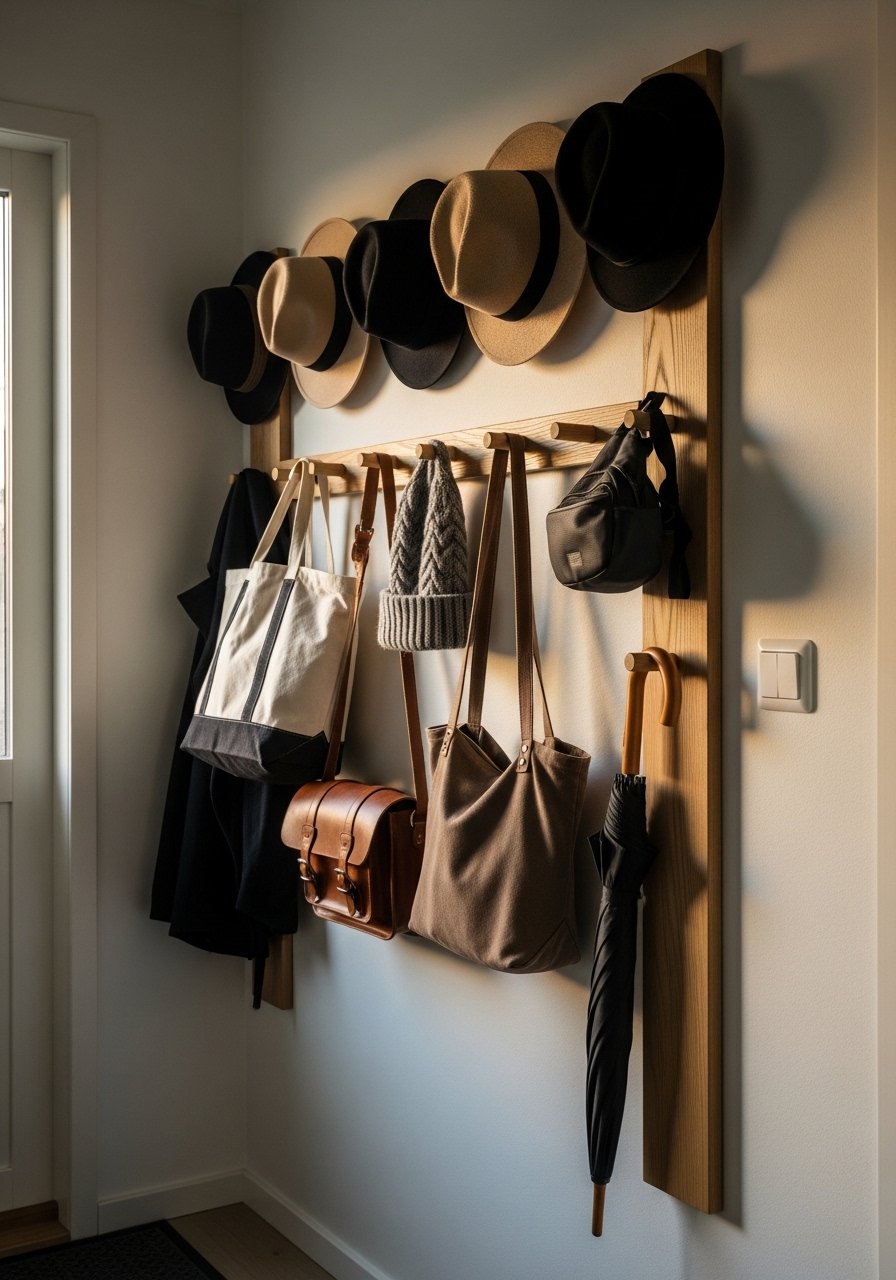
A vertical peg rail uses height instead of floor space, and the visual rhythm keeps the wall from feeling empty. Spacing pegs about 6 inches apart lets you hang layered coats and lightweight bags without overcrowding. It creates a lived-in, functional statement that suits renters because it only needs a few small screws. I installed one in under 30 minutes. Pair with a low entry umbrella stand or a set of wall hooks for varied storage.
Mistake to Avoid: Hanging pegs too close together, which causes everything to bunch and makes the wall look messy.
3. Gallery Shelf Instead of Frames
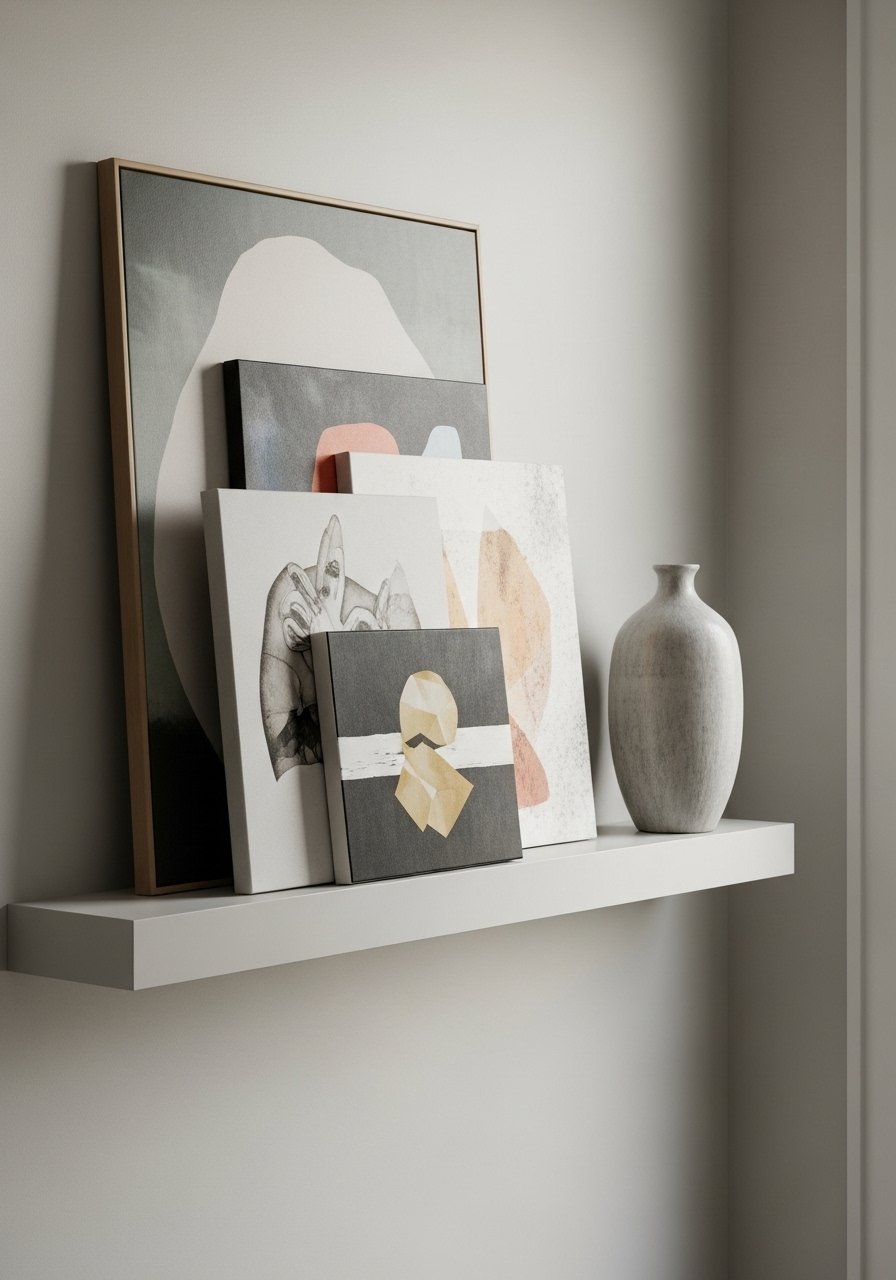
A slim picture ledge lets you layer art without hammering a new nail for every piece, so it is perfect for renters. I use a 3-inch-deep ledge to hold small frames, a mail catch, and one vase. The layered look feels curated and changes with seasons. For small spaces pick frames under 8 by 10 inches and stagger heights for depth. Try a picture ledge and a simple mail tray.
Mistake to Avoid: Hanging many same-sized frames in a rigid grid, which flattens the space instead of adding depth.
4. Mirror That Doubles as Light
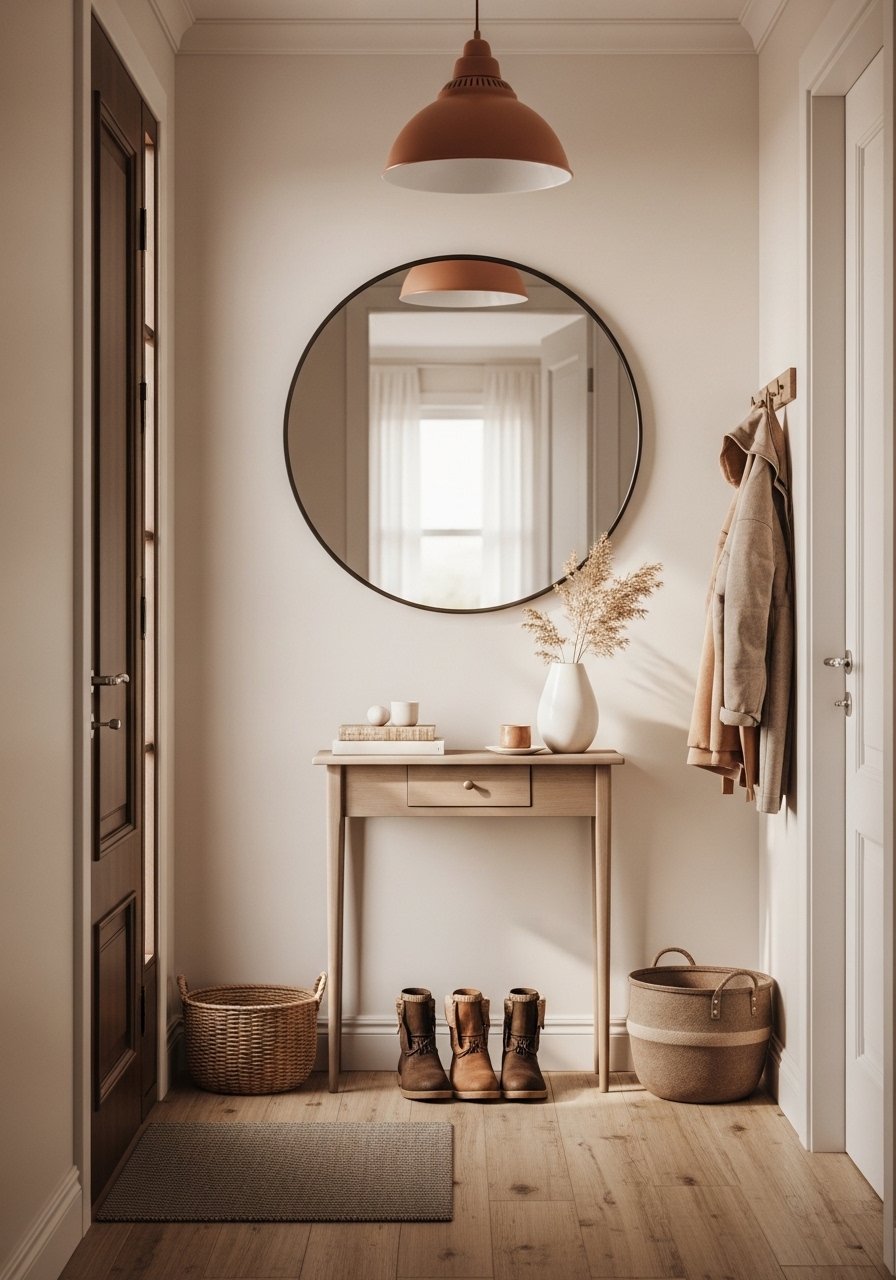
A mirror sized to the wall visually widens an entry and boosts light. I aim for a mirror that reaches eye level to float furniture underneath without looking top-heavy. A 30-inch round mirror over a narrow table reads clean and reflects the door light to make the space feel larger. For renters use a hanging mirror with a hanging bracket instead of heavy anchors. Pair with a round mirror.
Mistake to Avoid: Choosing a mirror that is too small, which makes the wall look like it needs more and emphasizes the tightness.
5. Narrow Bench With Shoe Tray
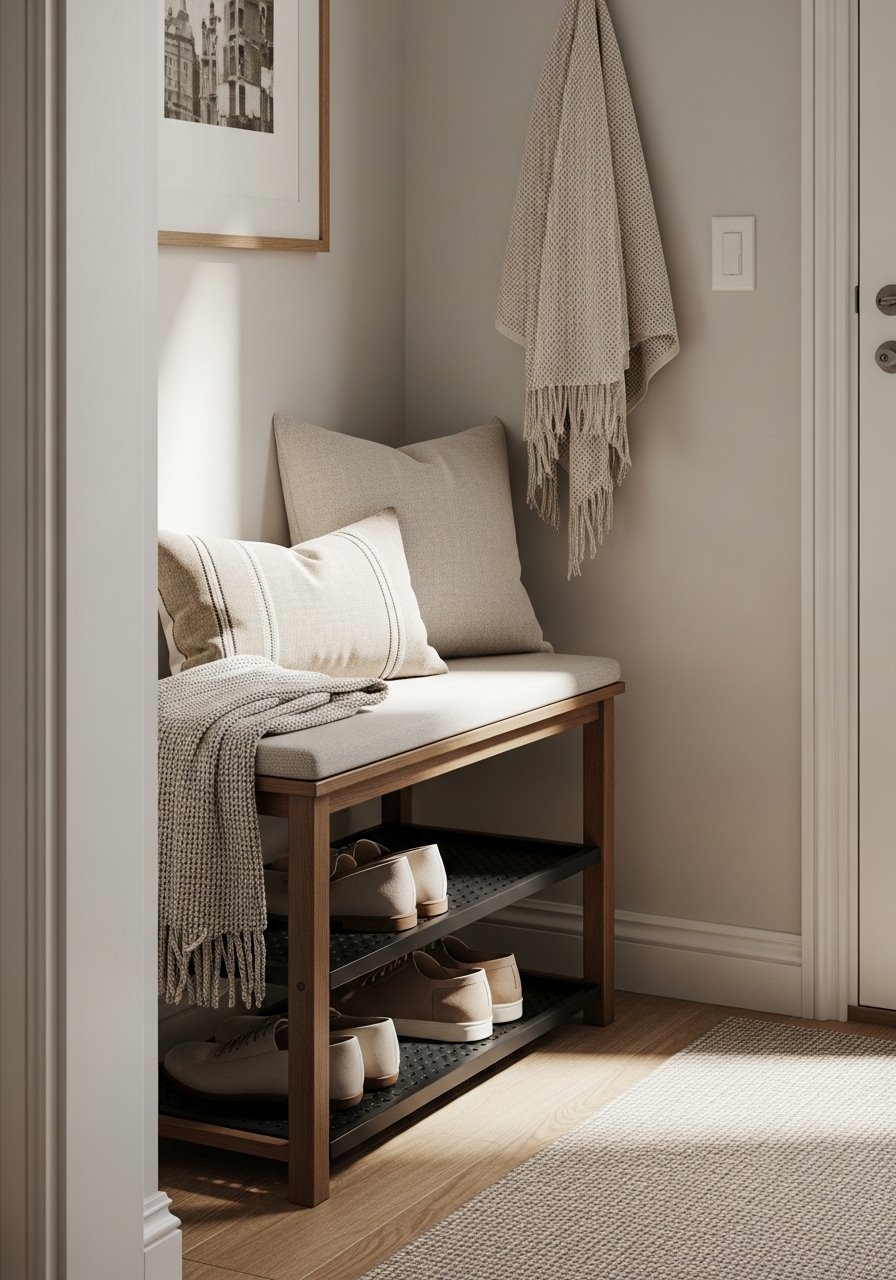
A bench gives seating and a place to remove shoes, which immediately calms arrival clutter. I look for benches 12 to 15 inches deep so they do not intrude into walkways. A removable shoe tray beneath keeps dirt contained. It is great for parents and pet owners because shoes and leashes stay off the floor. Try a slim entry bench and a rubber shoe tray. Renter friendly and easy to assemble.
Mistake to Avoid: Buying a deep bench that blocks the door swing or forces guests to step awkwardly.
6. Weatherproof Doormat Rotation
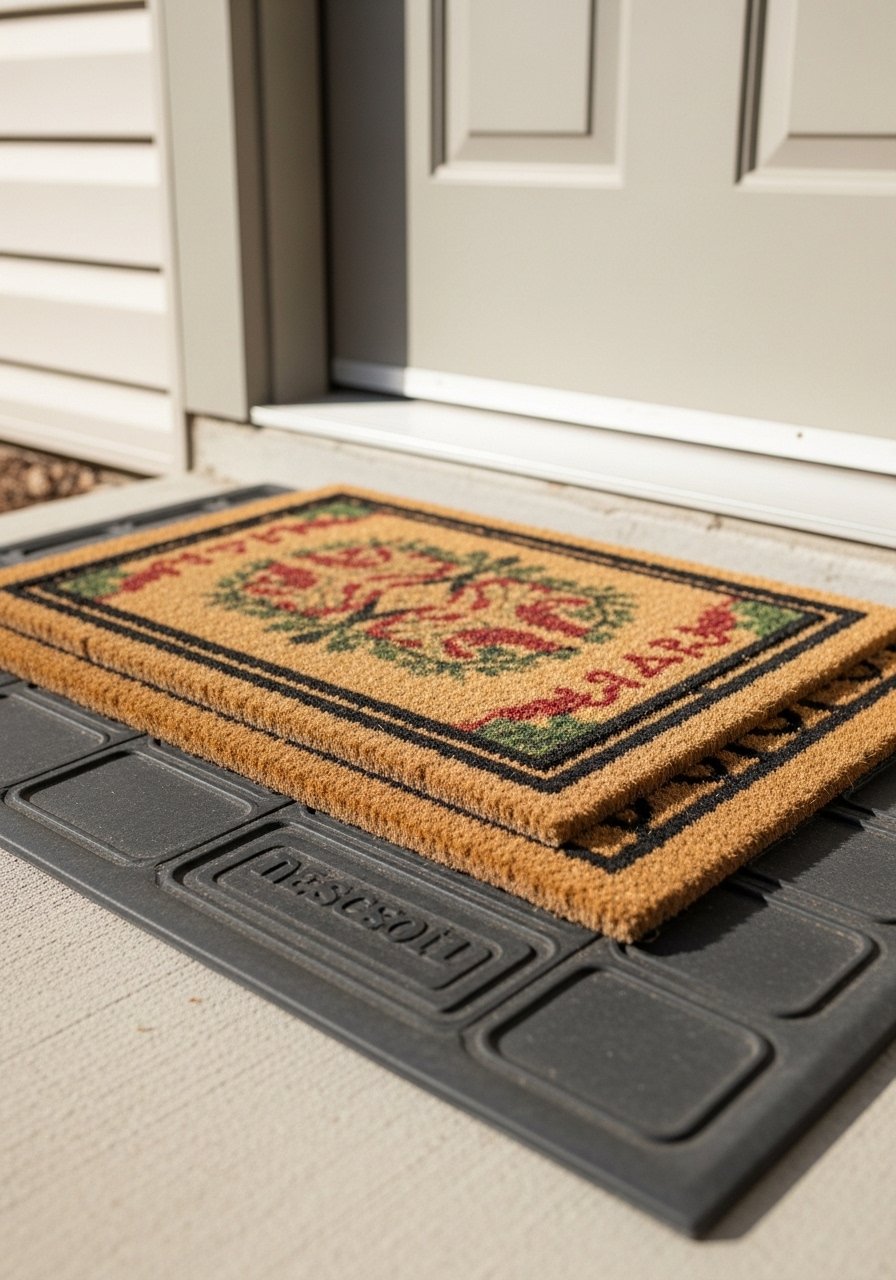
Layering a decorative mat over a plain rubber base keeps the decorative piece from soaking up salt and mud. I swap the top mat seasonally and wipe the base mat with soap so the foyer always looks fresh. This is a cheap habit under $40 that protects floors and lets you change mood by season. Use a rubber entrance mat below a decorative outdoor mat.
Mistake to Avoid: Using a single pretty mat that absorbs moisture and looks tired after one wet season.
7. Magnetic Key Art Panel
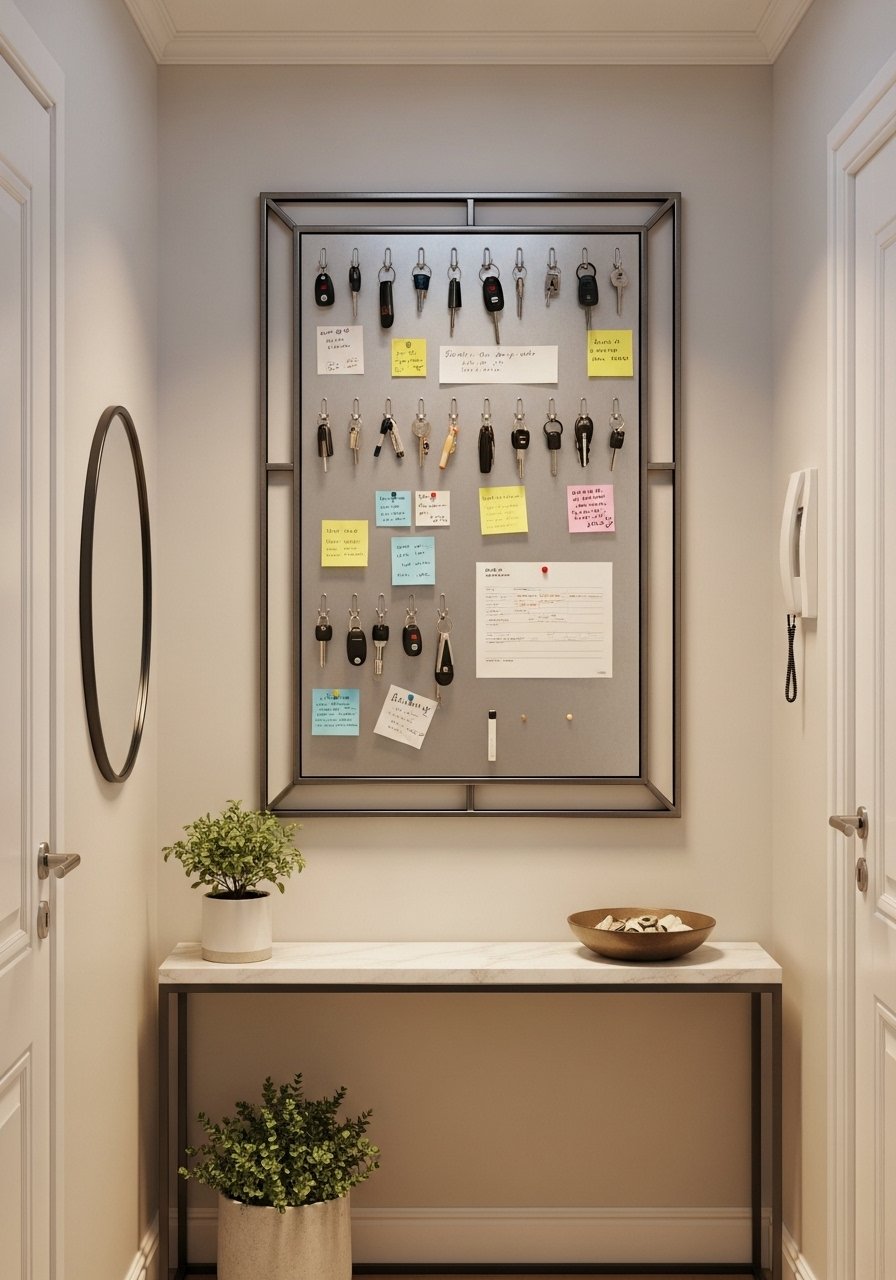
Hidden storage that reads like art solves one of my biggest frustrations: keys on random surfaces. A framed magnetic board looks like wall art and holds keys, mail, and a grocery list on small magnets. Mount it at shoulder height so reaching is natural. It is renter-friendly because it can hang with minimal anchors and unmounts cleanly. Try a magnetic board in a frame and small decorative magnets.
Mistake to Avoid: Placing the panel too high, which makes it inconvenient and encourages the same old drop-and-forget habit.
If any of these ideas have you ready to shop, here are the pieces I actually buy before starting a setup.
Entry Essentials For Narrow Foyers
Textiles & Mats:
- rubber-entry-mat (~$20-40) for a washable base under a decorative mat.
- decorative-outdoor-mat (~$20-50) to swap seasonally.
Furniture & Storage:
- slim-console-table (~$60-180) for narrow entryways.
- slim-entry-bench (~$50-150) with lower shelf for shoes.
- woven-storage-basket (~$20-60) to corral scarves and pet leashes.
Hooks & Organization:
- wooden-wall-hooks (~$10-30) for quick coat hanging.
- framed-magnetic-board (~$25-70) that doubles as art.
- rubber-shoe-tray (~$15-35) to keep mud contained.
8. Corner Ladder for Scarves and Throws
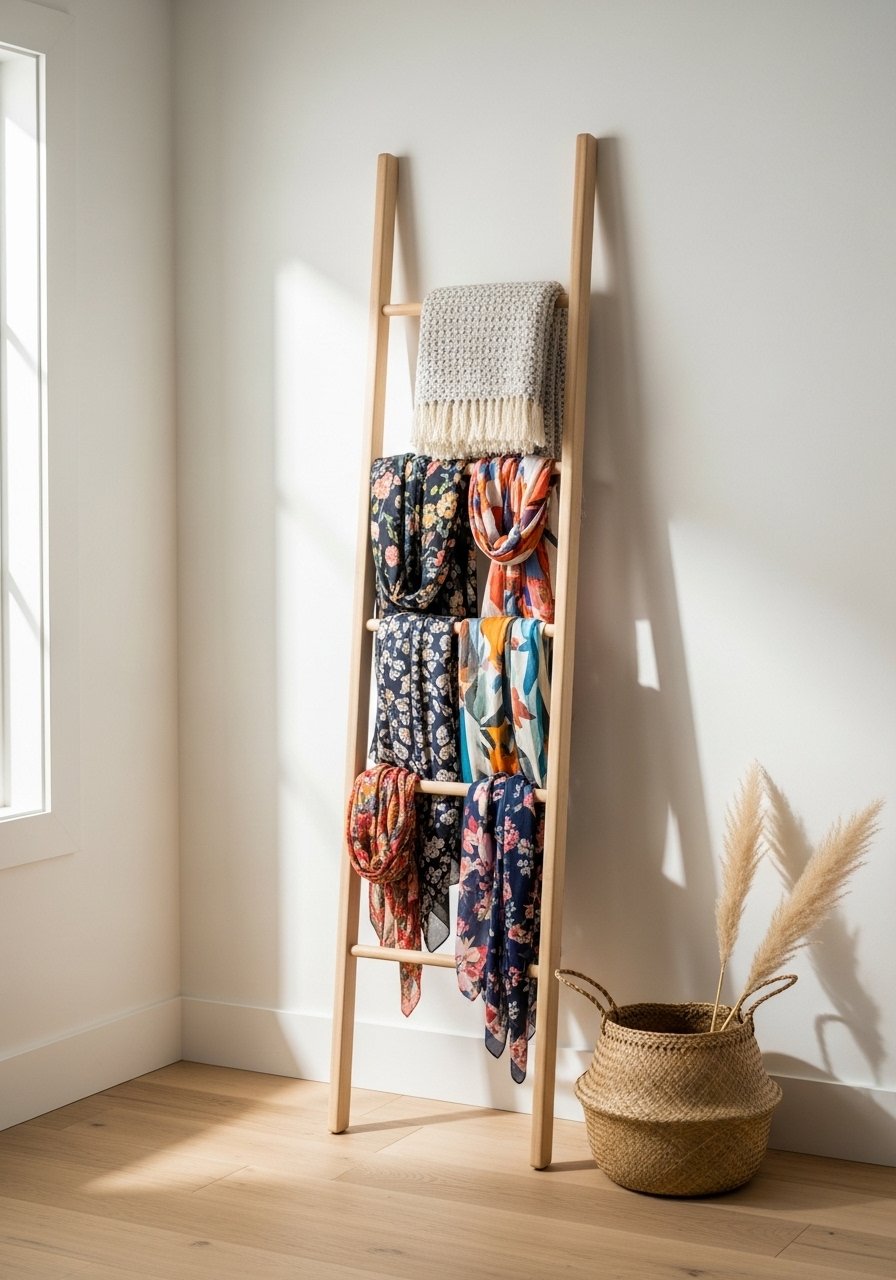
A narrow leaning ladder uses vertical corner space to store scarves, dog leashes, and seasonal throws without drilling many anchors. Choose a ladder that is no wider than 12 inches at the base so it fits behind the door swing. It reads decorative while serving function and is a renter-friendly solution because it is freestanding. I pair it with a small over-the-door hook for extra capacity. Pet households appreciate the off-floor storage for collars.
Mistake to Avoid: Buying a ladder that is too tall and unstable for the floor slope, which makes it wobble and unsafe.
9. Slim Coat Tree Stand
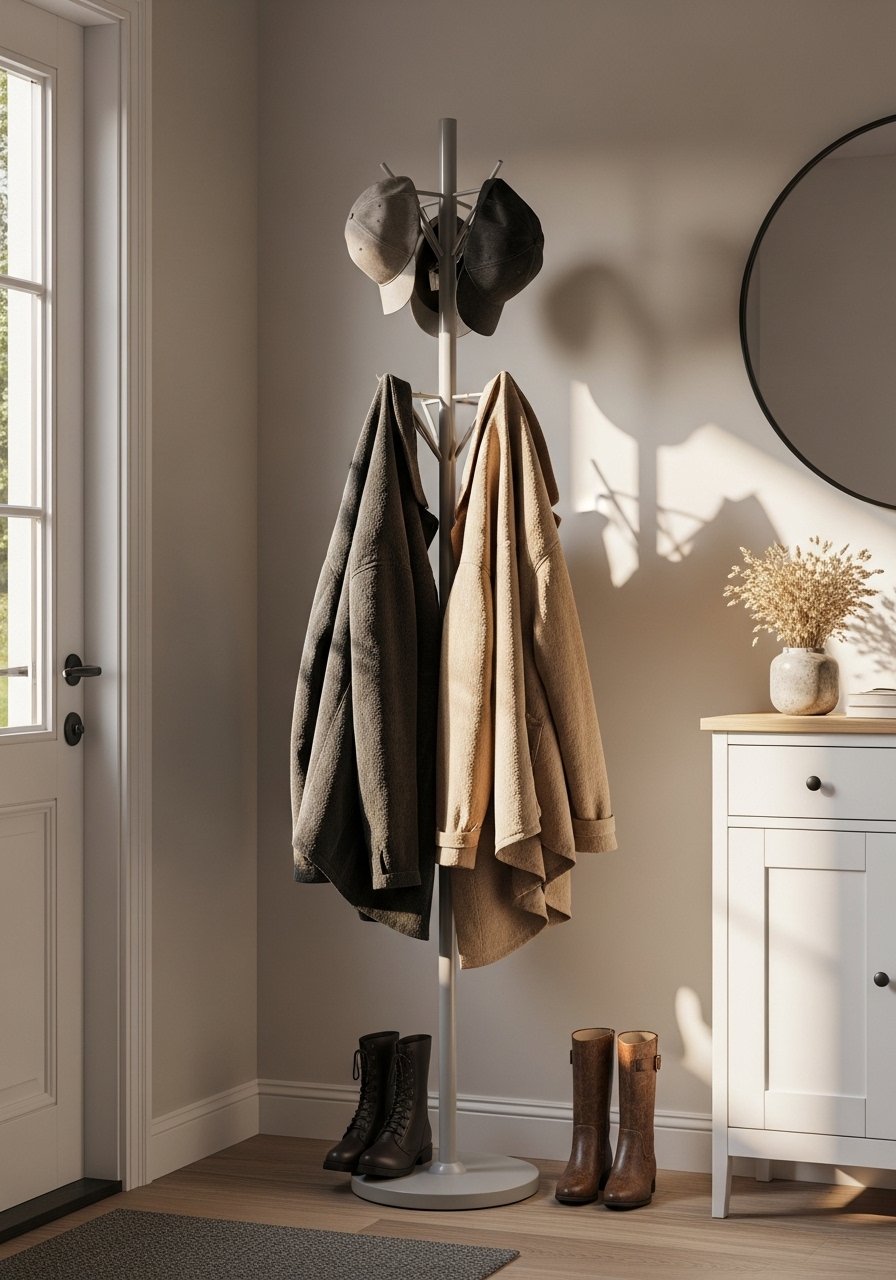
A coat tree takes up less footprint than a closet and keeps frequently used layers accessible. I favor stands with arms at varying heights so kids and tall adults can both reach something. Pick one under 16 inches in diameter at the base for tight spaces. It feels casual and lived-in while keeping things off seating. Try a compact coat stand. For apartments, use a lightweight model that can move easily.
Mistake to Avoid: Choosing a low-quality stand that tips when loaded, which makes you avoid using it.
10. Console with Built-In Charging Station
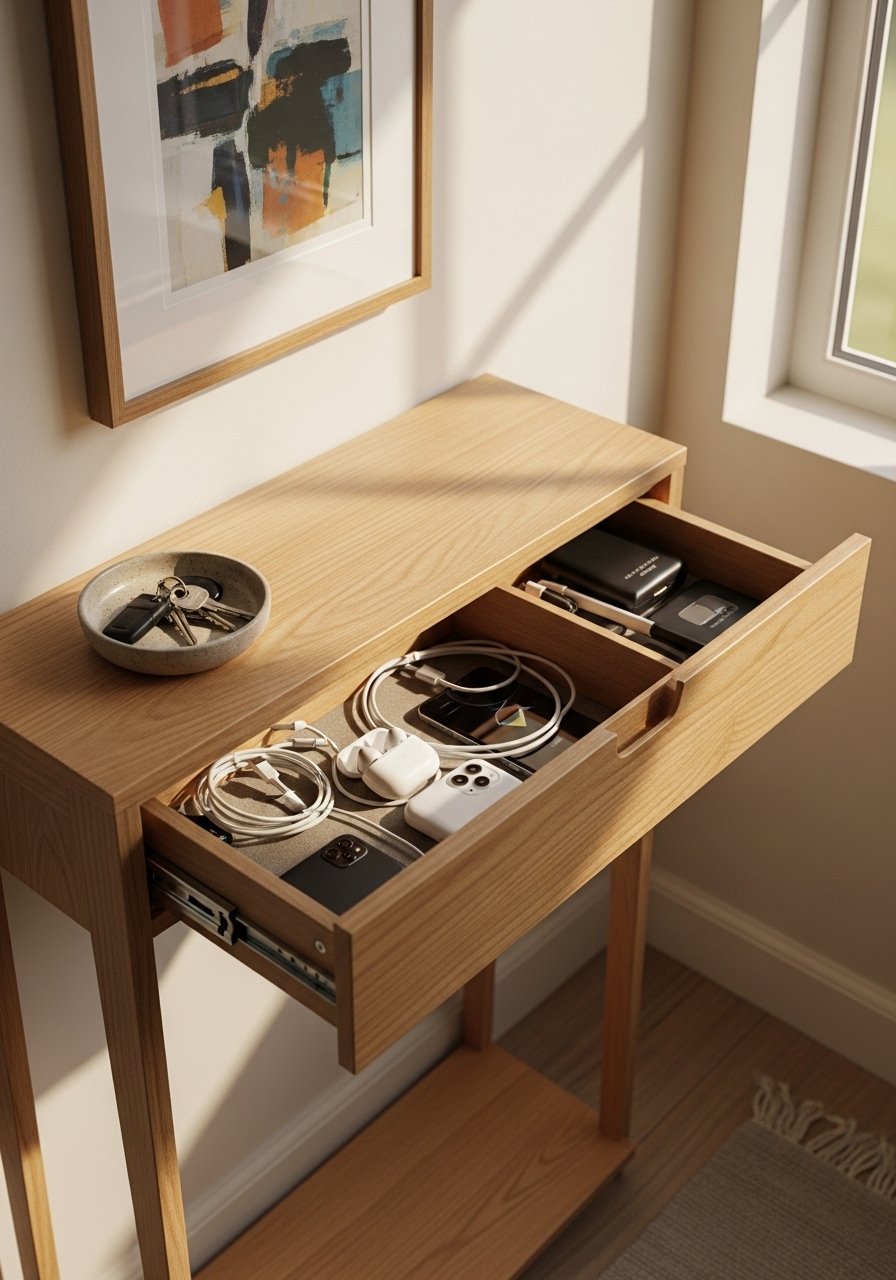
Keep a designated charging drawer so phones and AirPods do not become a countertop mess. I installed a small power strip inside a console drawer and drilled a cable pass-through at the back, spacing the strip to allow airflow. This avoids visible cords and makes the entry a true drop zone. For renters, pick a console with a removable back panel or use a freestanding box. Pair with a multi-port USB charger.
Mistake to Avoid: Leaving cords visible across the top of the console, which makes the area feel cluttered and unsafe.
11. Scaled Planter and Plant Stand
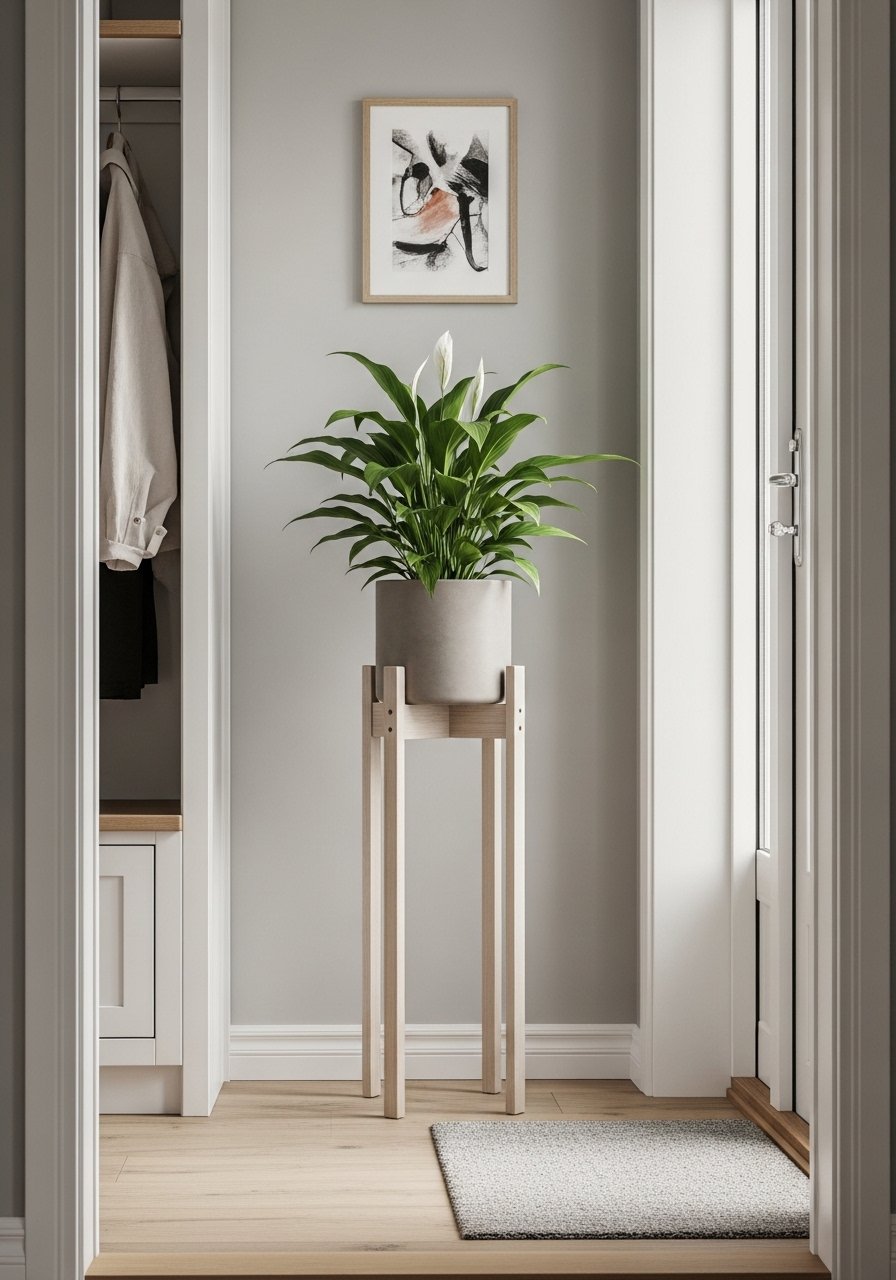
Plants bring life but too-large pots feel overwhelming. I use a planter under 10 inches in diameter on a 24-inch tall stand to add height without crowding the floor. Pick plants that tolerate lower light if your entry lacks direct sun. For pet households choose non-toxic varieties or place them out of reach. Try a narrow plant stand and a medium terracotta planter.
Mistake to Avoid: Using a heavy ceramic pot on an unstable stand, which risks tipping and a big cleanup.
12. Foldable Stool That Tucks Away
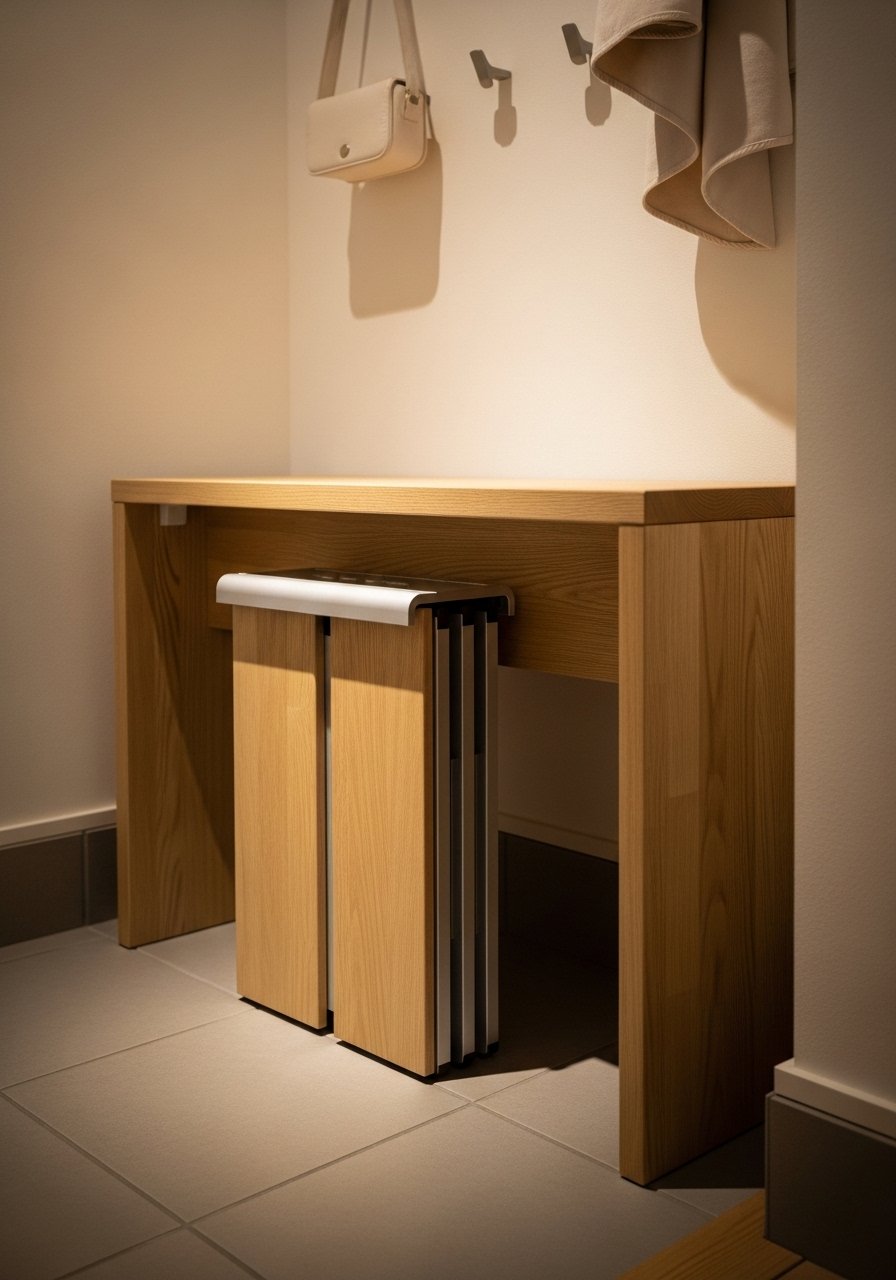
A small folding stool adds extra seating without permanent footprint. I keep one tucked under the bench for when I need to put on shoes or set down a bag. Choose a stool that collapses flat and slides into a closet or under a bench. It is one of the easiest low-cost additions that makes hosting and quick tasks smoother. Try a folding stool.
Mistake to Avoid: Buying a bulky stool that never gets folded and ends up adding clutter.
13. Seasonal Basket Swap System
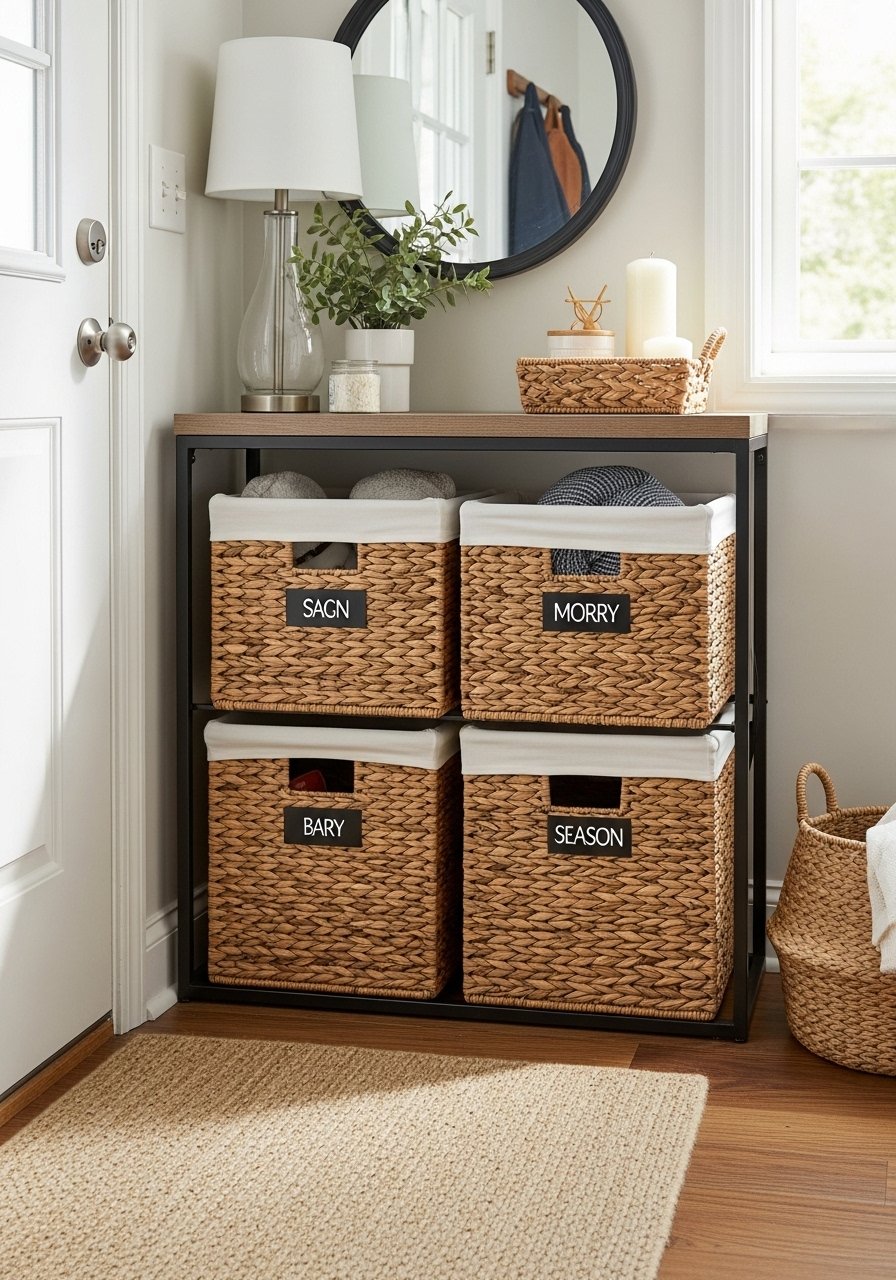
Instead of a single catchall, keep three baskets labeled for the season, mail, and pet gear. Rotate the season basket with a new one when weather shifts. I use identical baskets for visual harmony and change the content, not the look. It is quick to swap and keeps the entry feeling intentional. Choose baskets that slide easily under your furniture. Pair with woven storage baskets that fit your console width.
Mistake to Avoid: Using mismatched containers that read chaotic and make the entry look improvised.
14. Slim Shoe Cabinet With Open Top
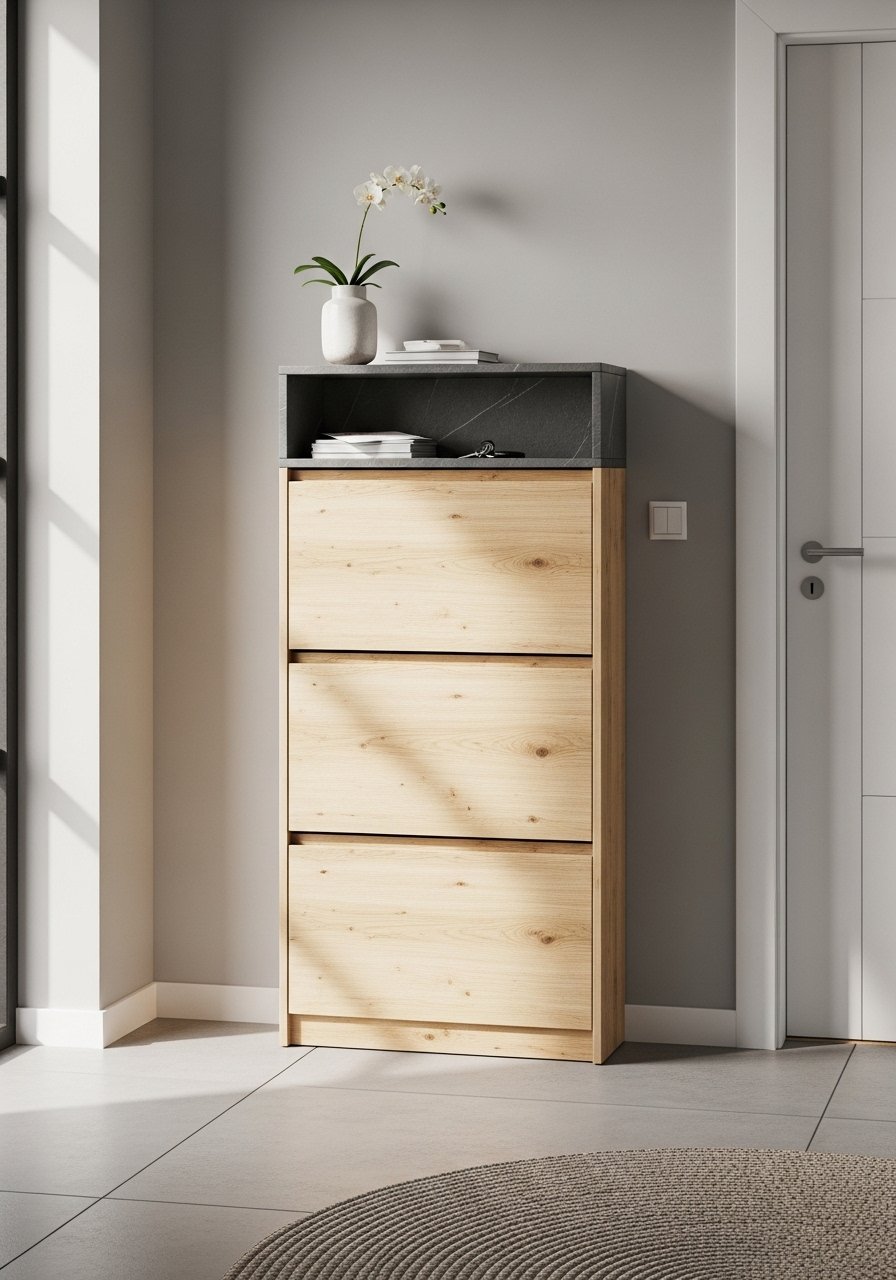
A low shoe cabinet keeps pairs hidden while the top surface becomes a landing zone. I like models with shallow depth and individual flip compartments to keep shoes ventilated. The open top doubles as space for a small tray, plant, or mail bowl. For renters, pick a freestanding unit and avoid drilling. Try a slim shoe cabinet with a small catchall tray.
Mistake to Avoid: Using a deep shoe cabinet that forces the door to hit it when opened, which becomes a daily annoyance.
15. Portable Lighting Plug-In Lamp
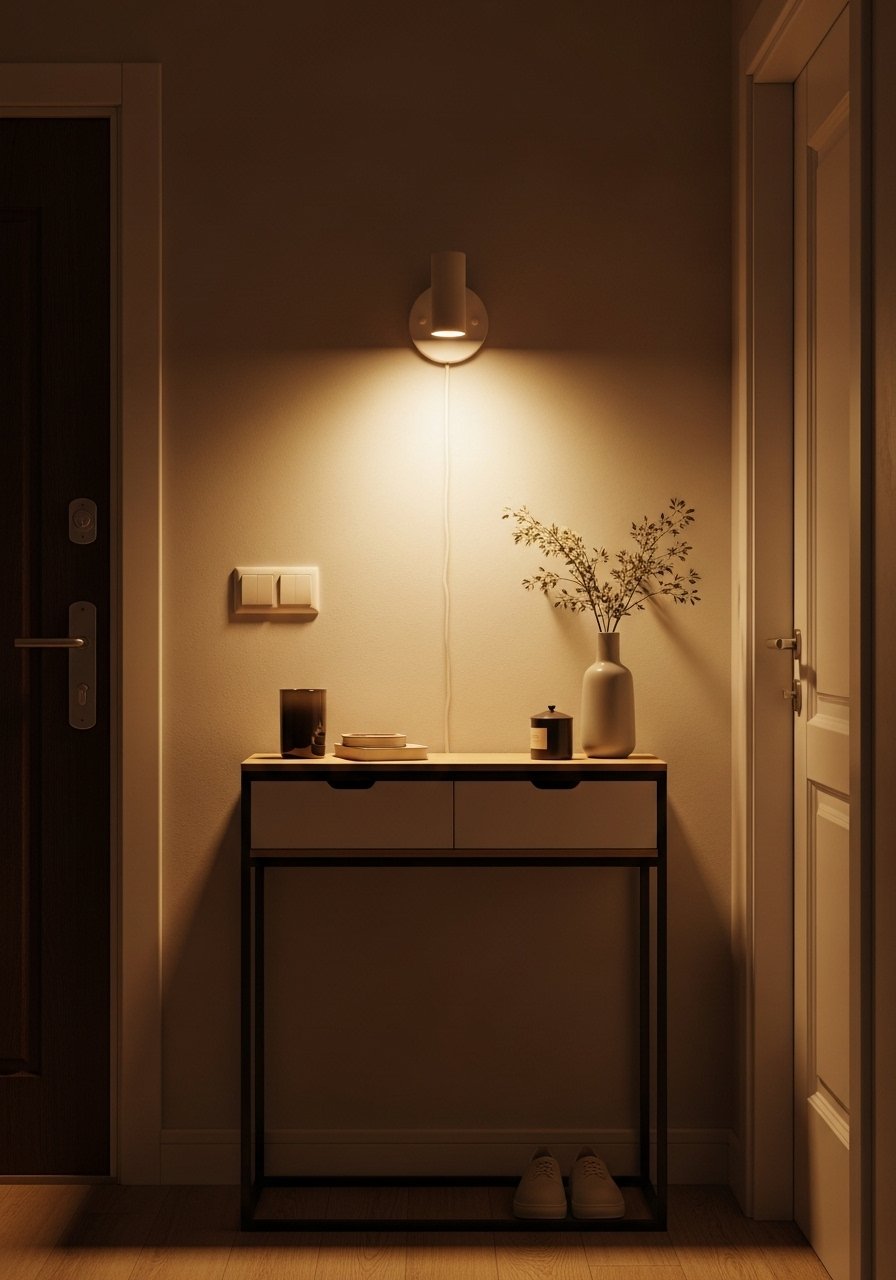
Good lighting changes how an entry feels after dark. A plug-in wall sconce or clamp lamp gives soft, directional light without rewiring. I use one with a dimmer plug to set a welcoming mood. Choose warm bulbs around 2700K to make the space feel comfortable. This is renter-friendly since it requires no electrician. Pair a plug-in wall lamp with a warm LED bulb.
Mistake to Avoid: Using a bright overhead bulb that makes the entry feel harsh instead of welcoming.
Small Entry Habits That Stick
Thin coats of protection beat one heavy treatment. Use a small bottle of furniture beeswax to spot-condition wooden tops twice a year. A little goes a long way.
Grab a microfiber duster. A quick swipe before leaving keeps the surface clear and prevents the nightly mail dump from becoming a pile.
Rotate a decorative outdoor mat each season. It is faster than deep-cleaning and keeps the entry visually fresh.
Most people hang the same coat hooks forever. Swap one or two hooks for different heights with peel-and-stick hooks so kids can reach and toss things in the right spot.