
I burned my hair twice before I learned to slow down. My first instinct was to crank the iron to max and rush through thick clumps. It looked flat in photos and frizzy in real life. After a few experiments and too many trimmed ends, I built a routine that keeps hair smooth and feels healthier, not brittle, the next morning.
This guide works for fine, medium, and coarse hair. It assumes you want straight hair with minimal weekly heat, about 20 to 40 minutes depending on length. I tested variations across four hair textures I have styled, after washing and restyling about fifteen times to settle on the timings and section sizes below.
What You'll Need
Styling Products:
- sulfate-free-shampoo (~$8-20)
- deep-conditioning-mask (~$10-30)
- heat-protectant-spray (~$8-25)
- lightweight-argan-oil (~$6-20)
Tools:
- ceramic-flat-iron (~$30-150)
- vented-round-brush (~$8-20)
- microfiber-towel (~$6-15)
- silk-pillowcase (~$12-40)
Step 1: Start with the right wash routine
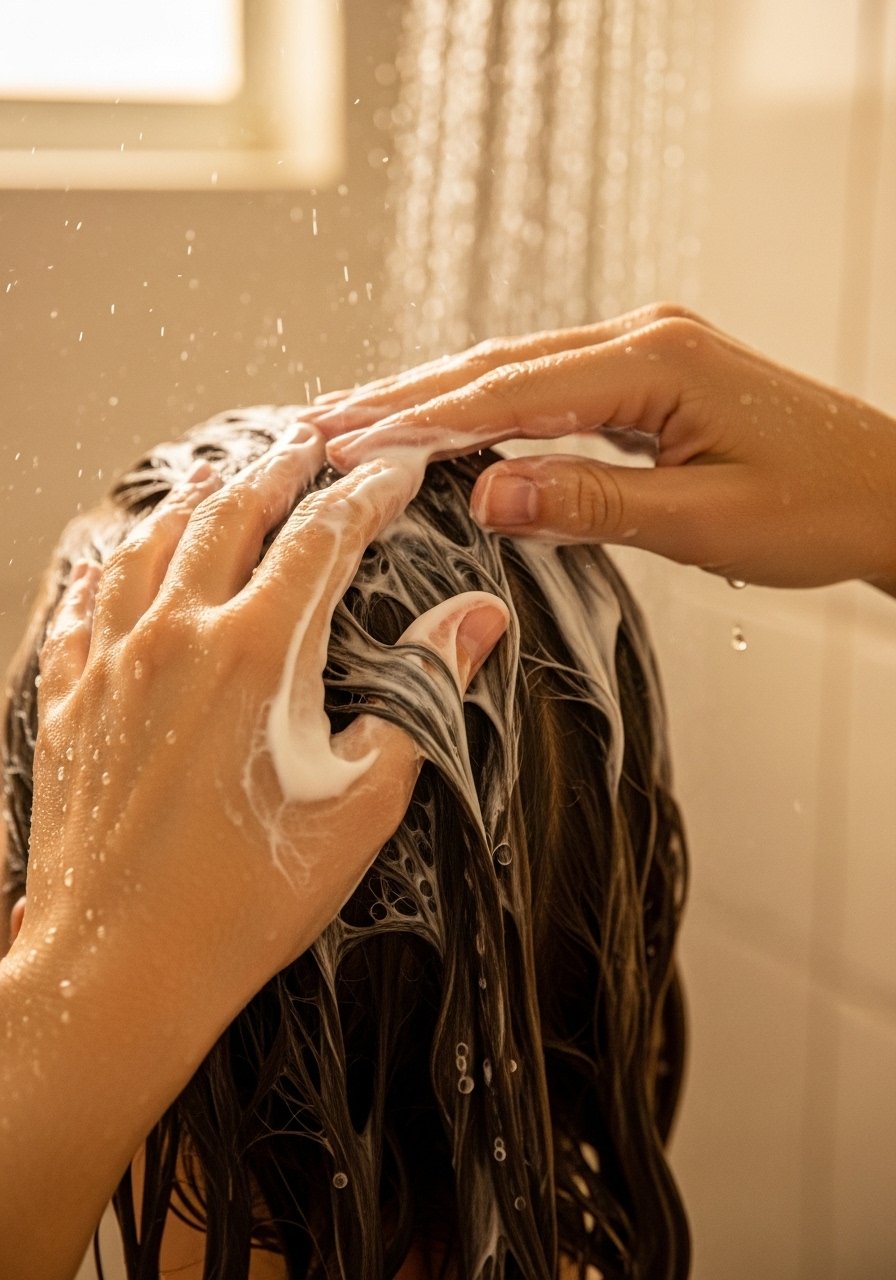
Pull the towel off the tub and actually read the bottle labels. Use a sulfate-free shampoo and a deep conditioning mask once a week if your hair is dry. For me, a two-minute mask left the hair soft instead of limp. Rinse with cool water to help the cuticle lay flatter. Towel-blot with a microfiber towel by squeezing, not rubbing. The goal is 60 to 90 percent dry before you bring in heat. That reduced frizz noticeably for me and shortened blow-dry time.
Mistake to Avoid: Applying heavy conditioner at the roots makes hair limp and increases flat iron passes.
Step 2: Use the correct amount of heat protectant
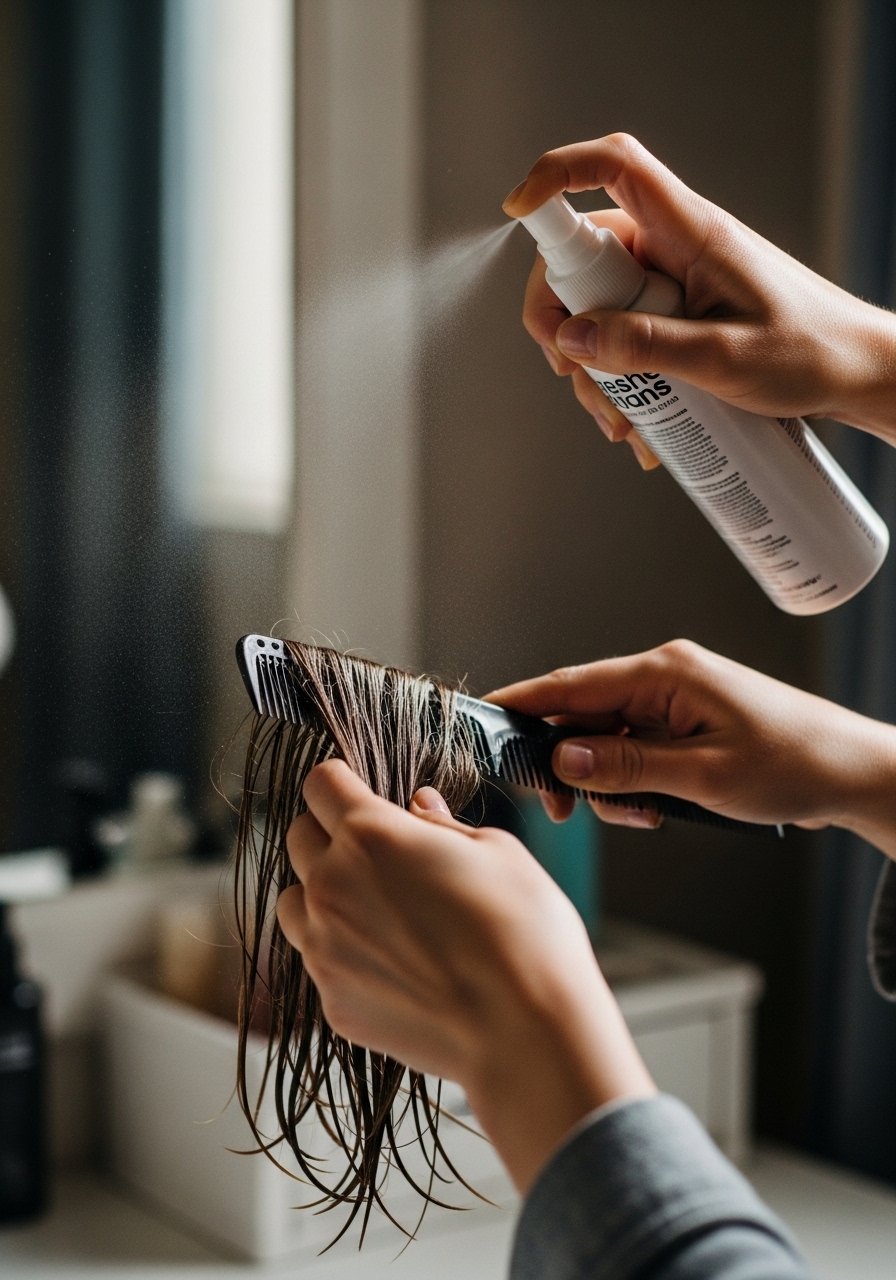
This is where people think more is better. It is not. For shoulder-length hair I use a nickel-sized amount of creamy protectant or 6 to 8 sprays if it is a mist. Work it through from mid-length to ends with a wide-tooth comb so it distributes evenly. Let it sit 60 seconds so it bonds to the strand before any heat. The product should leave hair feeling slightly tacky but not heavy. That tack helps the iron glide and keeps the cuticle from tearing.
Mistake to Avoid: Spraying protectant only at the roots leaves ends unprotected and prone to split ends.
Step 3: Dry smart, not hot
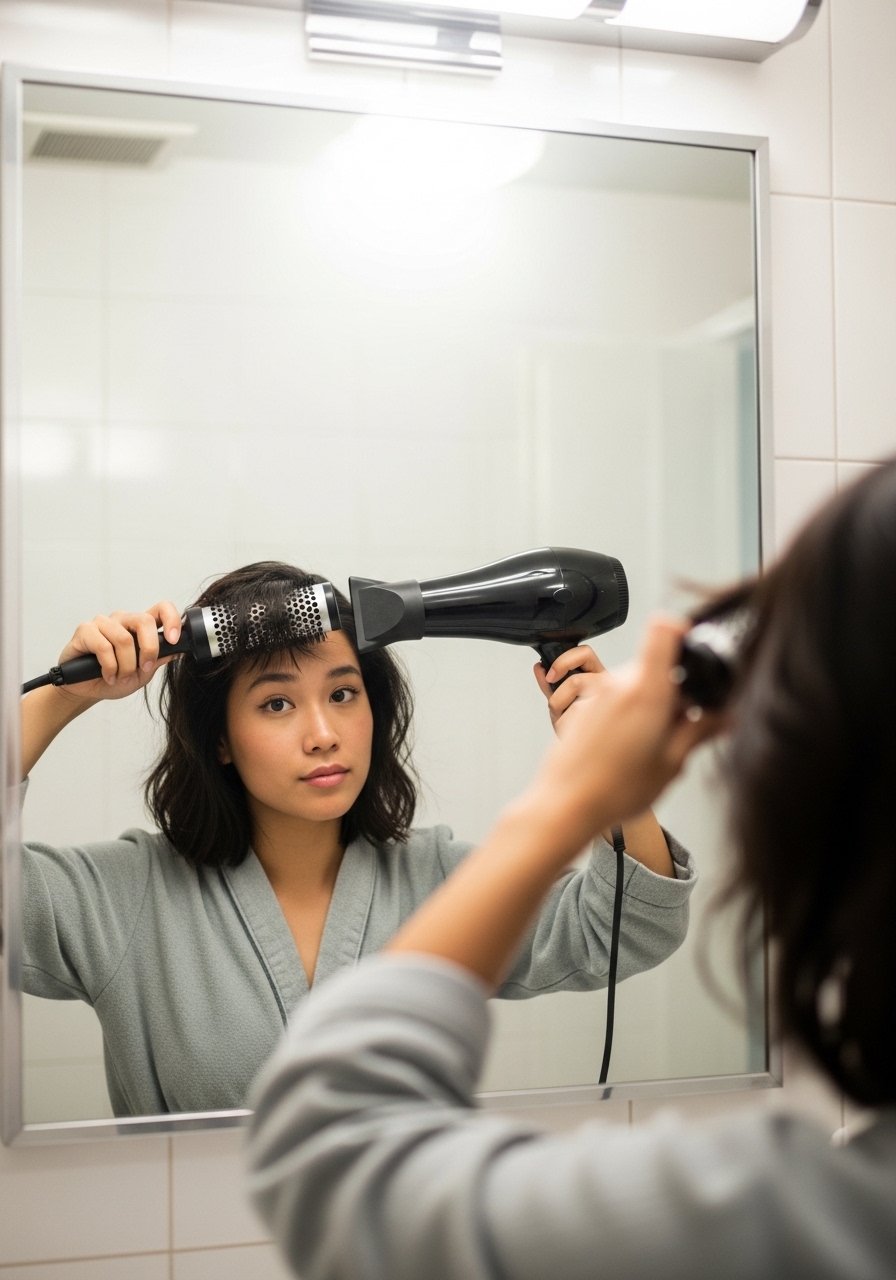
This part used to frustrate me. I used to blast with heat until it was bone dry then iron. Now I aim for about 90 percent dry with my blow-dryer on medium heat using a vented brush and concentrator nozzle. Hold the dryer about 6 inches away so the airflow dries without overheating. If you hear a hard sizzle it is too hot. Let hair cool for 30 to 60 seconds after each high-heat pass so the cuticle resets. Partially air-drying for 10 to 20 minutes before blow-dry also cuts total heat time.
Mistake to Avoid: Rushing and ironing soaking wet hair causes steam damage and dullness.
Step 4: Section into small, consistent strips
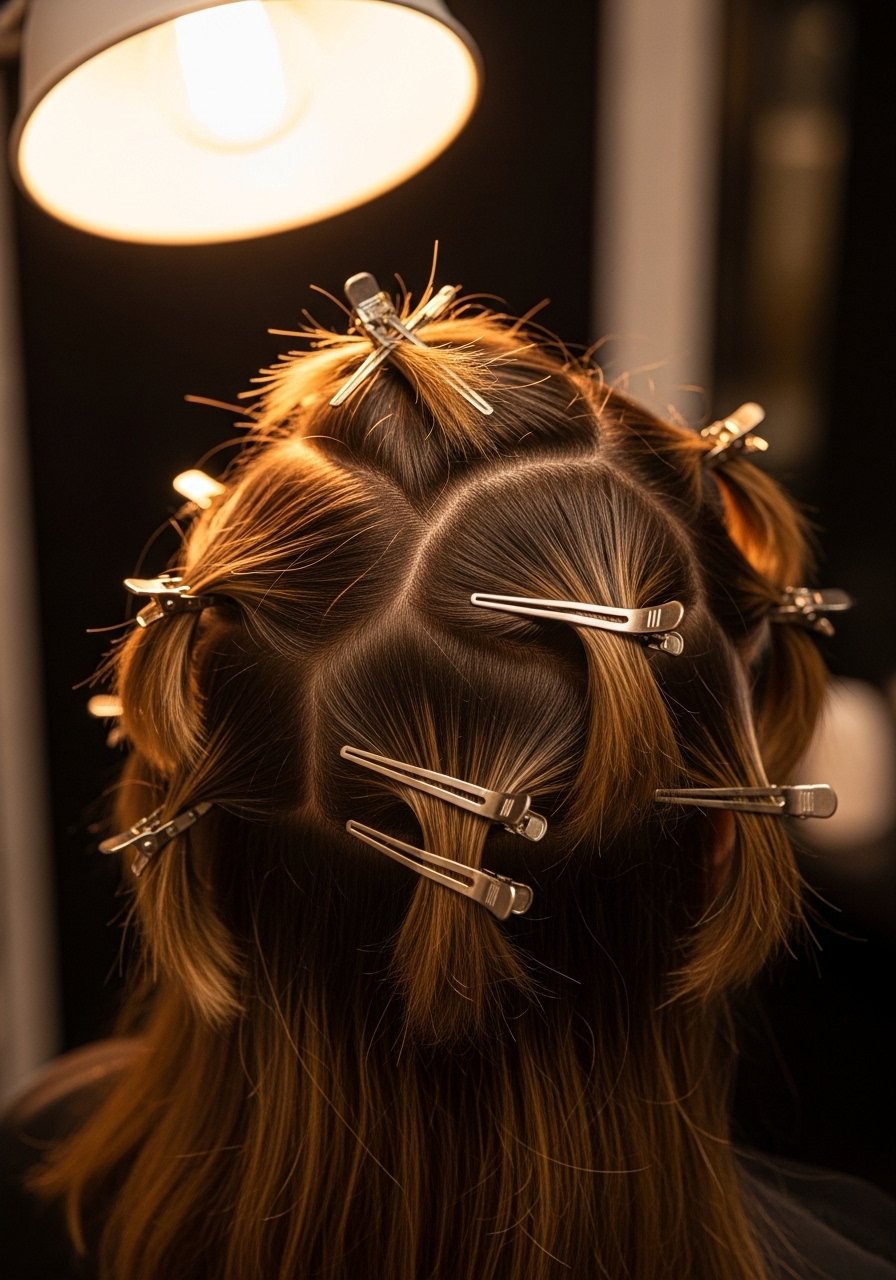
You want uniform 1/2-inch to 3/4-inch sections. Smaller sections mean fewer passes and more control. Clip the rest out of the way. Start at the nape and work up to the crown. Set your flat iron temperature to match texture: around 300°F for fine, 350°F for medium, and up to 380°F for coarse hair. This is the principle of progressive heat, lower temp and steady technique reduce cumulative damage. I do two smooth passes max per section and it usually stays straight until my next wash.
Mistake to Avoid: Using large chunky sections forces more passes and increases breakage.
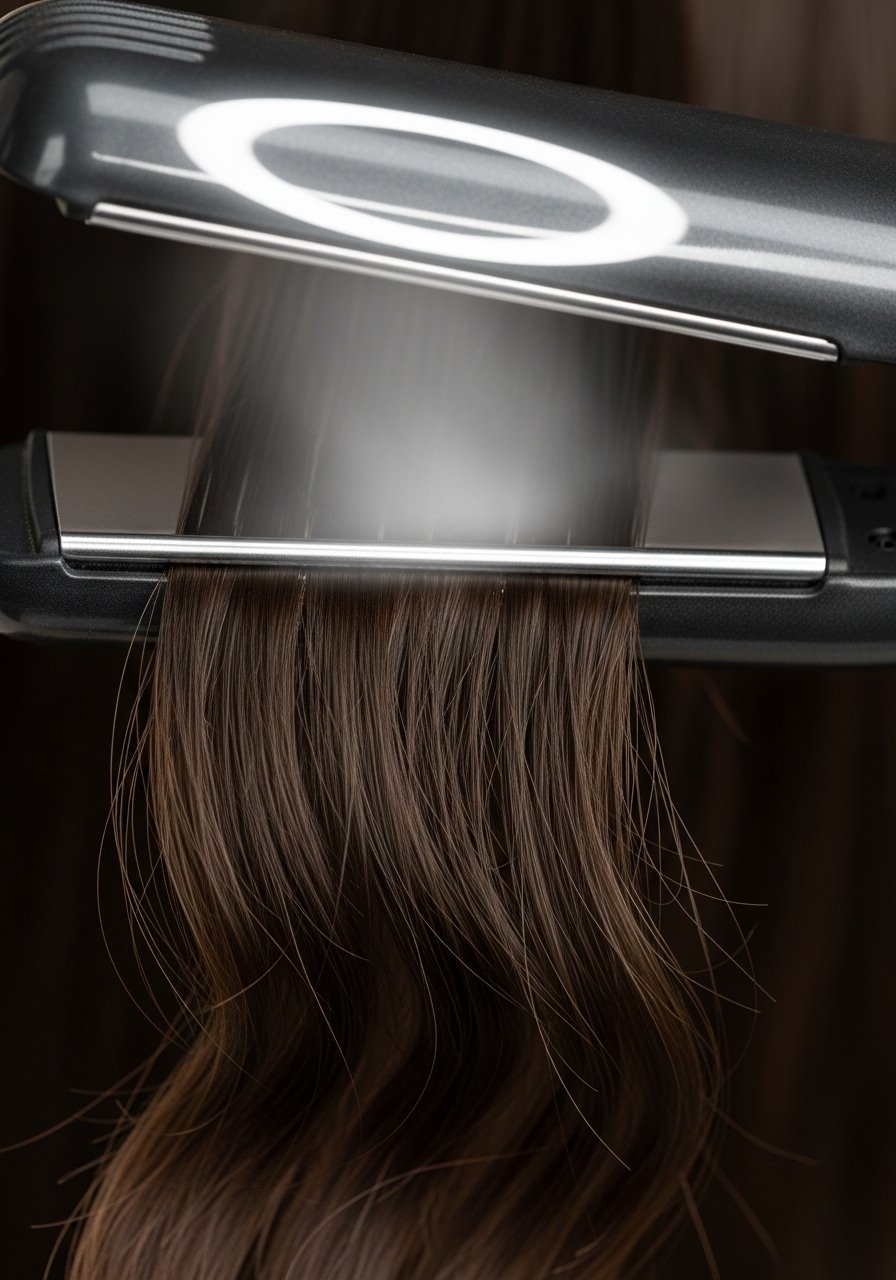
Step 5: The glide and timing technique
Listen to how the iron feels on the hair. Aim for a slow, steady pull of about one inch per second. Clamp gently and glide, do not clamp hard and hold. If you need a third pass you missed something earlier. Use a fine-tooth comb ahead of the iron for stubborn waves so the plate meets a smooth line of hair. The metal makes a faint soft hiss when the iron meets product residue. Wipe the plates between sections if you notice buildup. Fewer, deliberate strokes beat faster, harsher ones.
Mistake to Avoid: Applying excessive pressure while clamping creates dents and causes the hair to snap.
Step 6: Seal, sleep, and maintain
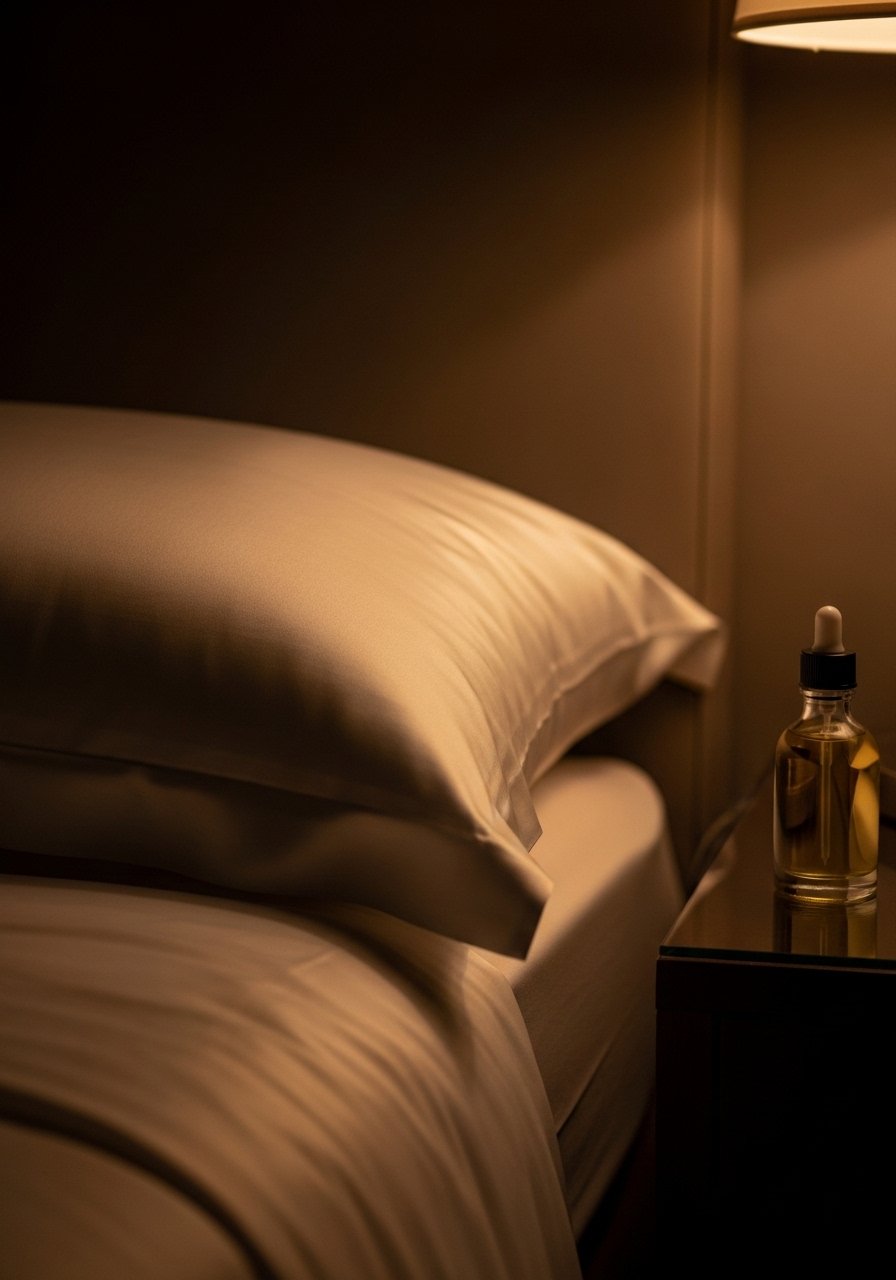
After styling, let hair cool undisturbed for five minutes so the cuticle sets. Then apply a pea-sized amount of lightweight argan oil to the ends, smoothing out any flyaways. I sleep on a silk pillowcase and use a loose, low pony with a soft scrunchie when I need to preserve the style. Touch-ups should be small face-framing sections rather than running the iron through the whole head. Over time, trimming 1/2 inch every 8 to 10 weeks keeps ends healthy and reduces the temptation to over-iron.
Mistake to Avoid: Rubbing oil into the roots makes hair greasy and leads to more washing and more heat exposure.
Hair Styling Tips
Partial air-dry trick: Let hair air-dry 10 to 20 minutes after towel-blotting to cut total heat time and reduce blow-dry stress. Use microfiber-towel for blotting.
Two-pass rule: Aim for one to two smooth passes per section, and only raise temperature if two passes do not work on coarse hair. Use ceramic-flat-iron with adjustable heat.
Prep ratio: For shoulder-length hair use about 6 to 8 sprays of protectant or a nickel-sized cream. This gives coverage without weight.
Tool-cleaning: Wipe iron plates after every 10 to 15 minutes of styling to avoid product build-up. A quick cloth keeps the glide smooth.
Heat-free alternative: On a Tuesday night when you do not want to think, try banding or a round-brush blowout for a straighter look without high flat-iron temperature. Use a vented-round-brush.
Porosity note: High-porosity hair soaks up protectant faster. Use slightly more protectant and a few extra seconds before heat to let it bond.
Weekly rescue: If your ends feel rough, a 10-minute deep conditioning mask once a week restores softness. Try deep-conditioning-mask.
Everyday Smooth
Learning how to straighten hair with less damage is mostly about pacing and small choices you repeat. Start with the right prep, measure product amounts, and respect section sizes. Give a low-heat approach a few tries and you will notice the hair retains shine and moves more naturally. Final tip, keep a lightweight oil on hand for instant smoothness, not to mask rough ends but to preserve them. You will get more consistent results as you practice and slow down.