
I kept trying to cram a full-size desk into a postage-stamp corner and then blaming the chair, until one late-night move I stacked a printer on a shallow floating shelf and suddenly had real legroom. That tiny change taught me the rule I still use: measure first, buy second, and don’t be shy about making one piece do two jobs.
These ideas are not about buying a new room. They are small, mostly renter-friendly fixes that cost under a few hundred dollars and work in apartments, tiny houses, or spare corners. I landed on these after trying this in three rentals, so expect a mix of simple weekend builds, some under-30-minute installs, and a few things you might want a drill for. Each idea notes who it fits, what makes it work visually, and one specific measurement or ratio I actually used.
1. Flip-Down Wall Desk For Tight Corners
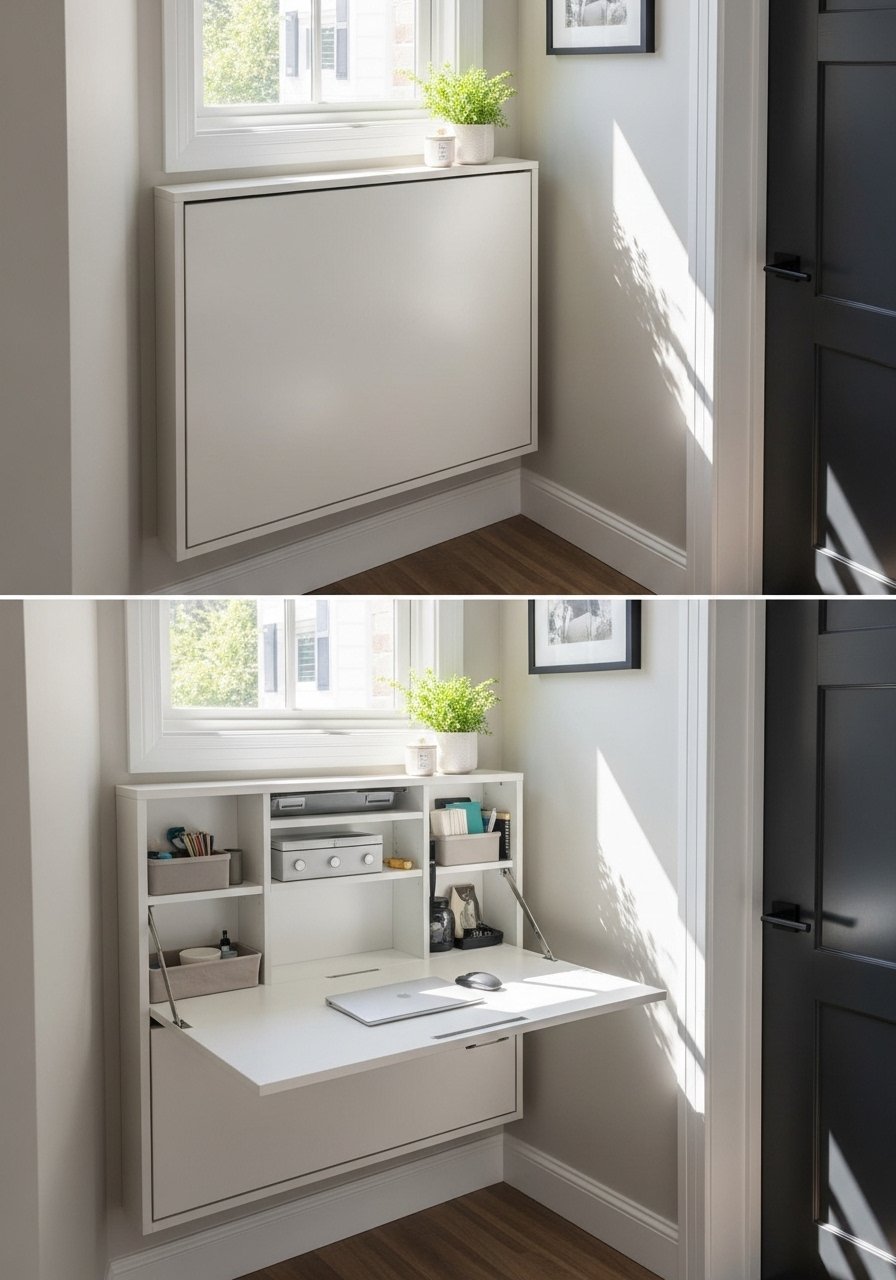
A flip-down desk shrinks out of the way when you are not working. Pick one with an inside depth of 12 inches so it still holds a laptop and a notepad but folds flat against the wall. Visually it keeps sightlines clean, which makes a small space feel wider. Install on studs or use heavy-duty wall anchors, and pair with a slim folding stool like the linked compact stool for small spaces. Budget is low to moderate. The rule I use is leave 20 inches of knee clearance for comfort when seated.
Mistake to Avoid: Mounting it too low so your knees hit the desk when you sit.
2. Narrow Floating Shelves Instead of a Bookcase
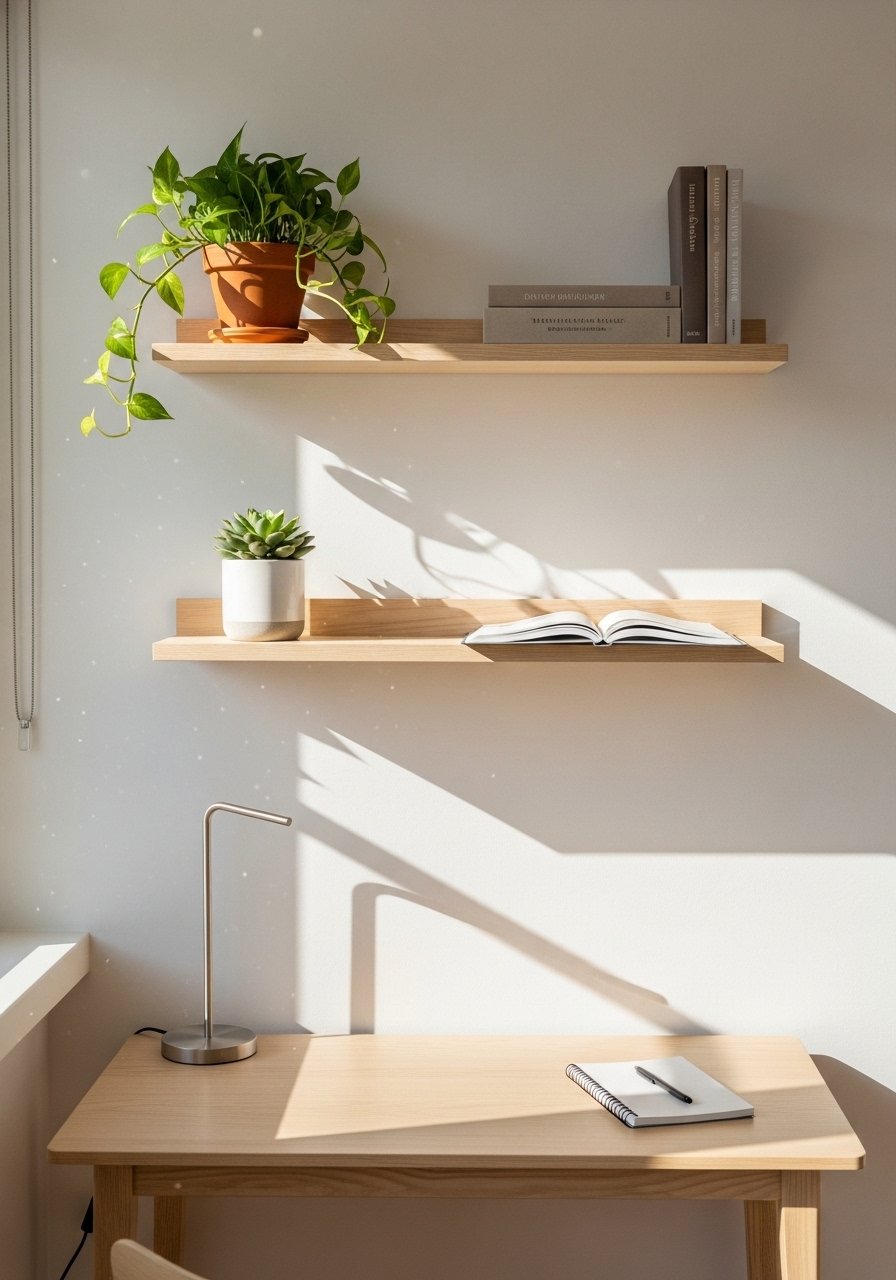
Swap a bulky bookcase for 8 to 10 inch deep floating shelves. They hold files, a wireless printer, and a tray for mail without stealing floor space. Visually they draw the eye up, creating vertical storage. Use three shelves staggered at 12 inch vertical gaps for stacked storage that is still reachable. I mount a thin under-shelf power strip to hide cords. Pair with a bracketless shelf for cleaner lines and a small file box for papers, linked below.
Mistake to Avoid: Using shelves deeper than 12 inches, which makes the corner feel crowded.
3. Under-Desk Drawer That Hides Clutter
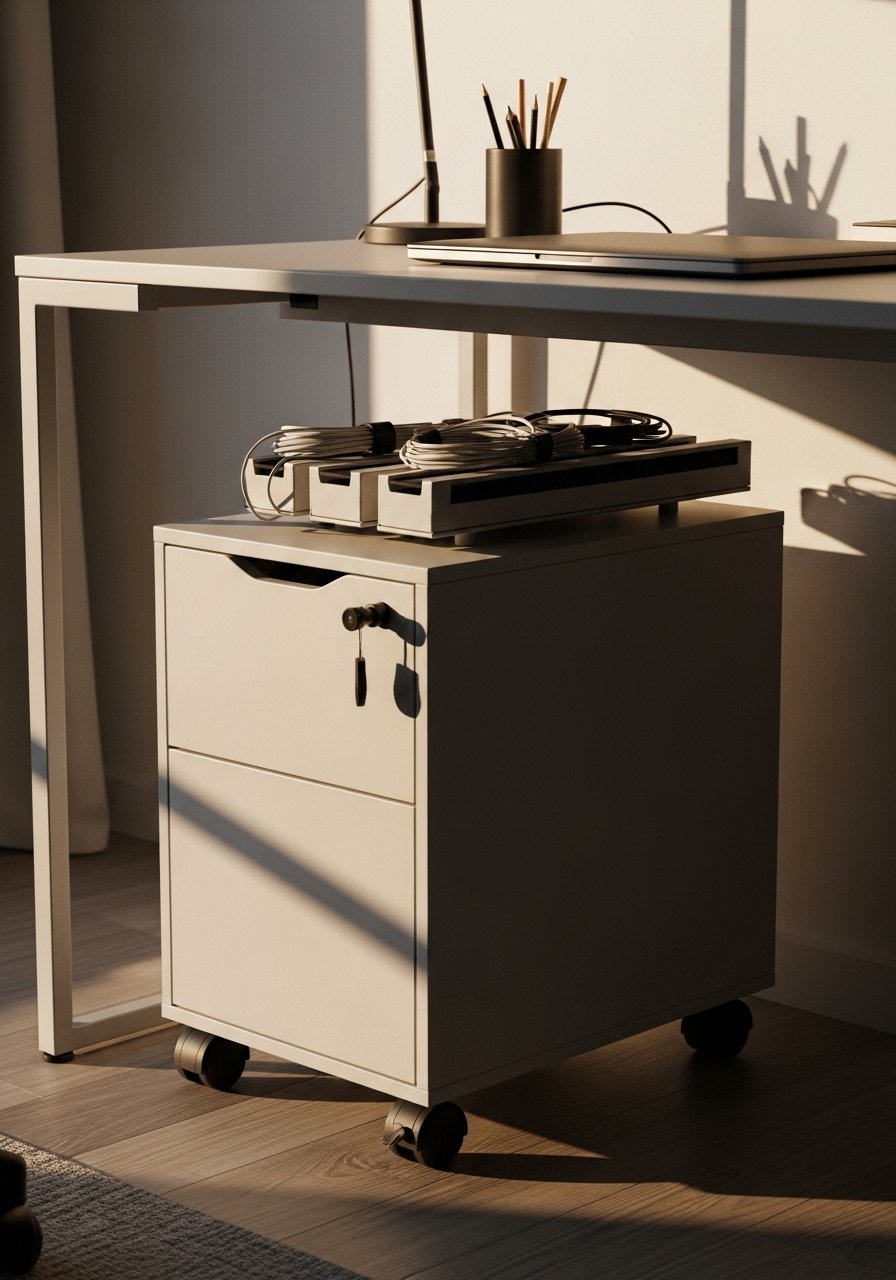
A single under-desk drawer frees desktop surface and keeps chargers hidden. Look for drawers that sit 6 to 8 inches below the desktop and that lock in place so they do not tip when pulled. This creates a neater backdrop for video calls and gives a tidy spot for pens, power bricks, and notebooks. It is an inexpensive upgrade under $80. I attach a cable clip to the drawer edge so the charger stays with the drawer, not loose on the floor.
Mistake to Avoid: Leaving the drawer full of random cords so it becomes a junk drawer again.
4. Monitor Arm To Reclaim Desk Depth
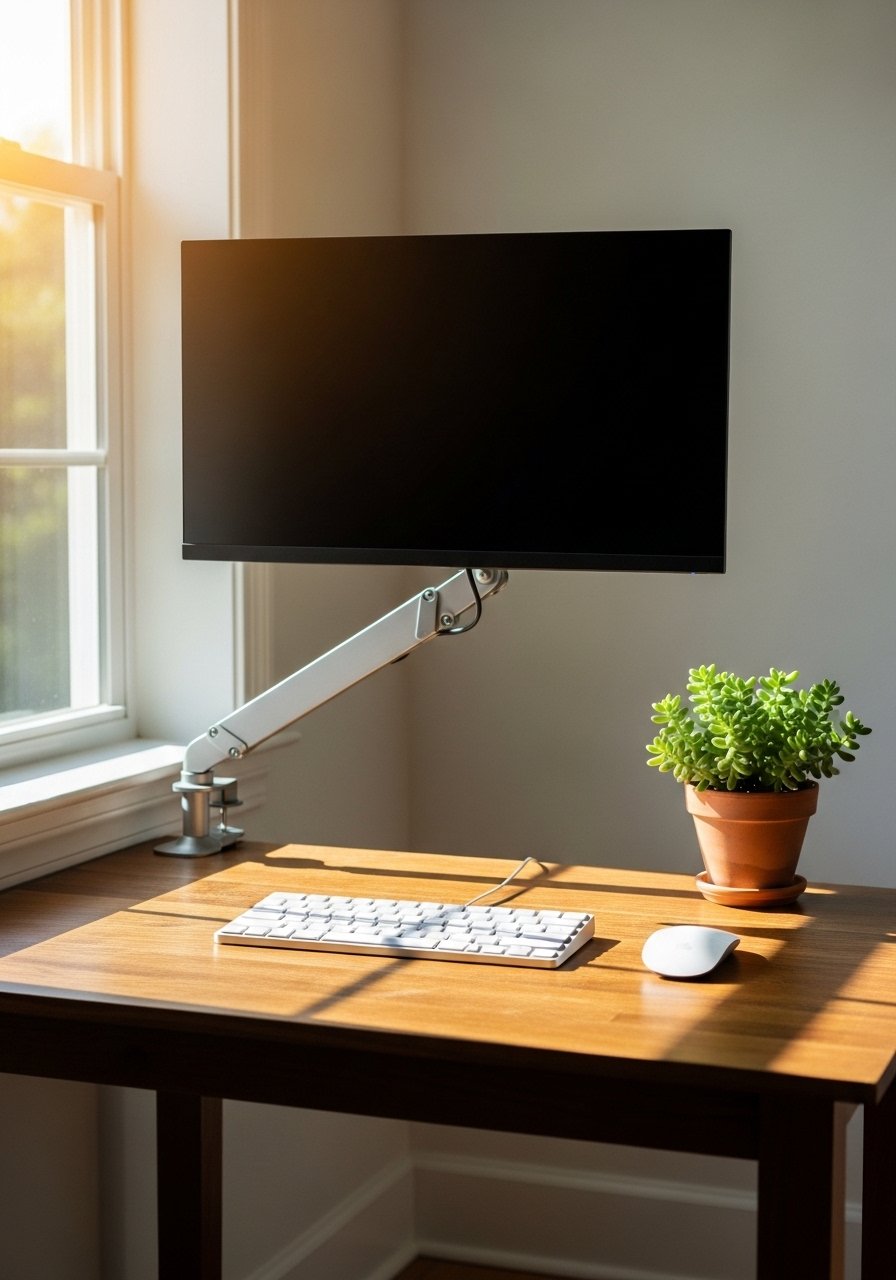
A monitor arm moves your screen off the desktop, instantly giving back 6 to 12 inches of usable depth. Aim for an arm that allows 20 to 30 inches of viewing distance and easy tilt. It cleans the silhouette and lets you slide a keyboard away when not working. This is great for remote workers who need a full-size monitor in a small footprint. Install is quick with a clamp, and a cable management clip keeps cords tidy.
Mistake to Avoid: Choosing an arm that does not reach far enough for your seating distance.
5. Closet Office With Door Storage
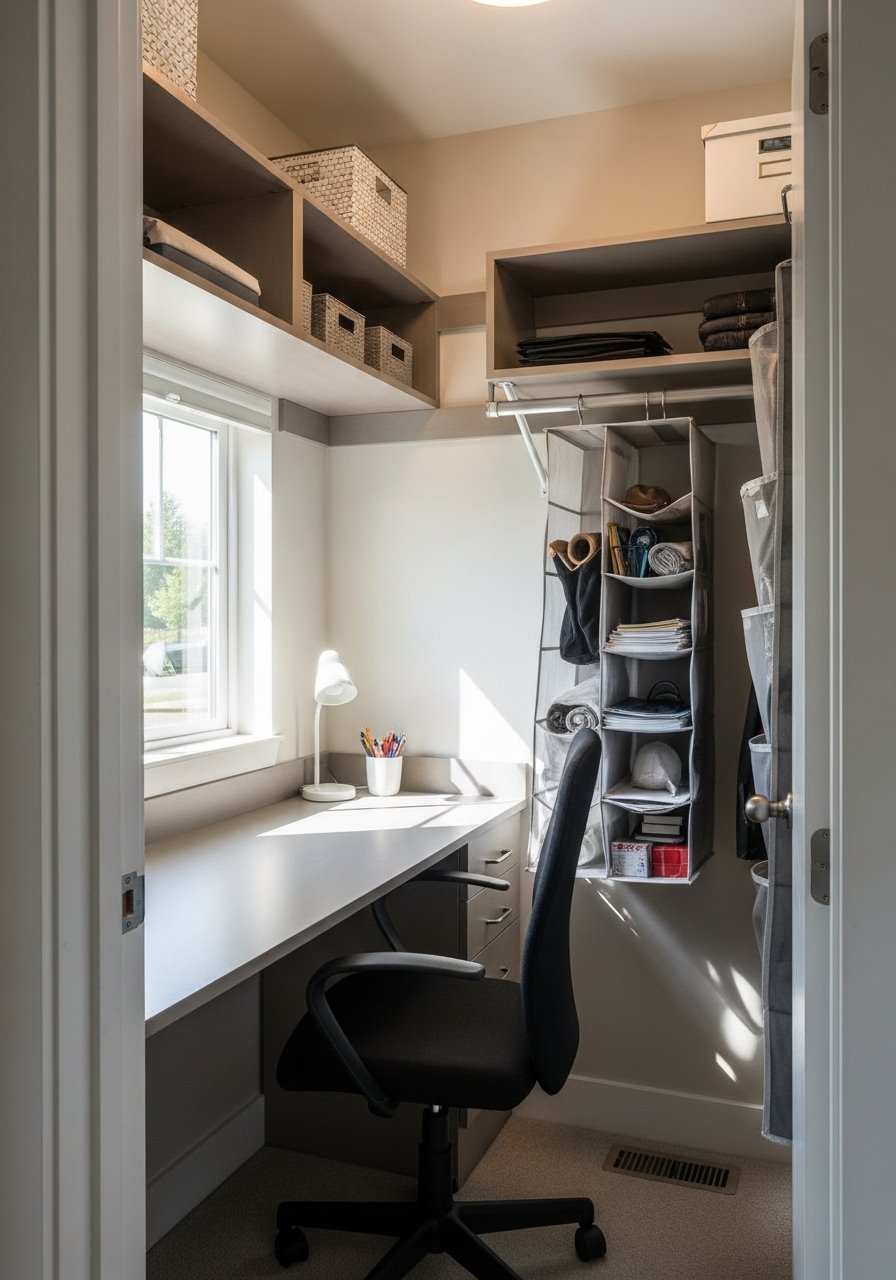
Turning a closet into a desk saves an entire room. Use a 20 to 24 inch deep desktop to fit a laptop and a small monitor. Mount a slim pegboard or magnetic strip on the door interior for scissors, notepads, and a small whiteboard. This setup is excellent for freelancers who need privacy during calls. Keep lighting in mind, either a battery-powered puck or a plug-in under-shelf light if you have an outlet nearby.
Mistake to Avoid: Leaving the closet full of clothes, which defeats the purpose.
6. Slim Rolling Cart as Mobile Workstation
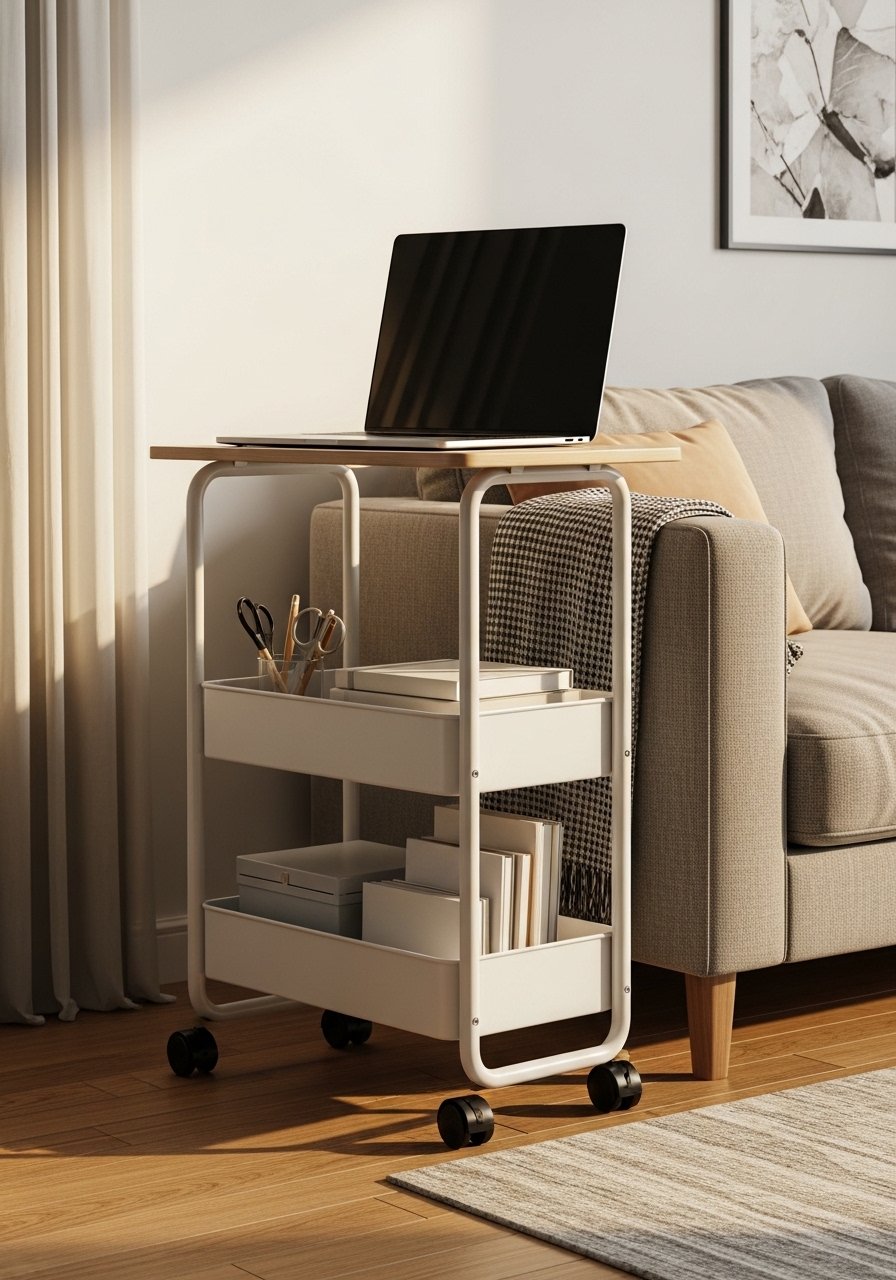
A narrow rolling cart becomes a standing desk, printer station, or portable supply hub. Choose one 10 to 12 inches wide so it can slide between furniture. The mobility means you can work at the kitchen table, move to a window for light, then tuck it away. Use the top shelf for your laptop, middle shelf for a power strip, and bottom shelf for paper. It is budget friendly and no-install.
Mistake to Avoid: Overloading the cart so it becomes too heavy to move smoothly.
7. Ladder Shelf With Built-In Desk Shelf
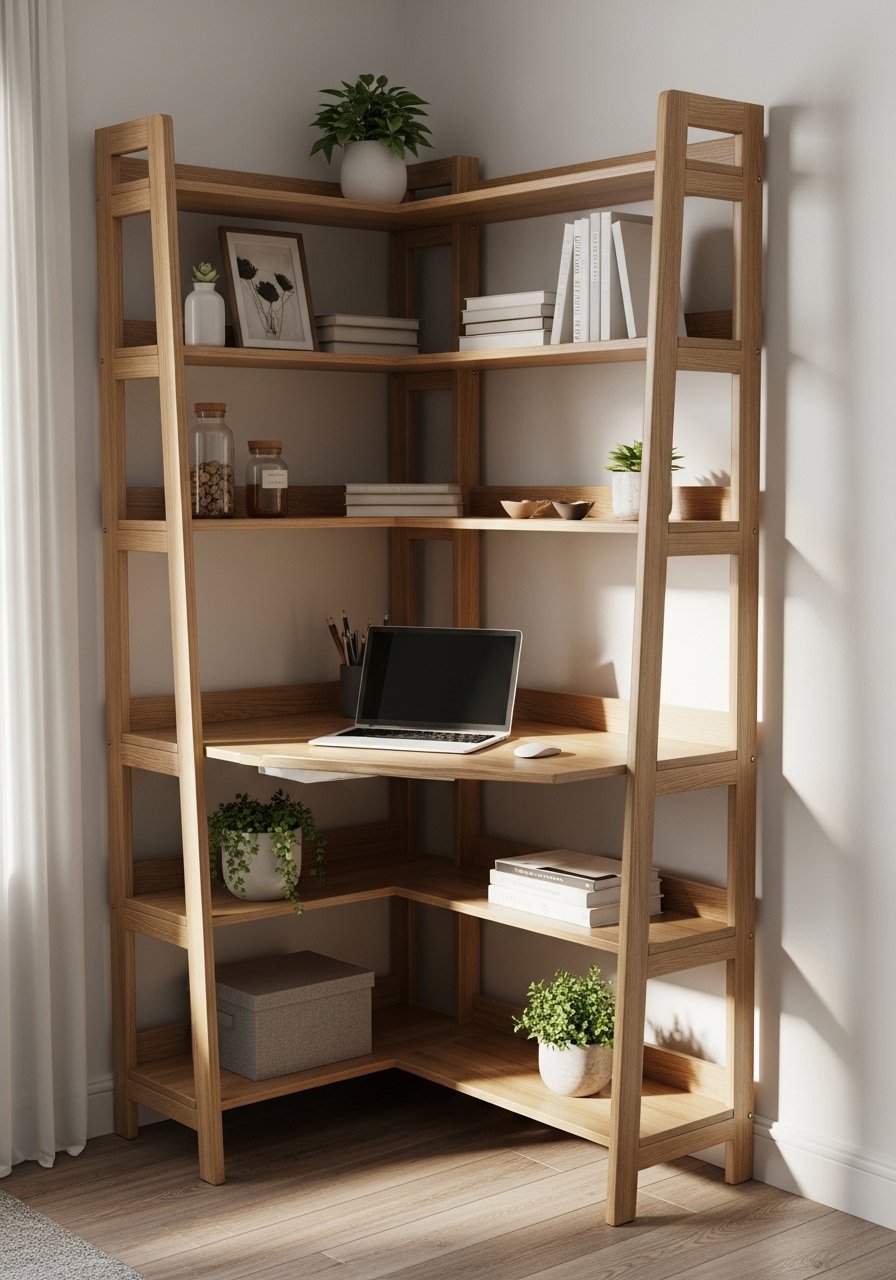
A ladder shelf with a desk shelf creates a vertical workstation. Choose a shelf where the desk surface is between 28 and 30 inches high for standard seating, and the top shelves slope back so items do not appear bulky. Visually it reads as one piece, so the space does not look cluttered. This suits people who want storage and display without separate furniture pieces. It is an easy DIY if you can assemble an all-in-one unit.
Mistake to Avoid: Setting the desk shelf too high, which causes shoulder strain.
If any of these ideas make you want the exact pieces, here are the things I use across most setups.
Small Office Essentials To Buy
Furniture Picks:
- Floating desk (~$60-160), a shallow model saves floor space and looks cleaner than a bulky desk.
- Slim rolling cart (~$30-70), useful as a mobile workstation or printer stand.
Storage & Organization:
- Under-desk drawer (~$40-90), keeps desktop clutter out of sight.
- Narrow floating shelf (~$15-40), perfect above a desk for files and plants.
Tech & Accessories:
- Clamp monitor arm (~$30-90), frees desk depth and improves ergonomics.
- Cable management tray (~$12-30), hides power strips under the desk.
Lighting & Comfort:
- Under-shelf LED light (~$20-45), brightens closet offices or dark nooks.
- Slim ergonomic chair (~$80-220), look for a narrow seat and low-profile arms when space is tight.
- Wall-mounted pegboard (~$15-50), turns vertical space into usable storage.
8. Ottoman With Hidden Laptop Tray
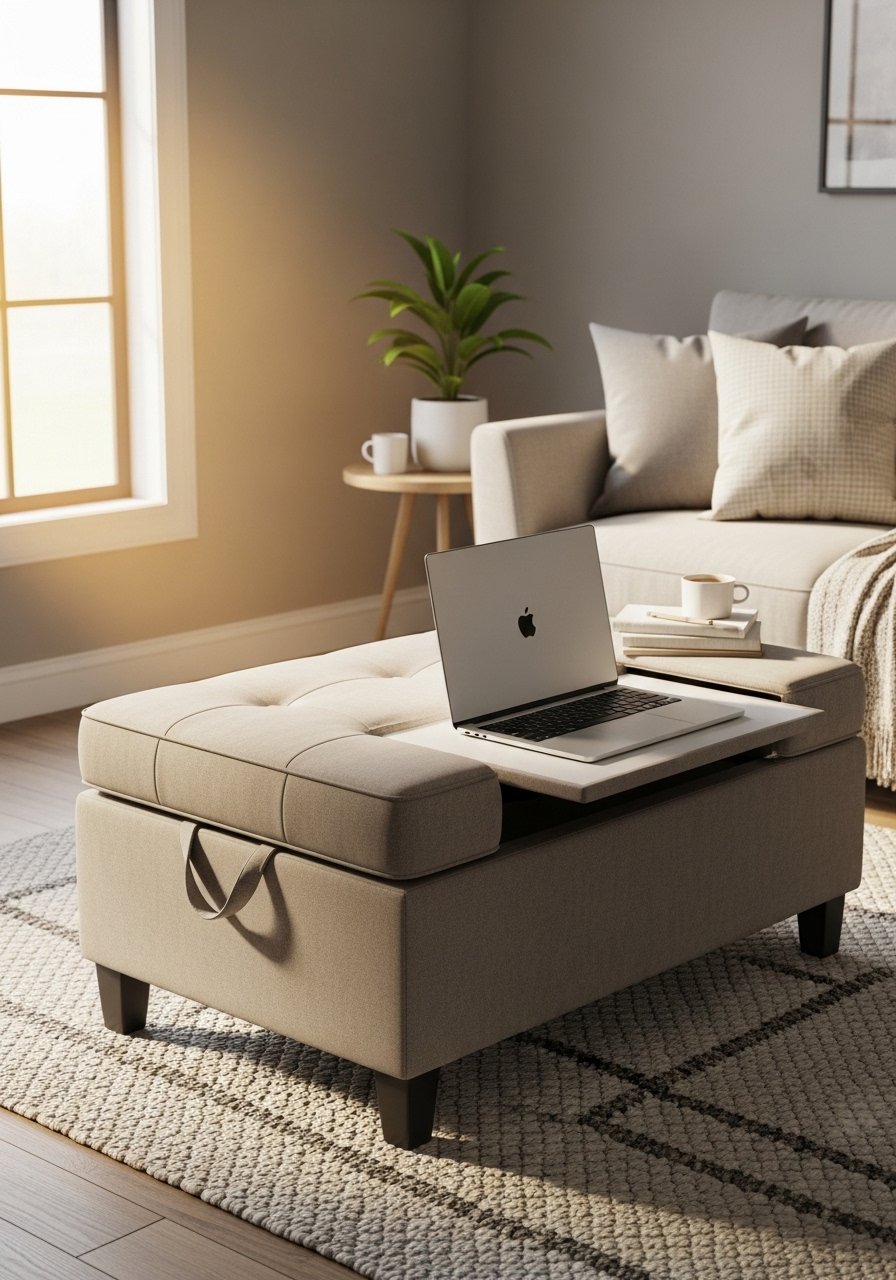
Instead of a side table, an ottoman that hides a slide-out tray doubles as a meeting seat and a workspace. Look for one where the tray clears the ottoman top by at least 2 inches and locks in place. It keeps a laptop out of sight when guests arrive and gives you a soft landing for casual work. This works best for people who do light work away from a desk and want flexible seating.
Mistake to Avoid: Choosing an ottoman with a tray that wobbles when typing.
9. Narrow Desk Against a Radiator Shelf
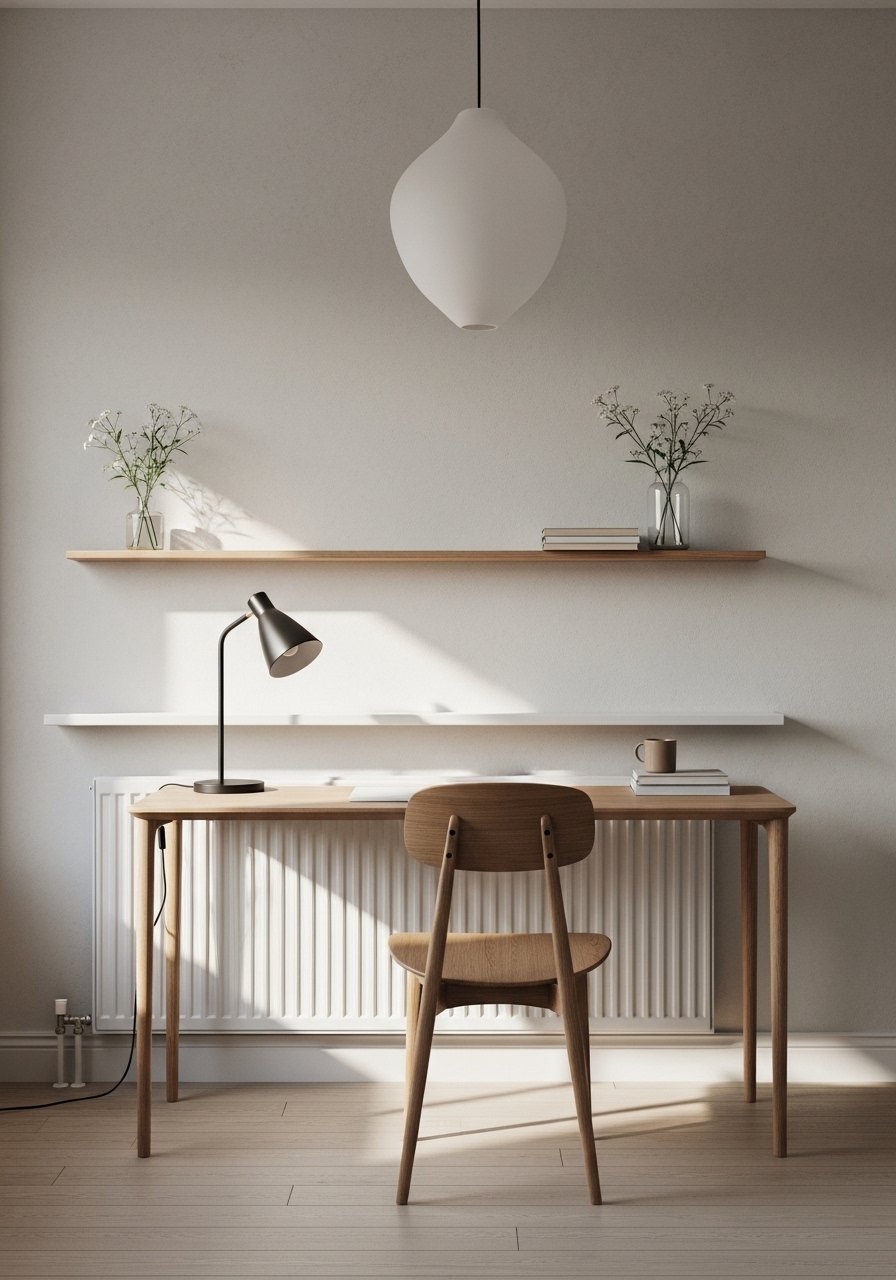
If your only wall is a radiator or low heater, use a thin shelf desk that sits just above the radiator fins, leaving 3 to 4 inches clearance for airflow. A simple board mounted at 28 to 30 inches high becomes a full workstation without blocking heat. This is a smart renter-friendly option where the room layout feels impossible. Use heat-resistant materials and check for any wall restrictions.
Mistake to Avoid: Mounting the desktop flush against the radiator and blocking heat.
10. Vertical File Rack On the Inside of a Closet Door
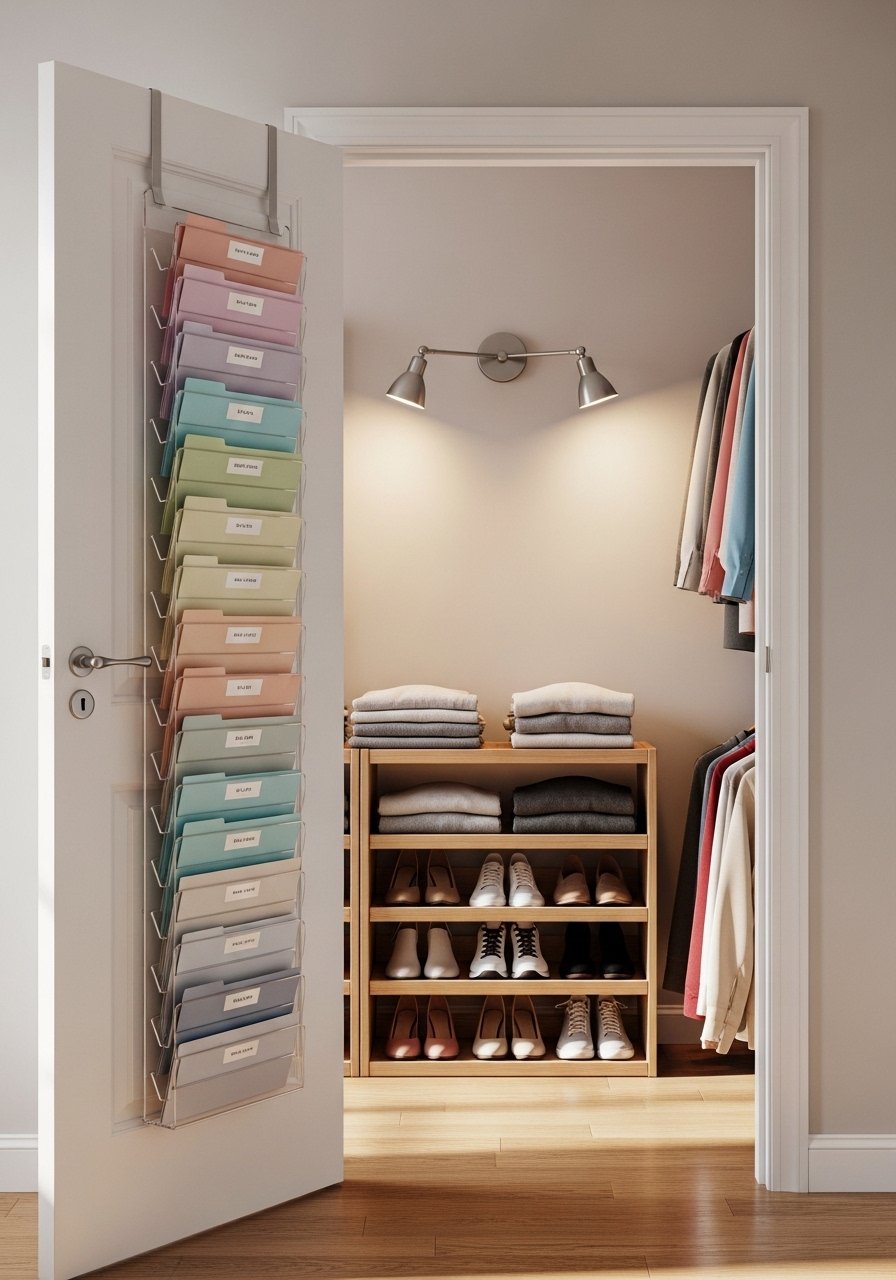
Installing a vertical hanging file rack on the closet door frees drawer space and keeps active files at eye level. Choose a rack that is less than 10 inches deep so the door closes easily. It is perfect for teachers, contractors, and anyone with ongoing projects. Pair it with labeled folders and a small clipboard on the door for current tasks.
Mistake to Avoid: Using a rack that prevents the door from closing fully.
11. Magnetic Vertical Board For Small Tools
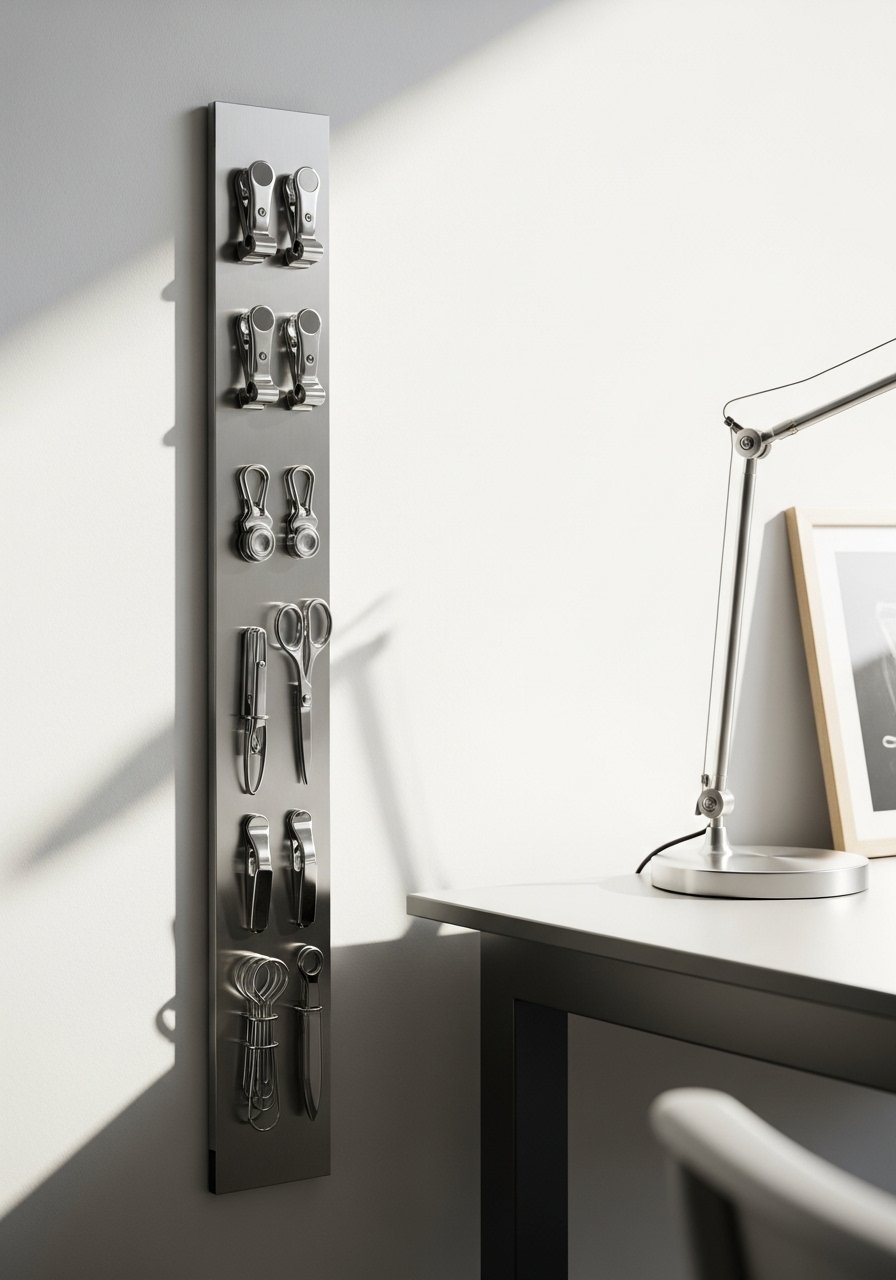
A tall magnetic board uses vertical real estate for scissors, clips, and metal pen cups. Place it at arm height so you can reach items without standing. It is visually lighter than a cubby unit and helps keep the desktop clear. I prefer matte finishes to avoid glare on video calls. This is a very low-cost upgrade and friendly to renters when mounted with removable strips rated for your wall type.
Mistake to Avoid: Loading the board so it sags or peels away from the wall.
12. Thin Desk With Pull-Out Keyboard Shelf
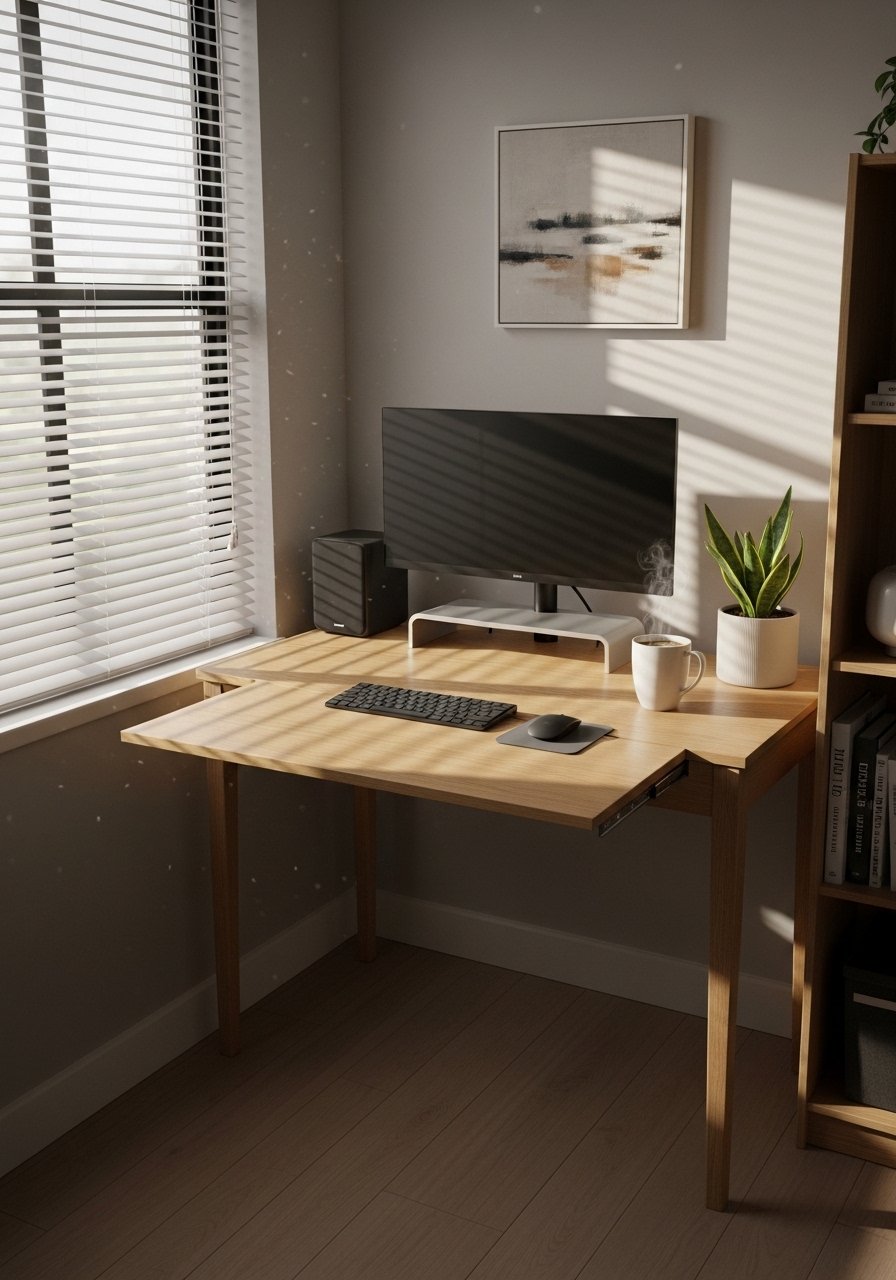
A slim desk with a pull-out keyboard shelf lets you push the keyboard away when not typing and use the top for sketching or small tasks. Aim for a tray that is at least 10 inches deep and locks when extended. It reduces desktop crowding and helps maintain an ergonomic wrist angle. This fits creatives who switch between mouse work and paper layouts.
Mistake to Avoid: Ignoring how the tray height aligns with your chair, causing wrist strain.
13. Foldable Wall-Mounted Printer Shelf
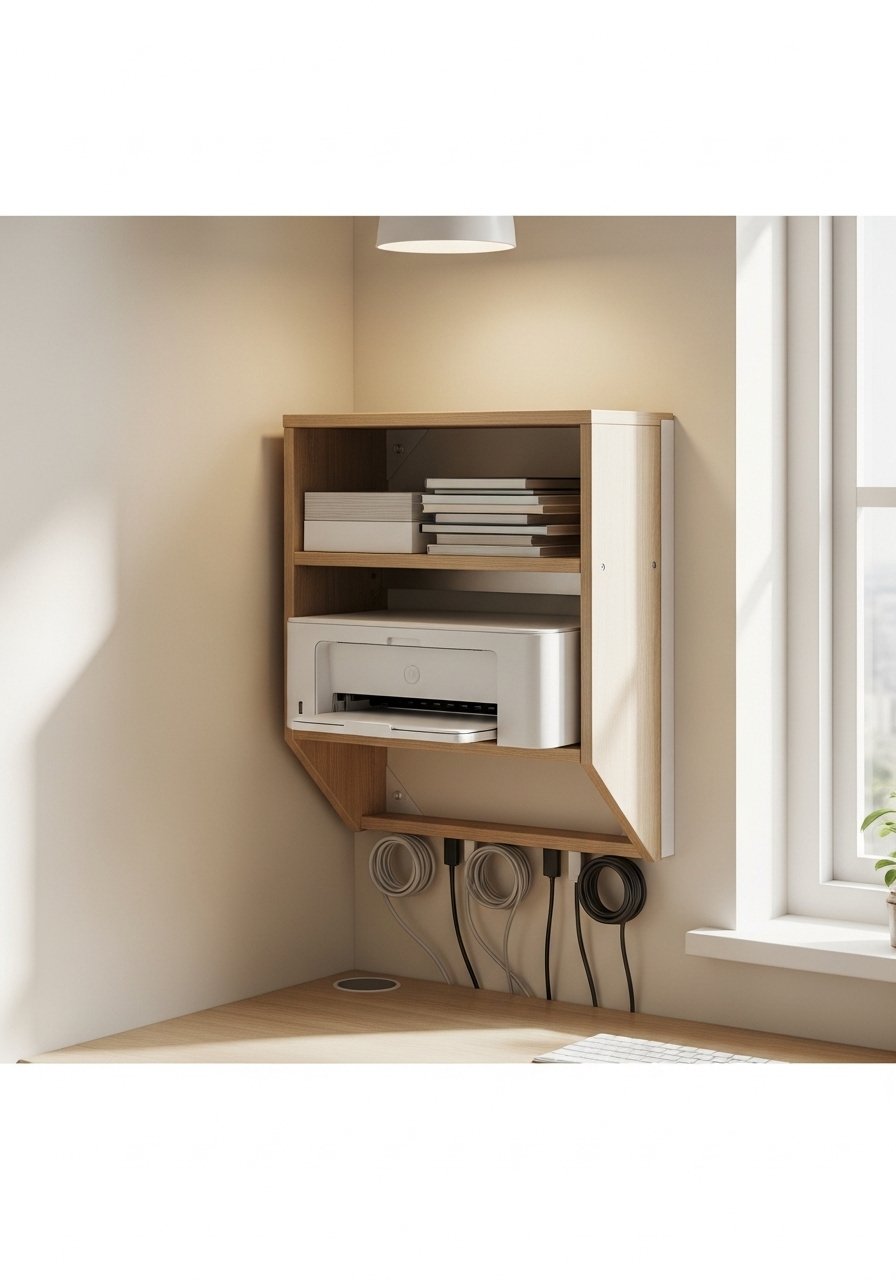
Instead of a floor printer stand, mount a small foldable shelf at chest level. When the printer is in use, flip the shelf down. When it is idle, fold it up to free the floor. Keep the shelf depth to 12 inches so paper does not overhang. This is perfect for people who only print occasionally but need the machine accessible.
Mistake to Avoid: Mounting the shelf too high so you cannot reach the paper tray.
14. Corner Floating Desk That Uses Otherwise Dead Space
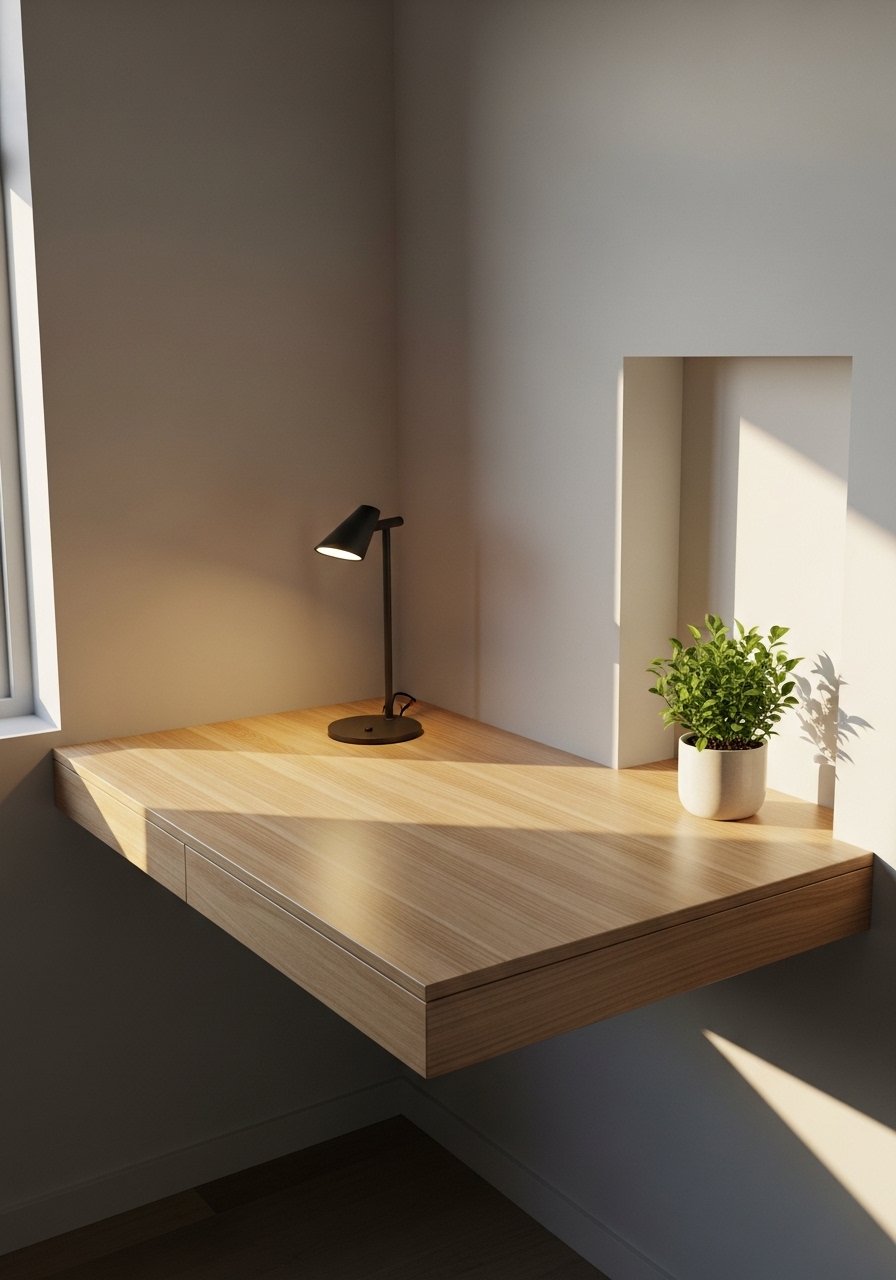
Corners often go unused. A corner floating desk with a 20 inch depth on each side makes a surprisingly roomy work surface while leaving the center floor open. This arrangement feels built-in and gives you two work planes for dual monitors or sewing and laptop tasks. It is a good fit for people who need a dedicated spot without a freestanding desk.
Mistake to Avoid: Making the corner desk too deep so it cuts off walkways.
15. Slim Standing Shelf That Doubles as a Desk
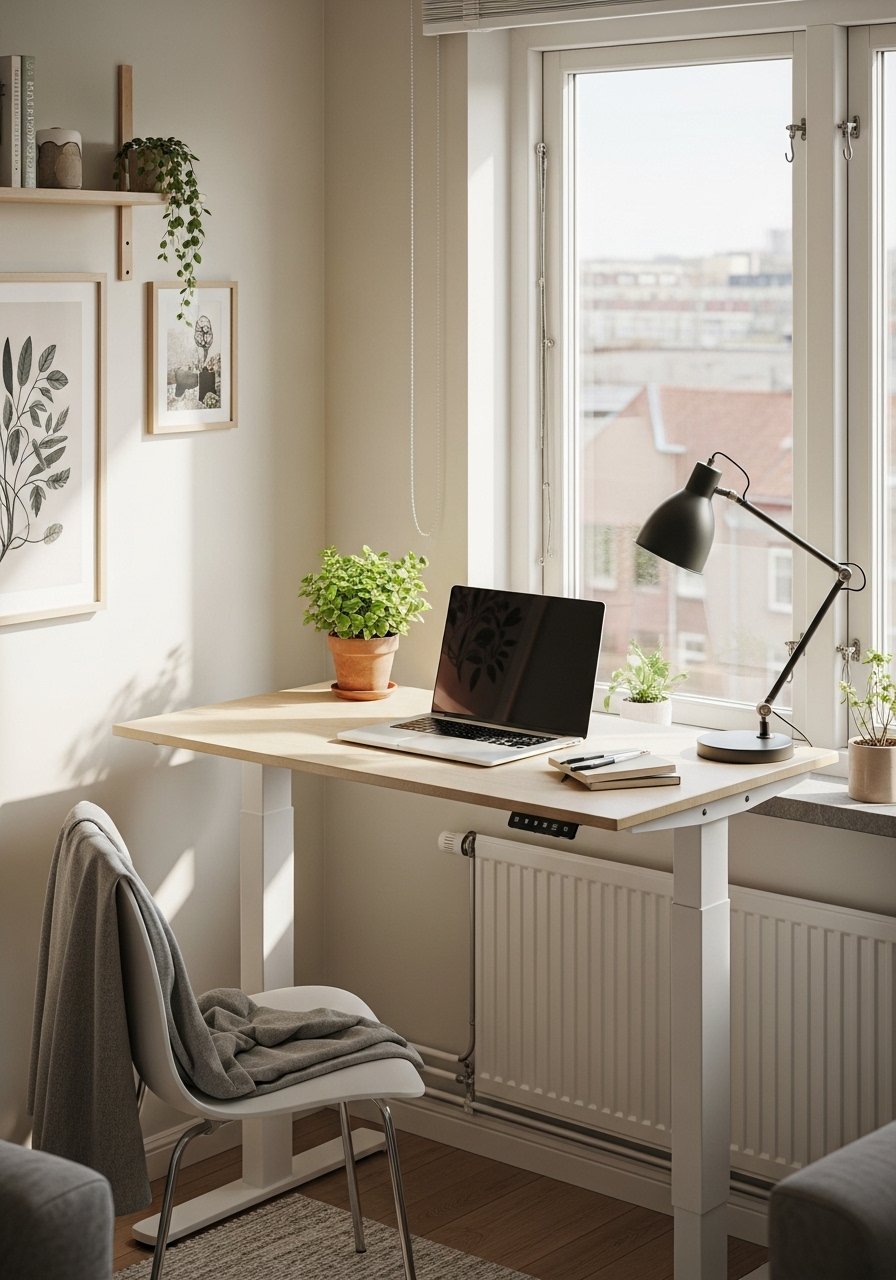
A tall slim shelf can become a standing station by using the top shelf as a desktop at roughly 40 inches high. Keep the footprint under 12 inches so it does not dominate the room. It gives you an alternate posture option and works for quick tasks or calls. This is a low-cost way to add standing without a full desk.
Mistake to Avoid: Standing at a shelf that is either too high or too low for your height, causing strain.
Tiny Office Tricks To Keep Using
Rotate your chair position. Swap where you face during the day. A compact swivel chair makes small corners feel less claustrophobic and lets you use two light sources.
Thin coats beat one thick coat every time. Three thin layers of quick-dry desk varnish look smoother and take less time to cure than one heavy coat if you are refinishing a tabletop.
Buy a multi-outlet flat power strip for under-desk mounting, not a bulky cube. It tucks cables up and keeps plugs easy to reach.
Most people buy extra small storage boxes. One oversized document tray anchored to a shelf handles multiple project files more cleanly than five tiny boxes.