
I almost threw out a thrifted lamp because the shade was misshapen, then I swapped the shade, added a 2700K bulb, and suddenly the whole couch looked like a hug. That tiny, specific change taught me how small edits create a warm room without buying everything new.
This list is for people who want a warm, lived-in home without a contractor or a big budget. Most ideas are renter friendly, simple to try in under an afternoon, and work in small apartments as well as houses. I wrote these after trying most of them in three rentals. Expect inexpensive swaps, one or two tool purchases, and a few things that take an afternoon and then last for years.
1. Swap To 2700K Bulbs For Softer Light

Changing bulb temperature is the fastest room-level move I make. A 2700K LED bulb reads warm to the eye and hides cool daylight tones in photos and reality. Use a dimmable 8 to 10 watt LED where possible for layered light control. It fits every style, and it costs under $10 a bulb, so it is low risk. Pair with a linen shade to diffuse light. I link my go-to bulbs and a simple linen shade that slips over most lamp frames.
Mistake to Avoid: Buying high-lumen daylight bulbs and hoping a lampshade will make them warm.
2. Layer Rugs, Not Replace Them

Layering an under-rug with a smaller, softer rug gives depth and immediacy. Aim for a 60/40 balance where the top rug covers about 60 percent of the underlayer in seating areas. In a small living room this means placing the top rug so sofa front legs rest on it. It reads intentional and cozy. I use a thin rug pad under both to avoid slip and add plush. This is cheap, renter friendly, and fast to experiment with using thrifted pieces or an affordable wool runner.
Mistake to Avoid: Choosing rugs with identical textures so layers read flat instead of rich.
3. Create a Candle Cluster With Varying Heights
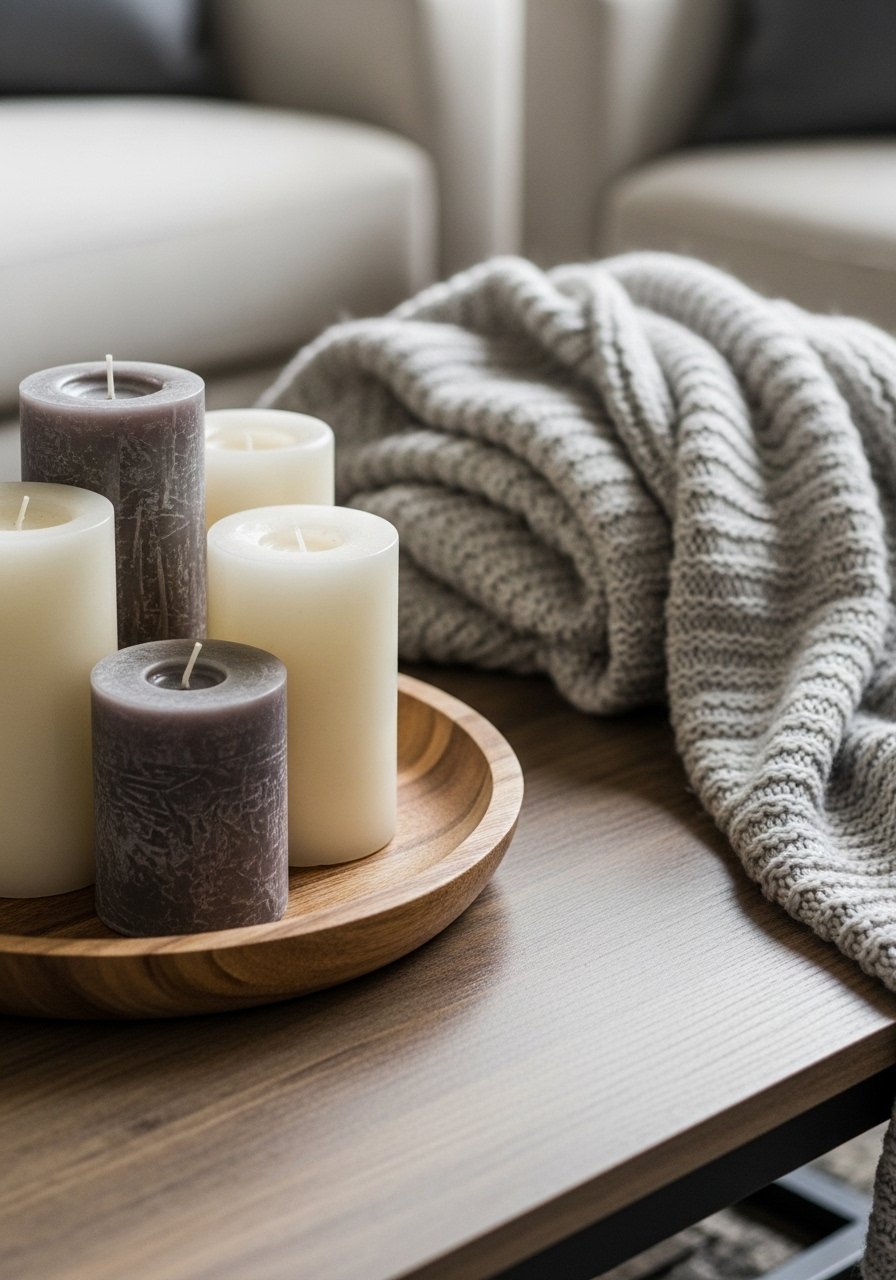
There is a reason candle clusters look warm in photos and warmer in person. Mix heights and one or two scented pillars with unscented to control fragrance. Use a metal or ceramic tray to catch wax and protect surfaces. Keep cluster size to about three to seven candles, depending on table size, and stagger heights by at least 2 inches for visual rhythm. This works in any style and is low cost. For safety, never leave candles unattended and keep kids and pets away.
Mistake to Avoid: Spacing candles evenly so they lose the cozy, accidental look.
4. Thrifted Art Grouped Like a Mini Gallery
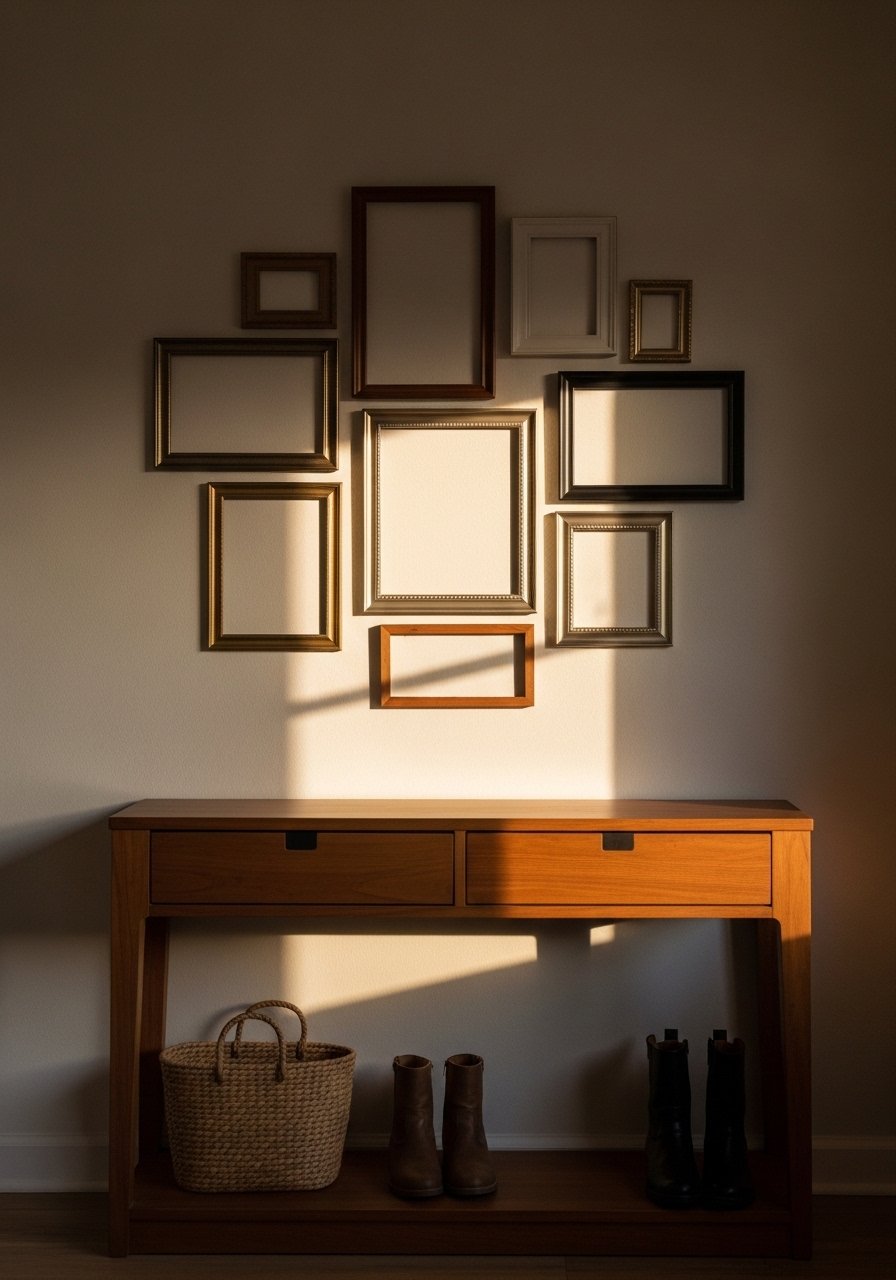
Putting small, inexpensive frames together creates scale and warmth without a single expensive piece. Arrange frames so the total group width equals about two thirds of the furniture below it. My rule of thumb is 3 to 5 pieces for a small console and 5 to 9 for a sofa. Use a consistent mat or repeat one frame color to tie the group visually. Hanging wire at eye level and using craft paper templates cut to frame sizes makes the process quick and renter friendly.
Mistake to Avoid: Hanging pieces too high so the group floats disconnected from the furniture.
5. Swap Hard Curtains For Lined Sheers

I used to think heavy curtains were the only route to cozy, then I tried light linen sheers with an attached thermal lining. You get the soft diffusion of sheers and the insulation of a heavier curtain without the visual weight. For small windows, choose lined panels that hang about 4 to 6 inches above the window frame for a grounded look. This choice is medium skill, a drill for tension rods optional, and saves energy while keeping a soft aesthetic.
Mistake to Avoid: Buying sheer panels without a lining and expecting them to reduce drafts.
6. Make a Reading Corner With One Oversized Floor Cushion

One oversized floor cushion anchors a cozy corner better than several small throw pillows. Aim for a cushion about 36 inches across to allow leaning and a small lap table. Add a weighted blanket and a lamp with 2700K light like idea 1. This setup is budget friendly, easy to move for renters, and perfect for small spaces. I use a removable cover on the cushion so it is washable and pet friendly.
Mistake to Avoid: Buying multiple small pillows that keep sliding off each other on the floor.
7. Swap Cold Metals For Warm Finishes
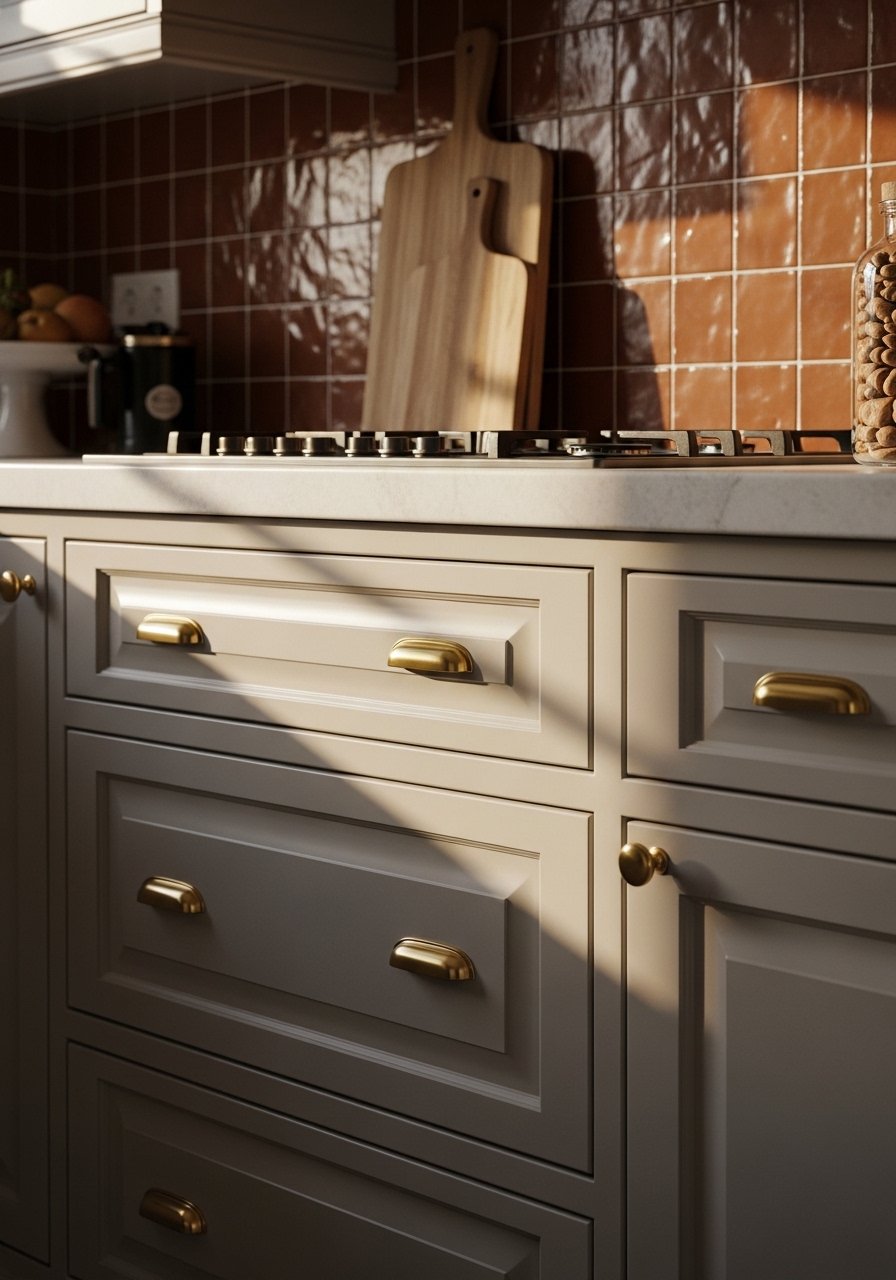
Brass or aged bronze hardware instantly warms a room. If a full upgrade is not possible, swap knobs and pulls on a few focal pieces like a dresser or cabinet. Use a staggered approach, changing high-impact pieces first. Hardware is an intermediate weekend project and usually under $10 per pull. Pair warm metal with wood tones and textured textiles for an added lived-in feel.
Mistake to Avoid: Replacing every knob at once and ending up with mixed finishes that compete.
If you want to recreate any of these corners fast, here are the pieces I actually reach for.
Warm-Feeling Decor Buys
Textiles & Pillows:
- plaid cotton throw (~$25-40), soft, machine washable for easy seasonal swaps
- oversized floor cushion (~$60-90), removable cover recommended
- velvet pillow covers (~$12 each), deep colors feel warm instantly
Lighting:
- warm LED bulbs 2700K (~$8-15 for a pack), dimmable when possible
- linen lamp shade (~$20-40), diffuses light nicely
Rugs & Padding:
- thin rug pad (~$15-30), prevents slip for layered rugs
- wool accent rug (~$80-150), small patterned top layer for warmth
Accessories:
- ceramic serving tray (~$25-45) for candle clusters and vignettes
- brass cabinet knobs (~$8-20 each), swap one or two to test the look
8. Use Thermal Liners Behind Curtains

Thermal liners behind curtains add warmth and reduce cold spots without changing your curtain style. Measure the panel drop so the liner hangs at the same length for a seamless look. Thermal liners are renter friendly because they attach to the rod, not the wall. The cost is modest and the energy savings show over winter. Install takes about 30 to 45 minutes for a standard window. I pair liners with light-blocking sheers in rooms where I sleep.
Mistake to Avoid: Hanging liners shorter than the visible curtain so they look like an afterthought.
9. Add a Low Shelf With Books and a Plant

Low shelving creates a cozy baseline in a room by keeping focus at seating level. Aim for a shelf height 12 to 18 inches above the floor in small rooms so it reads like a stage for objects. Curate three to five objects with varying heights and textures. This is renter friendly when using picture ledges rather than built-in shelving. For pets, choose heavier pots or add adhesive pads to avoid tipping.
Mistake to Avoid: Overfilling the shelf so nothing reads and everything looks cluttered.
10. Use Woven Basket Storage As Decoration

Woven baskets hide clutter and add texture. Use a scale rule of one large basket per seating area or two medium baskets for a console. Baskets are an easy swap for unattractive bins and are budget friendly. Keep one basket per week for laundry or toys in homes with kids to control visual noise. Natural materials age well and patina over time, which feels warmer than new synthetic bins.
Mistake to Avoid: Picking baskets that are too small for the intended storage, forcing overflow.
11. Install Peel-and-Stick Fabric Panels Behind a Sofa

Peel-and-stick fabric panels are one of the tricks most design posts skip. They give the look of upholstery or a soft headboard without nails and they are removable for renters. Cut panels to cover a 24 to 36 inch height band behind seating to create a visual backrest. Adhesive quality varies so test a corner before committing. This is an intermediate weekend project and makes photos and real life feel cozier.
Mistake to Avoid: Applying panels directly to textured walls without priming or testing adhesion.
12. Bring Height With a Plant Stand Cluster
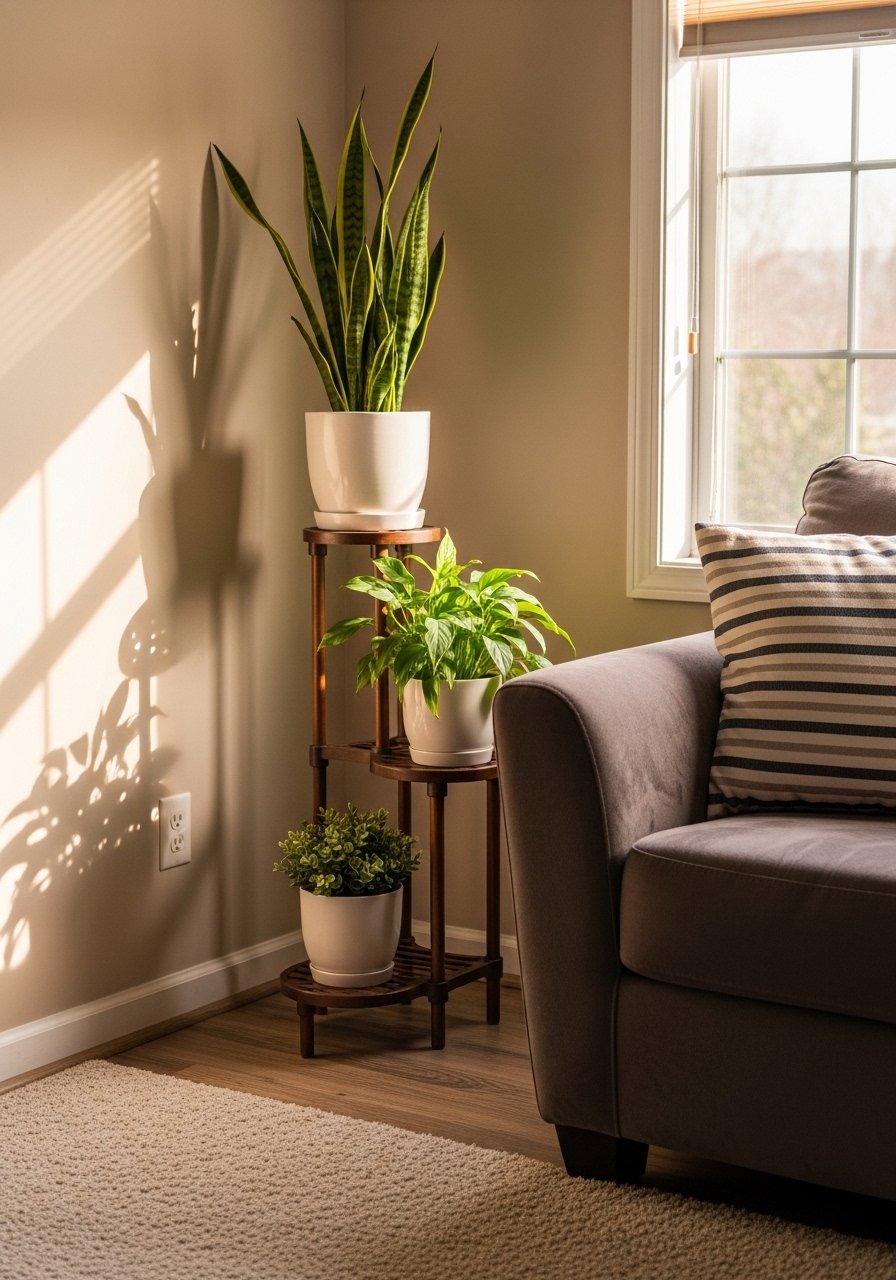
Grouping plants at varying heights creates depth and a lived-in mood. Use a tall plant on the floor, a mid-height on a stand, and a small one on a side table. Keep watering needs compatible so maintenance is simple. For small apartments, pick space-friendly stands that lift greenery without crowding. Plants soften hard edges and make a room feel inhabited in a warm way.
Mistake to Avoid: Placing all plants at the same height so they read like clutter instead of layered elements.
13. Swap One Accent Chair For A Curved Silhouette
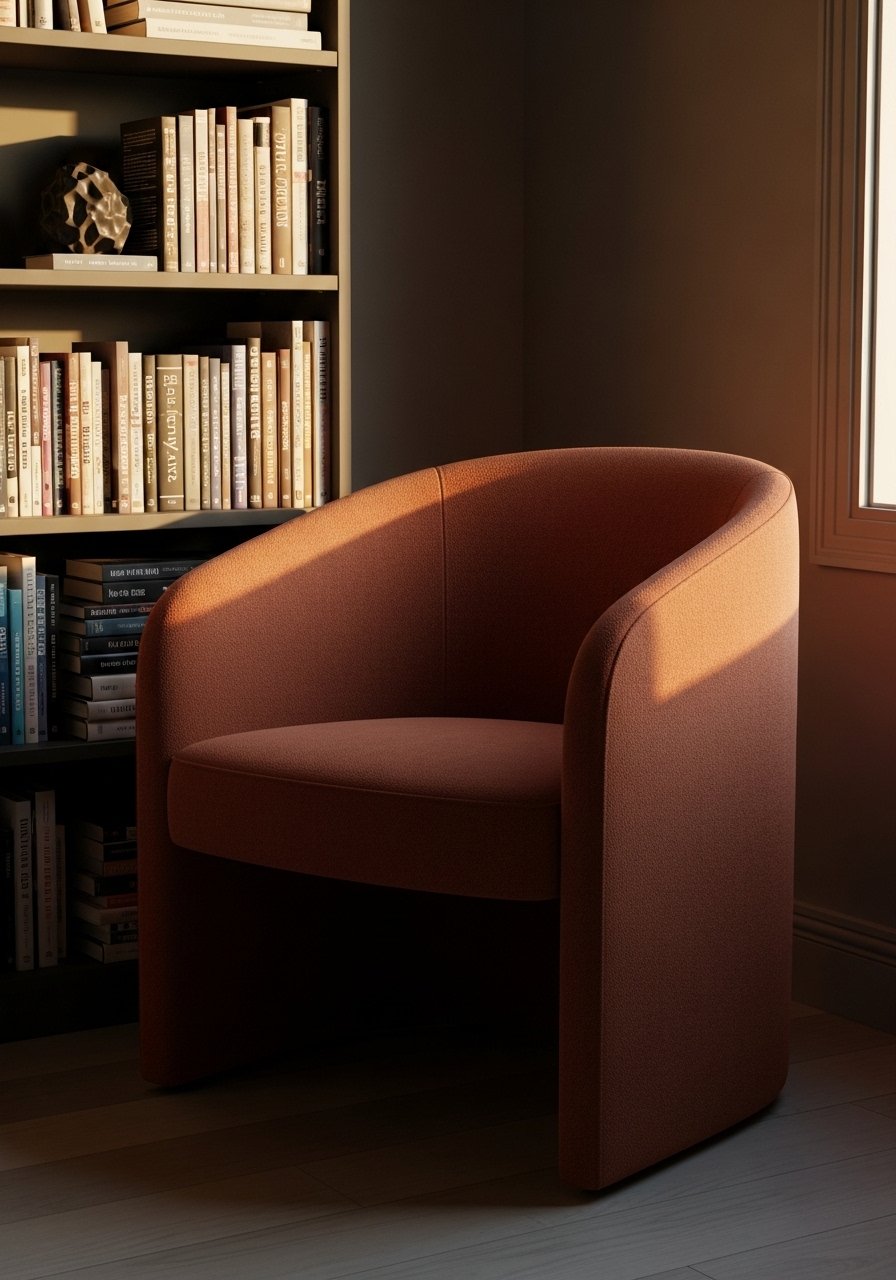
A curved chair breaks the boxy feel of sofas and makes a seating area feel more inviting. If you are pairing with a sofa, choose a chair about two thirds the sofa seat height to keep scale. Curved silhouettes read cozy in photos and in real life. Budget options include secondhand stores or slipcovered finds. This idea is medium budget and moderate skill for sourcing or reupholstery.
Mistake to Avoid: Choosing a chair that is too large for the floor plan and blocks pathways.
14. Build A Mantel Vignette With Odd Numbers

Mantel styling benefits from odd-number groupings and scale contrast. Place one taller item, one medium, and one small. Keep the total group width to about 60 to 70 percent of the mantel length. Swap seasonal items into the smallest spot to refresh the look without overhauling the whole mantel. This takes minimal time and offers a big visual payoff in a focal room.
Mistake to Avoid: Centering every object which makes the mantel read formal instead of relaxed.
15. Use A Tray To Anchor Coffee Table Collections
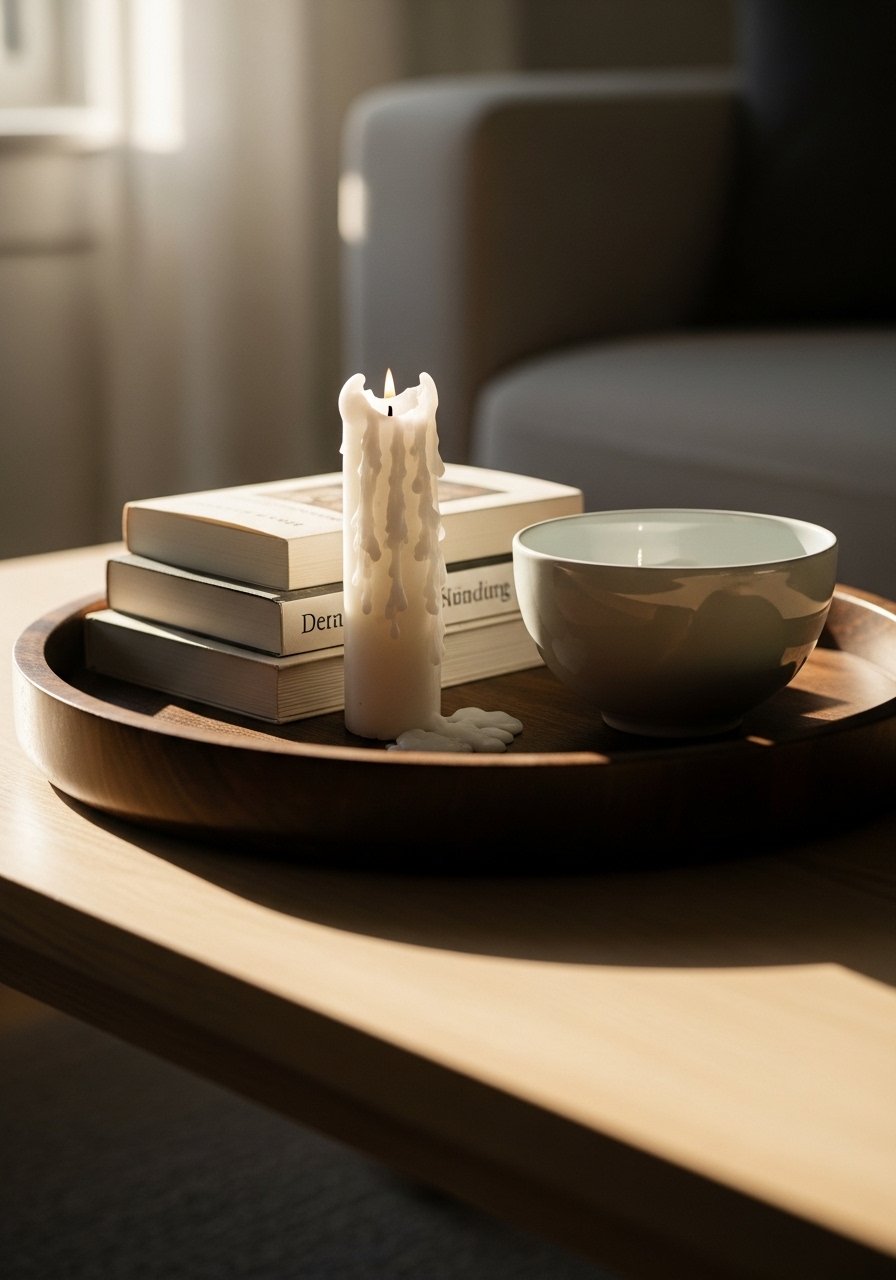
A tray corrals a collection and makes it feel deliberate rather than scattered. Choose a tray that leaves a 2 to 3 inch margin from the table edge for breathing room. I like wood or matte ceramic finishes because they show wear like a lived-in home. Trays are low cost and let you rotate items seasonally for fresh warmth without buying more things.
Mistake to Avoid: Using a tray that is larger than the table, which overwhelms the surface.
Small Buys That Make Big Rooms Warmer
Layering Textiles:
- wool throw blanket (~$40-80), adds texture and holds heat
- linen pillow covers (~$15 each), neutral base for seasonal color
Lighting Essentials:
- dimmable LED bulbs (~$10-20), switch to 2700K for warmth
- wax pillar candles (~$10-25), unscented and scented mixes work well
Practical Pieces:
- peel-and-stick fabric panels (~$30-70), renter friendly wall warmth
- wicker storage basket (~$25-50), hides clutter and adds texture
- small plant stand (~$20-45), lifts greenery for depth
Everyday Cozy Habits
Rotate textiles seasonally for immediate change. Swap velvet pillow covers for linen in summer and the room feels different without buying a new sofa.
Grab a few warm LED bulbs and replace main lamps first. A quick swap in living and bedroom lamps shifts the whole apartment into a cozier register.
Keep one ceramic tray on the coffee table to corral remotes and a candle. It makes tidying a 30-second habit and the surface reads intentional.
Every evening, light one or two safe candles instead of overheads. Use pillar candles on a tray to add warmth and quiet in five minutes.
Swap one hardware piece at a time to test finish changes. Start with brass cabinet knobs on a high-visibility piece and live with it for a week before committing.