
I kept trying to squeeze a normal dining table into a tiny corner, buying slim chairs and tiny placemats, and every meal felt like a stage set that collapsed by dessert. The moment I stopped forcing a full-size setup and started choosing pieces that fold, tuck, or do double duty, the room started to feel like a real place to live and eat.
After trying this in three rentals, these ideas are meant for people who need practical changes fast, not a full remodel. Expect budget picks and renter-friendly swaps that take under an hour or require basic tools. Most ideas are under $250, a few under $75, and none need advanced carpentry. If you want calm, functional dining in 80 to 200 square feet, these are what actually stick.
1. Narrow Drop-Leaf Table
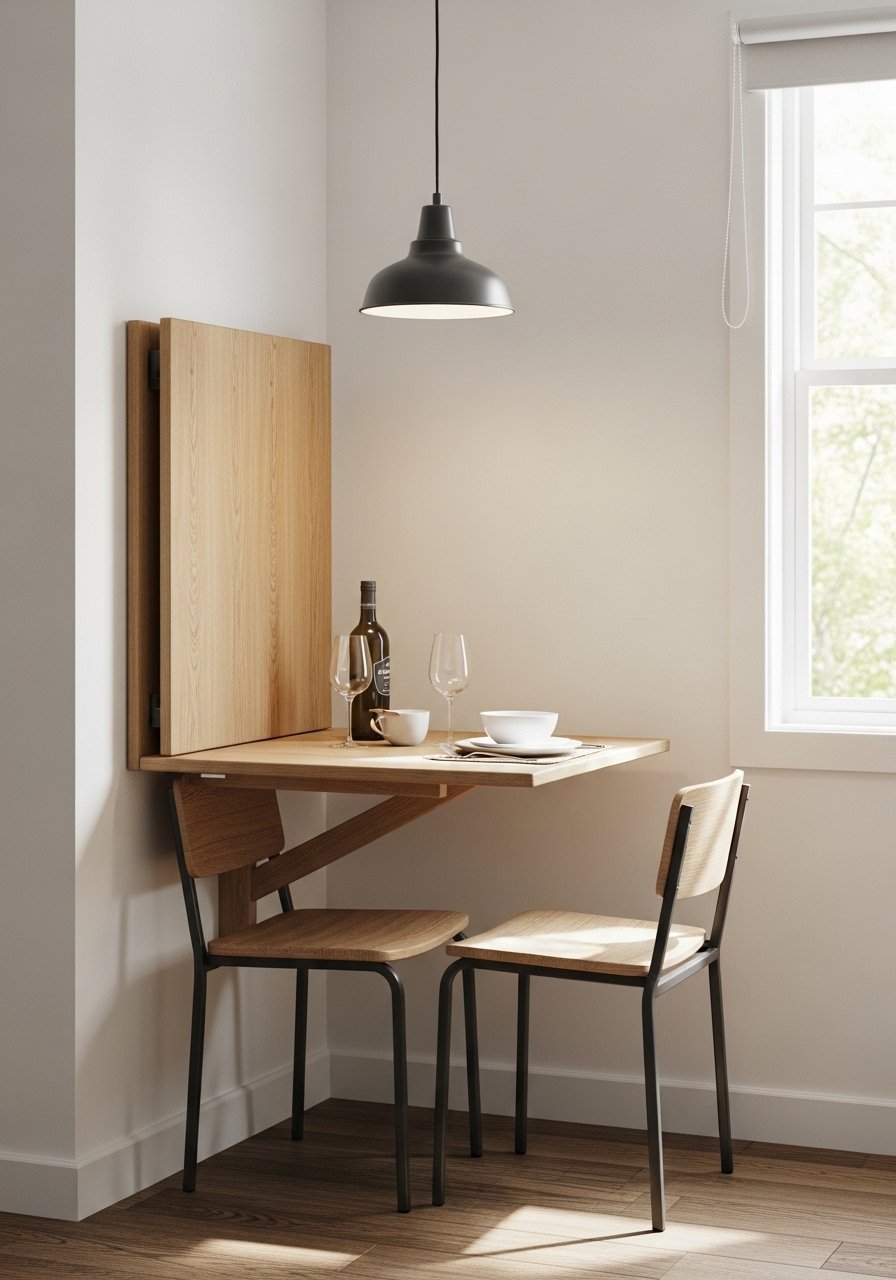
A drop-leaf table buys you a real surface when you need it and tucks away the rest. Look for one with a 12 to 14 inch folded depth and a 36 inch open width for two to four people. Visually it reads lighter than a full table because the legs create negative space, which matters in photos and reality. I use a narrow drop-leaf table as the workhorse, and a pair of stackable cafe chairs that slide under the leaves. Assembly is usually straightforward, and a single person can mount the leaves in under 20 minutes.
Mistake to Avoid: Buying a drop-leaf whose extended width leaves less than 24 inches behind chairs for walkers and doors.
2. Built-In Bench With Underseat Storage
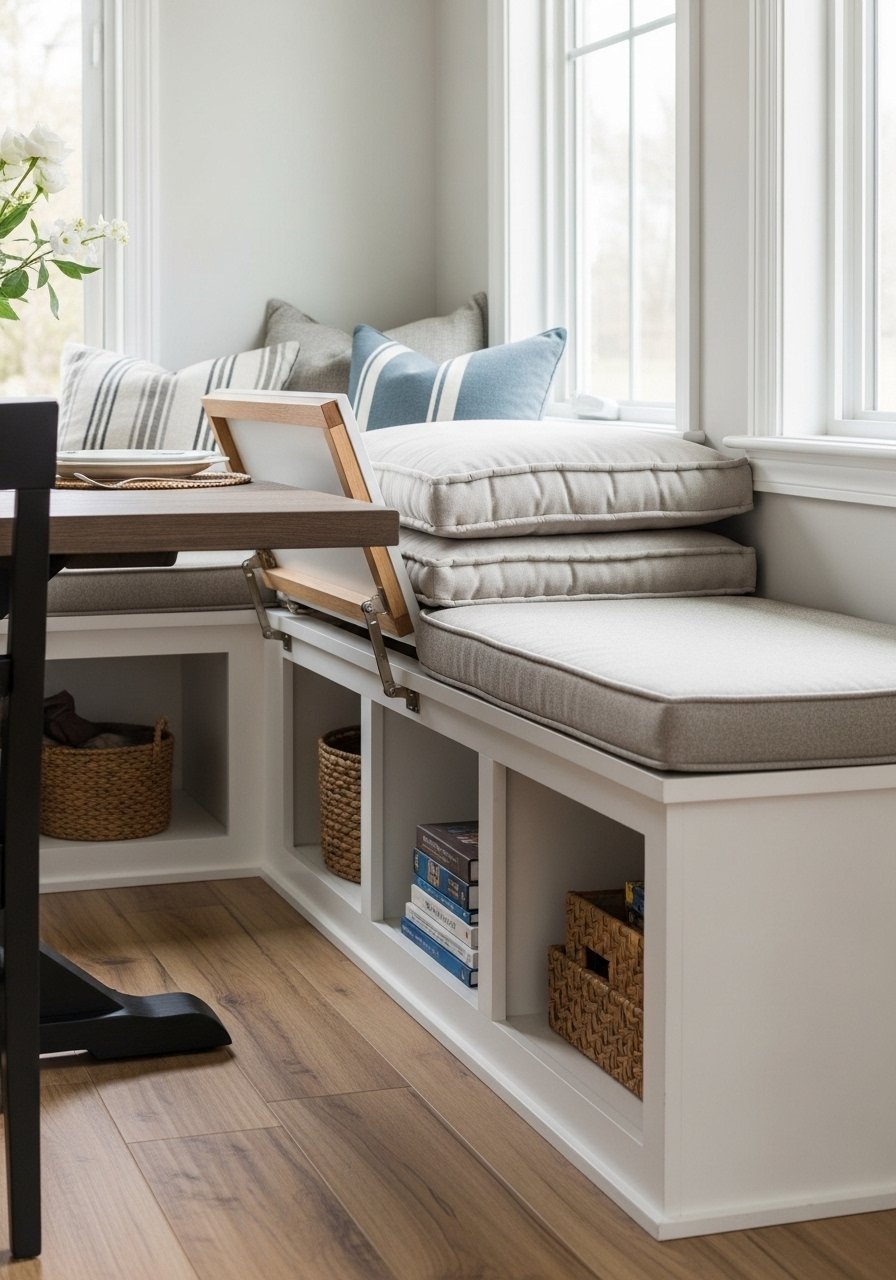
A bench against the wall replaces three chairs and gives storage for linens or seasonal dishware. Aim for a seat depth of 16 to 18 inches so it does not crowd the walkway, and a standard seat height of 18 inches for most chairs and tables. I installed a simple plywood box with lift hinges and finished it with a linen bench cushion for comfort. Bench storage works especially well in rentals because it is reversible. The visual payoff is a continuous horizontal line that makes the room read wider, not busier.
Mistake to Avoid: Making the bench too deep so it blocks a 30 inch clearance path needed behind seated diners.
3. Wall-Mounted Fold-Down Table
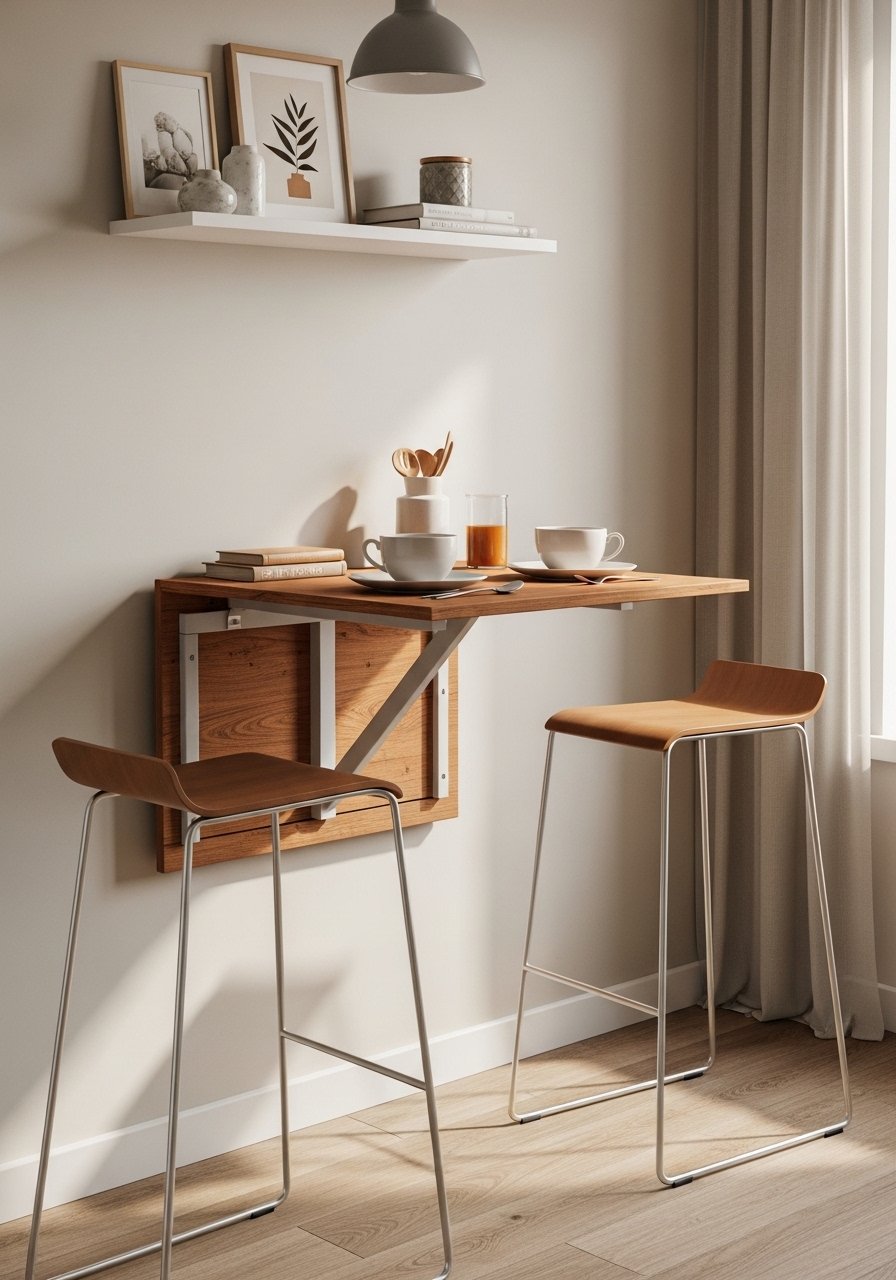
If you need counter space and table space but not both at once, a wall-mounted fold-down table is a game saver. Pick one with a closed depth of 6 to 8 inches and a working depth of 28 to 30 inches when open. Anchor the bracket to studs and use steel hinges rated for at least 100 pounds. I screwed a fold-down wall table into studs and paired it with slim backless stools. It reads clean in photos because the legs vanish when folded. Install takes about 45 minutes with a drill and stud finder.
Mistake to Avoid: Mounting the top on drywall alone and expecting it to hold regular dinner service.
4. Round Pedestal Table for Better Flow
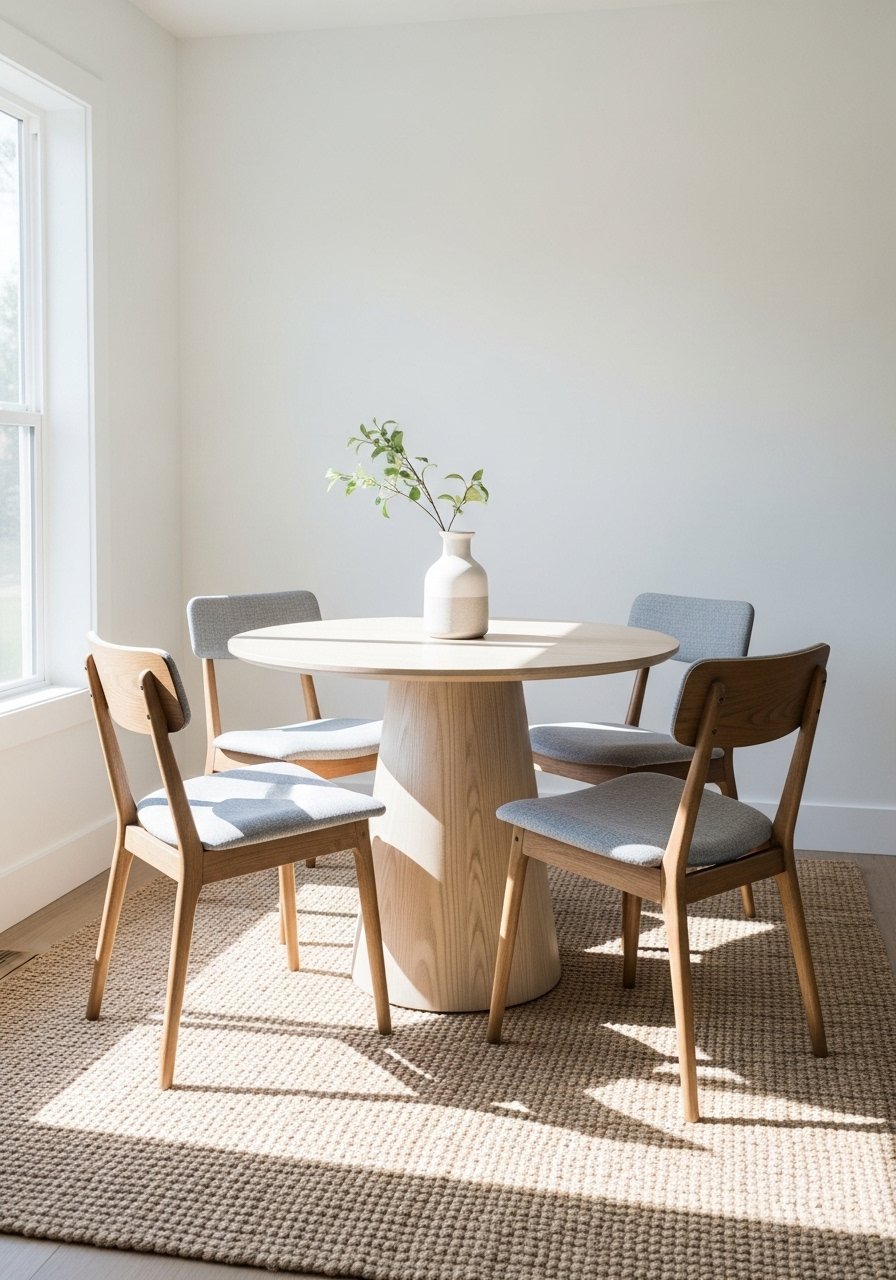
A round table removes corner bulk and improves circulation around seats. For tight spaces choose a 30 to 36 inch diameter so two diners have about 24 inches of elbow room each. Pedestal bases free up leg space and make a small area feel airy in photos and real life. I swapped my rectangular table for a 30-inch round pedestal table and noticed people could get in and out without scraping knees. Pair with armless chairs to keep sightlines open. This is a low-skill swap and often under $200 for a decent version.
Mistake to Avoid: Picking a round table that is too small for dinnerware and ends up looking like an oversized side table.
5. Slim Rolling Cart as a Hidden Buffet
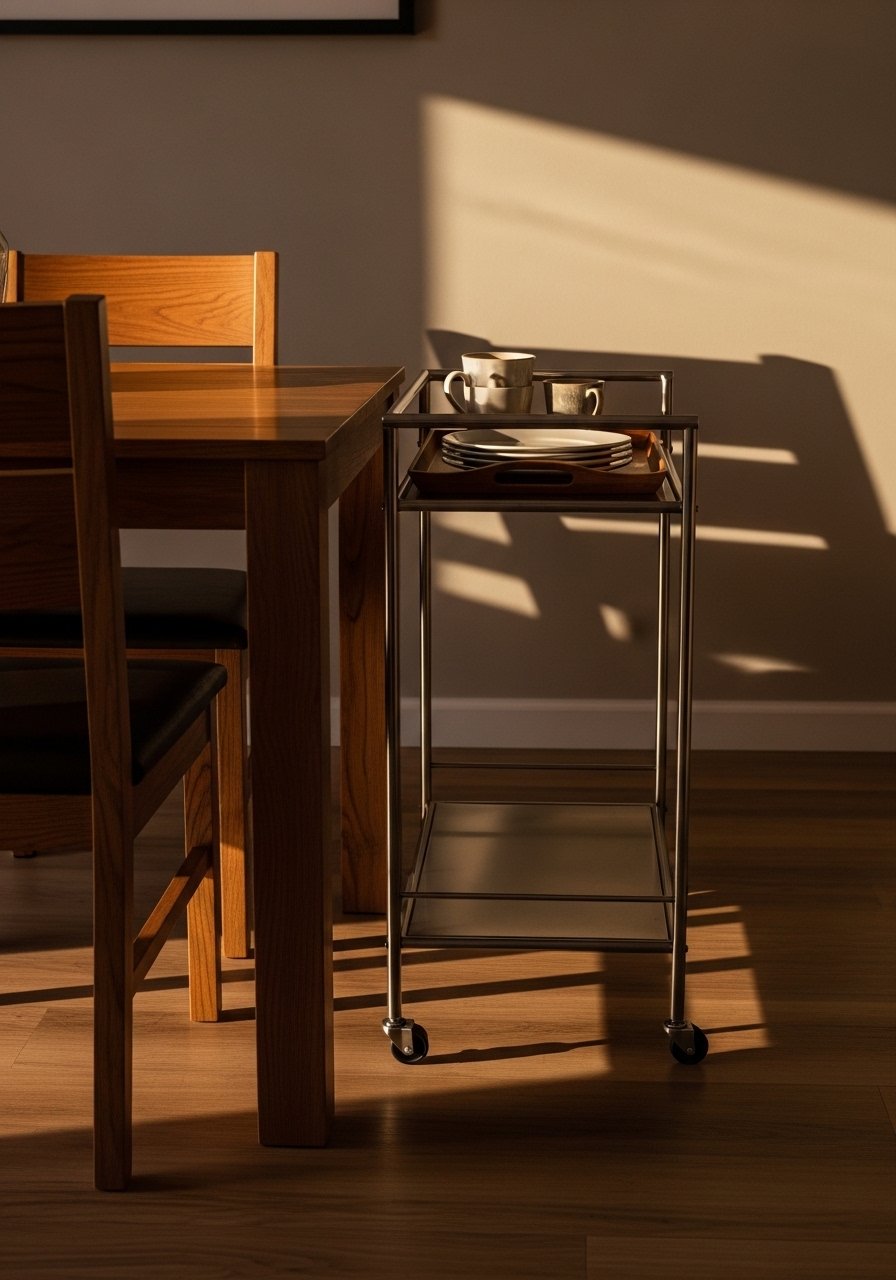
A slim rolling cart acts as a buffet, extra prep station, or drink station that you can push into a closet between meals. Choose a cart 10 to 12 inches deep with locking casters. Use the top shelf for service and the lower shelf for trays or baskets. I keep a narrow rolling cart stocked with placemats and napkins so I can pull it out moments before guests arrive. When styled with a single small plant it reads intentional instead of cluttered. This is a cheap way to add surface area without a permanent footprint.
Mistake to Avoid: Buying a cart with fixed wheels or a wide profile that blocks the walkway when pulled out.
6. Vertical Plate Rails and Peg Storage
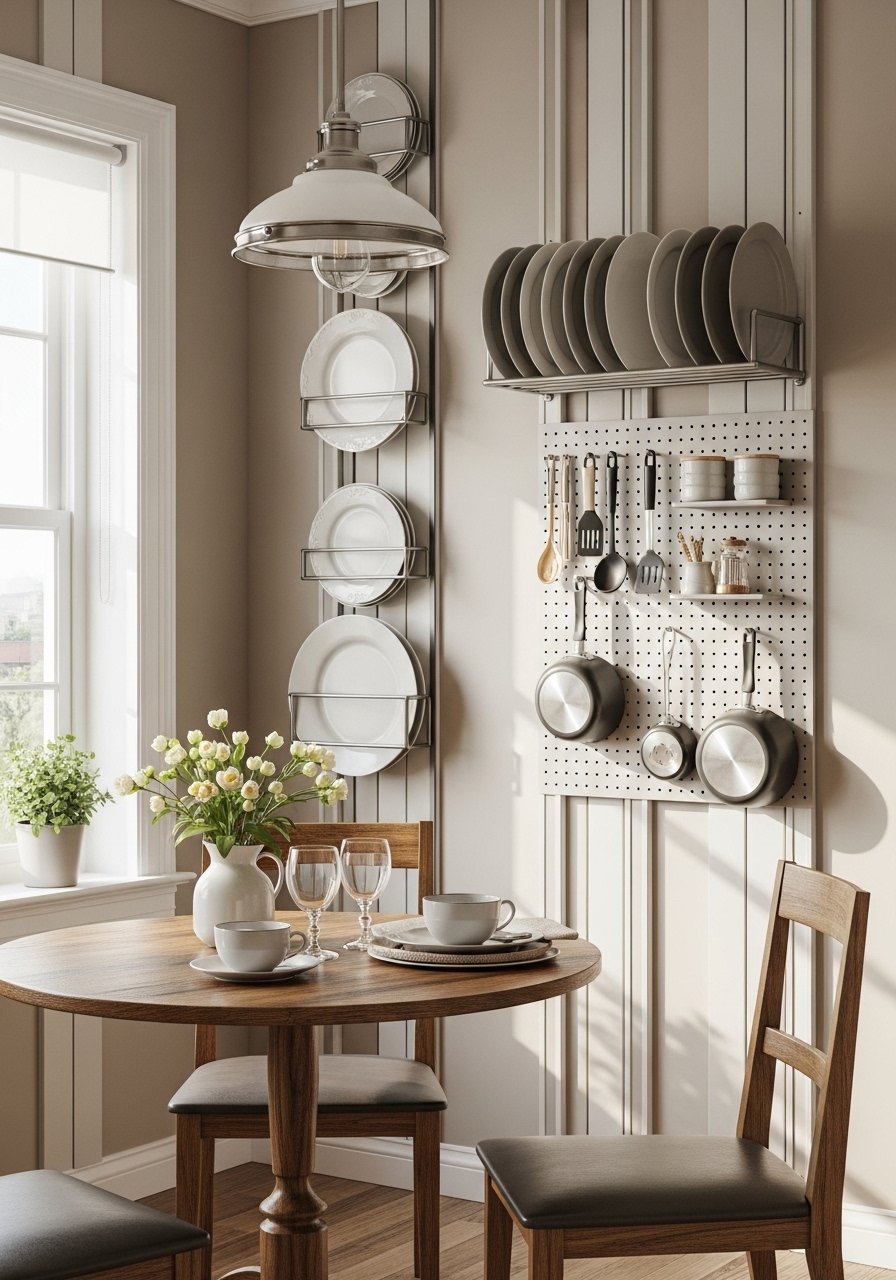
Open storage like plate rails or a small pegboard uses vertical real estate and keeps dishes accessible. Space pegs about 3 to 4 inches apart horizontally and arrange rails so plates sit at eye-level for visual balance in photos. I installed a wood plate rail and swapped out cabinet doors for a peg section that holds a few everyday pans. This cut my cabinet footprint in half and made dinner faster. It is renter-friendly if you use removable anchors for lightweight items, and it cleans up the kitchen-to-dining workflow.
Mistake to Avoid: Hanging heavy porcelain on flimsy hooks instead of using hardware rated for the weight.
7. Leaner Mirror and Slim Lighting
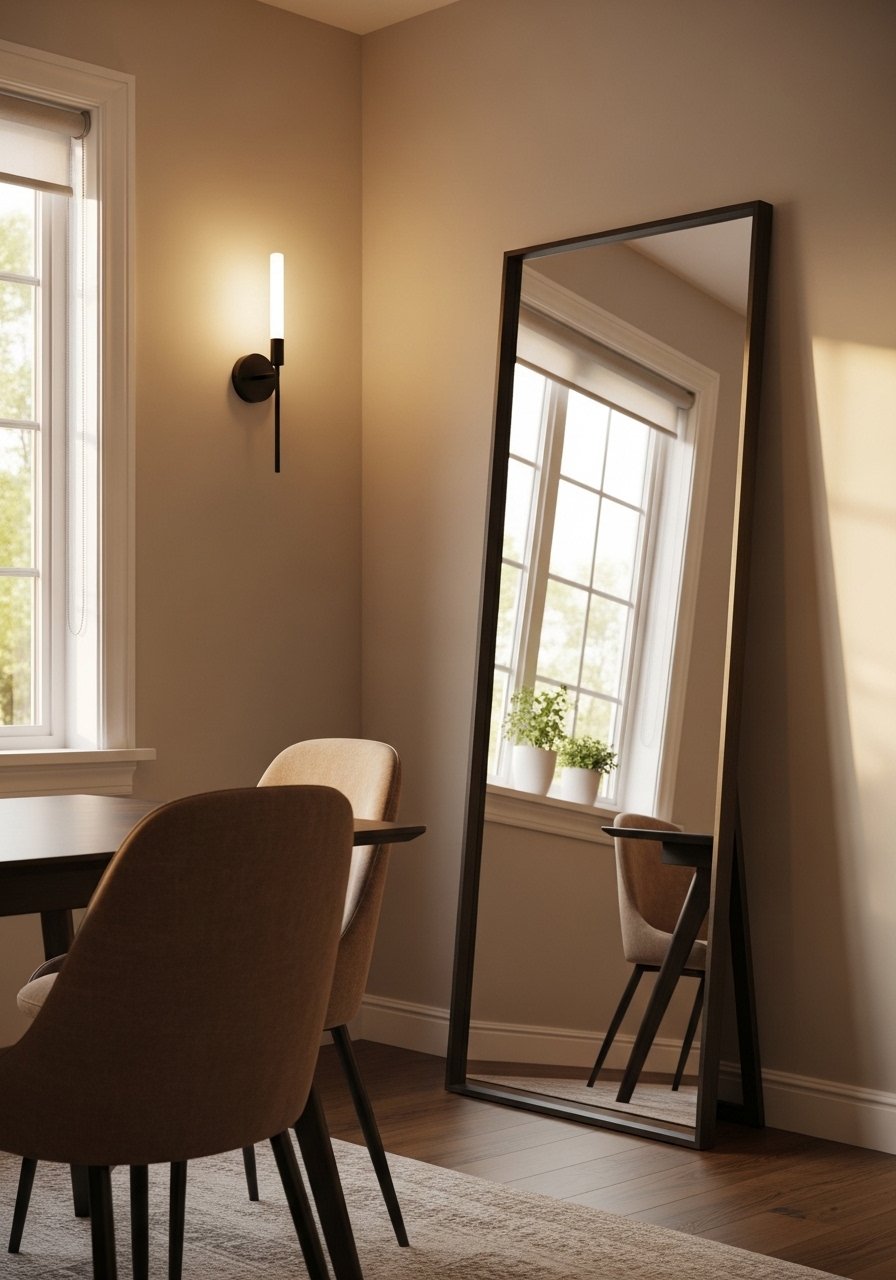
A tall mirror multiplied natural light and tricks the eye into seeing depth, especially when paired with a slim sconce. Aim for a mirror at least 60 percent of the wall height and place it opposite a light source for maximum bounce. I lean a full-length leaner mirror and installed a pair of slim plug-in sconces to avoid rewiring. In photos mirrors make the space read wider, though real life shows they also reveal clutter, so keep the focal area tidy.
Mistake to Avoid: Hanging a mirror across from a crowded shelf so the reflection doubles the mess.
If you want to outfit the small dining room now, here are the actual pieces I rely on most.
Small Dining Setup Staples
Seating & Benches:
- Linen bench cushion (~$35). Cushions make a simple bench feel finished and comfortable.
Tables & Surfaces:
- Narrow drop-leaf table (~$120-220). Compact when folded, roomy when needed.
- 30-inch round pedestal table (~$150-300).
Storage & Organization:
- Narrow rolling cart (~$60-140). Useful as serving space or storage.
- Wood plate rail (~$20-45).
Lighting & Mirrors:
- Leaner mirror (~$80-200). Picks up light and depth.
- Slim plug-in sconce (~$30-70).
8. Slim Console That Doubles As Serving Station
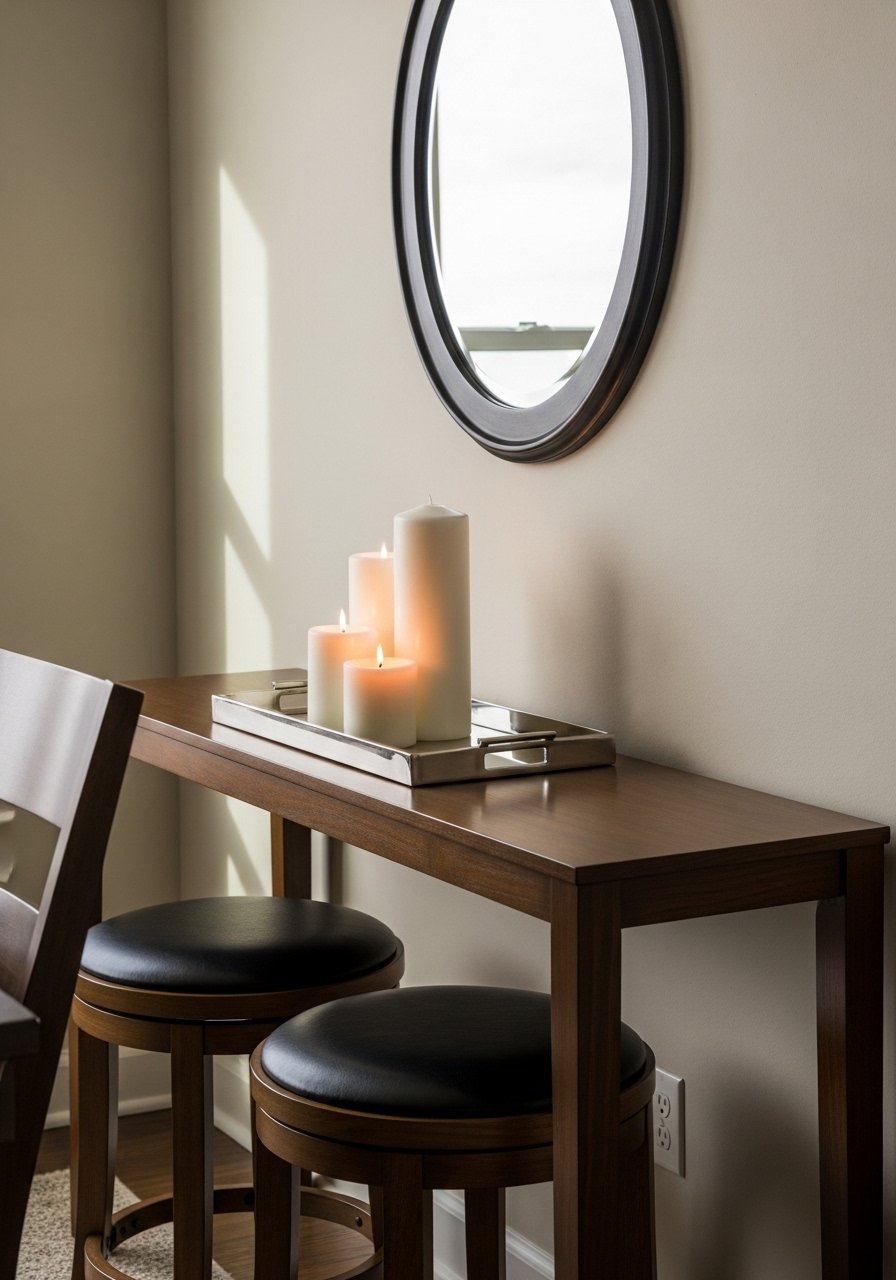
A console table with a depth of 10 to 12 inches fits behind chairs without eating into the room. Use it as a staging area for dishes, or as a coffee and drink station. I picked a narrow console table and placed a tray on top so everything looks organized in photos. The key is to style in odd numbers and keep one zone clear for serving. This is a renter-friendly piece because it is freestanding and easy to move.
Mistake to Avoid: Over-styling the top so the console becomes a clutter magnet instead of a functional surface.
9. Bench With Hidden Leaf or Lift-Top Table Trick
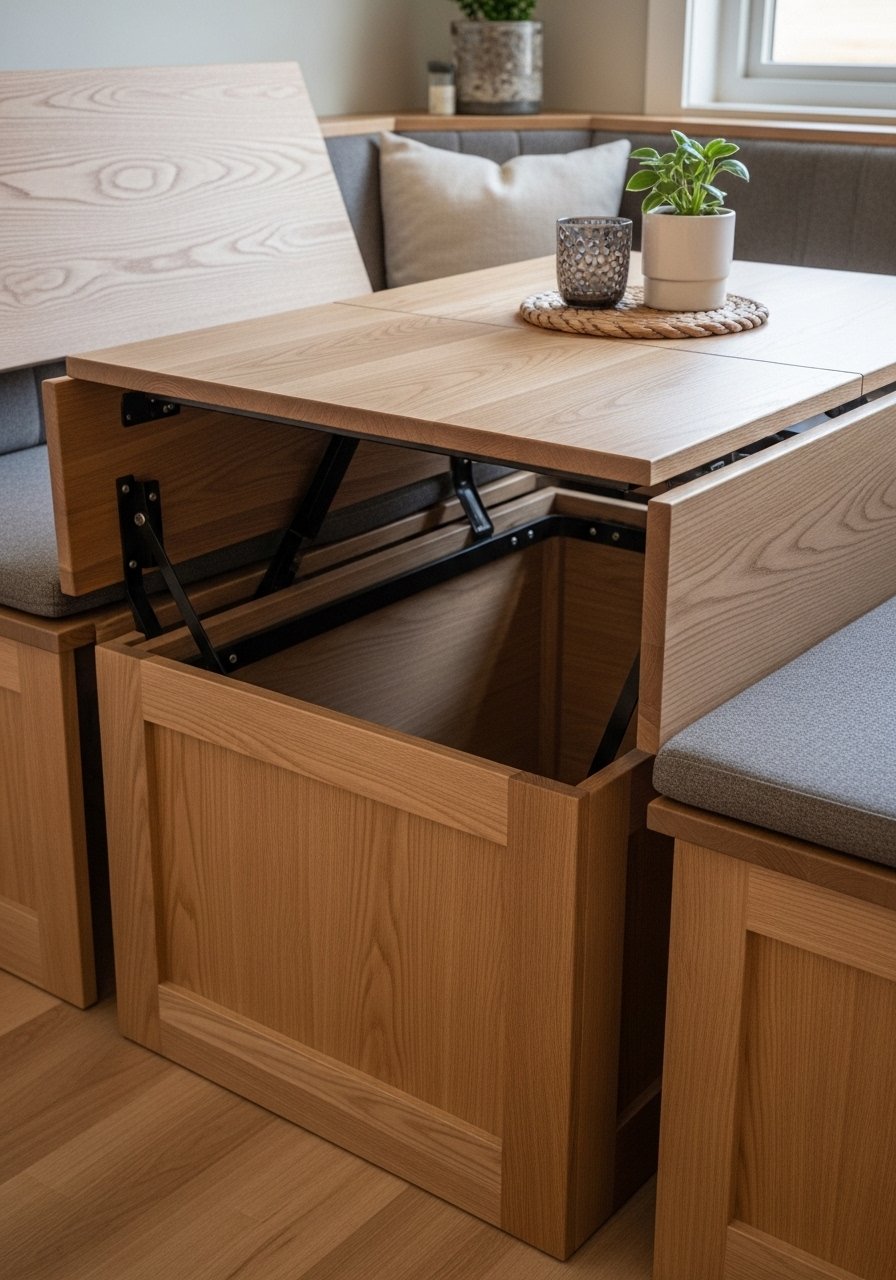
A bench that contains a narrow leaf or a lift-up tabletop gives you an extra 12 to 18 inches of usable surface when needed. The mechanism can be a simple lift-top box or a hidden leaf that slides out on rails. I retrofitted a storage bench with a slim lift-top mechanism and used a folding table leaf panel for big meals. This is a slightly higher-skill project but saves space because the extra leaf disappears when not in use. It is one of those clever moves that looks small in photos but feels enormous at the table.
Mistake to Avoid: Forgetting to measure clearance for the leaf when extended and trapping feet under the table.
Tight-Space Dining Moves
Use narrow rugs as anchors. A slim runner under the table, like a 2.5 foot wide option, reads intentional and avoids swallowing the room. Grab a low-profile rug to keep chairs sliding smoothly.
Swap full cabinets for one open shelf. Replace a heavy cabinet with a floating shelf and a few hooks. It keeps dinnerware handy and reduces visual weight.
Choose armless chairs or stools. Armless seating frees up 6 to 8 inches per person compared with armchairs. Try slim armless dining chairs to fit more people comfortably.
Lock wheels and use trays. If you use a rolling cart, pick one with locking casters and a removable tray. A locking caster set costs little and prevents the cart from drifting during dinner.