
I almost tossed an old brass lamp when I moved, but I left it on one last night and the whole living room stopped feeling like a rental and started feeling like home. That single warm pool of light made every pillow look softer, and suddenly the layered mess I had been avoiding read as intentional. Small, stubborn things do most of the work.
After trying this in three rentals, these ideas are meant for people who want a warm, modern room without a contractor. Budget ranges from thrifted finds to $100 splurges, most projects take under an afternoon, and every tip works in small apartments as well as houses.
1. Layered Lighting for a Lamp-First Feel
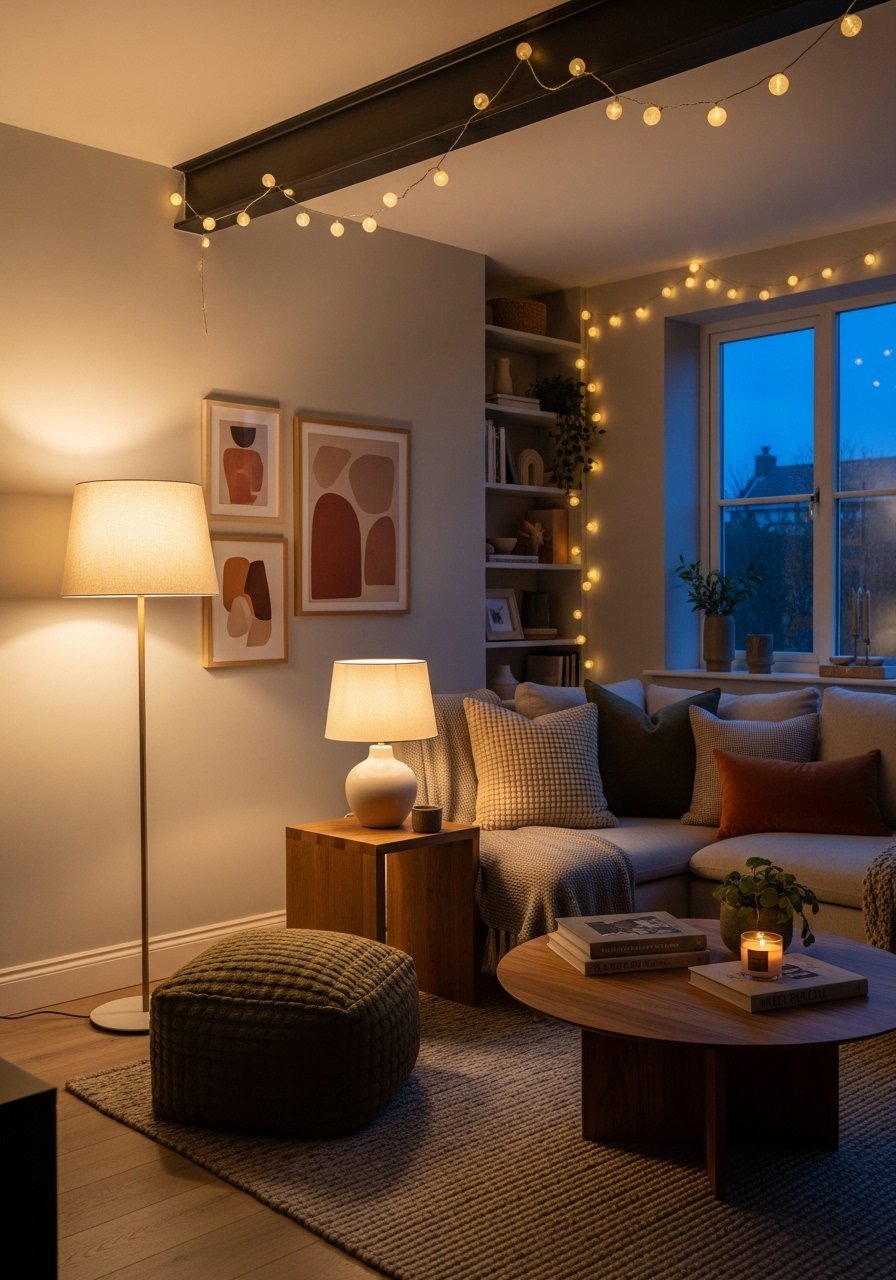
I stopped treating overhead lights as the main thing. Start with one statement lamp, then add a table lamp and a hidden strip or string light so 60 percent of the room reads as ambient. What makes it work is color temperature, pick bulbs around 2700K for a warm glow, not bright white. The feeling is intimate, like a coffee shop booth. This fits renters and anyone who wants mood control without rewiring. For a slow upgrade try a brass floor lamp and a warm white LED bulb, both easy swaps that take thirty minutes.
Mistake to Avoid: Relying only on overhead lighting, which flattens texture and makes rooms feel clinical.
2. A Low-Pile Rug with an Undersized Throw Rug Layer
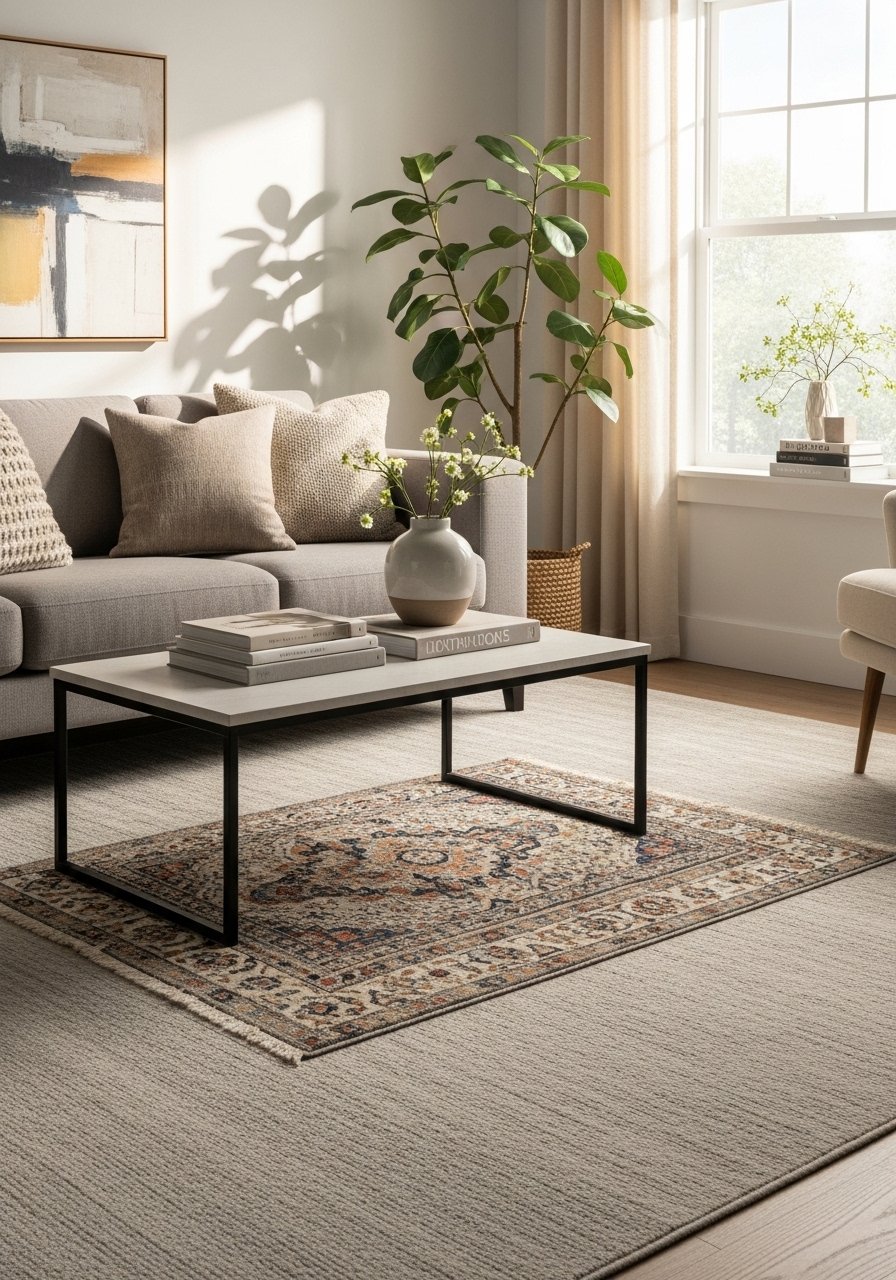
When I started layering rugs, the room gained depth without extra furniture. Place the main rug so the front legs of the sofa sit on it, then add a smaller patterned rug at a slight angle, leaving about 6 inches of the base rug visible on two sides. The contrast reads effortless and anchored. This technique works in small spaces and with budget rugs. Try a neutral low-pile rug under a small patterned accent rug. The specific detail that changed everything for me was the 6-inch reveal, which keeps the look intentional instead of messy.
Mistake to Avoid: Pushing rugs flush to walls so they float, which makes the seating look disjointed.
3. Textured Pillows in a 60-40 Size Ratio
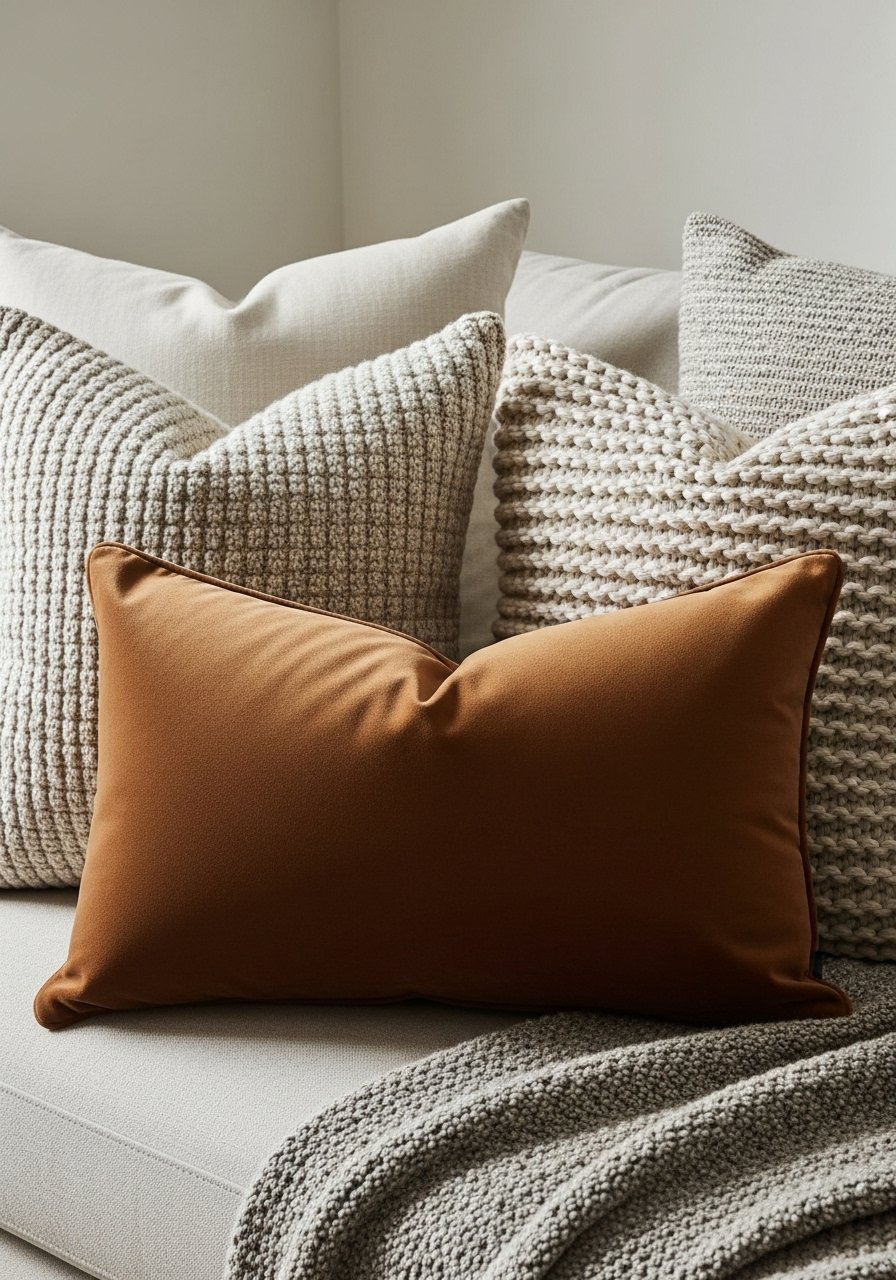
I had five tiny pillows and it read cluttered. Swapping to one oversized floor cushion or body pillow with two medium pillows gives a 60-40 weight balance that looks composed. Mix a velvet cover, a woven lumbar, and one knitted pillow for contrast. For budget swaps, use velvet pillow covers and a handwoven lumbar pillow. This works for petite and larger sofas, and adding removable covers keeps it renter-friendly. A small stuffing trick is to buy pillow inserts one size up for a fuller finish.
Mistake to Avoid: Buying many small toss pillows that create visual noise instead of a focal cluster.
4. One Cozy Throw Draped, Not Folded

I learned that folding a blanket into a perfect square makes a room feel staged. Drape a chunky knit or faux-sheepskin over a chair edge so about one third of it pools on the floor. The human eye reads that as used and welcoming. Choose a chunky knit throw or a faux-sheepskin throw depending on texture. This is a low-cost, high-impact move for renters and homeowners alike. The detail I never saw in pins is the one-third pool rule, which keeps the drape from looking staged.
Mistake to Avoid: Folding throws perfectly on an arm, which reads like a showroom and not a lived room.
5. Swap Cold Metals for One Warm Finish

I used to mix nickel hardware with chrome lamps and the room felt split. Pick one warm metal, like brass or warm matte gold, and repeat it in at least three places to create cohesion. Update a lamp, a mirror frame, and a small tray to the same finish for a modern warm look. For a renter-friendly route, swap in a brass table lamp and a metal tray. This is a low-effort way to feel intentional without replacing large fixtures.
Mistake to Avoid: Scattering multiple metal finishes with no repetition, which fragments the palette.
6. Hidden Storage That Doubles as Decor

I finally embraced baskets instead of visible clutter. Use woven baskets under a console or beside a sofa to hide cords, throws, or toys while adding texture. Aim for two matching baskets to keep scale balanced. A seagrass basket or a woven storage cube is inexpensive and renter-friendly. The practical detail that helped was measuring for 2 inches of breathing room so baskets slide in easily, which prevents a cramped look and keeps cleaning simple.
Mistake to Avoid: Choosing baskets too small, which creates visual clutter instead of neat storage.
7. Warm Window Layers, Lightweight and Heavy

For years I picked only blinds and missed the warmth curtains add. Layer a sheer panel for daylight with a heavier linen drape outside it, and hang the rod 4 to 6 inches above the frame to make ceilings read taller. The texture adds insulation and a soft visual edge to windows. Try sheer curtain panels paired with linen drapes. This works in rentals because most rods are easy to remove and the effect is immediate.
Mistake to Avoid: Mounting curtains at the window frame height, which shortens the wall and makes rooms feel boxy.
If any of these ideas have you ready to shop, here are the pieces I actually use and recommend.
Lighting, Textiles, and Small Finds
Textiles & Soft Goods:
- chunky knit throw (~$30-70), perfect for draping on a chair or sofa.
- velvet pillow covers (~$12 each), easy seasonal swap.
Lighting & Hardware:
- brass floor lamp (~$60-140), my lamp-first anchor.
- 2700k-led-bulb (~$8-15), warm and soft.
Storage & Rugs:
- seagrass-storage-basket (~$20-45), hides cords and throws.
- neutral-low-pile-rug (~$80-250), anchors seating.
Small Habits That Make Rooms Feel Warm
Shift to lamp-first evenings. Swap one overhead night for a floor lamp and a table lamp, and use warm white bulbs. That soft, layered glow changes the whole mood.
Grab velvet pillow covers for about $12 each. Rotating covers seasonally is cheaper than new pillows and instantly refreshes texture.
Light a soy wax candle for short bursts when guests arrive. A candle smells like a home and gives a focal point without permanent changes.
Everyone piles small pillows in a cluster. One oversized floor cushion anchors a reading corner better. It draws the eye and invites sitting without extra chairs.
Measure before you buy a rug. A good rule is that the front legs of major seating should sit on the rug, so pick a neutral-low-pile-rug that leaves about six inches of border to keep the layout intentional.