
I nearly tossed a thrifted drop-leaf table after one week of wobbling and a laptop that kept sliding into my coffee. I kept it because I needed a desk and because when folded right it actually saved more floor space than the cheap folding desk I had bought and returned twice. That wobble taught me the angle, the brace, and the one screw I should have tightened from the start.
This list is for people who need a usable workspace inside a small apartment, spare bedroom, or studio, and who want low-cost, renter-friendly fixes you can do in an evening. I tested most of these setups after trying this in three rentals, so expect quick builds, a couple of basic tools, and alternatives when you cannot drill into the wall. Skill levels range from beginner to intermediate, budgets from under $20 to a modest splurge for durable hardware.
1. Wall-Mounted Drop Leaf Desk
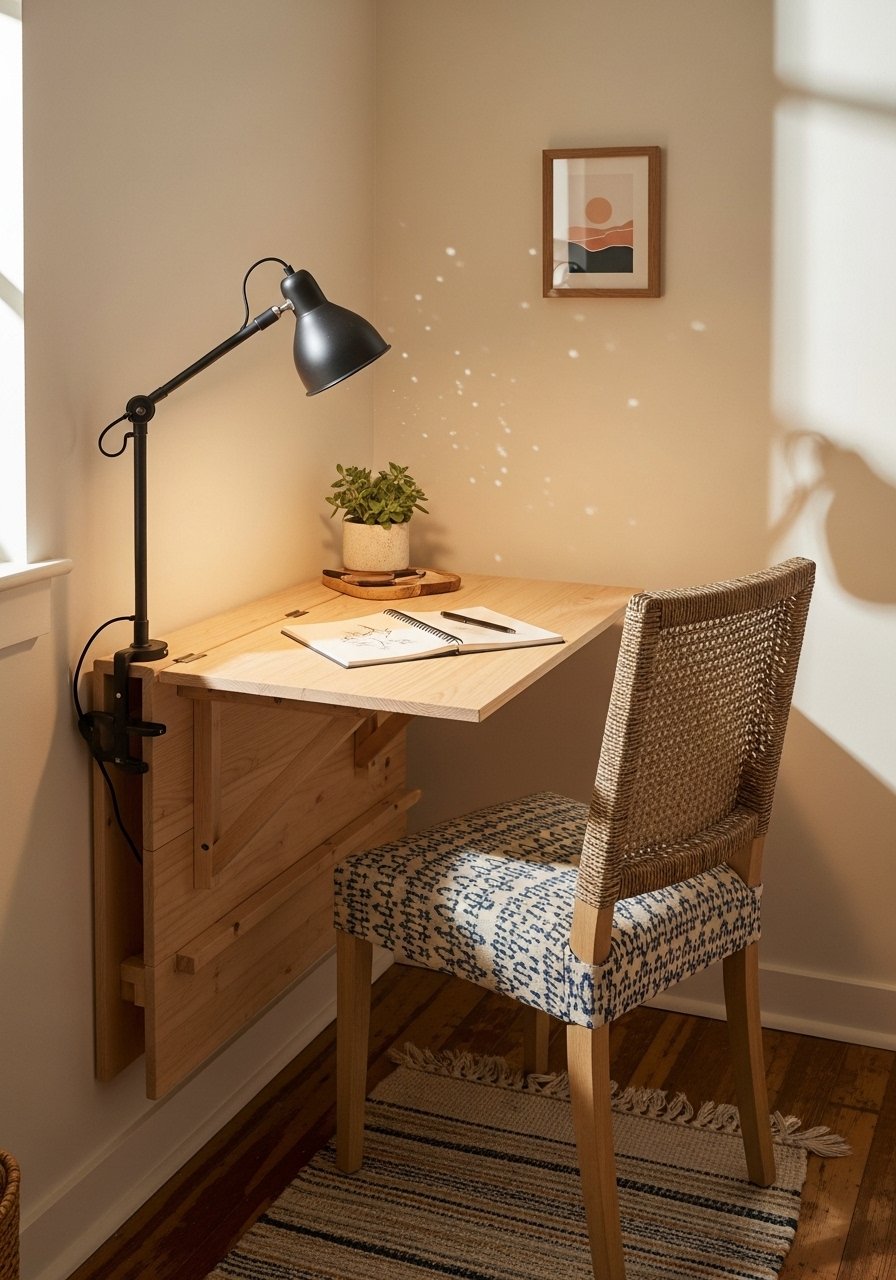
A wall-mounted drop leaf desk nails the core problem: you get full tabletop when you need it and zero footprint when you do not. What makes it work is the hinge plus a single folding bracket rated for at least 100 pounds, mounted into studs or with heavy-duty anchors. Mount the bracket roughly 28 to 30 inches from the floor for a comfortable sit-stand height, or 40 inches if you plan to use it while standing. It reads as simple and modern, fits a laptop and a notebook, and is renter-friendly if you use toggle anchors. Pair with a compact folding desk chair and a slim desk clamp lamp for under $80 total.
Mistake to Avoid: Mounting the bracket into drywall without anchors or studs so the desk sags the first week.
2. Floating Shelf Desk With Knee Clearance
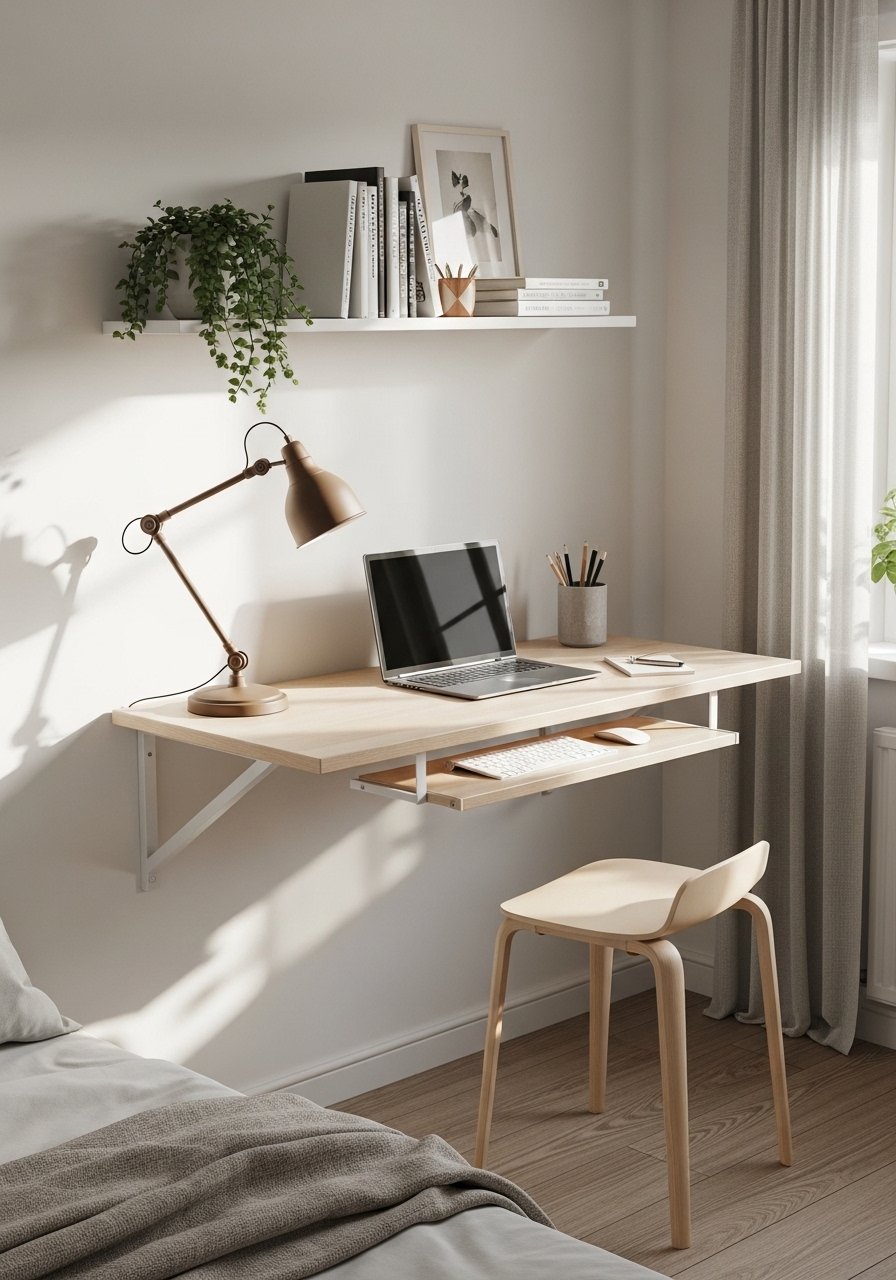
A floating shelf desk keeps the floor open while offering a real work surface. The trick is depth and clearance. Use a 10 to 14 inch deep shelf for a laptop-only station and leave 24 inches of knee clearance beneath. Mount a small pull-out keyboard tray at 6 inches below the shelf if you use an external keyboard. This is a great low-cost option for renters since most shelves attach with anchors rather than structural changes. Style it with a compact wire cable basket tucked underneath and a slim laptop riser on top to keep the screen at eye level.
Mistake to Avoid: Choosing a shelf too shallow so the keyboard hangs off the front or the monitor feels too close.
3. Vertical File Storage Using Magazine Holders
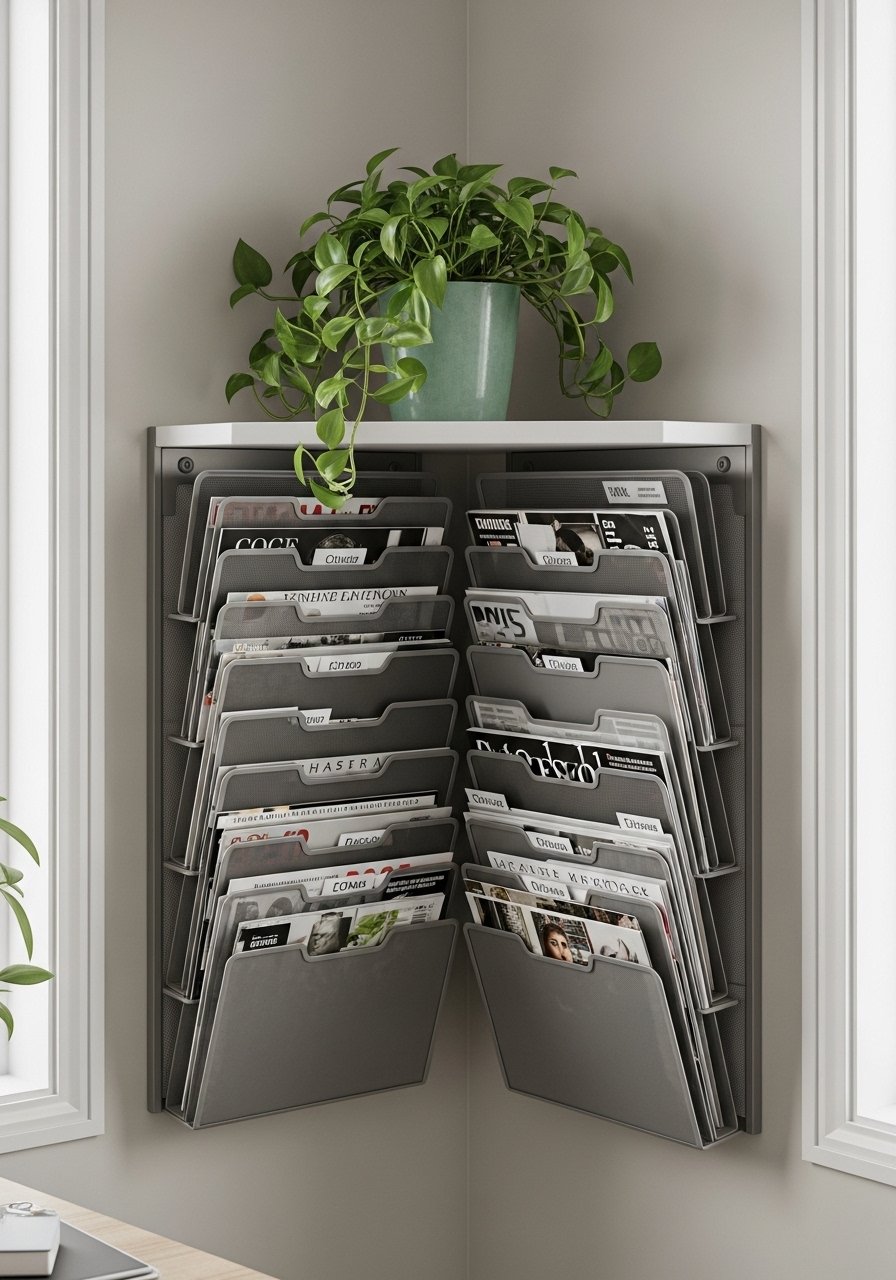
Stacks of paperwork ruin small desks. Mount magazine holders vertically on the wall to convert dead vertical space into organized file storage. Space the holders about 10 to 12 inches apart so each folder slides in easily. This approach creates a slim filing system for invoices, notebooks, and current projects. It reads cleaner than a bulky filing cabinet and costs less than a large furniture piece. Use labeled tabs and a narrow wall-mounted file holder or recycled magazine racks. For renters, use removable Command-style strips rated for the weight you plan to add.
Mistake to Avoid: Overfilling holders so they bow out and look messy on the wall.
4. Monitor Arm to Reclaim Desk Depth
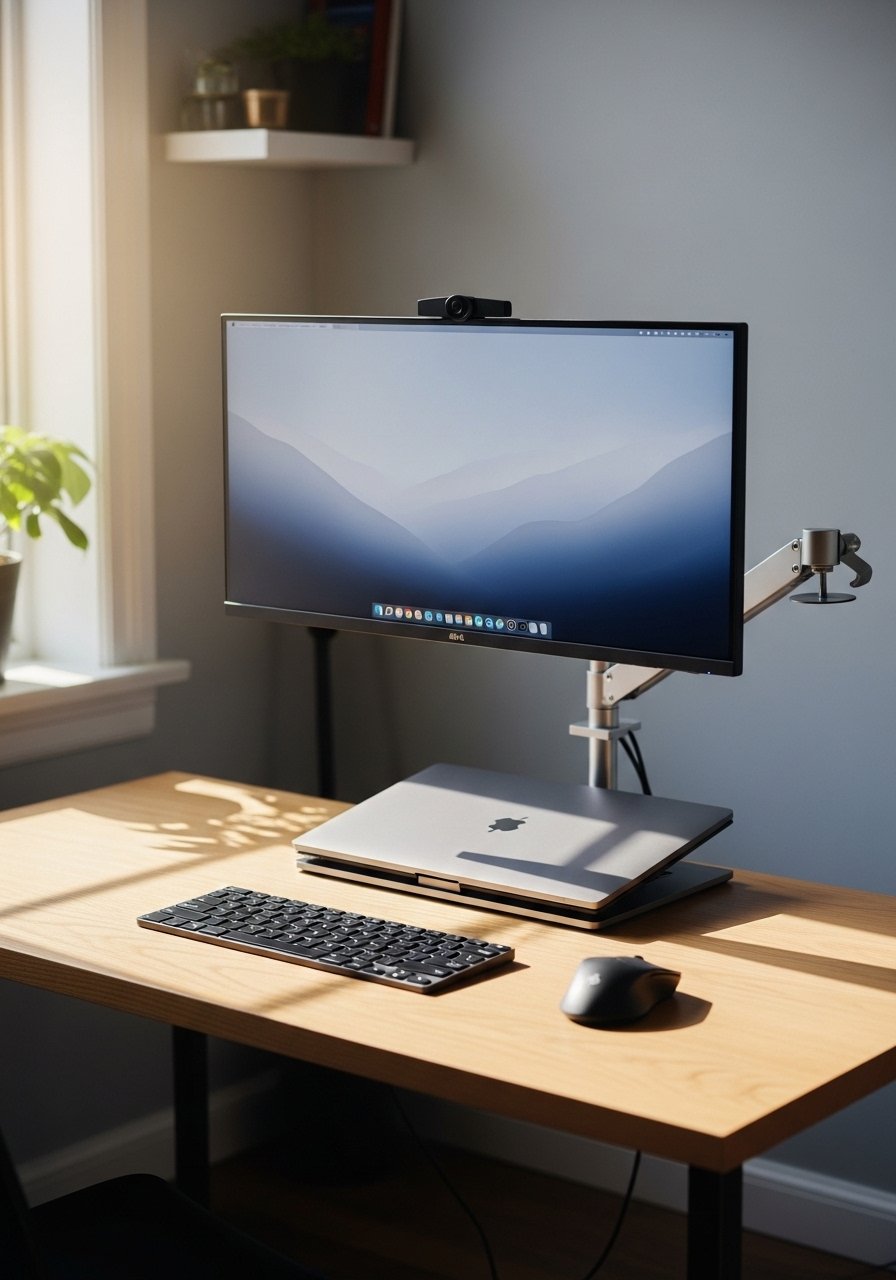
A monitor arm is the single thing that makes a narrow desk usable for any serious work. By lifting the monitor you reclaim at least 6 to 8 inches of tabletop for papers or a compact keyboard. Clamp-style arms are easy to install on thin desks, and gas-spring arms let you tilt and height-adjust in seconds. Choose one with a 75 to 100 mm VESA mount and 10 to 20 pounds capacity for most 24 inch screens. It suits hybrid workers who pair laptop and monitor, and the cost is worth it if you work long hours. Try the adjustable monitor arm and a slim wireless keyboard.
Mistake to Avoid: Buying an arm rated below your monitor weight so it droops after a month.
5. Pegboard With Small Ledges for Vertical Tools
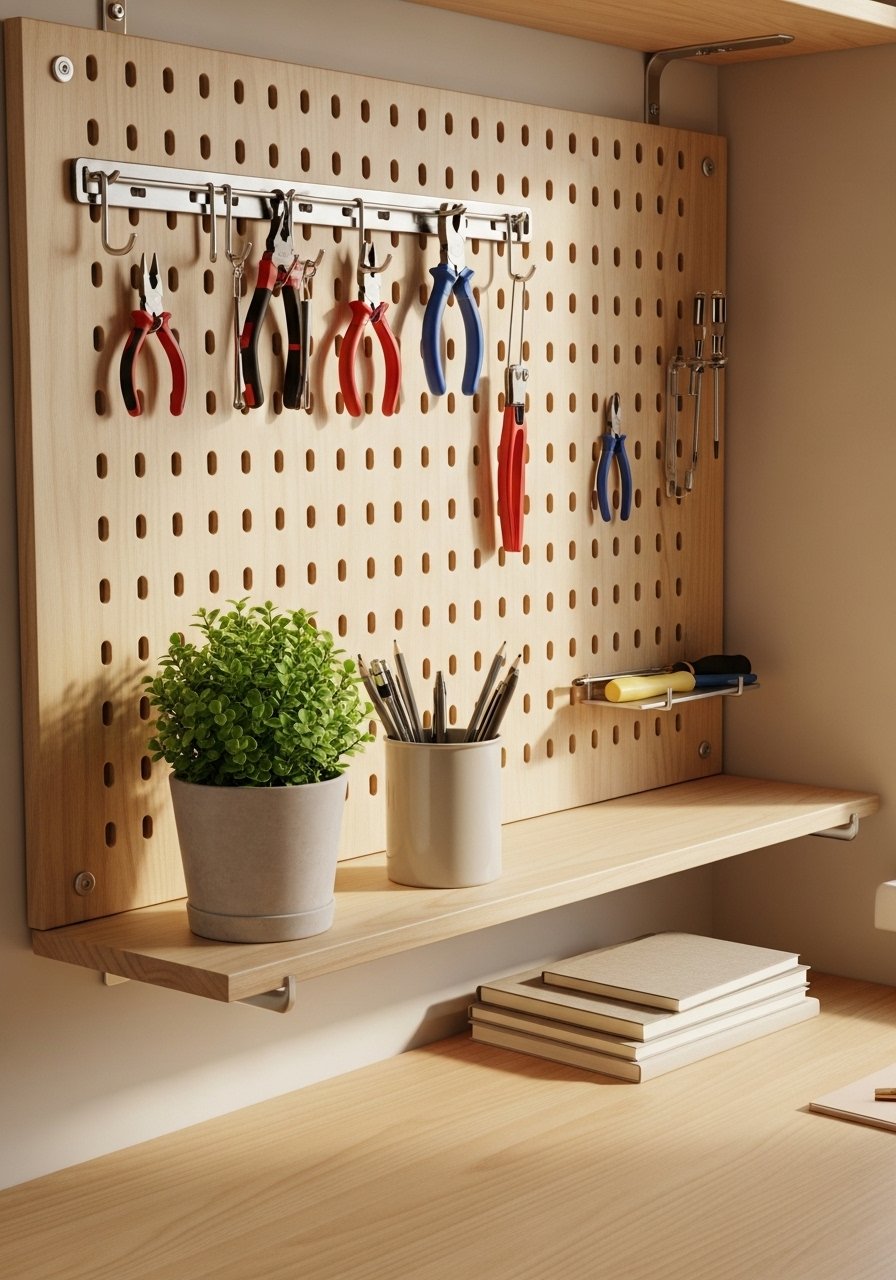
Pegboard used to feel garage-y but when paired with narrow ledges it becomes a polished vertical workstation. Mix hooks for headphones and scissors with a shallow shelf for notebooks and a picture frame. Drill the pegboard slightly off the wall by 1 inch so hooks angle inward and hold items securely. It creates a workshop vibe that works for creative freelancers and anyone who likes visible organization. This is cheap and renter-friendly if you mount to studs or use heavy-duty anchors. Add a pegboard accessory set and a small floating picture ledge.
Mistake to Avoid: Mounting the board flush to the wall so hooks do not sit at a usable angle.
6. Rolling Vertical File Cart for Under-Desk Storage
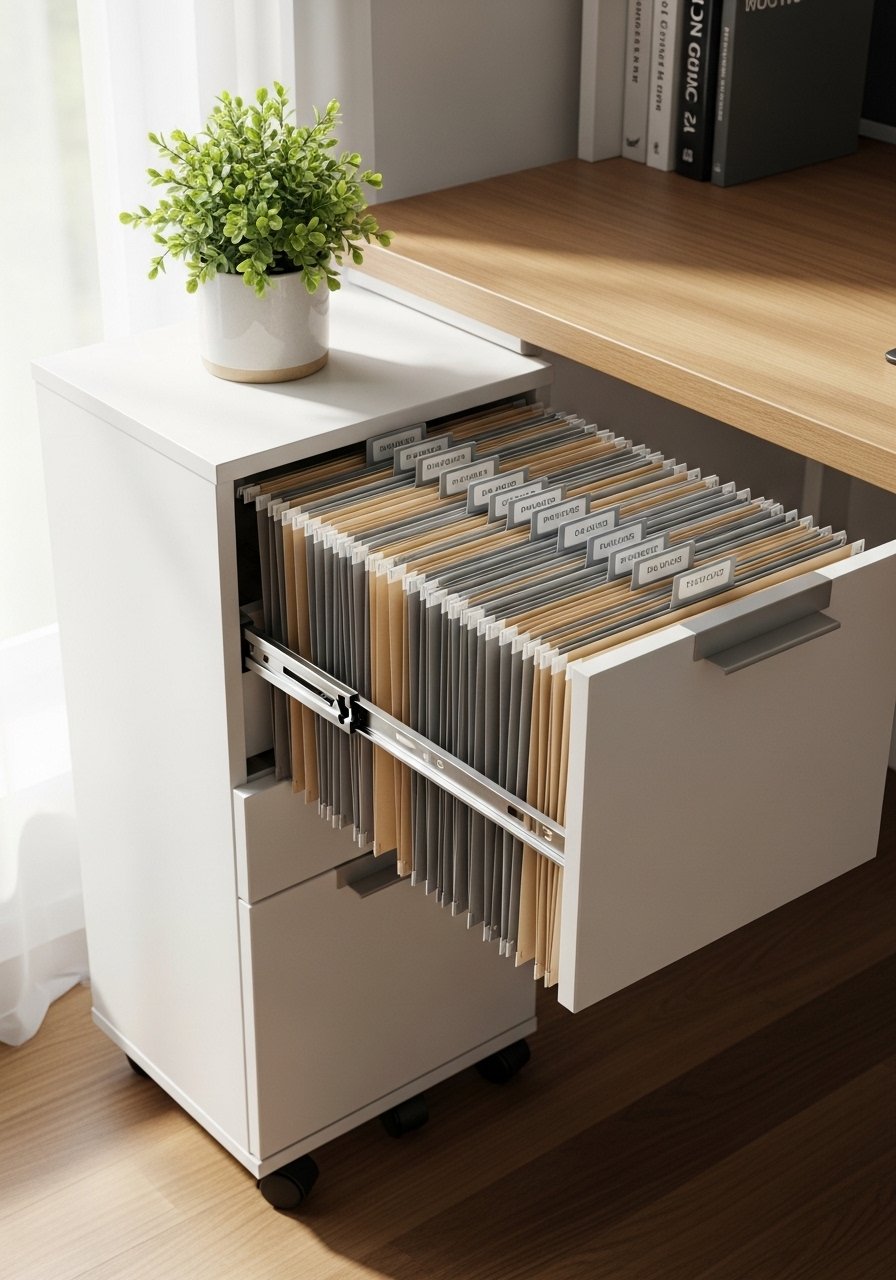
If you cannot lose floor space, go mobile. A rolling vertical file cart fits under most desks and pulls out when you need it, keeping printers and paper off the work surface. Small carts that are 10 to 14 inches wide slide into tiny gaps and offer two to three tiers of storage. Choose quiet rubber casters and a locking wheel for stability when parked. This is great for renters who need to change layouts often. I like to keep a slim rolling file cart paired with stackable drawer organizers for pens and chargers.
Mistake to Avoid: Getting a cart without a wheel lock so it drifts when you lean on it.
7. Magnetic Strip for Metal Tools and Small Accessories
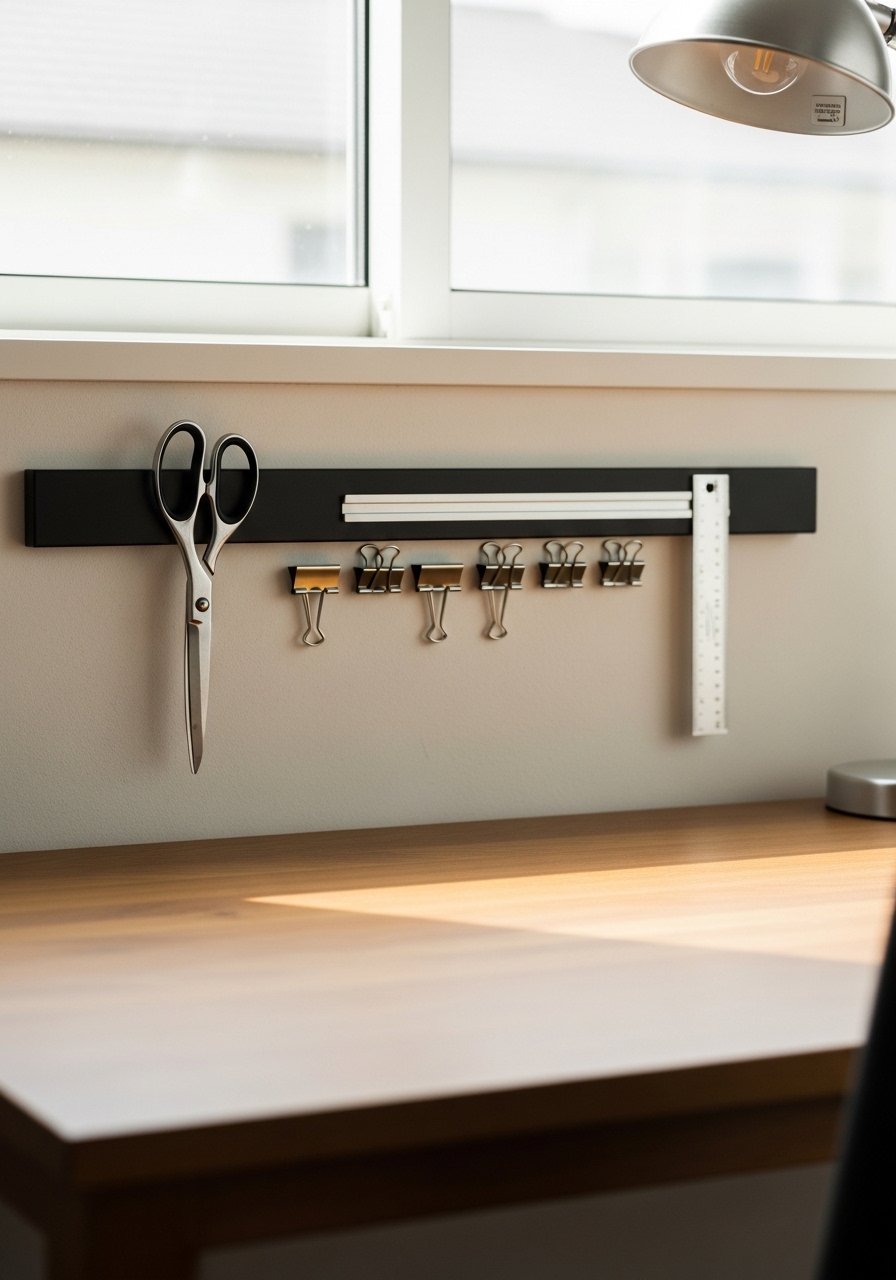
A magnetic strip is a tiny idea that cuts desktop clutter fast. Mount a magnetic strip horizontal above or beside your desk to hold scissors, metal clips, a metal ruler, and small tools. Keep the strip to one linear foot per user for a neat line of essentials. It is budget level and renter-friendly since small screws or 3M strips handle the load. This also doubles as a charging cable anchor if you add a small metal clip. Pair with a magnetic tool strip and a set of small metal clips.
Mistake to Avoid: Overloading the strip with heavy items so screws pull free from the wall.
If any of these ideas have you ready to actually buy something, here are the compact essentials I use across most of these setups.
Compact Office Staples
Shelving & Mounts:
- Floating shelf (~$20-40). A sturdy basic shelf that becomes a desk or display.
- Bracket hinge set for drop-leaf desk (~$12-25). Use heavy-duty ratings.
Organization:
- Wall file holder (~$10-20). Keeps paperwork vertical.
- Pegboard accessory kit (~$15-30). Hooks, baskets, and ledges.
Tech & Small Gear:
- Adjustable monitor arm (~$40-90). Reclaims desk depth.
- Rolling file cart (~$35-70). Mobile storage for tight spaces.
5 Tight-Desk Shortcuts
Clip-on LED task lamps beat bulky desk lamps. A clamp lamp like this clamp desk lamp frees surface area and directs light exactly where you need it.
Grab command removable hooks for hanging headphones or light cables. They peel off cleanly which is ideal in rentals.
Using thin non-slip shelf liners under a monitor base stops wobble and keeps items from sliding. Try a non-slip shelf liner for about $8 and trim to size.
Most people pile cords under the desk. A simple under-desk cable tray tacks cables out of view and keeps the floor clear.
If you have a corner gap, slide in a slim corner shelf for vertical storage rather than a wide piece that eats floor space.