
I kept choosing tiny wrist poppies because they looked delicate in photos, only to watch the lines fuzz into a gray smudge after a year. The turning point came when an artist sketched the stem a little longer and suggested 3RL instead of a single needle. It is a small technical change that made the difference between a token and a piece that still reads as a flower months later.
These ideas are for people who like small, quiet tattoos that still read from a distance, and for anyone considering first-time color in a fine-line style. Most designs are one-session friendly and sit in the low to moderate pain range. Across five shops I have visited, artists recommended single-needle or 3RL setups for crispness, and most clients wanted something coverable for work. Expect budget options under $120 and studio pieces up to $350 depending on color and placement.
1. Single-Needle Wrist Poppy
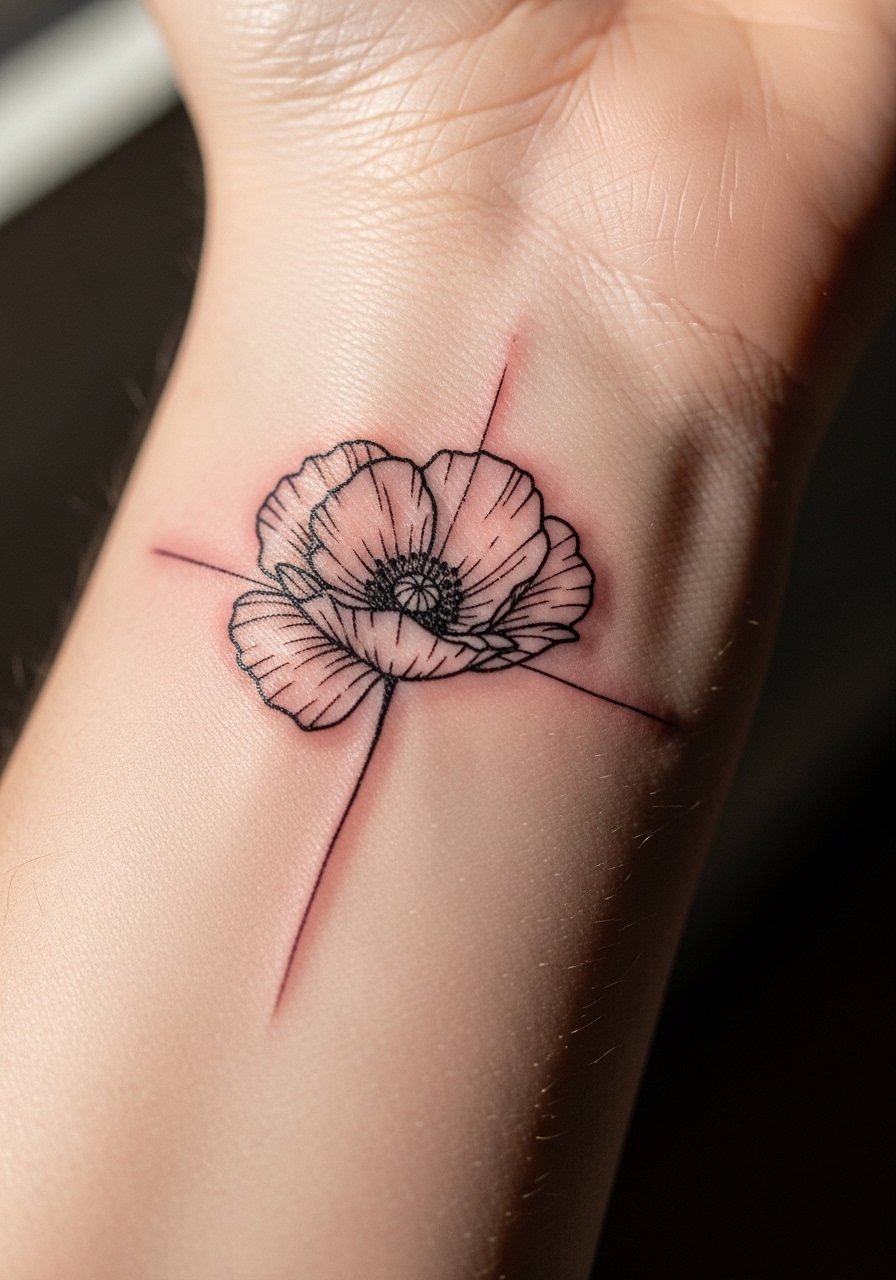
Small, vertical poppies on the wrist show best with a single-needle outline, tight negative space, and a tiny dot for the seed head. Visually it reads fragile and modern, perfect for someone who wants an understated memorial or nature piece. This works on short sessions and suits wrists and thin forearms. Bring a printed reference to match scale. I like pairing it with a moisturizing tattoo aftercare balm to keep the lines from drying into scabs that pull ink out. The rule I follow is 0.25 to 0.35 millimeter line weight for lasting clarity.
Mistake to Avoid: Asking for the smallest possible size without adjusting needle choice, which causes early blurring.
2. Ankle Stem Poppy
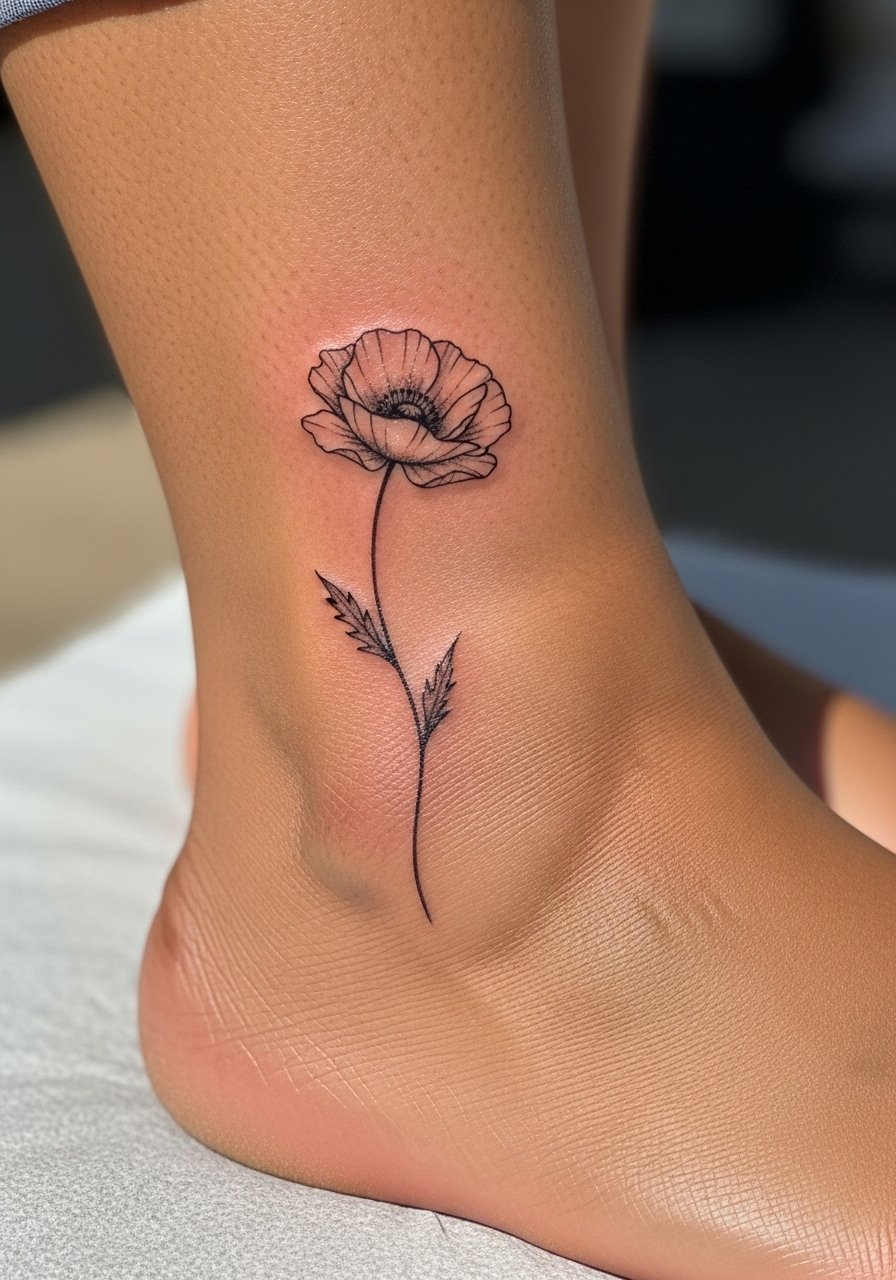
A long, slender stem makes an ankle poppy feel like a deliberate spot of movement along the leg. It works because the negative space between petals keeps each line separate as the skin stretches with walking. This style fits people who want something coverable in socks or boots. For this placement I prefer 3RL for slightly thicker stem lines and single-needle for petal veins. Pack a clear stencil transfer paper to ensure the design sits exactly where you want it on the ankle bone.
Mistake to Avoid: Choosing a dense petal fill that sits too close to ankle folds, causing loss of detail when healed.
3. Behind-Ear Tiny Poppy
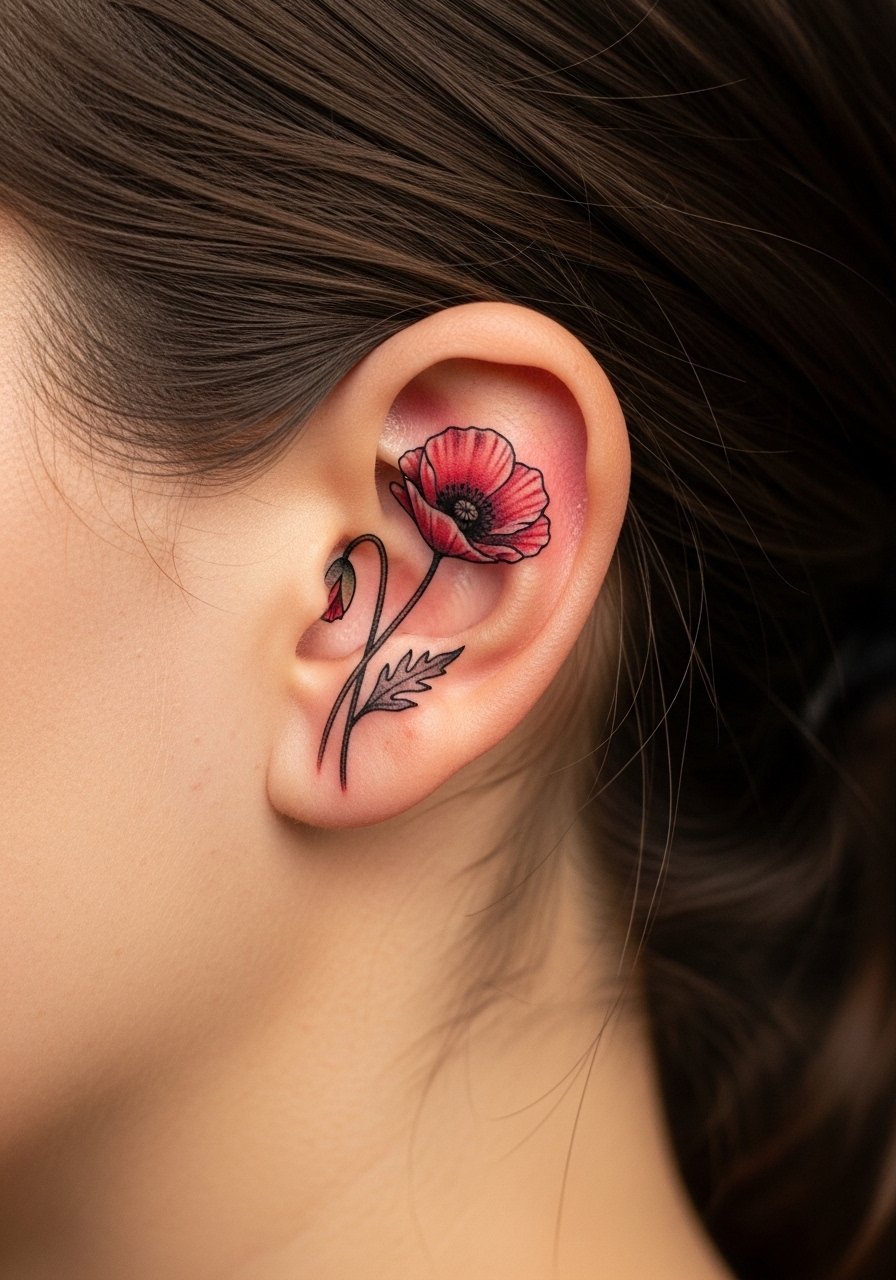
Behind-ear poppies read like a secret, visible only when hair is up. The trick is keeping the design no more than 1 inch and using single-needle work for petal veins. It creates a quiet, romantic mood and suits petite placements or first-timers. Healing here is fast but keep hair tied back for a week. A gentle fragrance-free antiseptic wash helps avoid irritation from shampoo.
Mistake to Avoid: Letting hair rub the fresh tattoo during the first three days, which can lift ink and blur lines.
4. Collarbone Outline Poppy
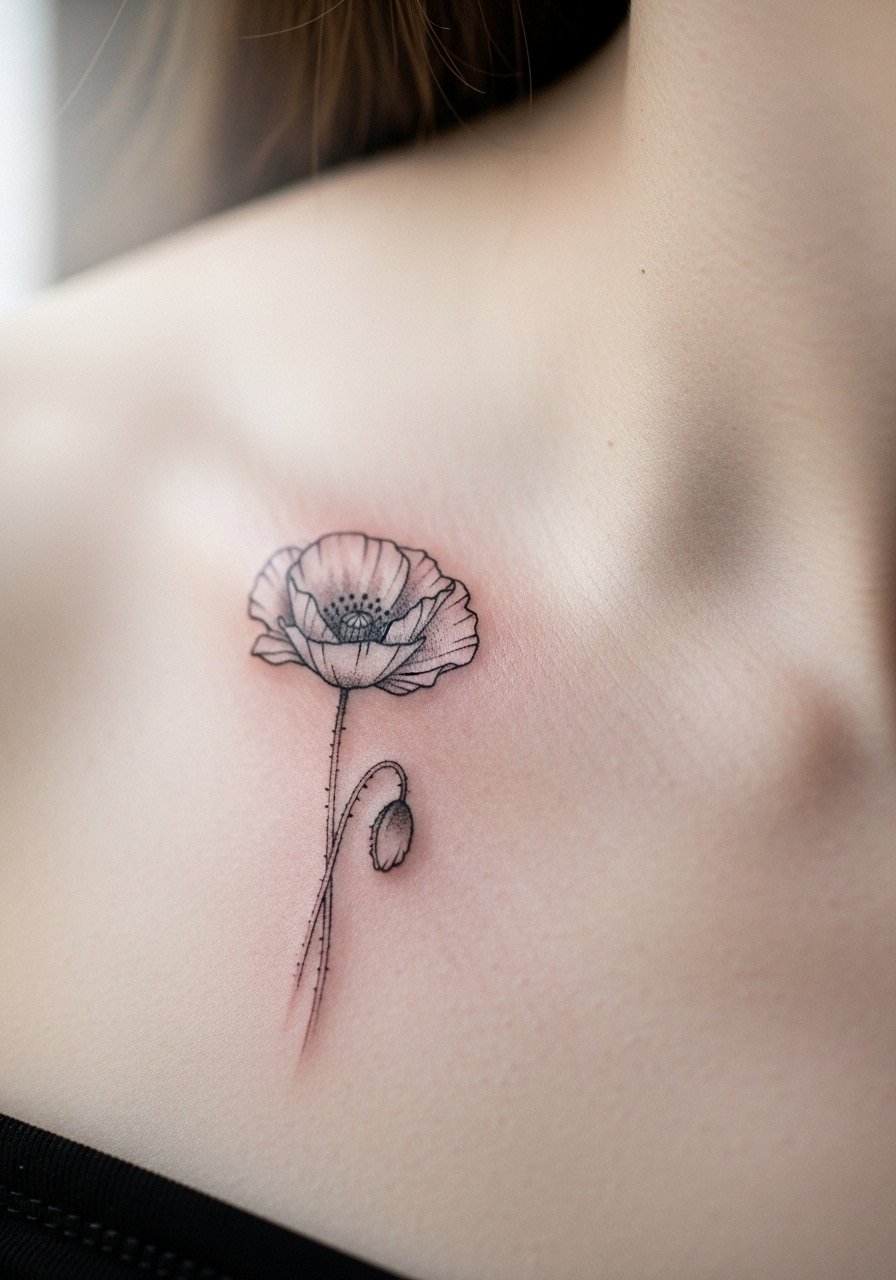
A collarbone poppy slants with bone structure, giving a graceful, fashion-forward placement that moves with your collar. It reads as elegant and intentional, ideal for someone who likes jewelry-like tattoos. I ask artists to keep petal edges slightly open rather than fully closed to prevent ink pooling on the chest. Expect 30 to 60 minute sessions and mild soreness. Pack a silicone scar sheet for later if you plan to keep the area moisturized and flat.
Mistake to Avoid: Requesting solid black petals over the collarbone, which can look heavy against delicate bone contours.
5. Finger Stem Poppy Ring
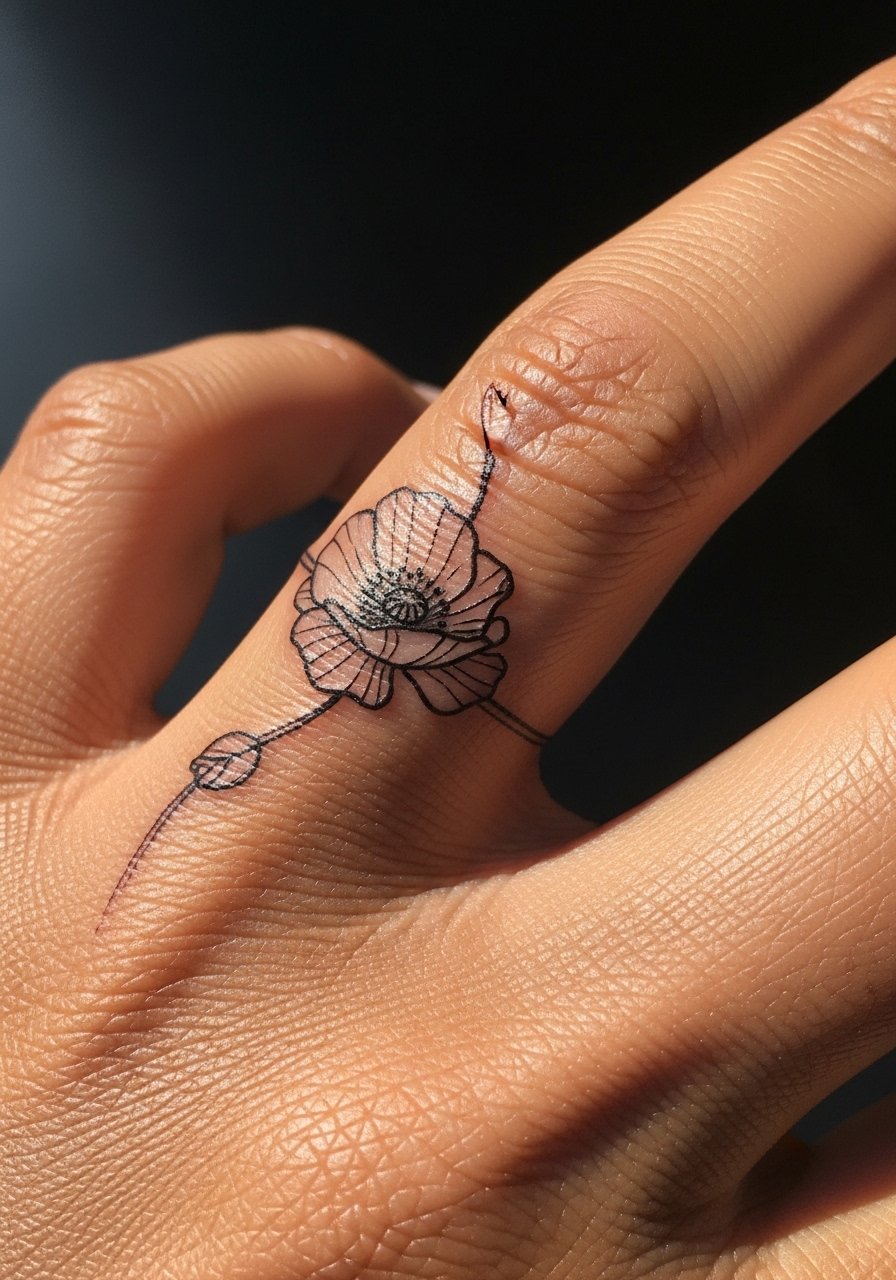
A poppy wrapped like a ring around the finger is charming but demands strategic spacing and repeated touchups. The skin moves constantly, so use sparse lines and avoid tiny cross-hatching. It reads playful and intimate, made for someone who rotates jewelry often. Expect faster fade and plan touchups every 12 to 18 months. I use a thin tattoo sunscreen stick when the ring is exposed to sun to slow fading.
Mistake to Avoid: Requesting dense detail on the finger without accepting future touchups will leave the design patchy.
6. Watercolor Accent Poppy
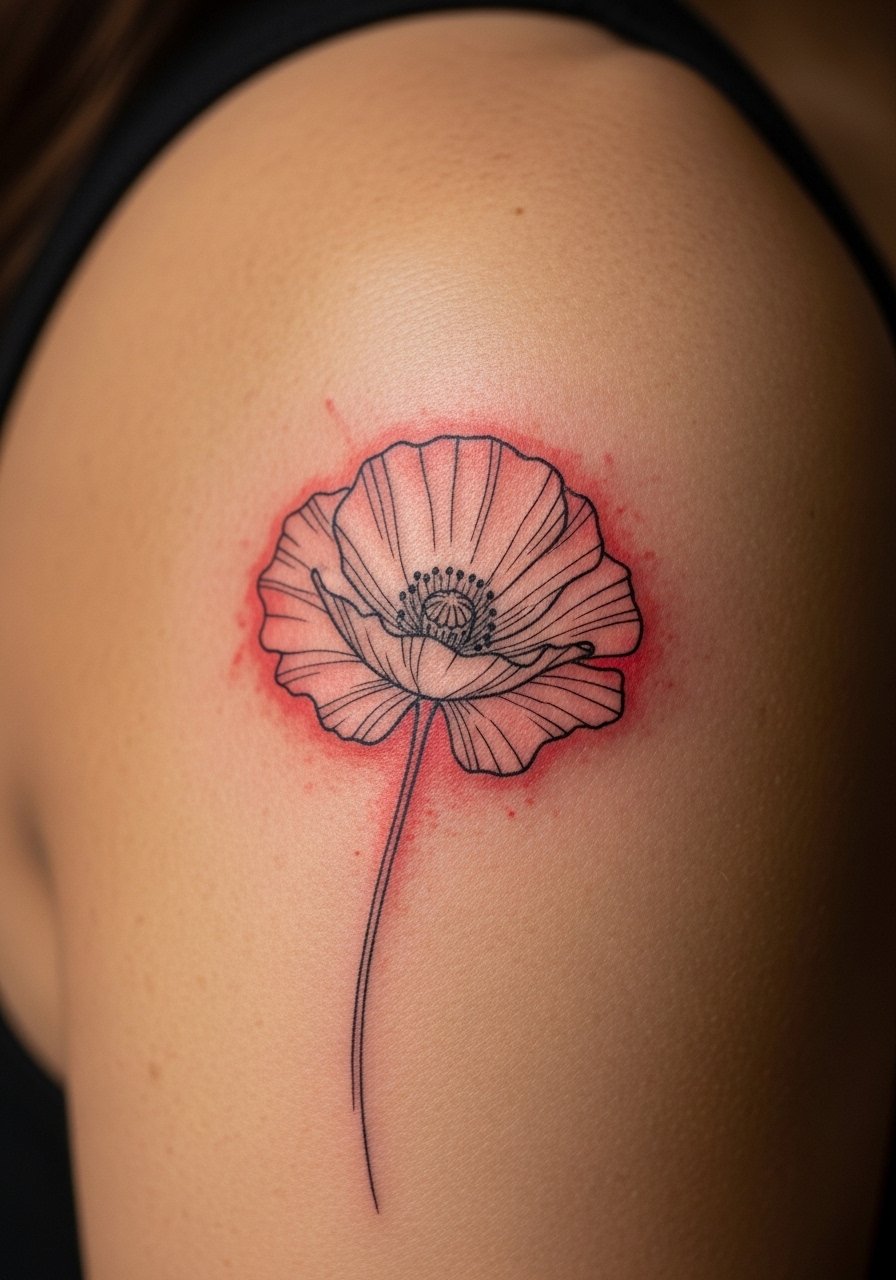
A fine line outline paired with a soft watercolor wash gives the poppy a painterly feel without sacrificing line crispness. The visual balance comes from keeping color slightly outside the outline, a technique that ages better than filling petals entirely. This idea suits someone comfortable with a little color and a moderate budget for pigment blending. For color saturation I choose thin layers and let the artist build slowly. Bring an alcohol-free color-safe cleanser for aftercare when color is involved.
Mistake to Avoid: Asking for saturated watercolor in one pass, which increases scabbing and pigment loss.
7. Tiny Bouquet Forearm Cluster
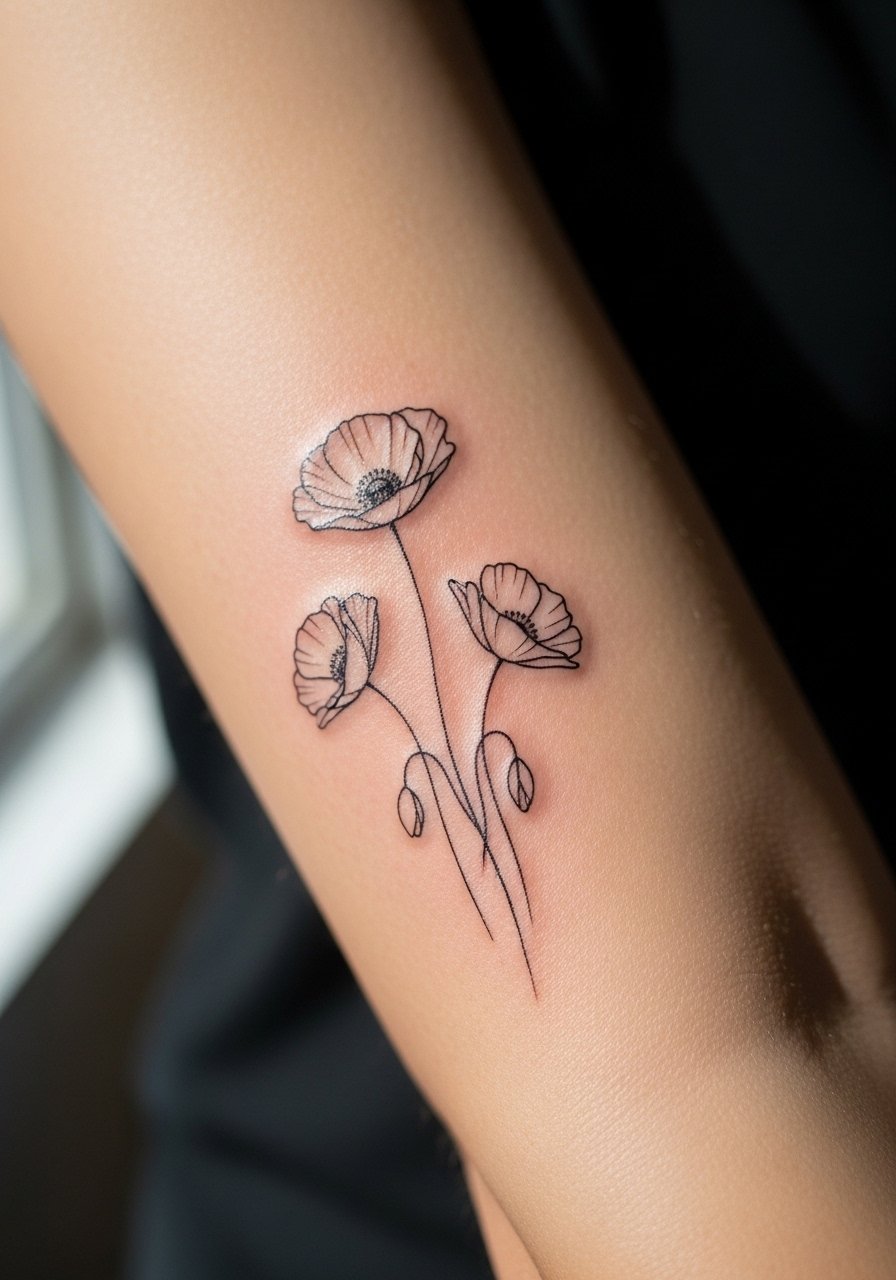
A cluster reads as a small bouquet, giving more visual weight than a single bloom while staying compact. The reason it works is rhythmic spacing and varied stem lengths, which keep each flower legible. It suits someone who wants a slightly louder statement without a large piece. Keep each poppy under two centimeters across to avoid blending. I recommend a session of 60 to 90 minutes for this and packing a tattoo aftercare kit for home healing.
Mistake to Avoid: Crowding three blooms into a space meant for one, which makes petals merge during healing.
If you want to buy the basics before your next appointment, here are the items I actually reach for when planning poppy pieces.
Studio Essentials for Fine Poppy Work
Aftercare:
- Tattoo aftercare balm (~$8-15), lightweight and fragrance free.
- Fragrance-free antiseptic wash (~$7-12), gentle for the first week.
Prep & Stenciling:
- Stencil transfer paper (~$6-12), so the reference sits exactly where you want it.
- Disposable gloves (~$10-20), basic studio hygiene.
Touchup & Protection:
- Tattoo sunscreen stick (~$9-15), for daily sun protection after healing.
- Silicone scar sheet (~$12-25), for flattening raised edges later.
Comfort & Care:
- Disposable razor (~$4-8), shave the spot the day of your appointment if needed.
- Alcohol-free color-safe cleanser (~$8-14), helps with colored pieces.
- Tattoo aftercare kit (~$15-30), all-in-one for travel.
8. Delicate Nape Poppy Trio
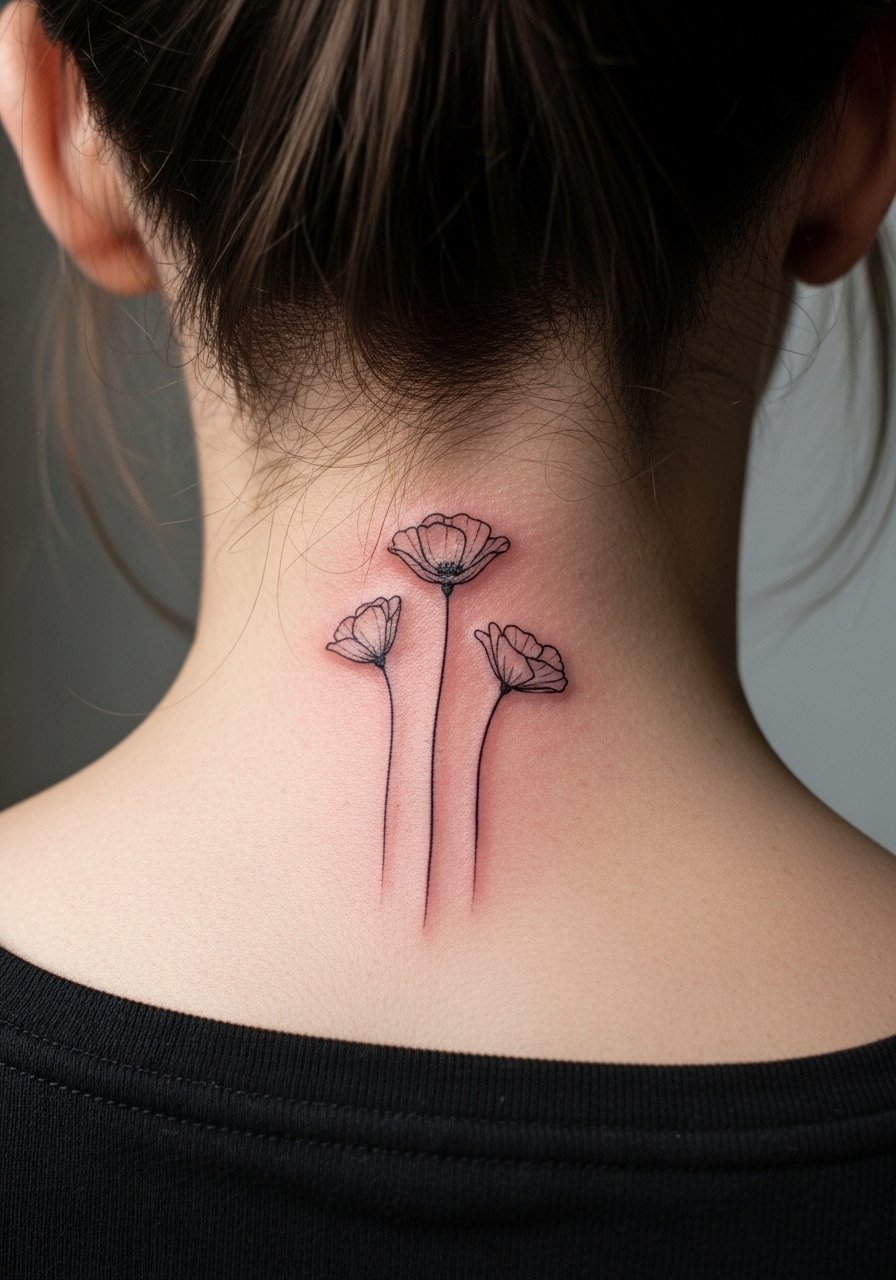
A nape trio feels private and flirty, revealed by an updo. The upward movement along the spine flatters the neck and shoulder line. For this area use single-needle petal lines and a slightly thicker stem line so it reads from behind. Healing is simple but avoid tight collars for two weeks. If you plan to hide it at work, this is a good spot. I usually suggest a small container of hypoallergenic moisturizer to keep the nape supple.
Mistake to Avoid: Wearing high collars immediately after, which rub and irritate fresh ink.
9. Ribcage Poppy Sprig
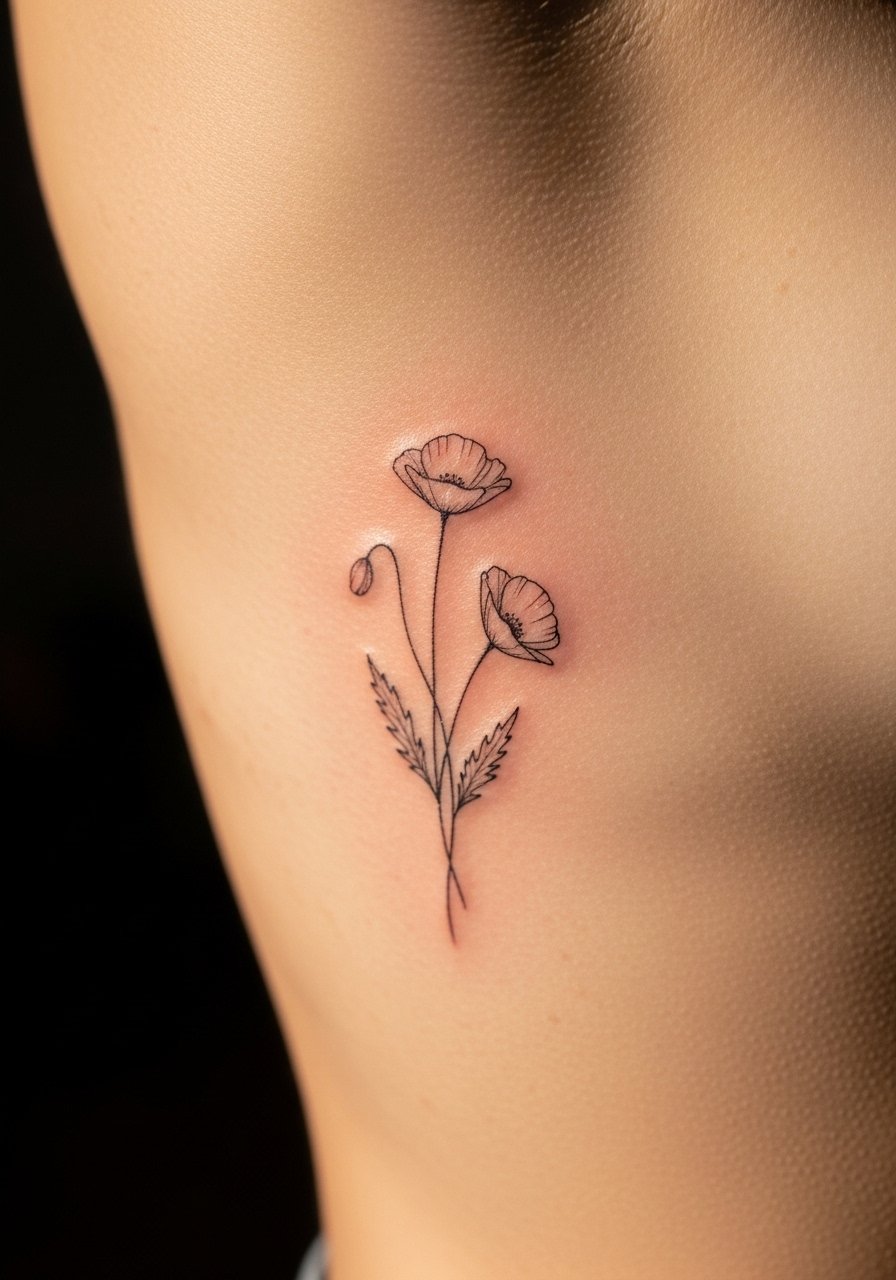
Ribcage poppies take advantage of the body curve for an elongated sprig that reads like botanical art. It feels intimate and more work-visible at the beach. Expect higher pain but a dramatic look that ages nicely because the skin there stretches less. I recommend booking a 90 minute slot if you want multiple tiny blooms and ask for spaced lines rather than heavy shading. Pack a soft breathable garment for aftercare to avoid chafing.
Mistake to Avoid: Asking for dense shading in the ribs where movement causes pigment migration.
10. Micro-Realism Poppy with Dotwork
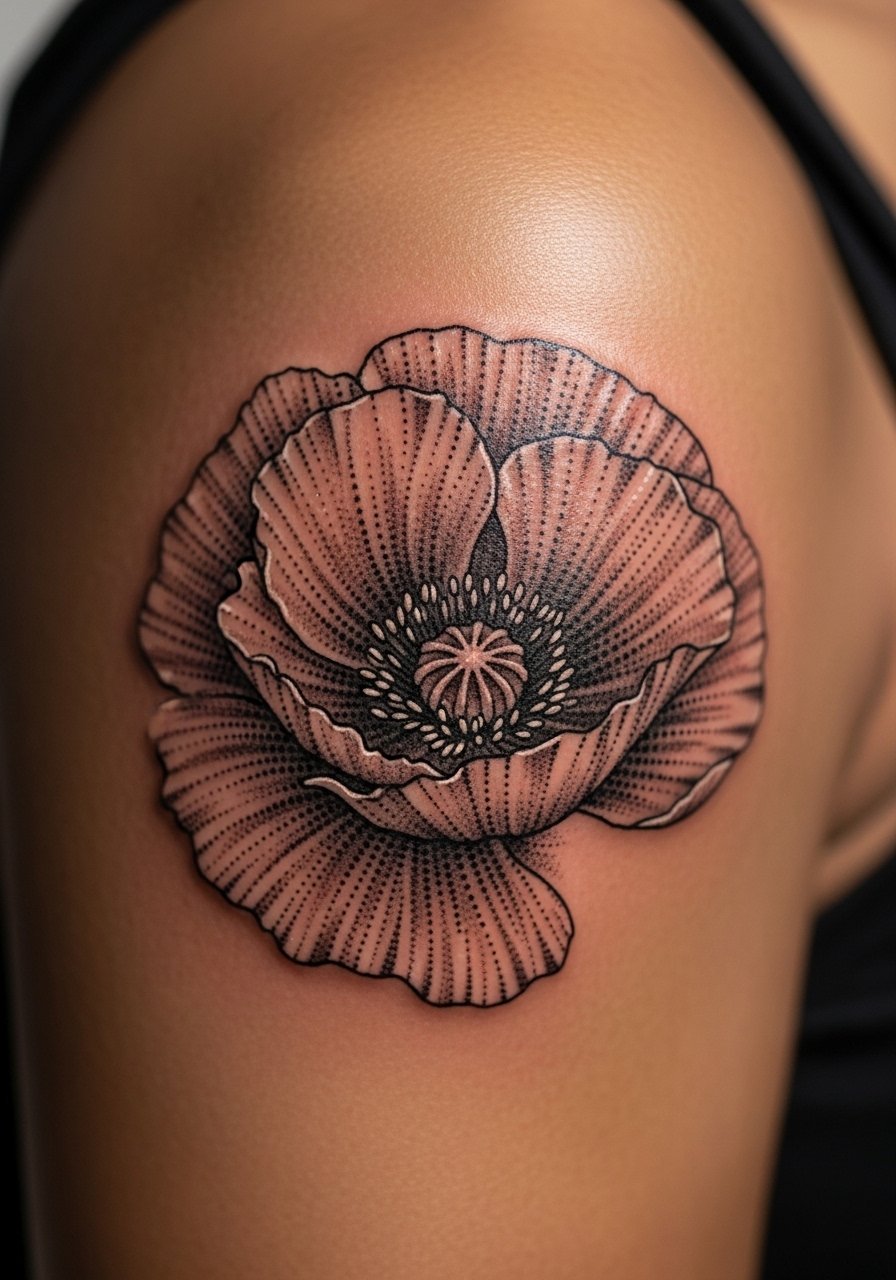
Micro-realism combines ultra-fine outlines with dotwork shading to suggest depth without solid fills. It creates a textured, almost photographic look in a tiny space. This style suits someone who appreciates detail and is willing to pay for precision. Artists often use a tight 3RL cluster for dotwork transitions. I ask for subtle contrast so the dot gradients hold. Consider an ink dilution set if an artist is blending dilute grays for you.
Mistake to Avoid: Pushing for heavy contrast in micro pieces, which can turn dots into blotches when healed.
11. Memorial Poppy with Script
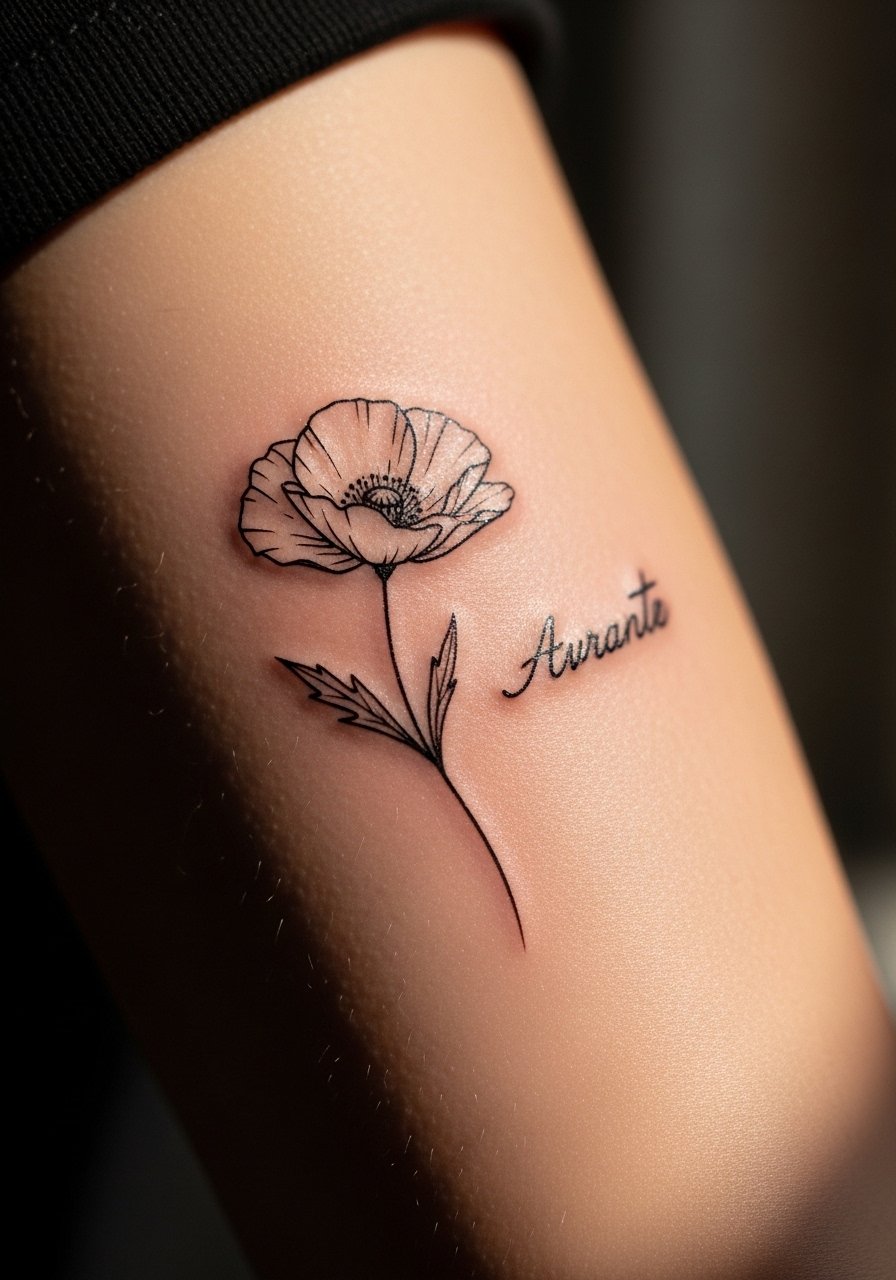
Poppies are often used as memorials, and adding a neat script name can feel meaningful. Keep the type small and legible, and place the script so it does not ride into the petal veins. This fits people who want a discreet tribute that can be covered for work. Be mindful that poppies are a remembrance symbol in some countries, so discuss cultural sensitivity with your artist if the design references a specific tradition. I like pairing the piece with a light tattoo-safe moisturizer to preserve edge crispness.
Mistake to Avoid: Squashing script into tiny space, which makes names unreadable after healing.
12. Chest Pocket Poppy
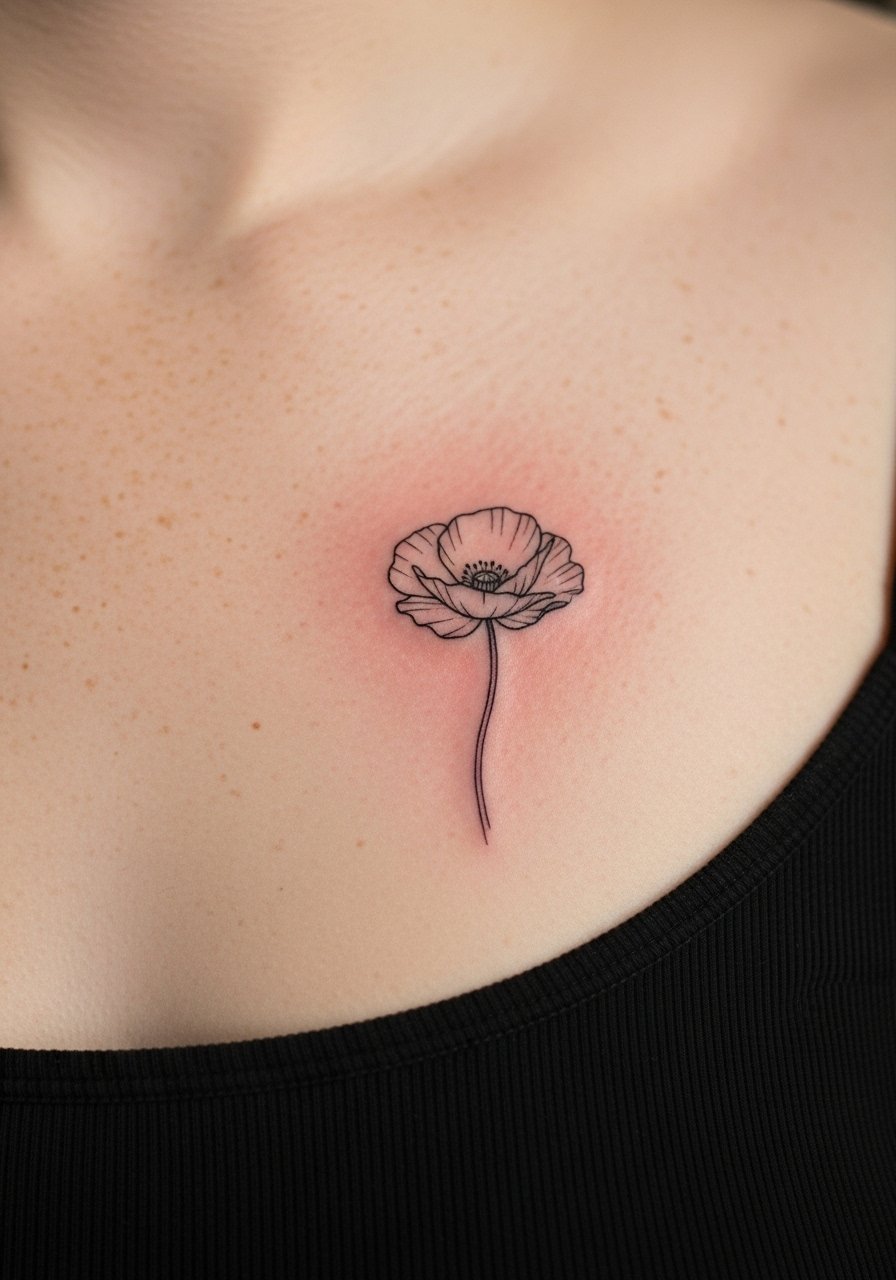
Placed near the sternum or pocket area, a single poppy feels like a kept secret over the heart. It creates warmth and a wearable symmetry under shirts. For this spot I ask for slightly spaced petal tips and minimal dot shading to avoid a solid patch. Session time is short and healing is straightforward when you sleep on your back. Bring a soft breathable cotton tee to wear while the tattoo sets.
Mistake to Avoid: Requesting dense color here while planning to sleep on the side, which causes pressure and scabbing.
13. Upper Thigh Bloom
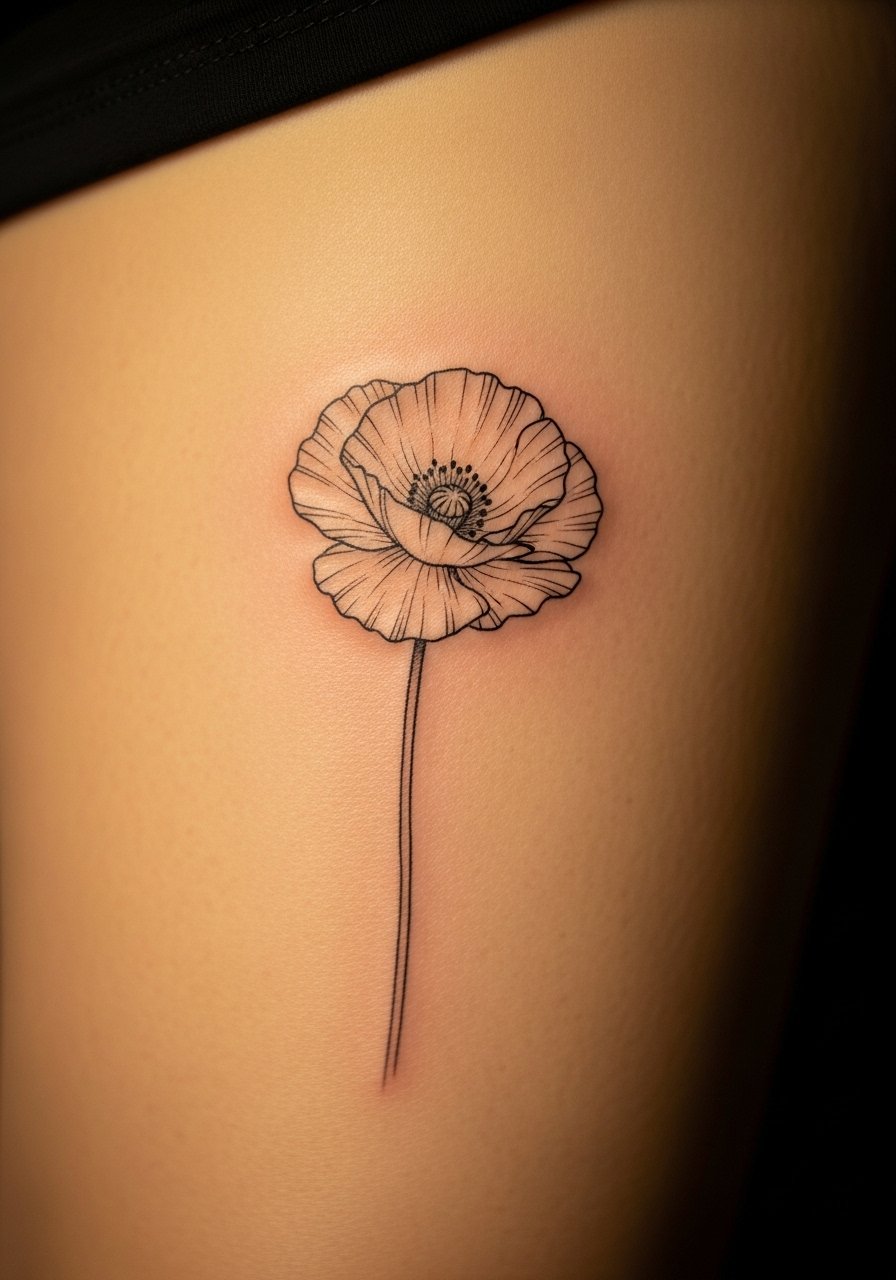
An upper thigh poppy is personal and covers easily for formal settings. The skin gives a bit more canvas so you can scale the petal details up slightly without losing fine-line character. It feels sensual and private, great for someone who wants a larger single bloom in a single session. I suggest a slightly wider spacing between veins and a thin wash if you want color. Pack a soft shorts pair for comfortable healing wear.
Mistake to Avoid: Choosing extremely dense petal work that will sit poorly against thicker skin and require touchups.
Fine Line Poppy Care Tips for Longevity
Thin coats of balm work best. After the first three days, dab a thin layer of tattoo aftercare balm twice daily rather than smothering the area.
Use stencil transfer paper so artists can place tiny poppies precisely, especially on curved spots like the ankle or collarbone.
Keep sun protection simple. A small tattoo sunscreen stick is easy to carry and prevents color washout on exposed poppies.
If color is used, choose air-dry clothing for the first week. Grab a soft breathable cotton tee to avoid sticky fabrics that pull scabs.
Talk to your artist about needle choice. Single-needle and 3RL setups are common for these designs, and asking about line weight up front saves you from a blurry outcome later.