
I almost threw out a scratched walnut console table the winter I moved into a studio, until I sanded a single corner, stained it a shade darker, and suddenly the whole entryway read intentional instead of junk. That tiny rescue taught me how small edits beat new purchases every time.
These ideas are practical, renter-friendly and mostly low budget, tested after trying this in three rentals. Expect projects that take 15 minutes up to an afternoon, with clear small-space swaps and a few things worth spending on. If you want looks that read lived-in and balanced rather than staged, these are the ones to save.
1. Gallery Wall With Varied Frame Depths
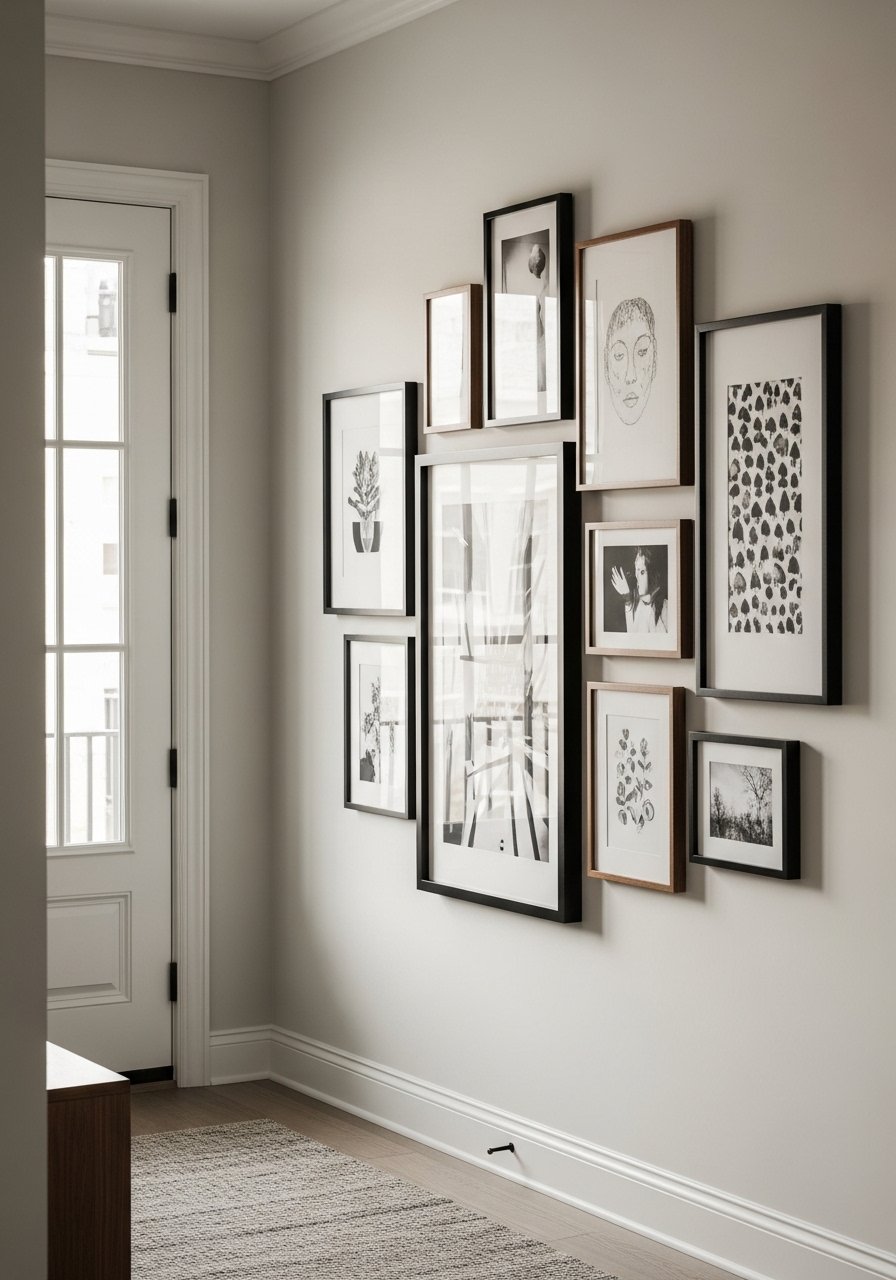
A flat gallery wall looks like a print sale gone wrong. Mix frame depths and mats so pieces cast tiny shadows and the whole arrangement reads intentional. I hang the largest piece, then work out with 2 to 3-inch spacing between frames rather than guessing. For lightweight prints use black picture frames and swap paper art seasonally. This works for renters because you can use removable hanging strips sized to weight, and the slight gap hides imperfect alignment. The result feels curated in ten minutes, not forced.
Mistake to Avoid: Hanging frames tightly together with zero depth so everything flattens against the wall.
2. Peel-And-Stick Accent Corner

A vertical strip of peel-and-stick wallpaper turns an awkward corner into an intentional focal point. Pick a pattern in about a 1:3 scale to the wall height so it reads like a built-in panel. I recommend testing a 12-inch sample first, then use a smoothing card to avoid bubbles. For stubborn seams try a small craft roller and a touch of heat from a hairdryer on low. For renter-safe options search for peel-and-stick-wallpaper. The cost is low and the mood shift is immediate.
Mistake to Avoid: Applying full rolls without trimming edges to outlets and baseboards for a sloppy finish.
3. Layered Lighting, Two Heights

Lighting that sits only in the ceiling makes rooms look flat. Layer a floor lamp at seating height and a plug-in wall sconce about 60 to 66 inches from the floor for reading and atmosphere. Match warm bulbs around 2700K across fixtures for a coherent glow. I swapped a single overhead for three layered sources and the living room finally felt like a room you want to stay in. For a no-wiring option try a plug-in wall sconce.
Mistake to Avoid: Using the same bright cool bulb in every fixture so the room feels clinical.
4. Rug Sizing Trick For Small Rooms

A rug that is too small makes furniture float awkwardly. Aim for the front legs of larger pieces to sit on the rug, or at least 8 to 12 inches of overlap under a sofa. If a perfectly sized rug is out of budget, layer a mid-size rug over a neutral underpad to fake the right proportions. I use a non-slip pad cut 2 inches smaller than the rug to help edges lay flat. A low-cost option to try is jute-area-rug for texture on a budget.
Mistake to Avoid: Buying the largest cheap rug you find without measuring furniture overlap first.
5. Curated Open Shelving Styling
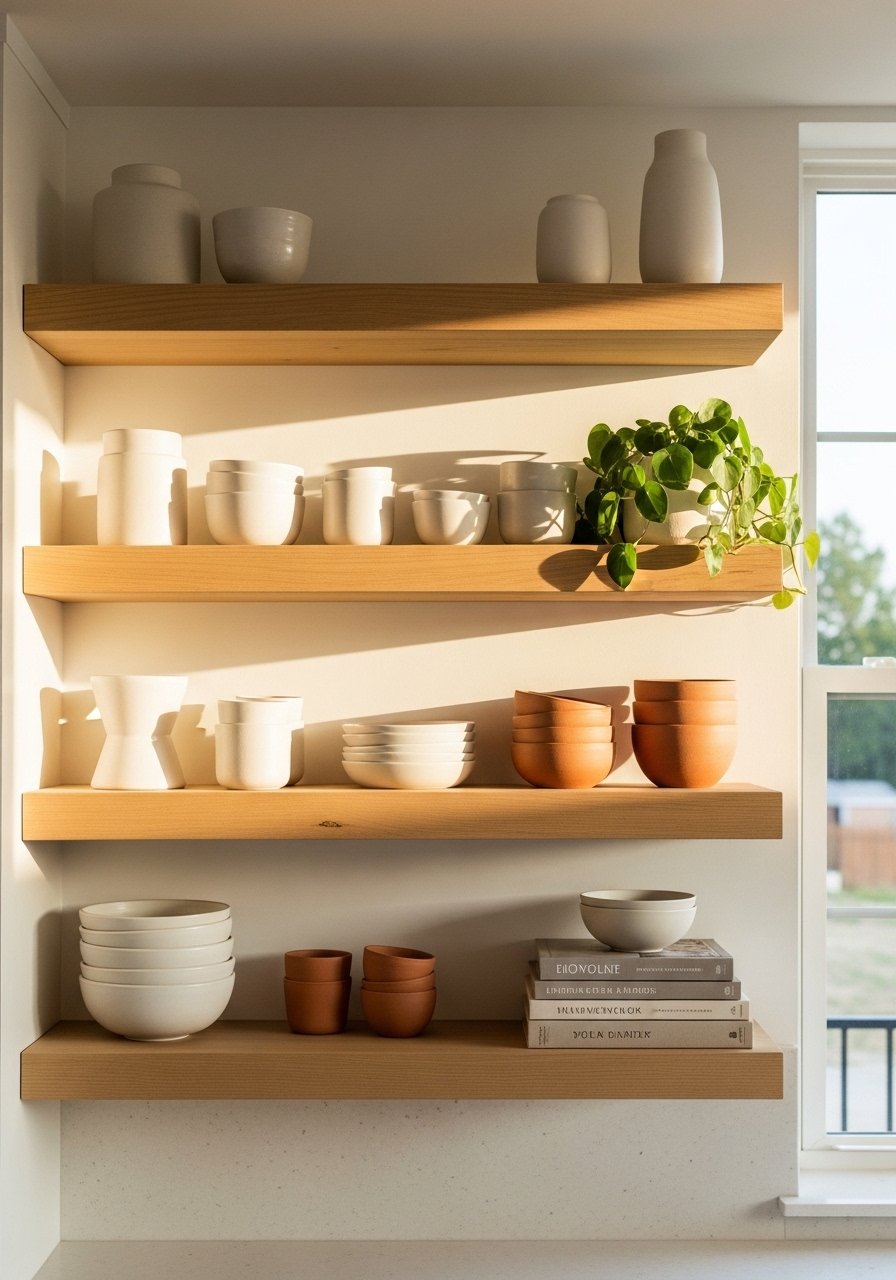
Open shelves look messy when everything is the same height. Mix horizontal stacks with vertical rows and leave negative space roughly the size of a small plate between groupings. I tuck one decorative bowl per shelf next to functional items to break the utility look. For easy updates use a consistent color family, like white ceramics and warm wood, then add one accent like a matte stoneware serving piece. A solid option is matte-stoneware-serving-platter.
Mistake to Avoid: Lining every shelf with identical jars so it reads like pantry overflow instead of styling.
6. Trim Molding As Cheap Paneling

Thin trim becomes instant paneling when painted the same color as the wall. Use 1×2 primed MDF strips and set panels about 18 to 24 inches wide for a bedroom headboard wall. Paint the whole thing in an eggshell finish with a ratio of two parts matte to one part satin to keep it subtle yet durable. This is fast, renter-friendly when installed with adhesive-friendly clips, and it reads more expensive than the cost of materials. For trim try primed-mdf-trim.
Mistake to Avoid: Nailing without sealing joints so seams show through the paint.
7. Switch Plate Swap For Small Drama

Changing switch plates is a minute-long upgrade that signals attention to detail. Swap plastic white plates for brass or matte black covers that match hardware. Keep a backup of the original plates and remove power at the breaker before swapping. Matching finish across doorknobs, cabinet pulls and switch plates ties a room together in a subtle way. If you like a modern look search for brass-switch-plate.
Mistake to Avoid: Mixing metal finishes randomly so the room reads mismatched rather than collected.
If any of these ideas have you ready to act, here are the essentials I keep reaching for.
Starter Picks For Small Spaces
Textiles & Soft Goods:
- velvet-pillow-covers (~$12 each). Swap covers seasonally, one change makes the couch feel new.
- jute-area-rug (~$60-120). Natural texture that hides traffic.
Hardware & Lighting:
- plug-in-wall-sconce (~$35-80). No wiring, big mood.
- brass-switch-plate (~$8-20). Small upgrade with impact.
Wall & Shelving:
- peel-and-stick-wallpaper (~$25-60 per roll). Test a strip first.
- primed-mdf-trim (~$10-25 per length). Fast paneling.
Frames & Art:
- black-picture-frames (~$15-40). Lightweight and renter-friendly.
- matte-stoneware-serving-platter (~$30-50). Doubles as decor and function.
8. Balcony As A Mini Room

I treated my tiny balcony like a pocket room by anchoring it with an outdoor rug just big enough for two chairs. Add a half-height table to avoid crowding and string lights at the railing level rather than overhead to keep the ceiling feeling open. Choose water-resistant textiles and one statement plant for privacy. A lightweight, weatherproof outdoor-rug finishes the look quickly and packs away if needed.
Mistake to Avoid: Filling the balcony with too many potted plants so it reads cluttered instead of cozy.
9. Hidden Cable Channels

Visible cords are the easiest thing to fix. Paint adhesive cable channels the same color as the baseboard and run them along corners where the eye expects a line. Use adhesive cable tracks sized to hide a power strip and a single HDMI cable, and fasten with small cable clips every 12 inches for a clean run. I keep a labeled surge protector behind the console, so swapping devices stays simple. Look for adhesive-cable-tracks that are paintable.
Mistake to Avoid: Trying to hide cables by stuffing them behind furniture where they kink and damage connectors.
10. One-Tone Layering For Calm

Using one color family with mixed textures keeps small rooms calm while still feeling rich. Combine linen, a knit throw, and a low-sheen pillow in a single palette and vary surface finishes like matte ceramic and soft velvet. I aim for three texture types and two shades within the color family to avoid monotony. It is a beginner-friendly approach that reads sophisticated without expensive pieces. For quick swaps try linen-duvet-cover.
Mistake to Avoid: Matching everything exactly, which makes the room feel flat rather than layered.
11. Corner Floating Shelf For Plants
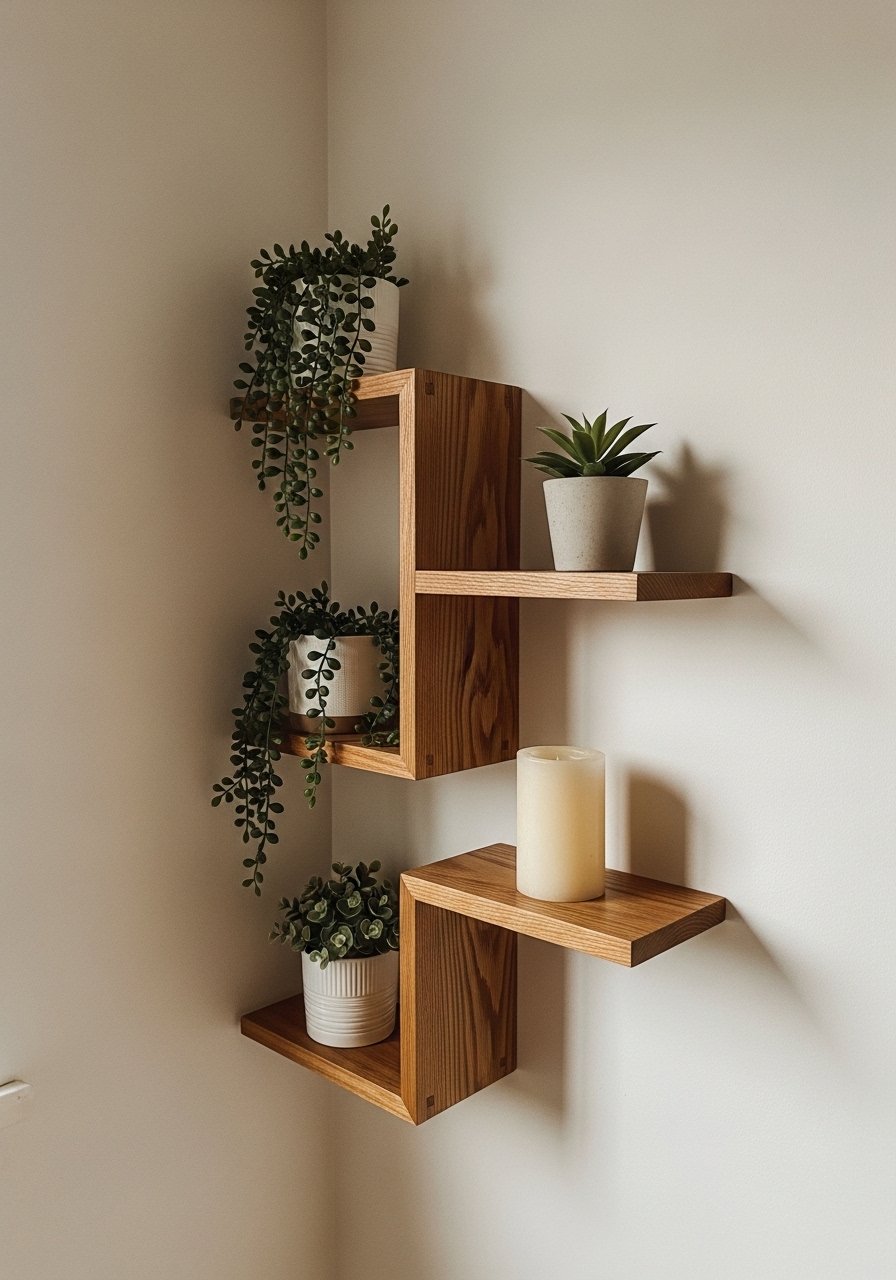
A slim floating shelf in a corner creates a vertical vignette without stealing floor space. Keep shelf depth under 6 inches to avoid crowding traffic flow. Use wall anchors rated at least 30 pounds and stagger shelf heights by 8 to 10 inches for rhythm. Line a trailing plant on the top shelf so vines soften the vertical line. For lightweight styling grab a floating-shelf that ships with anchors.
Mistake to Avoid: Choosing a deep shelf that protrudes and becomes a stubbed-toe hazard in small rooms.
12. Statement Mirror To Multiply Light

Position a tall mirror across from a window so it doubles daylight. A narrow arched mirror is easier to tuck into tight spots and adds vertical emphasis that raises perceived ceiling height. Secure leaners with a floor stop if you have pets or kids. Mirrors with a thin black frame read modern and anchor other black accents like picture frames. Try arched-leaning-mirror for an affordable option.
Mistake to Avoid: Hanging a small mirror alone so it looks like a one-off instead of part of the room.
13. Kitchen Counter Clearing Station

Clutter congregates around the sink and stove. Add a small tray or shallow bowl as a designated clearing station and keep it to a single surface object plus one plant. I use a stone tray for wet items and a ceramic bowl for mail, both easy to wipe. Limiting the station to two functional pieces keeps counters usable without constant triage. For a low-maintenance tray try stone-tray.
Mistake to Avoid: Turning the clearing station into a catchall where receipts and wrappers accumulate.
14. Paint The Ceiling Warm White
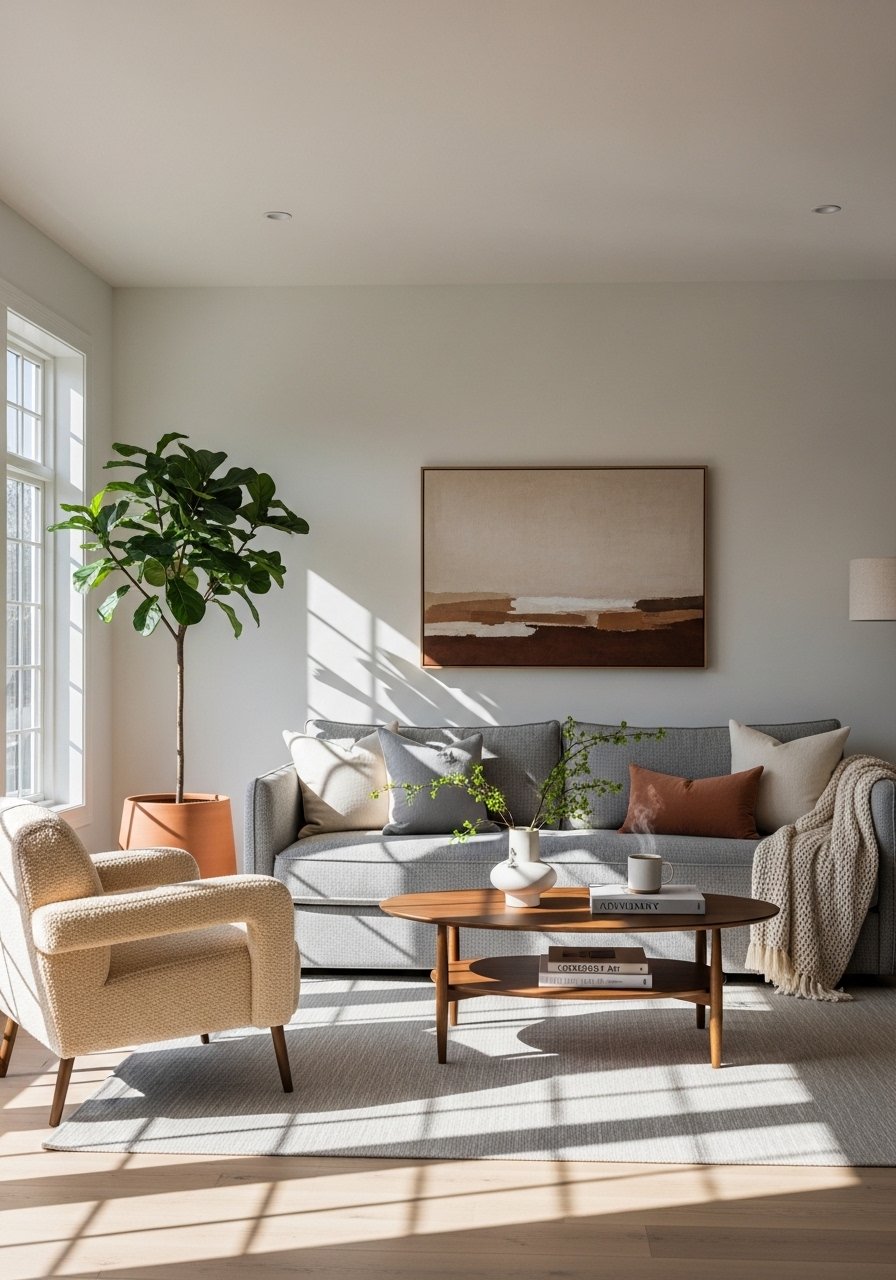
A slightly warm white ceiling reads softer than stark white and makes layered lighting feel natural. Choose a paint with LRV around 80 and tint it with a warm base so it reads close to 2700K light. Paint the trim the same or one shade darker to ground the room. It is a small change that keeps the space feeling cohesive, especially when paired with warm bulbs.
Mistake to Avoid: Painting ceilings pure bright white while using warm-toned bulbs so the room looks mismatched.
15. Modular Seating For Flexibility
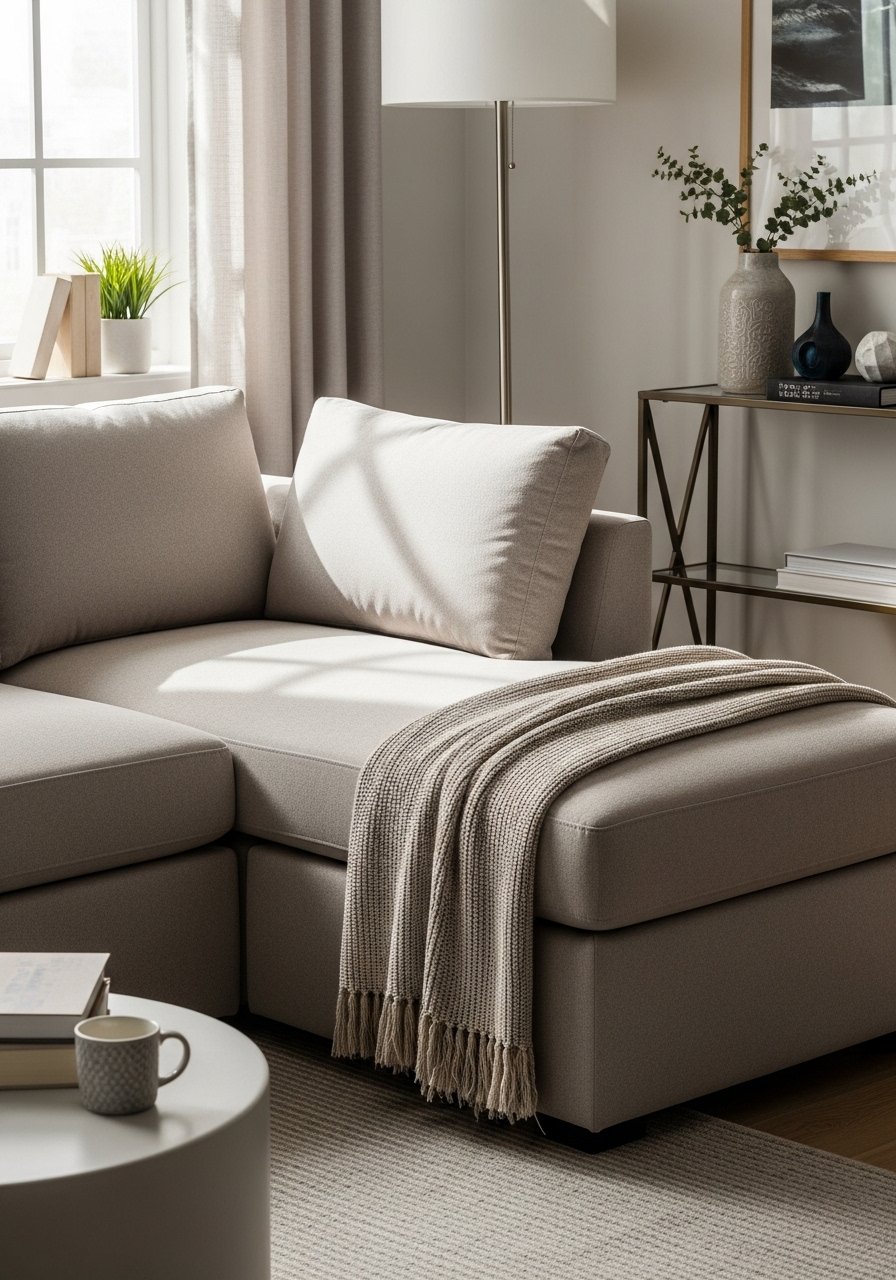
For small spaces, modular seating that can be reconfigured keeps things flexible for guests and everyday life. Choose one durable fabric like performance linen and plan modules so at least one piece is lightweight enough to move alone. Use a 2:1 ratio of seating depth to coffee table size so circulation stays open. I picked modules with removable covers for easy washing after rentals. Options like a modular-sofa-section make this practical.
Mistake to Avoid: Buying a one-piece couch that blocks the best walking path in the room.
Placement Habits That Stick
Start small and measure twice. Keep a tape measure in a drawer so you actually test rug and shelf sizes before buying. I cannot count the number of returns this saved. Grab a fabric-tape-measure for easy checks.
Rotate textiles seasonally. Swap out pillow covers and a throw every three months to refresh the room without spending much. Try velvet-pillow-covers in fall and linen in summer.
Match bulb color temperature across a room. If you use 2700K bulbs, replace all fixtures with that temperature to avoid odd color shifts. A pack of dimmable-led-bulbs-2700k keeps the glow consistent.
Everyone piles too many decorative objects on a single shelf. Instead, follow a rule of three: one tall, one medium, one small item per shelf. Use a matte-ceramic-vase as an anchor piece.
Test temporary fixes before committing. I use sample paint pots and a small wallpaper swatch before an entire wall so I do not redo a heavy project. Keep a set of sample-paint-pots on hand and save time and returns.