
I spent months shrinking carnation photos until my wrist tattoo looked like a confused star. The mistake I kept making was treating a carnation like a full bloom painting, not a tiny signpost. Once I learned to pick a single petal rhythm, limit line weight, and plan for healed look not photographed flash, the designs actually worked on small spots and held up. That is what the list here aims to fix, with practical picks and real placement notes I learned across five shops I have visited.
These ideas are aimed at people who want subtle floral tattoos that read clearly in everyday life, not someone booking a full sleeve. Expect beginner-friendly sizes, budget-friendly aftercare, and options that are easy to cover for work. Most designs are one-session or split into short touch-ups, and each idea notes pain, session time, and placement so you can plan around work, travel, or a tattoo that needs to stay discreet.
1. Single-Line Wrist Carnation
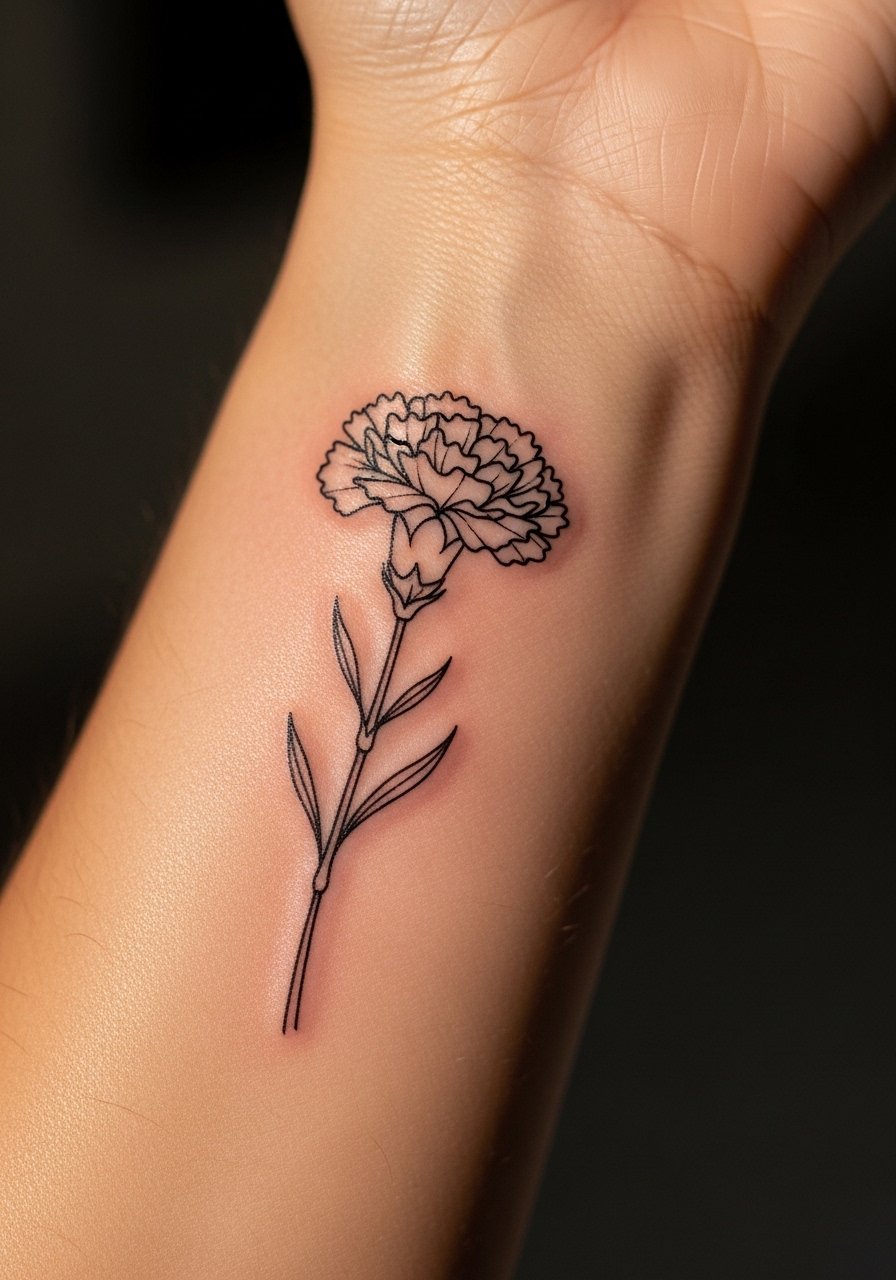
A continuous single-line carnation reads clean on a small wrist because there is no competing shading to blur over time. Aim for a 2.5 to 3.5 centimeter height with a 0.25 to 0.35 millimeter line weight so the petals keep definition after healing. This fits someone who wants a visible but low-profile piece and is quick to book. Bring a reference with clear petal spacing, and ask the artist for single-needle work. Use a fragrance-free moisturizer for the first week to keep scabbing soft.
Mistake to Avoid: Shrinking a detailed photo into a tiny wrist tattoo without reducing petal count first.
2. Micro-Shaded Ankle Carnation
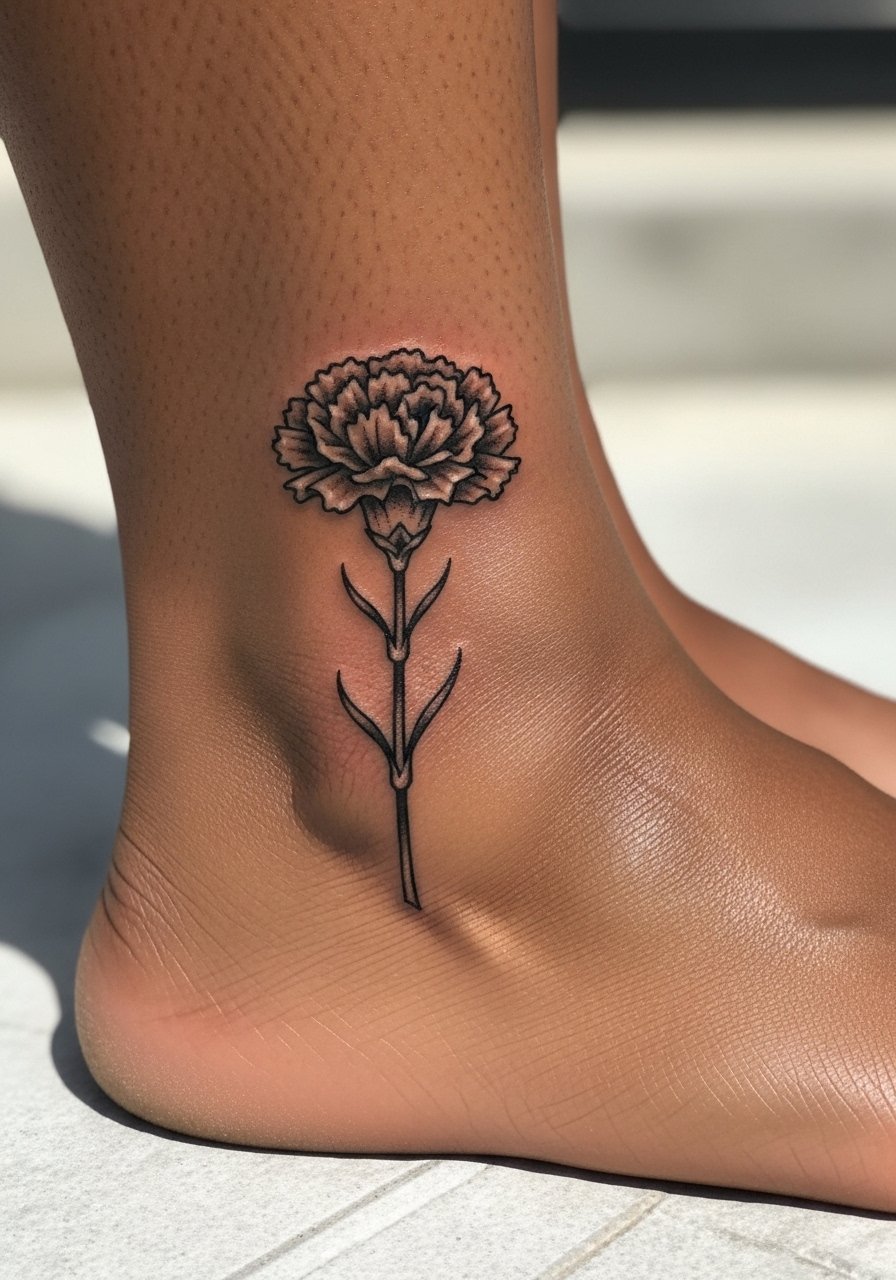
Micro-shading gives depth without heavy black fill, so a 3 to 4 centimeter carnation looks soft rather than blocky. Ask for 10 to 15 percent shading density, small dot gradients, and a single-needle taper on the edges. This style suits someone who wears sandals or low shoes and wants a delicate pop. Pack a green soap and a breathable adhesive bandage for transit home after a session.
Mistake to Avoid: Asking for "full shading" at small sizes, which turns into a muddy blob after a year.
3. Behind-Ear Tiny Carnation Outline
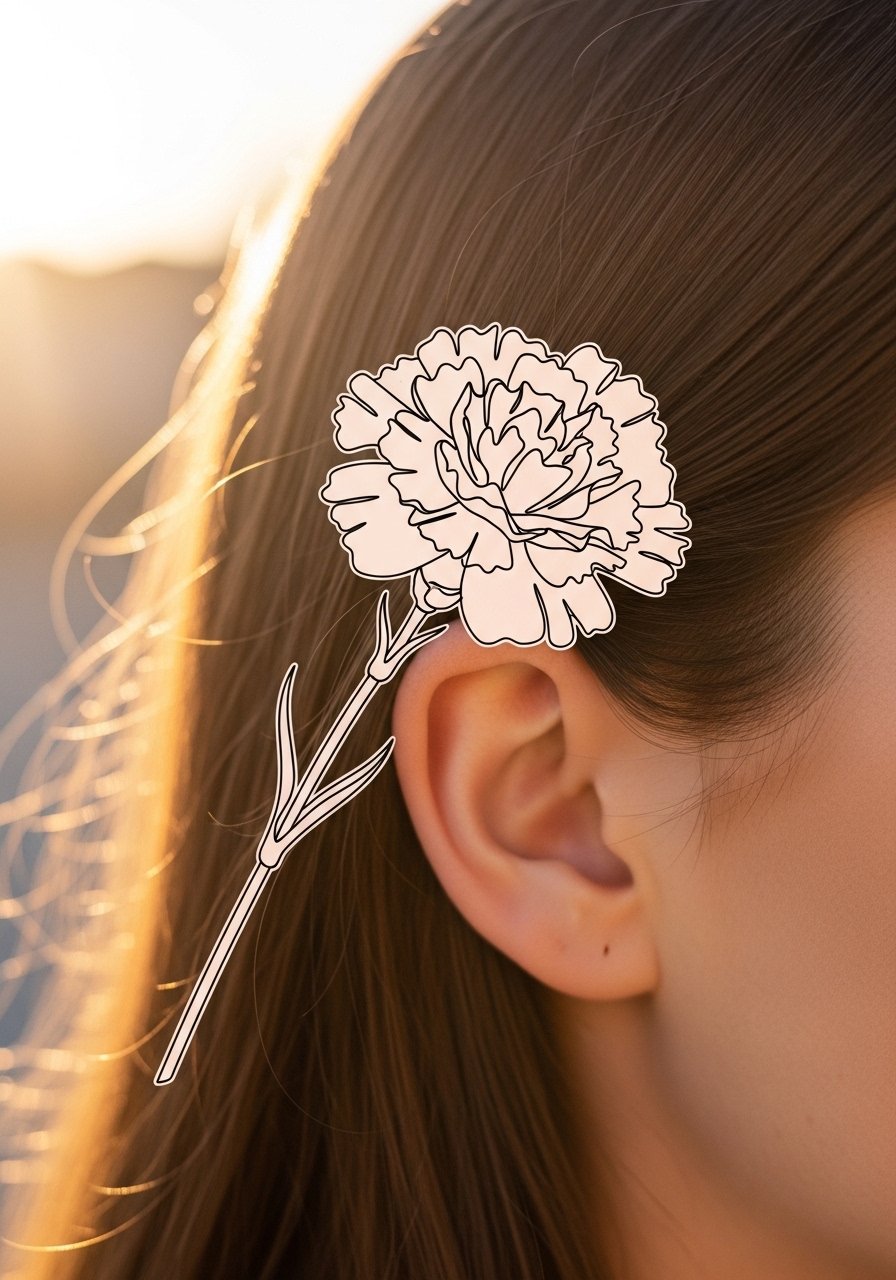
A simple outline carnation behind the ear can be as small as 1.5 to 2 centimeters and still read, because the negative space around it helps the eye. This placement is work-coverable with hair and is low-commitment for first-timers. Request 0.25 millimeter linework and avoid interior dots. For touch-ups, a tiny amount of tattoo aftercare balm keeps the area supple while sleeping.
Mistake to Avoid: Packing too many petal veins into a behind-ear piece, which looks cluttered at that scale.
4. Collarbone Single-Petal Accent
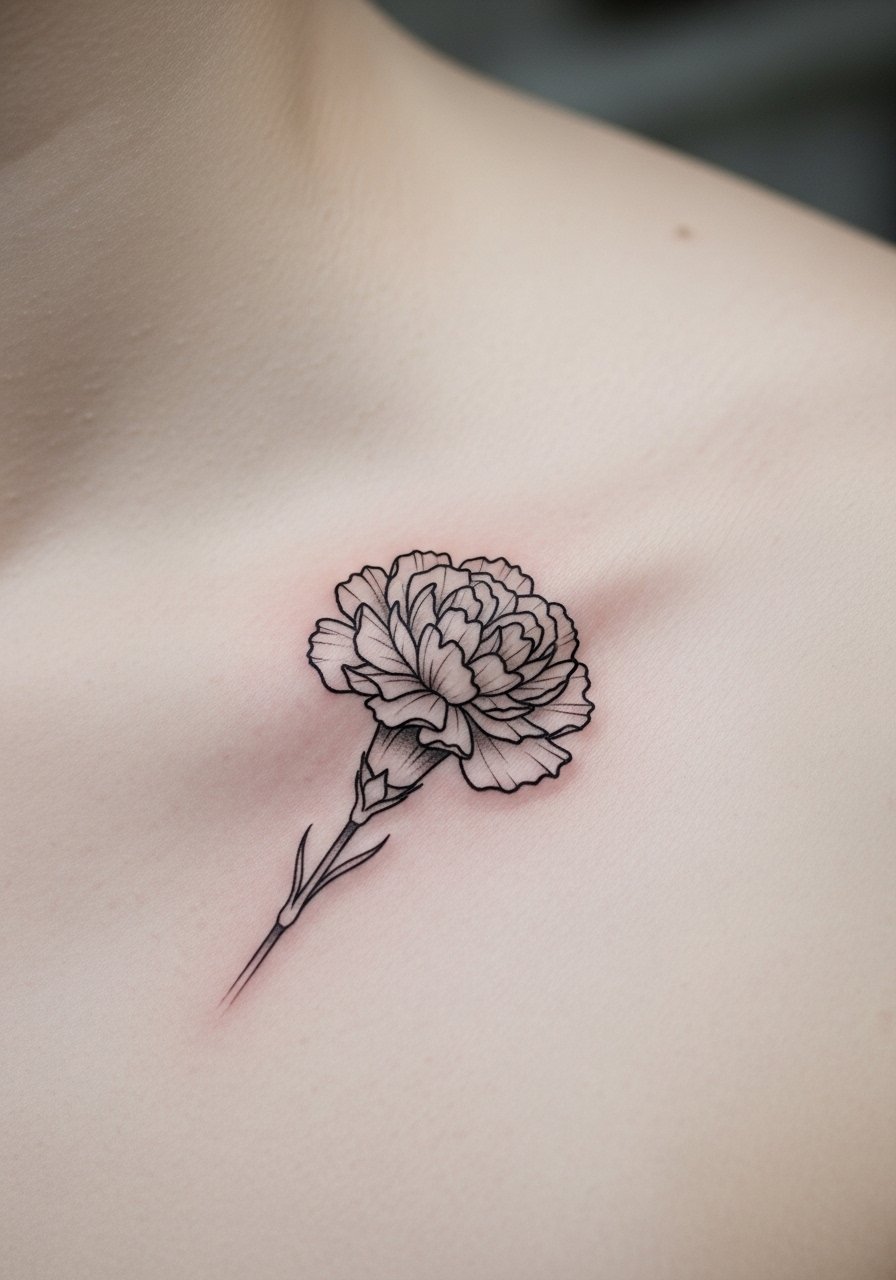
One isolated petal placed over the collarbone gives the impression of a secret bloom and works well with necklaces. The trick is a 1.8 to 2.5 centimeter width and a mix of 0.25 millimeter line with 20 percent micro-shading at the base for depth. This is a slightly higher pain area but worth it for a visible, elegant result. Ask the artist to show a stencil sitting on you before inking.
Mistake to Avoid: Using a full bloom template on the collarbone without scaling the inner shading.
5. Tiny Finger Stem Accent
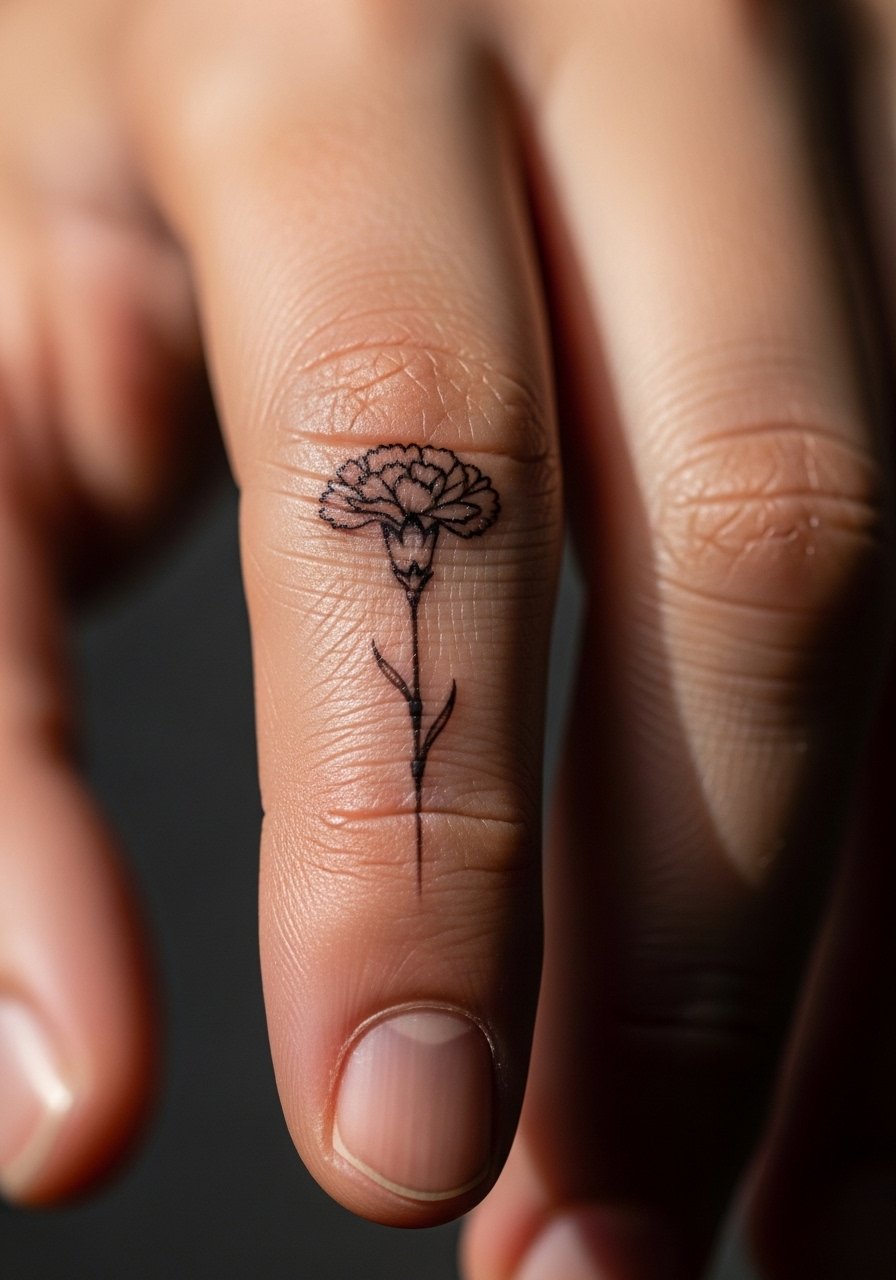
Finger placements need simplified stems and minimal petals because skin there spreads and fades faster. Keep the design under 2 centimeters and focus on a single stem with one or two petals. Expect touch-ups; plan for a short session each 12 to 18 months. Carry a sterile bandage for the first night and avoid heavy hand work until the scab lifts.
Mistake to Avoid: Trying to reproduce a wrist-sized carnation on a finger without simplifying the composition.
6. Inner Bicep Minimalist Bouquet
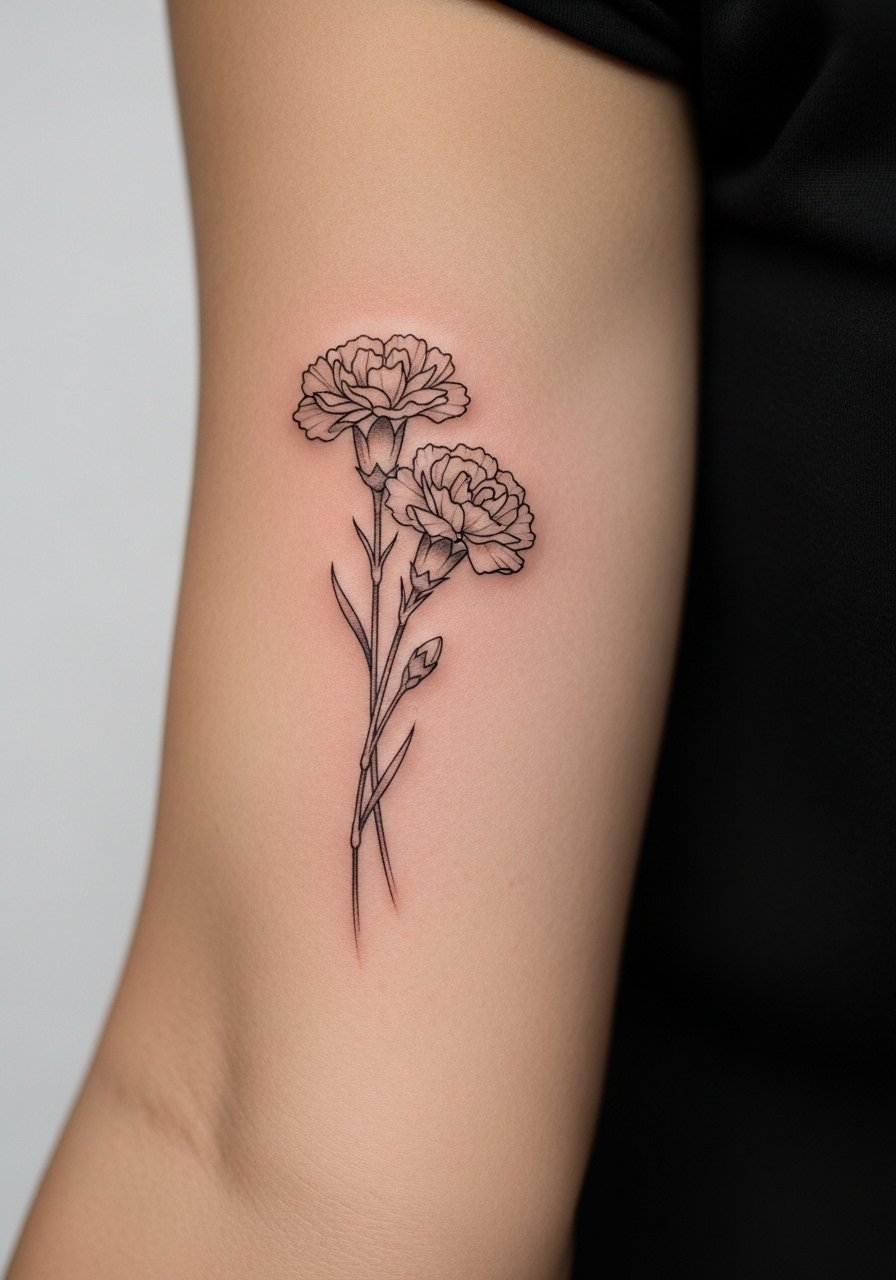
Pairing two tiny carnations as a petite bouquet works on the inner bicep because there is space for slight spacing and short stems. Use 3 to 4 centimeter total height with 0.3 millimeter lines and micro-dot shadows between stems. This placement suits someone who wants a private piece that is still visible in sleeveless tops. A fragrance-free soap bar helps during cleaning while avoiding irritation.
Mistake to Avoid: Crowding multiple tiny blooms too close so they heal into one indistinct shape.
7. Ribcage Negative Space Carnation
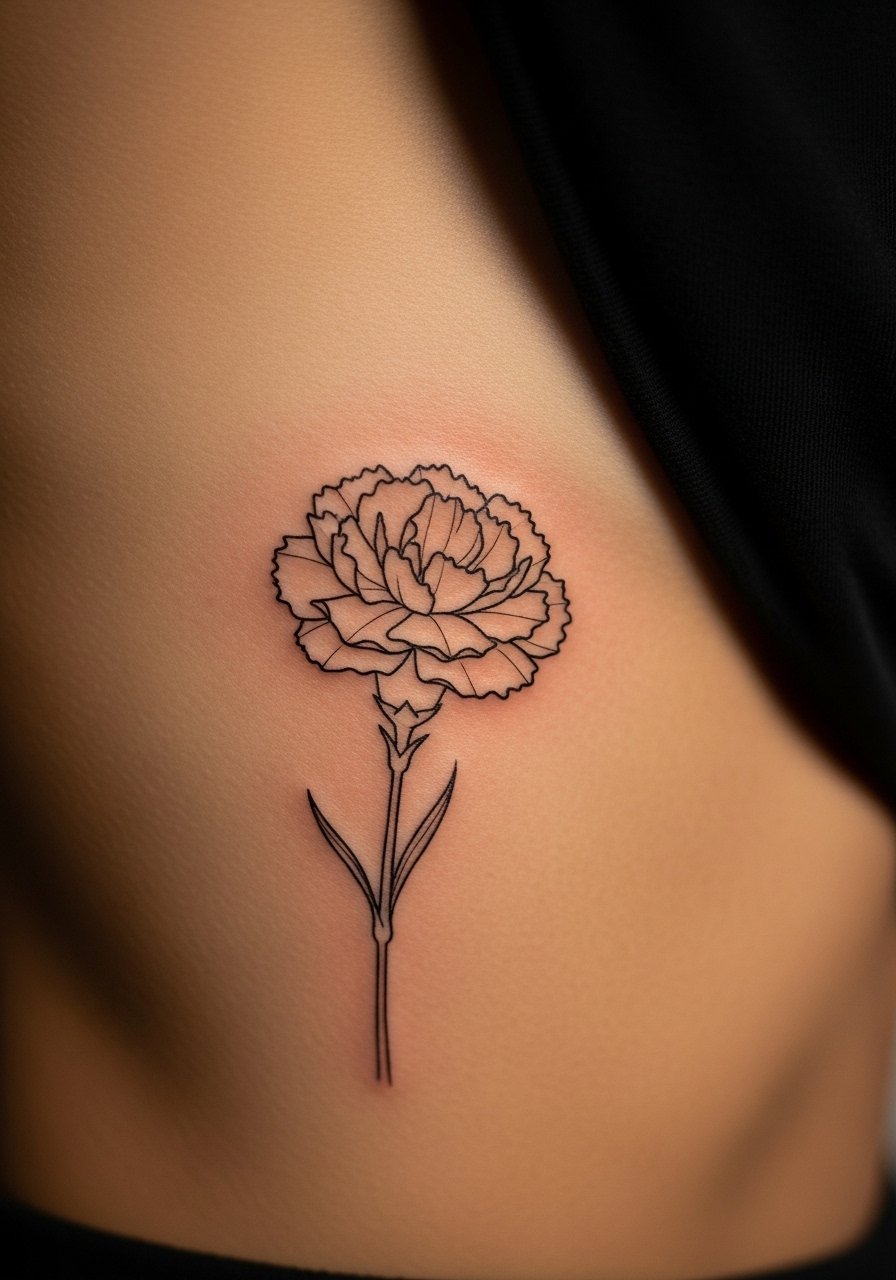
Negative space outlines on the ribcage keep the design airy and less painful because less dense ink is used overall. A 4 to 6 centimeter silhouette with deliberate skin gaps between petals makes a tattoo that breathes with movement. This is not for a quick lunch break, expect 1 to 2 hours. Pack a cooling gel pack to soothe the area gently after the session.
Mistake to Avoid: Filling every petal for contrast when negative space would preserve clarity longer.
If any of these ideas have you ready to plan the right set of supplies before booking, here are the essentials I use or recommend from real sessions.
Tattoo Session Essentials For Minimal Carnations
Aftercare Basics:
- Tattoo aftercare balm (~$8-20). A small tin for daily application during the first week.
- Fragrance-free moisturizer (~$8-15). Use after the balm phase.
Cleaning & Protection:
- Green soap for tattooing (~$6-12). For gentle cleaning during sessions.
- Sterile bandages (~$10-18). Breathable options for the first night.
- Sunscreen stick (~$8-14). For healed tattoos to prevent fading.
Tools Artists Mentioned:
- Single-needle tattoo cartridges (~$15-30). Useful for fine-line work; bring a note if you prefer one needle size.
- Tattoo transfer paper (~$10-20). Good for artists who accept client-provided stencils.
- Disposable gloves (~$12-20). For cleanliness if you purchase aftercare kits.
Extra Comfort:
- Cooling gel pack (~$6-12). For the trip home after a sensitive placement.
8. Collarbone Script-Integrated Carnation
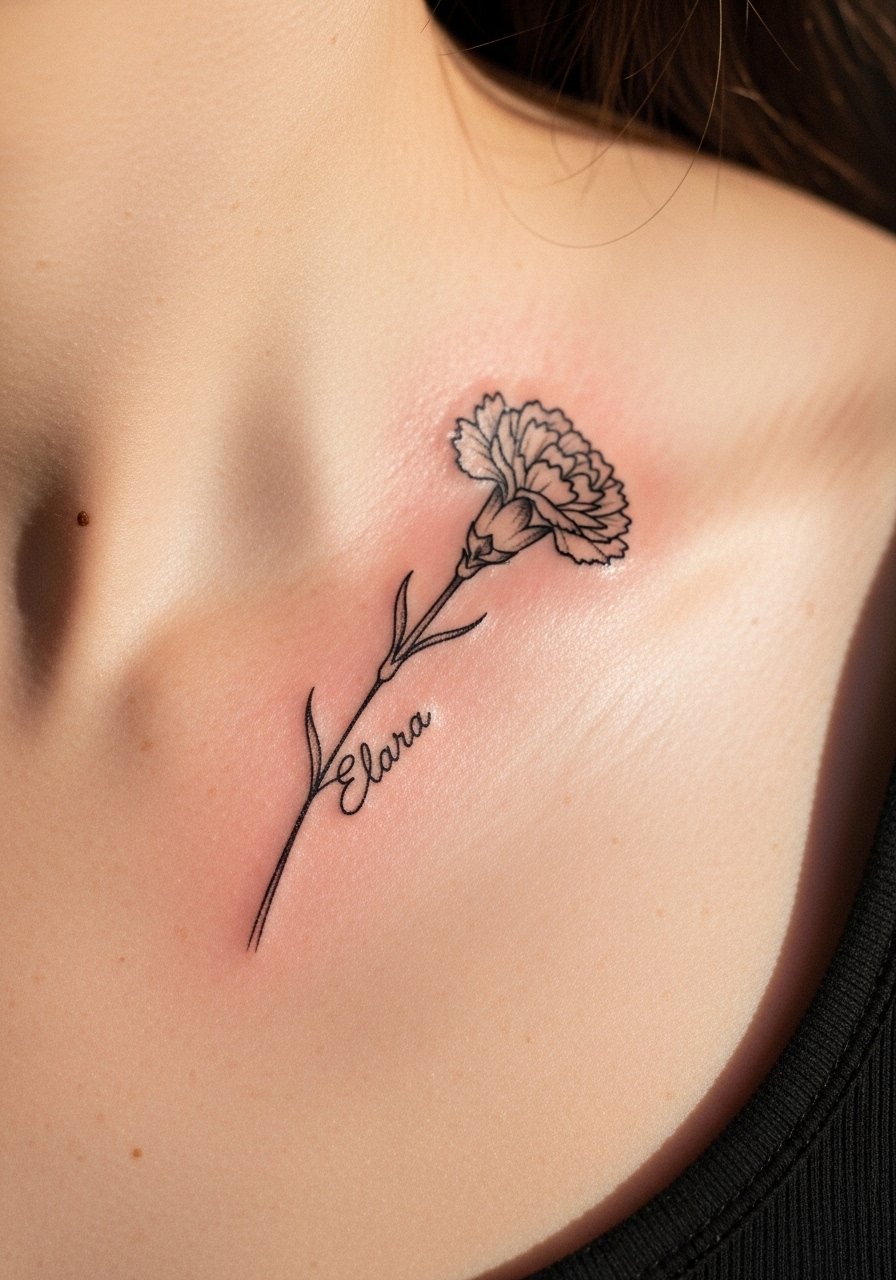
Weaving a thin name or date along a carnation stem keeps the bloom readable while adding personal meaning. Keep lettering at 1.5 millimeter stroke and limit to a single short word. This is best for people who want a sentimental piece that is still classically minimal. Ask the artist for a stencil mockup on your skin and keep the text short. Use a fragrance-free moisturizer during weeks two to four.
Mistake to Avoid: Choosing a long phrase, which forces the letters to become too tiny to read.
9. Thigh Geometric Frame Carnation
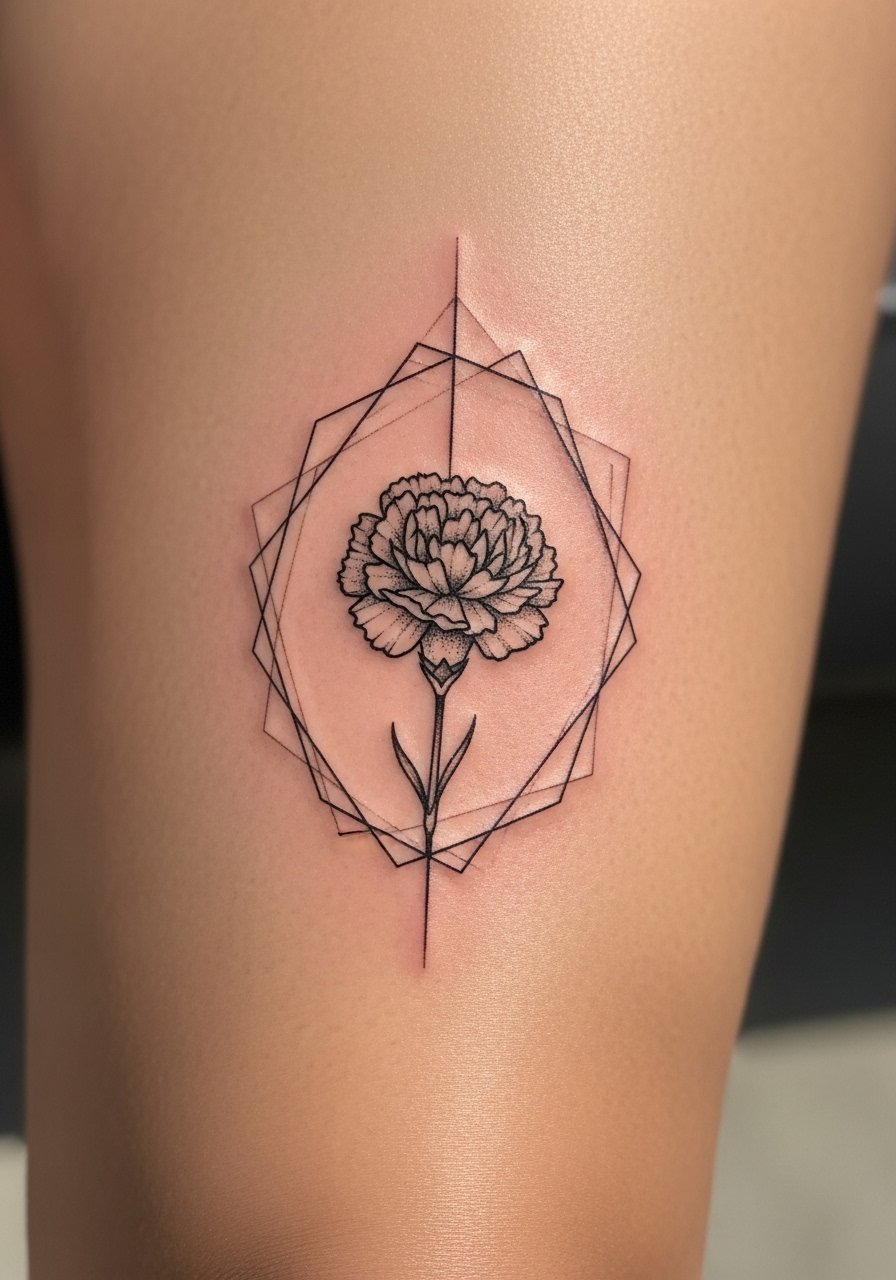
Pairing geometry with a carnation highlights the flower without filling the piece. A 5 to 7 centimeter frame with 0.35 millimeter outlines and a single 3 to 4 centimeter flower inside creates a modern contrast. This suits someone who wants a statement that is easy to hide under clothing. Expect 1.5 to 2 hours and bring loose clothing for the ride home. A tattoo aftercare balm helps reduce itch during healing.
Mistake to Avoid: Letting the frame dominate the flower, which makes the bloom feel like an afterthought.
10. Shoulder Blade Dotwork Carnation
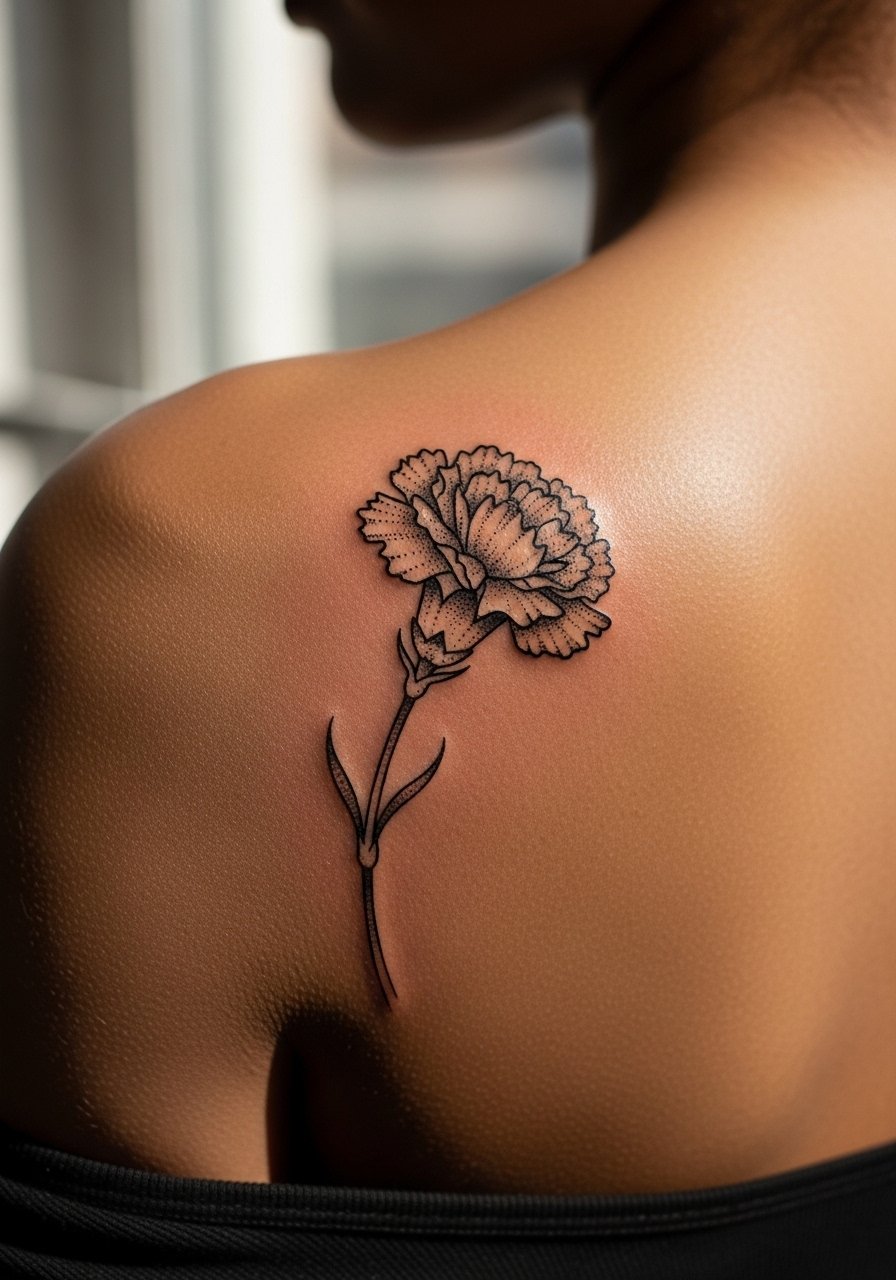
Dotwork offers texture without dense black areas, perfect for shoulder blade pieces that move with the skin. Use graduated dot density from 5 to 40 percent to create petal depth. A 4 to 5 centimeter design holds detail well here. This is for someone who wants texture without heavy contrast and prefers a piece that ages gently. Keep a fragrance-free soap bar on hand for the first few showers.
Mistake to Avoid: Asking for solid black fills when dotwork would preserve a softer silhouette over time.
11. Foot Outer Edge Minimal Carnation
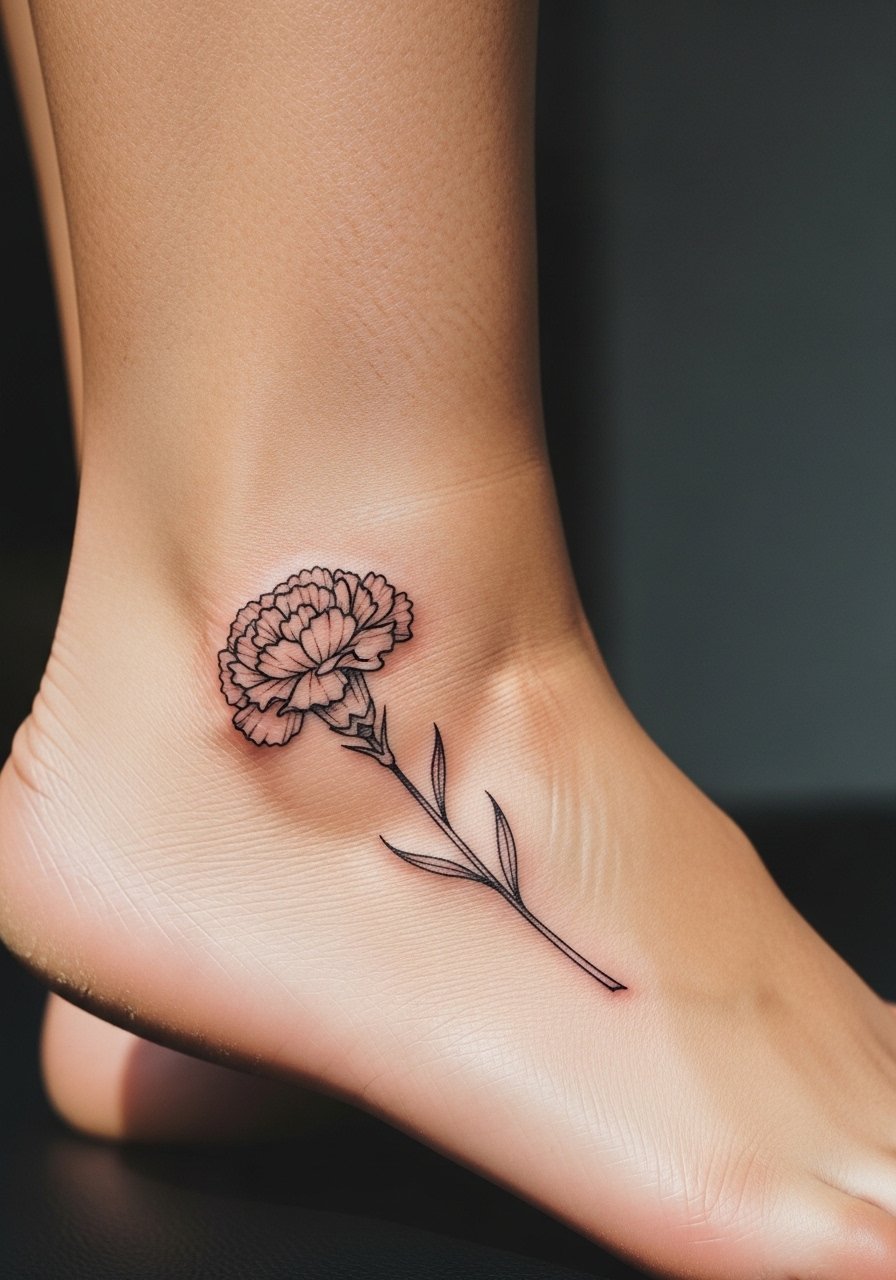
Foot tattoos need simplified stems and minimal petal overlaps because the skin is thin and moves. Keep the motif under 3.5 centimeters with 0.3 millimeter lines and minimal interior detail. Plan for slower healing if you wear shoes. A pair of open-toe shoes and a sterile bandage for the first day are useful.
Mistake to Avoid: Getting a highly detailed bloom on the foot and expecting it to look the same after shoed walking.
12. Side-Rib White-Ink Edge Carnation
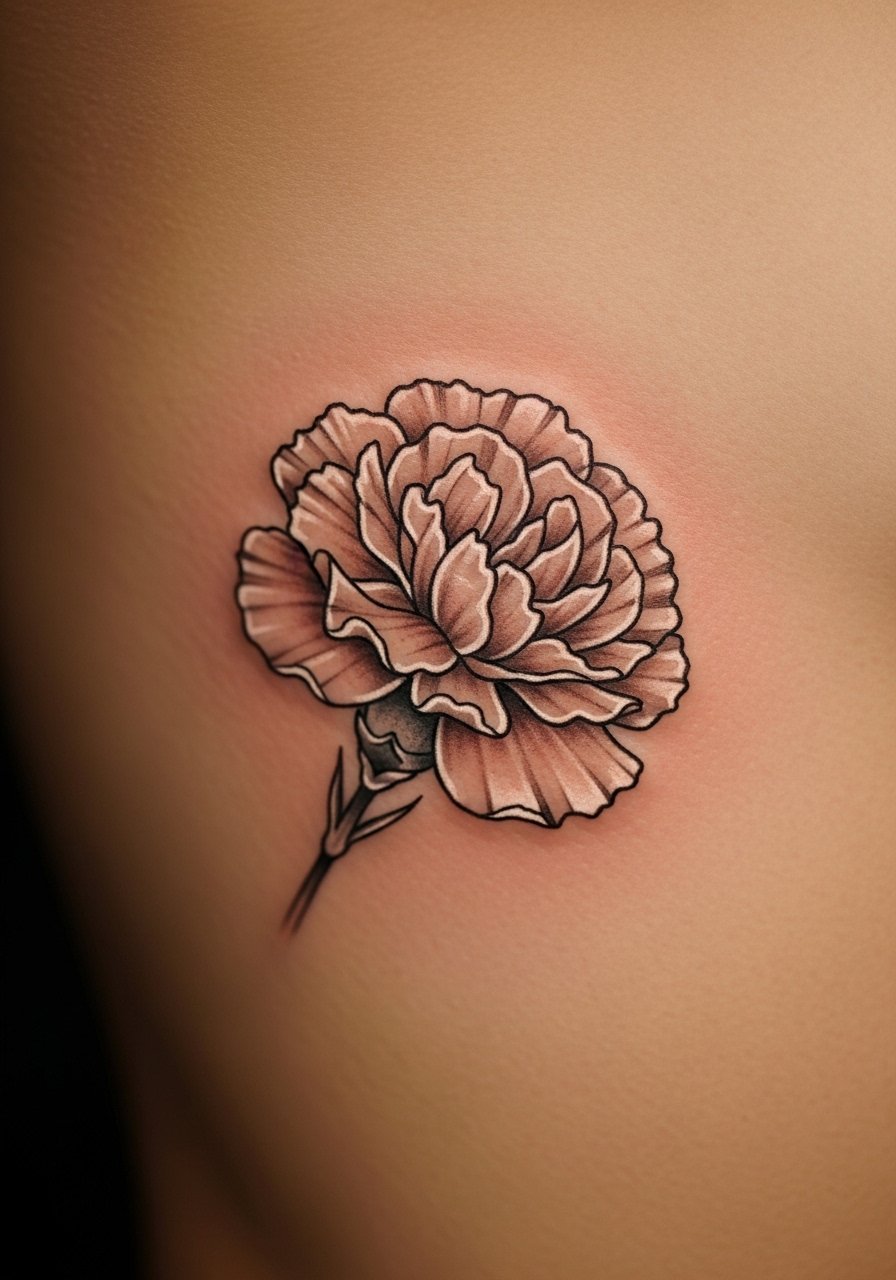
Adding a tiny amount of white ink to petal edges gives a faint highlight that reads as texture in photos and in person. Keep white ink minimal and only on healed skin if doing a touch-up. This is for people who want a slightly three-dimensional look without heavy shading. Ask the artist about white ink longevity on your skin tone. Keep a sunscreen stick handy post-healing.
Mistake to Avoid: Overusing white ink at initial session, which can fade unevenly and require touch-ups.
13. Nape of Neck Mini Carnation Cluster
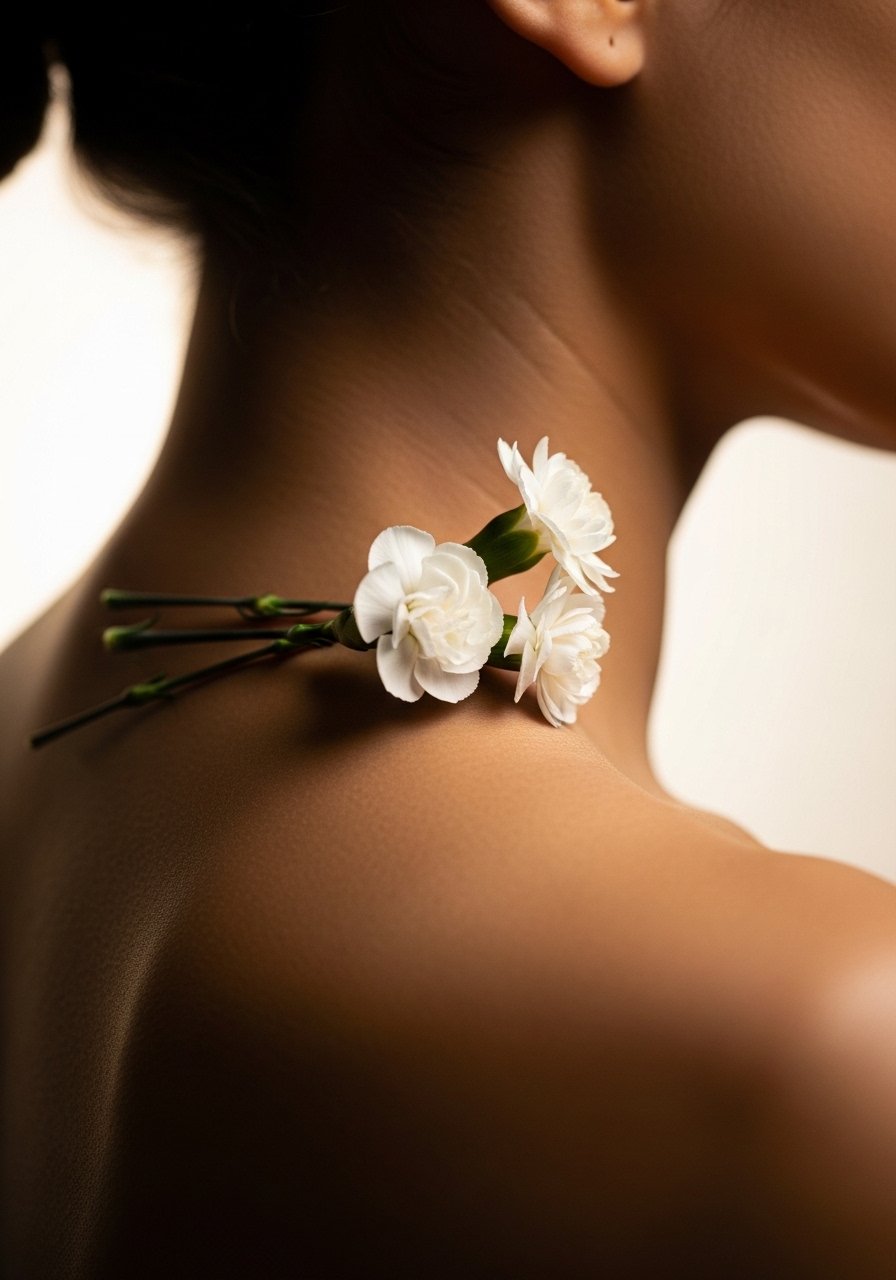
A small trio at the nape works with hair length for coverability and looks intentional when hair is up. Keep each flower 1.8 to 2.5 centimeters wide and space them so the negative space reads. This placement is higher pain for some but easy to hide. Pack a cooling gel pack and wear loose collars after the session.
Mistake to Avoid: Clustering too tightly so the blooms heal into one blot.
14. Inner Wrist Miniature with Metallic Ink Accent
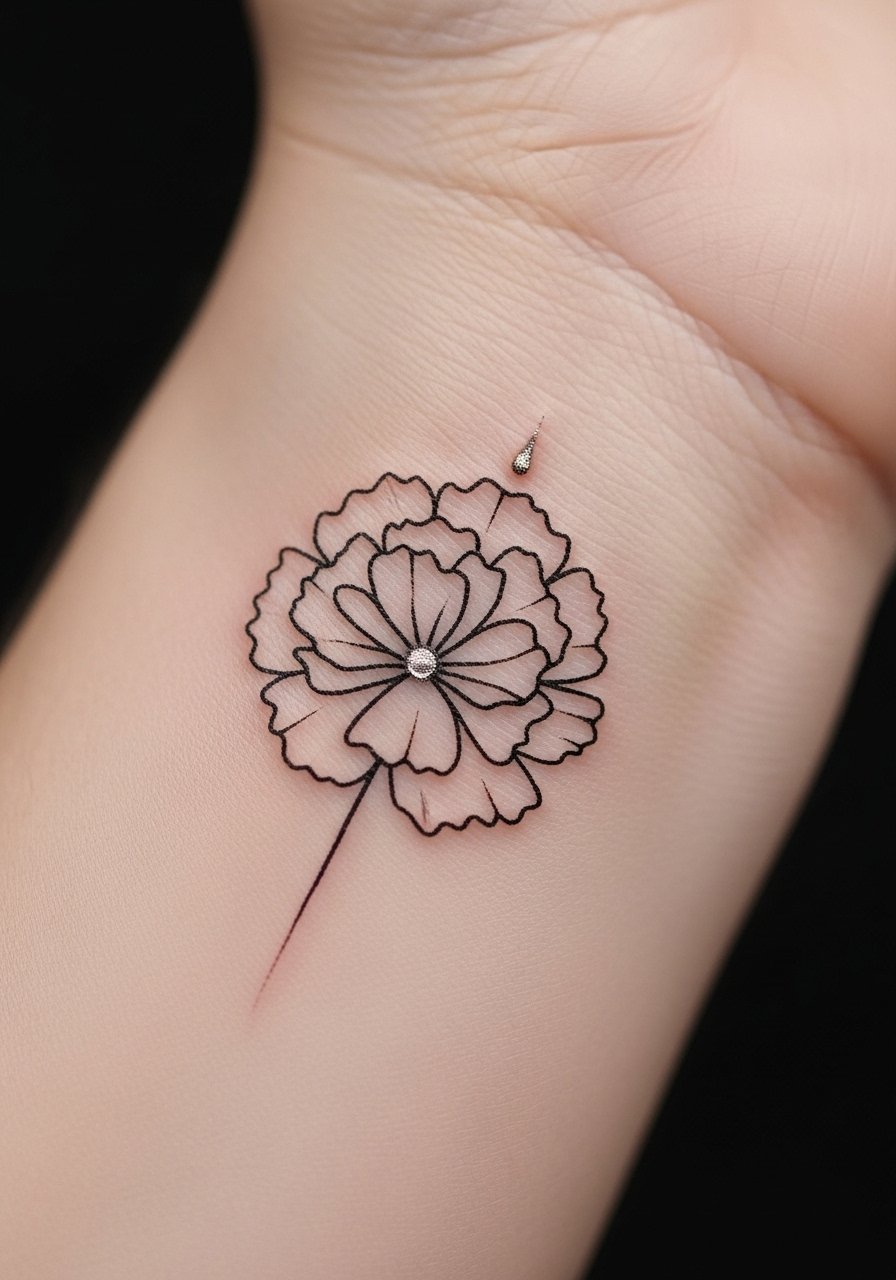
A single metallic-ink dot at the flower center can add subtle shimmer without heavy coverage, but confirm your artist's pigment choices for safety. Keep the dot very small and let the main lines be the focus. This suits someone who wants a hidden detail that catches light occasionally. Use a fragrance-free moisturizer after the initial balm phase.
Mistake to Avoid: Overdoing metallic pigments which can oxidize or fade oddly on some skin types.
15. Rib Wrap Stem Band
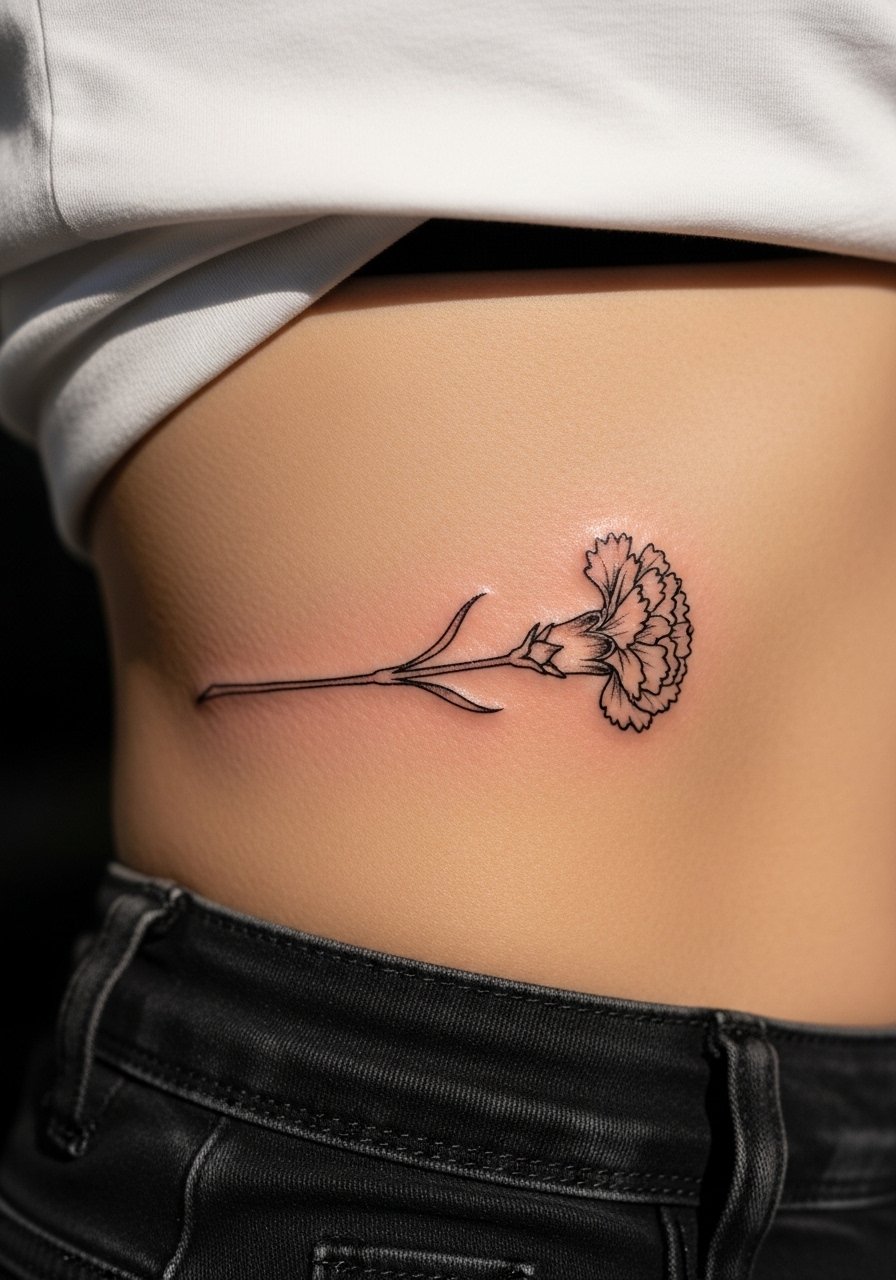
A stem-wrapping band reads like jewelry and stays elegant because the design is linear rather than filled. Keep stem width narrow and petal count low, with 0.3 millimeter line weight and 3 to 4 centimeter repeat length. This is great for someone who likes the idea of a floral band they can show or cover easily. Bring a loose shirt for the trip home and use a sterile bandage for the first few hours.
Mistake to Avoid: Turning the band into a solid filled cuff, which loses the floral identity.
Minimal Carnation Aftercare Moves
Keep each tip focused on small design longevity.
Less is more with moisturizer. Lightly apply a thin layer of tattoo aftercare balm twice a day. Thick slathering traps sweat and softens scabs.
Grab green soap for washes. A mild, short lukewarm rinse during the first week keeps the stencil crisp without rubbing.
Protect healed work with a sunscreen stick. A swipe after the morning routine prevents line loss over years.
If an artist offers single-needle cartridges, try them. They make 0.25 to 0.35 millimeter lines that hold better on small petals than wider groupings.
Skip early workouts that make you sweat heavily near the new tattoo. Excess moisture and friction invite ink loss and prolonged scabbing.