
I kept telling my barber to "keep it short" and leaving with hair that competed with my beard instead of balancing it. The problem was not length alone. It was where the sides met the beard, how the crown held texture, and the tiny guard numbers no one seemed to agree on. One cut finally clicked, and I started writing down exact guard pairings and product names so the next time I sat down I got the same result.
These nine short cuts are practical, easy to maintain, and aimed at guys who keep beards from stubble to full. Expect salon-to-home skill, low to moderate styling time, and budgets that cover a decent trimmer and one reliable styling product. I use these across four hair textures I have styled, and I call out clipper guard pairings and small technique details so you can walk into any barber shop and get the look you want.
1. Short Crop With Full Beard
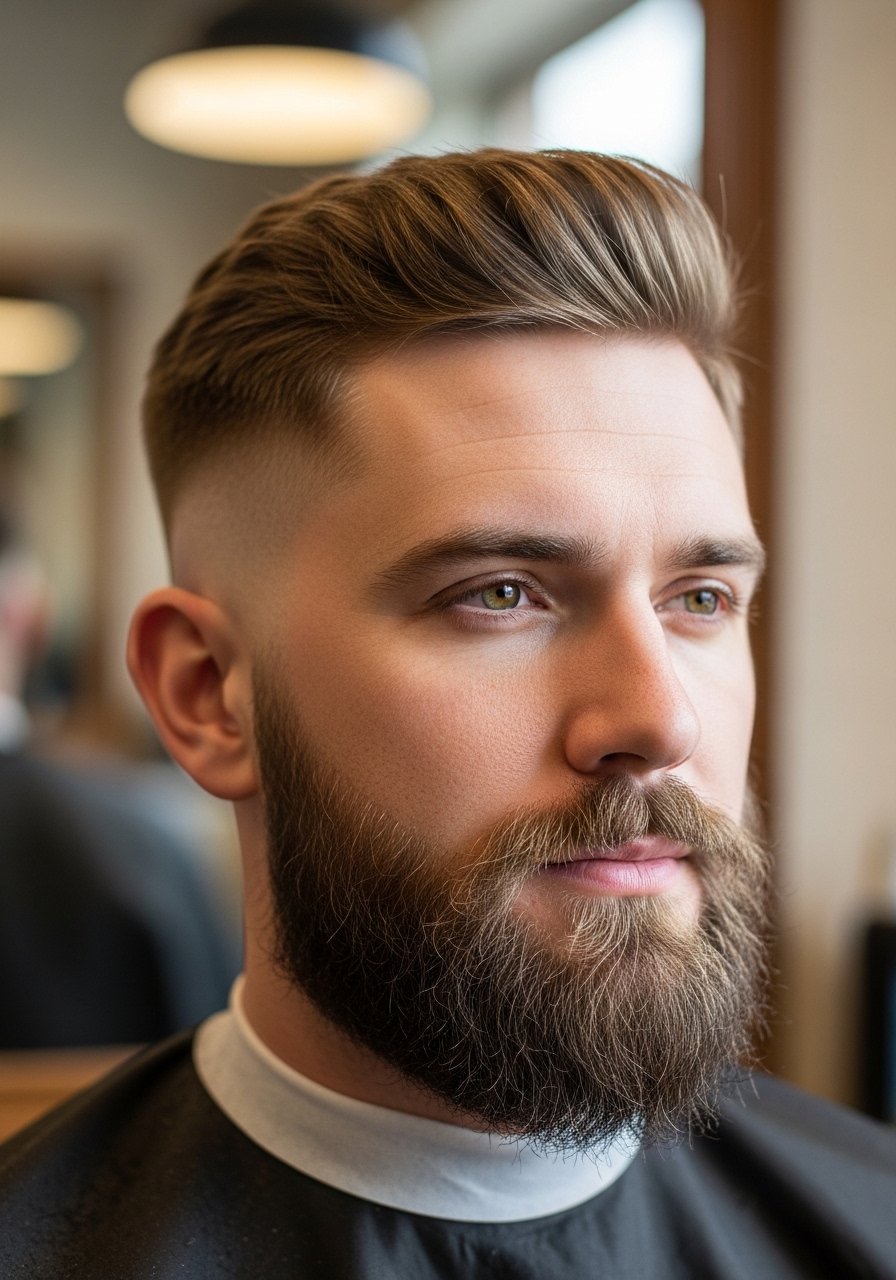
This works because the top keeps texture while the sides are tight enough to frame a full beard. Aim for a #2 on the sides blended to a #4 on top with 1 to 1.25 inches left at the crown to hold texture. The result feels balanced and intentional, not like two different faces glued together. It fits straight and wavy hair, needs 5 minutes of morning texturizing, and is beginner friendly for home trims. I reach for a matte clay and a light beard oil in the same scent to avoid clash. Try matte-clay-hair and unscented-beard-oil.
Mistake to Avoid: Trimming the sides too short without easing into the beard, which creates a harsh disconnect.
2. Buzz Cut With Soft Fade
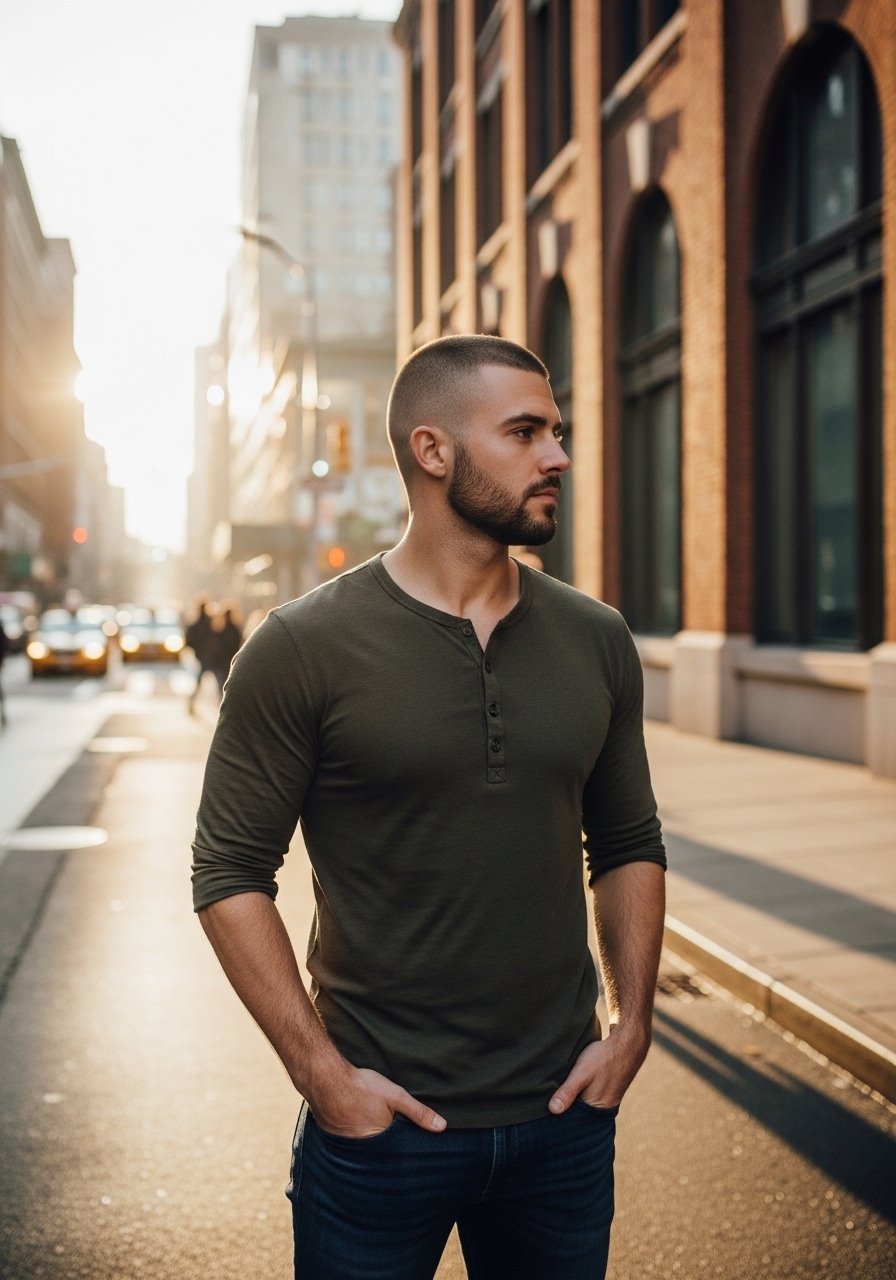
A buzz with a soft fade is low maintenance and highlights the jawline when the beard is a short boxed style. Use a #1.5 on the sides fading into a #0.5 toward the neck for a soft gradient. This gives a clean, wearable finish and only needs a quick pass with clippers every two to three weeks. It suits guys who sweat, live small-space gym routines, or prefer a simple morning routine. My go-to is a heavy-duty cordless clipper and a compact beard trimmer for the neckline. Check cordless-clippers and precision-beard-trimmer.
Mistake to Avoid: Relying on one setting for both head and beard. The fade needs a separate neckline trim.
3. Textured Crop With Tapered Neckline

The textured crop uses short layers on top to add movement and a tapered neckline to link hair to beard. Ask for scissor texturizing at the crown and a skin taper around the nape that stops about half an inch above the beard line. Visually this makes the beard appear intentional and the hair feel light. It fits fine hair needing volume and medium-density beards. Styling takes eight minutes with a sea salt spray and a light paste. I like sea-salt-texturizer and light-texturizing-paste.
Mistake to Avoid: Letting the neckline drop into the beard, which hides the jaw and makes the overall shape look messy.
4. High Skin Fade With Stubble
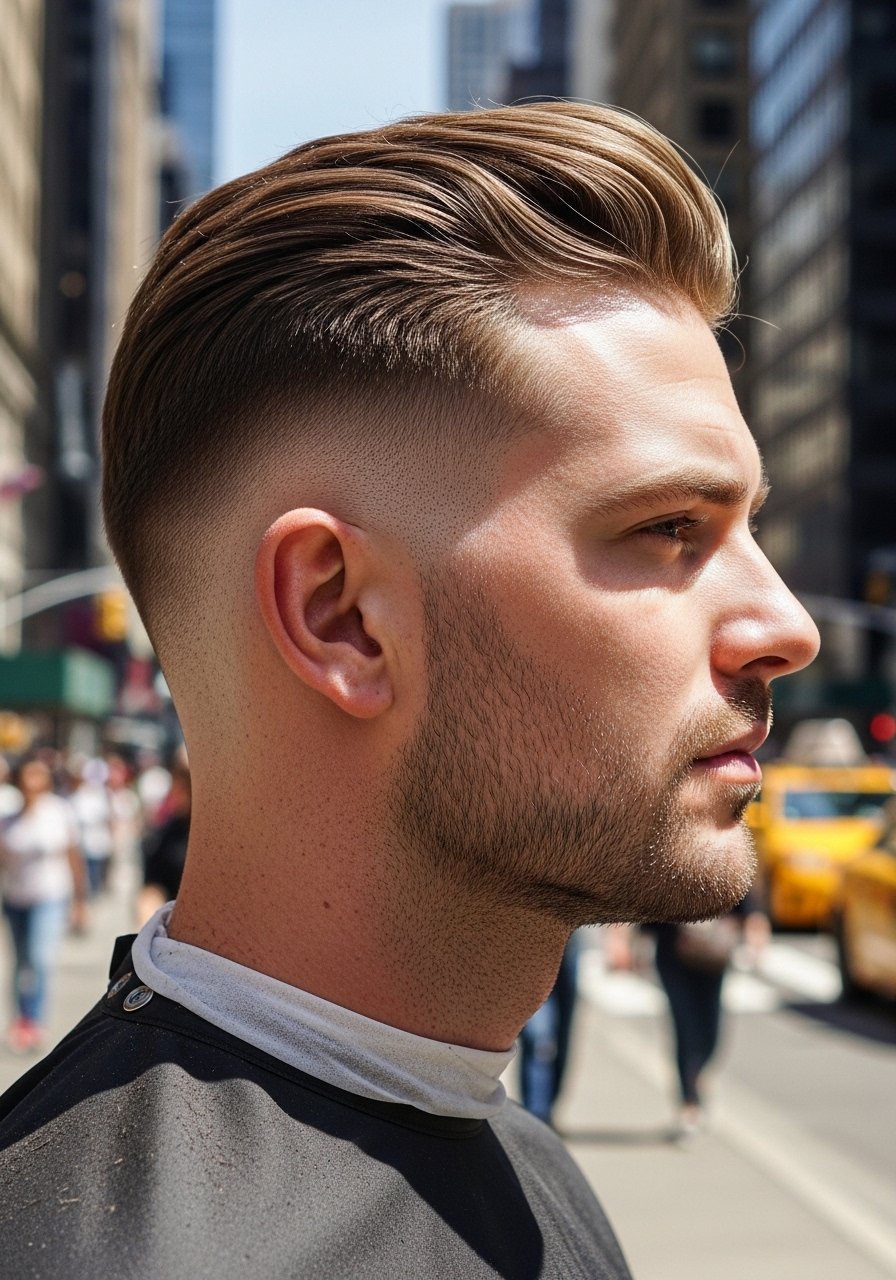
The high skin fade opens the face and puts stubble front and center. Keep the top at about 1 inch for a little lift and shave the sides down to skin at the temples. The contrast draws attention to the beard texture and cheekbones. This is low effort in the morning and works well for athletic builds. You will need a trimmer for upkeep every 4 to 7 days. For a clean finish use a precision trimmer and a matte paste for the top. Recommended: precision-trimmer and matte-paste.
Mistake to Avoid: Letting the top grow too long against a high fade, which makes the face look top-heavy.
5. Short Pompadour With Tapered Sides
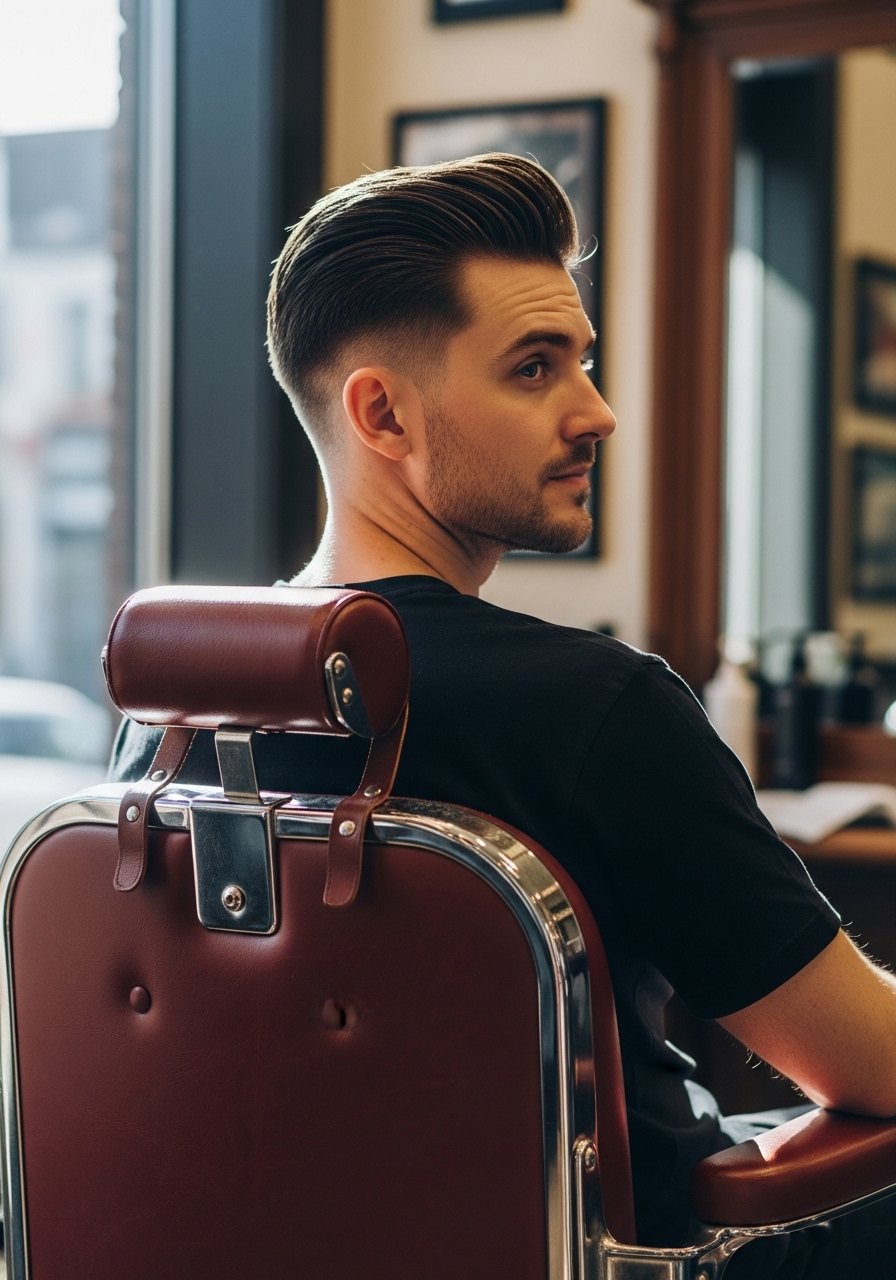
A short pompadour gives height that balances a medium-length beard. Ask for tapered sides down to a #2 and leave 1.5 to 2 inches on top with textured ends so it reads modern, not theatrical. Use a firm hold pomade and a boar-bristle brush for a structured finish that still moves. This style suits thicker hair and men who spend a bit more time styling. It requires heat or a quick blow-dry for the lift. Try strong-hold-pomade and boar-bristle-brush.
Mistake to Avoid: Applying too much product at the roots, which weighs the lift down and makes styling take longer.
6. Ivy League Crop With Short Boxed Beard

This clean cut keeps the sides tidy and the top long enough to part, giving a smart, groomed vibe next to a short boxed beard. Request a #3 on the sides blending to scissor-cut length on top at about 1 to 1.25 inches. It reads refined, works for office settings, and adapts well for petite and taller faces by adjusting the part width. Styling is minimal with a light cream to tame flyaways. I like light-styling-cream and a small beard comb like beard-comb. I have used this across four hair textures I have styled and found it scales well.
Mistake to Avoid: Letting the part disappear with too much product, which makes the cut look flat.
7. Crew Cut With Defined Cheek Line

The crew cut is about crisp geometry. Short top, slightly tapered sides, and a sharp cheek line on the beard create a deliberate shape. Ask for a #3 top, tapered to a #1.5 at the temples. The defined cheek line lifts the face and makes the beard look intentional rather than grown out. This is fast to style and great for someone who prefers a neat, sporty look. Use a matte fiber and a detail trimmer for the cheek and neckline. I recommend fiber-styler and detail-trimmer.
Mistake to Avoid: Relying on a single pass to define the cheek line, which leads to uneven edges.
If any of these cuts made you want to try one, I pulled together the gear I use most often.
Short Cut Grooming Essentials
Tools:
- cordless-clippers (~$60-120). A rechargeable set that holds a consistent blade is worth the spend.
- precision-beard-trimmer (~$30-70). For clean necklines and cheek lines.
- detail-trimmer (~$20-50). For edges and small corrections.
Styling & Care:
- matte-clay-hair (~$10-20). Use sparingly for texture without shine.
- sea-salt-texturizer (~$8-18). For grip and separation on short cuts.
- unscented-beard-oil (~$10-20). Daily conditioning keeps the beard soft and the skin calm.
- boar-bristle-brush (~$8-18). Smooths hair and distributes natural oils.
8. Caesar Cut With Textured Fringe
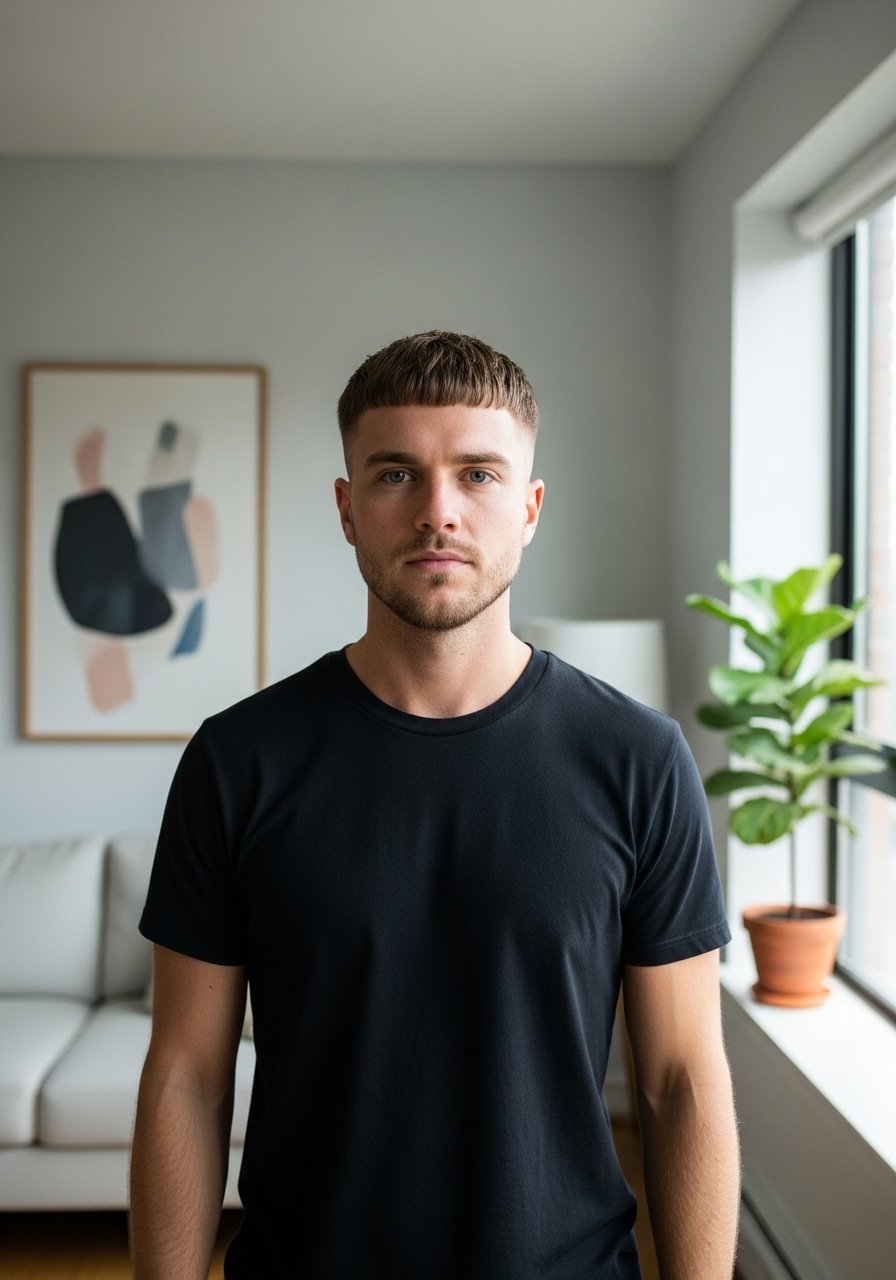
The Caesar keeps the fringe short and blunt which offsets a fuller beard by shortening the forehead visually. Leave the fringe at about 0.5 to 0.75 inches and blend the sides to a #2. Texturize the fringe with point cutting so it reads natural and not blunt blocky. The style is low fuss, takes two minutes to style with a dry paste, and suits round or square faces that need forehead balance. Use a matte paste and a small comb for placement. Try short-hair-paste and small-pocket-comb.
Mistake to Avoid: Cutting the fringe too bluntly without texture, which closes off the forehead and looks dated.
9. Skin Taper With Longer Top And Short Beard
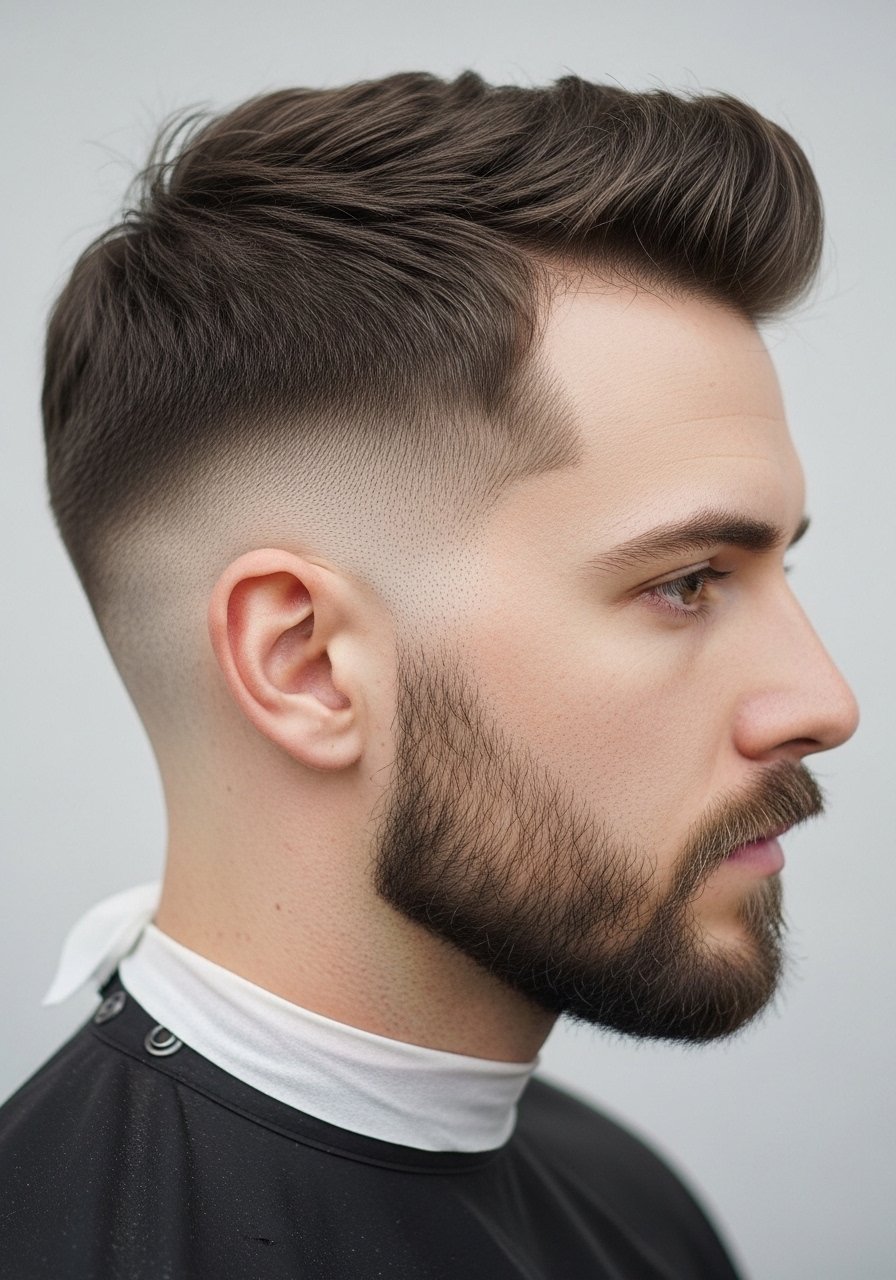
This pairing keeps the top long enough for forward sweep or subtle waves while the skin taper gives a clean base for a short beard. Keep the top at 1.5 to 2 inches and the beard at about 3 to 5 millimeters for stubble contrast. That ratio keeps the face grounded while still letting you style the top. It needs moderate upkeep and one styling product for the top and one beard balm for control. I use light-hold-spray and beard-balm for this look.
Mistake to Avoid: Letting the beard grow unevenly against a tight skin taper, which breaks the clean silhouette.
Beard And Cut Habits Worth Trying
Thin coats beat one thick coat every time. Apply a pea-sized amount of matte-clay-hair in layers so style holds without looking sticky.
Grab precision-beard-trimmer for about $40. A small investment keeps cheek lines and necklines tidy and avoids emergency trips to the barber.
Air-dry short hair after towel blotting and use a palm-sized dab of sea-salt-texturizer for texture. It saves heat and gives natural separation.
Most people carve the beard neckline too low. Keep the neckline at two fingers above the Adam’s apple and use a detail-trimmer to maintain that guide once a week.