
I almost gave away the battered sideboard I found at a yard sale because it looked like an extra in someone else’s story. One afternoon I dragged it into the dining room, leaned a mirror on it, and something stopped feeling staged and started feeling lived in. That little rescue taught me the scale rules I keep returning to, and how a single rescued piece can make a room look deliberately arranged without trying too hard.
This list is for people who like clean, layered rooms but do not want a showroom. Most projects are renter-friendly or partial renter-friendly, fairly low cost, and doable over a weekend. Expect a mix of quick styling moves, small carpentry options, and crafty swaps that work in apartments and houses, with small-space alternatives and pet-friendly notes woven through.
1. Centered Rug, Legs on It

A rug that holds the table and chairs makes a dining area read as one piece instead of fragments. Aim for at least 18 inches of rug beyond the table edge on all sides for a full anchored look in a standard room. For a small apartment, a rug that covers the two front legs on the chairs still works. I use a natural jute rug because it hides scuffs and pet hair. Try a jute area rug for an earthy base, and add a polyurethane protector if you worry about spills. This is budget friendly and low skill.
Mistake to Avoid: Buying a rug too small so chairs catch the edge every time someone sits down.
2. One Oversized Pendant Light
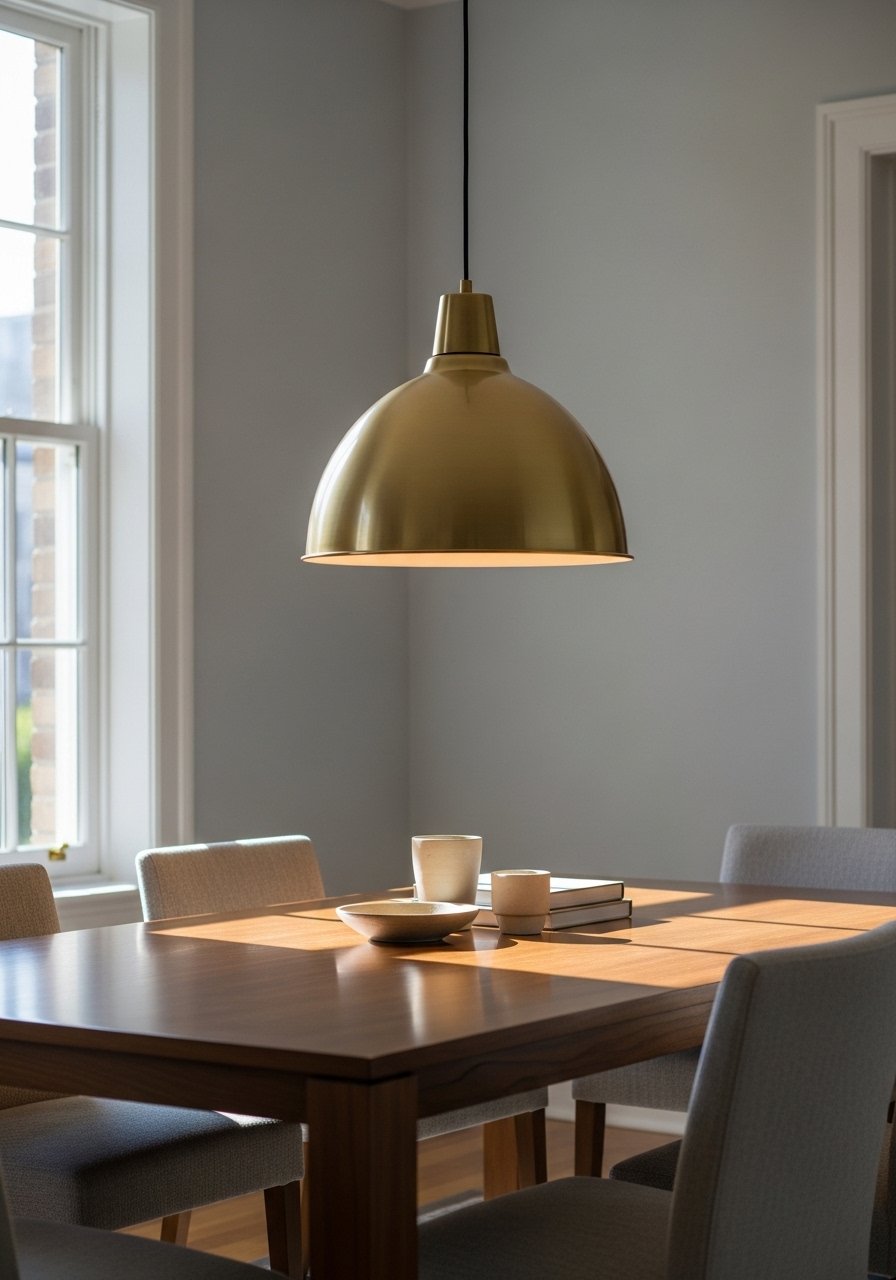
A single pendant slightly larger than you think you need simplifies the ceiling and makes the table look styled. Use the rule of roughly 12 to 16 inches across for a narrow table and 20 to 24 inches for a wider table. Hang it so the bottom sits about 30 to 36 inches above the tabletop in a typical eight-foot ceiling. For renters, a plug-in pendant or a tension-rod canopy avoids rewiring. I swapped a thrift chandelier for a warm brass pendant and the room finally read as intentional rather than improvised.
Mistake to Avoid: Choosing several small lamps that create visual clutter instead of one clear focal point.
3. Leaning Mirror Over the Sideboard

Leaning one round or oval mirror softens corners and doubles natural light. For visual balance, pick a mirror roughly two-thirds the width of the furniture below it. A leaning mirror is renter-friendly because it needs no permanent fixings, and it gives the wall instant depth. I like a simple black frame to ground lighter walls. Pair this with a round decorative mirror for a polished look without heavy installation. It makes the room feel twice as bright on dull days.
Mistake to Avoid: Hanging a mirror too high so it reflects ceiling instead of the room.
4. Mix Scales on the Table

Layering objects at different heights keeps the tabletop from reading flat. Use a low serving platter for width, a vase at table height for vertical interest, and a small candle or salt cellar as a low anchor. Keep the centerpiece assembly to about 60 percent of the table length for balance on rectangular tables. For easy swaps, a matte stoneware serving platter pairs with a simple ceramic vase. This setup is low cost and perfect for people who change looks seasonally.
Mistake to Avoid: Building a centerpiece that blocks sight lines across the table.
5. Gallery Wall with One Strong Piece
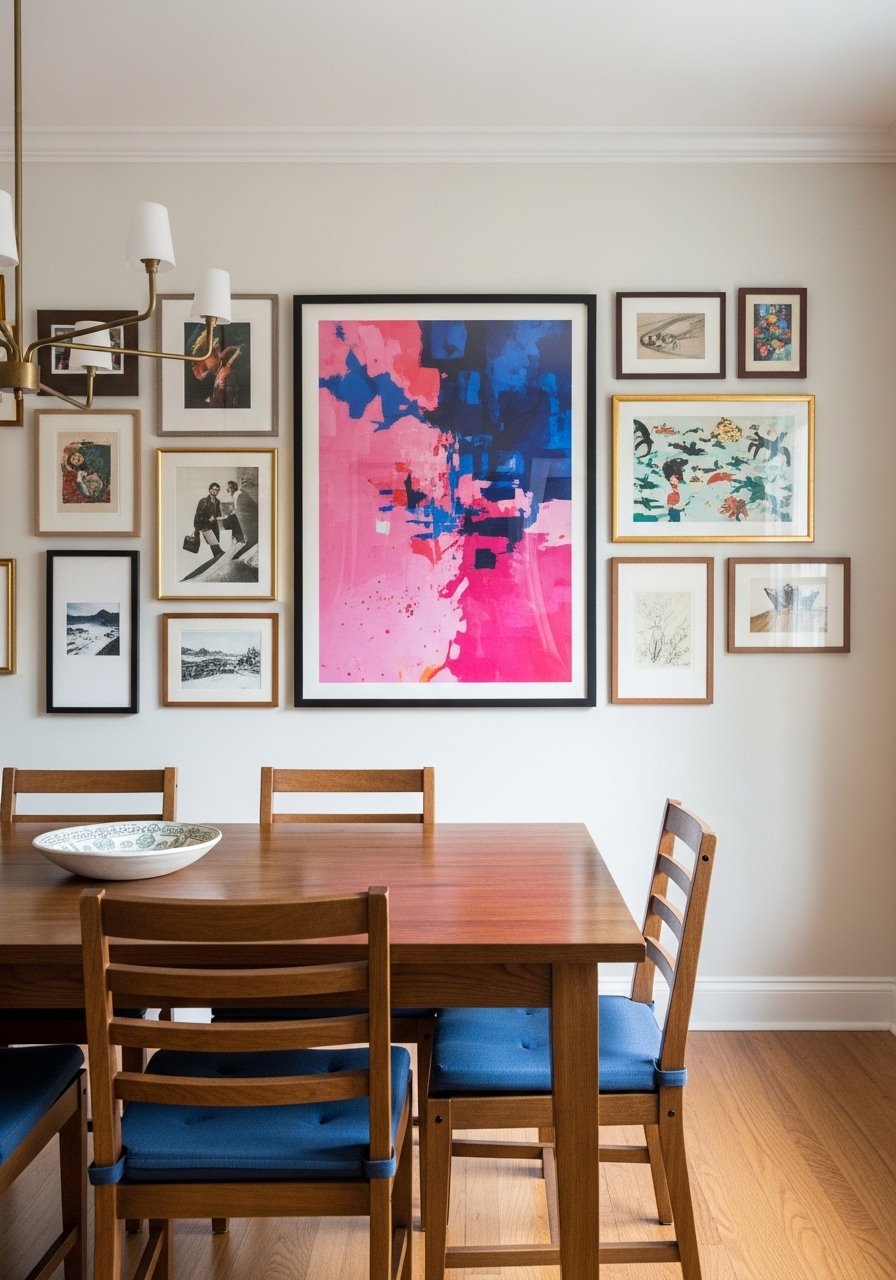
Instead of filling a whole wall with small frames, pick one strong artwork and add two or three smaller pieces in a loose cluster. Keep at least 2 to 3 inches between frames for an intentional but not forced arrangement. For renters, use picture-hanging strips for the smaller pieces and anchor the largest work with two small nails. I framed a print above my table and the room stopped feeling like a waiting room. Try a set of black picture frames for a cohesive touch.
Mistake to Avoid: Taping things up asymmetrically without a unifying scale or color.
6. Swap Chair Style, Keep One Color

Mixing chair styles instantly looks curated when the palette links them. Keep one color or material across the set for coherence. For example, the two ends can be upholstered while the sides stay wooden, both tied together with a neutral seat pad. For small spaces, swap only the head chairs and keep the rest simple. I replaced two matching chairs and the room went from predictable to intentional. Affordable slipcovers or seat cushions make this budget friendly and pet tolerant.
Mistake to Avoid: Choosing wildly different finishes that fight instead of harmonizing.
7. Open Shelf Styling for Dinnerware

Open shelving turns functional dishes into decor. Apply a 2-to-1 rule: two stacks of plates to one row of glasses, to avoid visual chaos. Keep the most used pieces at elbow height for convenience. For renters, install floating shelves with toggle anchors or choose a freestanding ladder shelf. I keep a stack of white plates beside a row of clear glasses and it looks intentional even when dishes are partly in use. A set of clear glass tumblers makes everyday use feel elevated.
Mistake to Avoid: Overfilling shelves so every object competes and the display reads cluttered.
If any of this has you wanting the exact pieces, here are the items I reach for most.
Dining Room Basics To Shop
Lighting & Fixtures:
- Warm brass pendant light (~$60-150), for one clear focal point.
Textiles & Soft Goods:
- Jute area rug (~$80-200), durable and pet-friendly.
- Seat cushions (~$20-40), ties mixed chairs together.
Tabletop & Serveware:
- Matte stoneware serving platter (~$30-50), low and wide for centerpieces.
- Clear glass tumblers (~$20-35 per set), durable everyday glass.
Walls & Frames:
- Round decorative mirror (~$70-150), leans nicely on a sideboard.
- Black picture frames (~$30-60 for a set), makes a simple gallery feel cohesive.
Table Styling Shortcuts Worth Trying
Place cards are unnecessary for daily meals. Fold a linen napkin and tuck it into a linen napkin ring to make place settings feel thought-through without fuss.
Grab a ceramic vase and use one branch for scale. A single stem costs less and reads more intentional than a fussy bouquet.
A plug-in pendant solves the lighting problem in rentals. Try a plug-in pendant kit to avoid rewiring while creating a focal point.
Most people center art over the table. Try off-centering by one third for a lived-in asymmetry. A pair of command picture hanging strips makes experimenting damage-free.
Keep seasonal swaps to three small changes. Swap pillow covers, a centerpiece piece, and one wall print. I do that every season and the room feels refreshed without a big budget.