
I did this as a dare to myself, a tiny experiment with my closet that I expected to fail. Six months later I had fewer pieces and more outfits, and people kept asking what I changed. It started with picking a mood and sticking to it. Not flashy at first, just a small set of rules that stopped me from buying the same impulse piece over and over.
This guide covers building a season-proof capsule for workdays, weekends, and quick travel. It works on a modest budget, about mid-range pieces plus a couple of upgrades. I tested this across three seasons and found the sweet spot is a compact set that leans neutral with two accent colors. If you want fewer morning decisions and outfits that actually fit your life, this method gets you there without drama.
What You'll Need
Clothing Basics:
- Plain white tee (~$15-$35)
- Slim dark jeans (~$40-$120)
- Neutral blazer (~$60-$200)
Layering Pieces:
- Lightweight knit sweater (~$30-$90)
- Classic trench coat (~$80-$250)
Accessories:
- Simple leather belt (~$20-$60)
- Neutral crossbody bag (~$40-$150)
Step 1: Empty the Space and Sort Fast
Pull everything out of your closet. Yes, everything. Seeing it all together is the only way to stop lying to yourself about what you actually wear. Make three piles: keep, maybe, donate. I set a timer for 45 minutes and forced decisions. The trick is a quick gut check, not overthinking. Use a lightweight sweater as your touch test, feel the fabric for pilling and weight. If it feels thin and stretched, it goes. Aim for a 3:1 ratio of neutrals to accents as you rebuild so outfits mix easily.
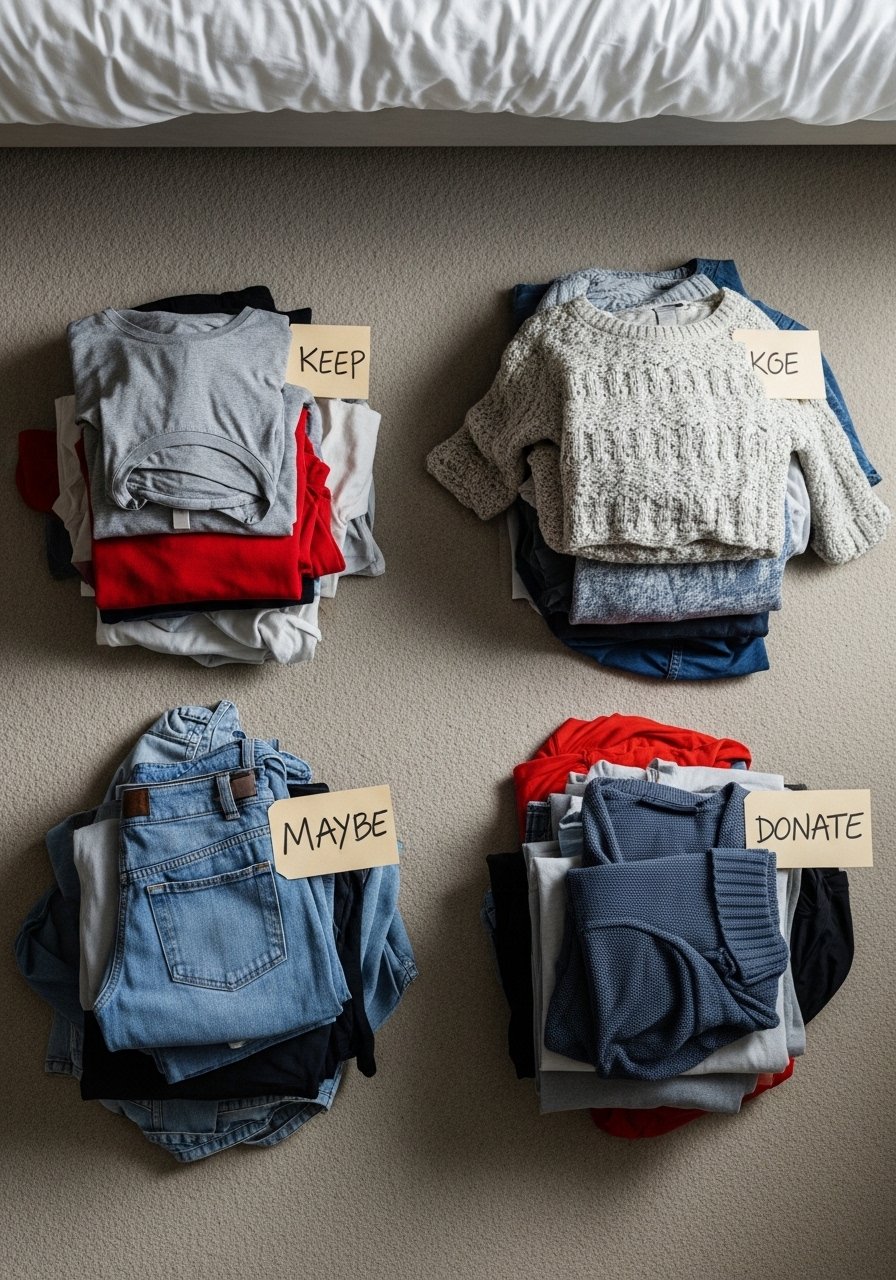
Mistake to Avoid: Not emptying the closet keeps you in the same loop of buying duplicates.
Step 2: Define Your Color Story
Pick one neutral base, one supporting neutral, and one or two accent colors. I went navy, camel, and soft green. Keeping colors consistent makes 80 percent of outfits work together. Lay items on the bed and swap one piece at a time until the combination reads cohesive. The visual test I use is to pick three random items and see if they could form a complete outfit. If yes, that stays. After rotating an outfit for a full season I could hear which colors felt tired. Trust that little sensory gut, how a color feels next to your face matters.

Mistake to Avoid: Choosing too many accents fragments the wardrobe and kills outfit options.
Step 3: Build Around 5 Core Outfits
Start by creating five go-to outfits that cover your typical week. For me it was casual day, client meeting, quick errand, date night, and travel outfit. Each should reuse at least two pieces across different looks. The principle of maximizing versatility is what makes a capsule breathe instead of feel tiny. I recommend 5 to 7 tops, 2 bottoms, 1 blazer, and 1 coat as a minimum framework. That gave me dozens of combinations without extra weight in the closet. Listen for the soft click when a shoe hits the floor and the outfit feels right. That is the confidence cue.

Mistake to Avoid: Ignoring repeat use leaves you with single-use pieces that clutter the system.
Step 4: Edit for Fit and Proportion
Try every keep item on. If a hem hits awkwardly, fix it. I learned crop length rules the hard way. A skirt hem that hits mid-thigh will read different than one that sits just above the knee. Use the rule of thirds for proportions, like one fitted piece plus one relaxed piece, and one accessory. If the shoulder seam does not sit at your shoulder edge, it will drag the silhouette down. I took two shirts to a tailor and it made them feel new and heavier in a good way. Small tailoring is often cheaper than buying another perfect item.

Mistake to Avoid: Wearing ill-fitting staples hoping a layer will fix them makes outfits look careless.
Step 5: Choose Shoes and Accessories That Repeat
Pick two pairs of shoes that cover most days, plus one statement pair for special events. For example, a clean white sneaker and a low-heel ankle boot. Accessories should act like glue. One belt, one bag, and simple jewelry keep looks feeling intentional. I once had eight bags in rotation and none paired with everything. Downsizing felt heavy at first, but the tactile weight of a good leather bag made outfits feel anchored. Aim for 2 to 3 accessories that appear in at least 60 percent of your outfits.

Mistake to Avoid: Having too many accessory options means nothing feels like the right finishing touch.
Step 6: Make Seasonal Mini-Capsules
Create a small swap box for each season with 3 to 5 items you rotate in. I keep a knit set in winter and a linen shirt in summer. This keeps the base capsule stable but allows weather and mood changes. Pack these items separately so you are not tempted to keep everything out. A good rule is swap no more than 20 percent of the core pieces per season to maintain cohesion. Side note, if you have cats, skip open bottom shelves for shoes. I almost skipped seasonal planning. Glad I did not.
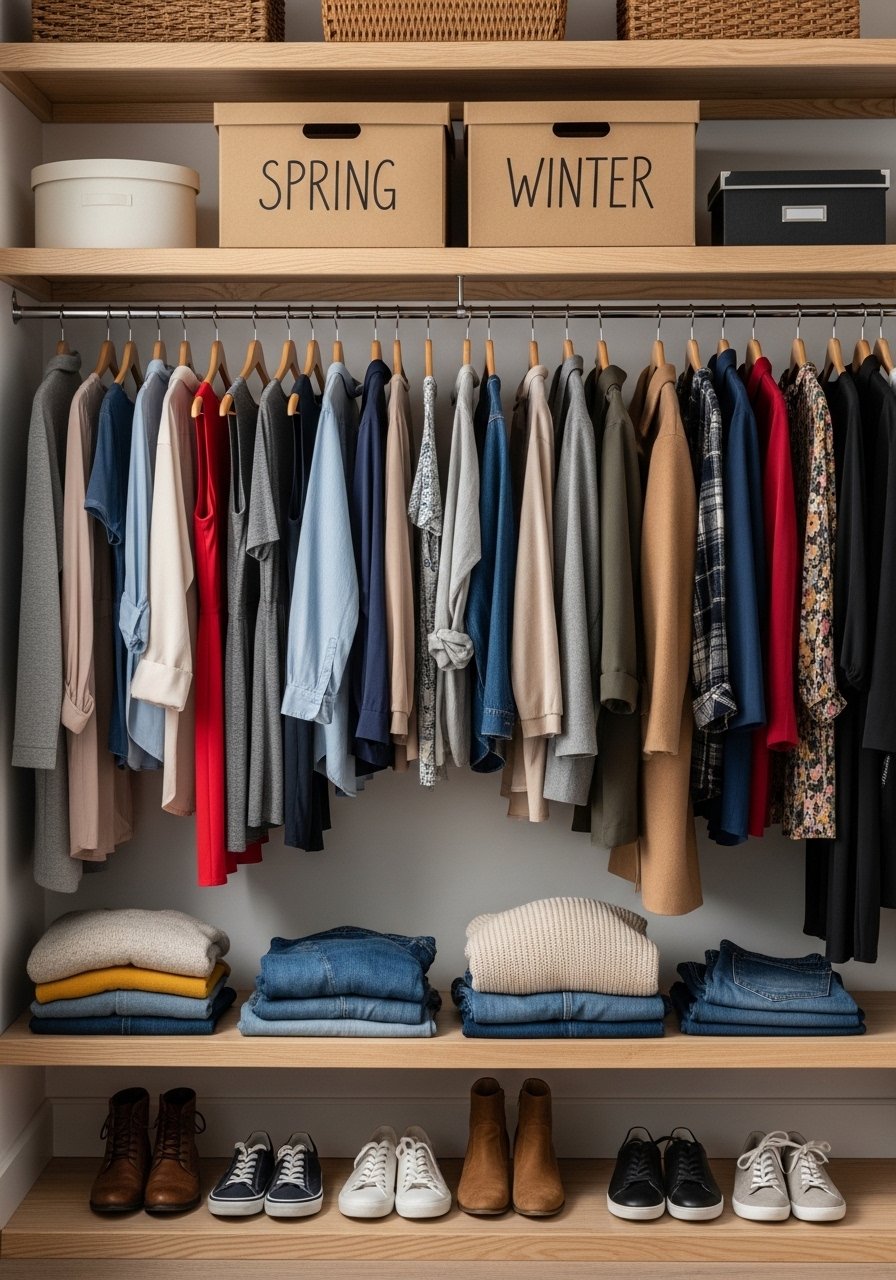
Mistake to Avoid: Swapping everything each season erases the benefits of having a capsule.
Fashion Tips
Wear-Repeat Rule: If you reach for something twice in a week it belongs in the capsule, not the maybe pile, try a neutral blazer like this neutral blazer to bridge outfits.
Tailoring First: Small fixes beat new buys, a local tailor often costs less than a new jacket, try getting waist and sleeve adjustments.
Mix Textures: Pair a nubby knit with smooth denim for contrast that reads intentional, consider a textured-knit sweater for depth.
One Statement: Limit statement items to scarves or shoes so they feel special rather than scattered, a bold shoe like brown-ankle-boot does the job.
Travel Capsule: Pack 8 to 10 items that mix, roll items to save space, and include a neutral bag that works day to night.
Budget Swap: Replace one higher-cost item with a well-reviewed mid-range alternative, I did this with jeans and saved $80 without losing fit.
Outfit Formula Bookmark: Save three outfit photos you love on your phone, use them when you are too tired to decide in the morning.
Wear It Daily
Start small and keep testing. Wear the outfits, not the rules, and tweak what feels off. A tiny wardrobe means more mornings with a clean choice and less time spent hunting for a match. Final tip, live with your capsule for a month before buying anything new, and you will notice the items that truly matter. Keep going, you will get the rhythm.