
I spent an afternoon staring at a single outfit photo, trying to name what made it work. The clothes looked messy close up and cohesive in photos. Took three tries to get there. What I learned is simple: pick an anchor, vary scale, and repeat one color three times. Do this and the outfit stops looking like costume and starts feeling like you.
This guide walks you through mixing prints for everyday wear, weekend dates, and office-appropriate looks. It works on a tight budget or with nicer pieces. I tested this across four body types and rotated outfits for a full season to check wear and wash. Expect quick wins, a few frustrating experiments, and at least one outfit that finally clicks.
What You'll Need
Clothing Basics:
- Plain-white-tee (~$15-$35)
- Neutral-blazer (~$40-$120)
Layering Pieces:
- Striped-breton-top (~$20-$60)
- Patterned-midi-skirt (~$30-$90)
Accessories:
- Silk-scarf (~$15-$50)
- Leather-belt (~$20-$60)
Step 1: Start with a neutral anchor and one repeat color
Pull everything out and pick the neutral piece that will hold the look together, like a blazer or trousers. The neutral creates breathing room. Then choose one color from a patterned piece to repeat elsewhere, maybe the shoes or a scarf. I usually repeat the color three times across the outfit. That small repeat is the glue. I learned this after my first attempts looked like mismatched laundry. Use the blazer for structure and the repeated color to guide the eye.
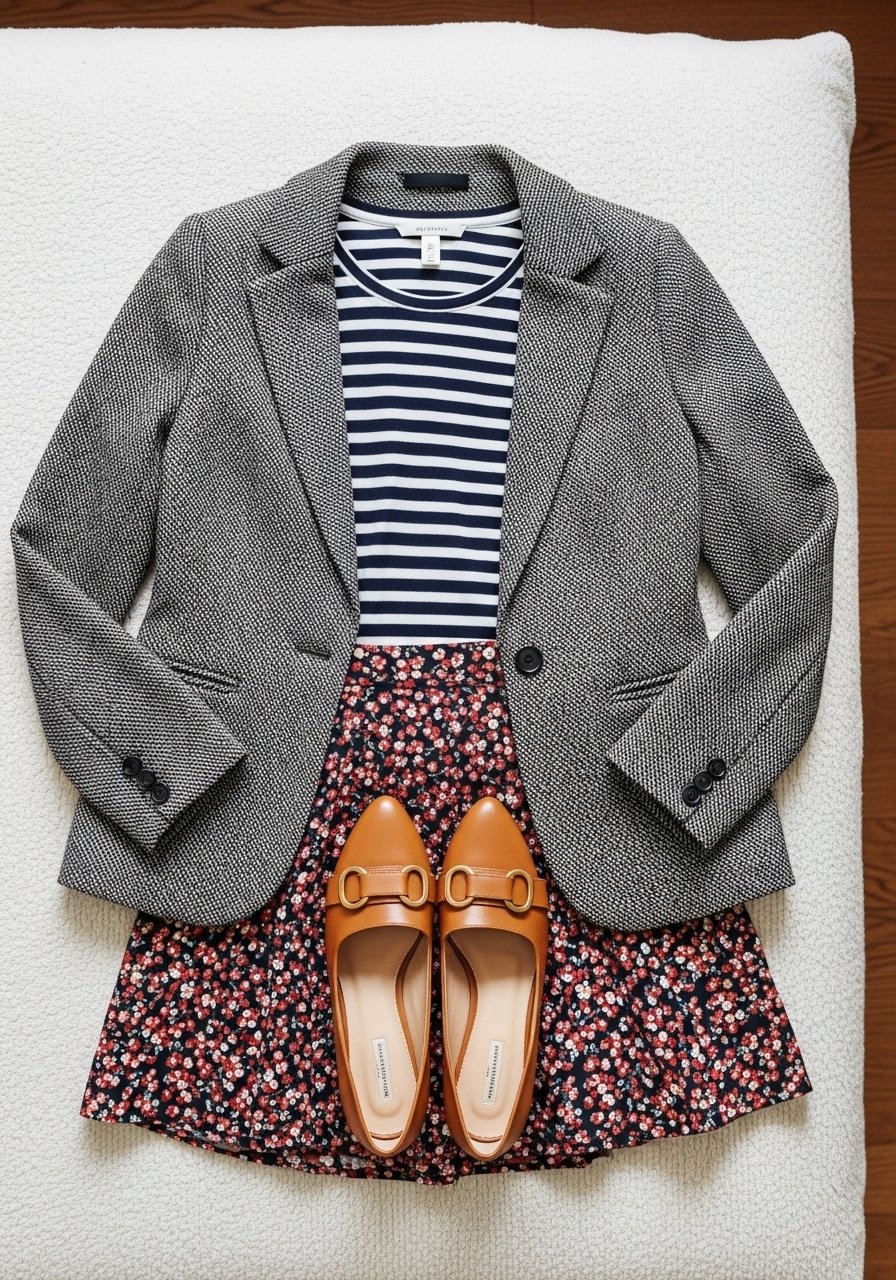
Mistake to Avoid: Wearing three competing bright colors with no neutral anchor makes the outfit look chaotic instead of intentional.
Step 2: Balance pattern scales using a 3:1 rule
Most wins come from mixing scale. I aim for one large pattern, one medium, and one small or micro print, a rough 3:1 visual ratio. Big florals read at a distance, small stripes add texture, and tiny dots act as a quiet filler. The rule of scale is a principle I use all the time: contrast scales so patterns do not fight. The textured knit or linen will change how a print sits, so notice how the fabric drapes. Try different combinations and step back under daylight to check balance.
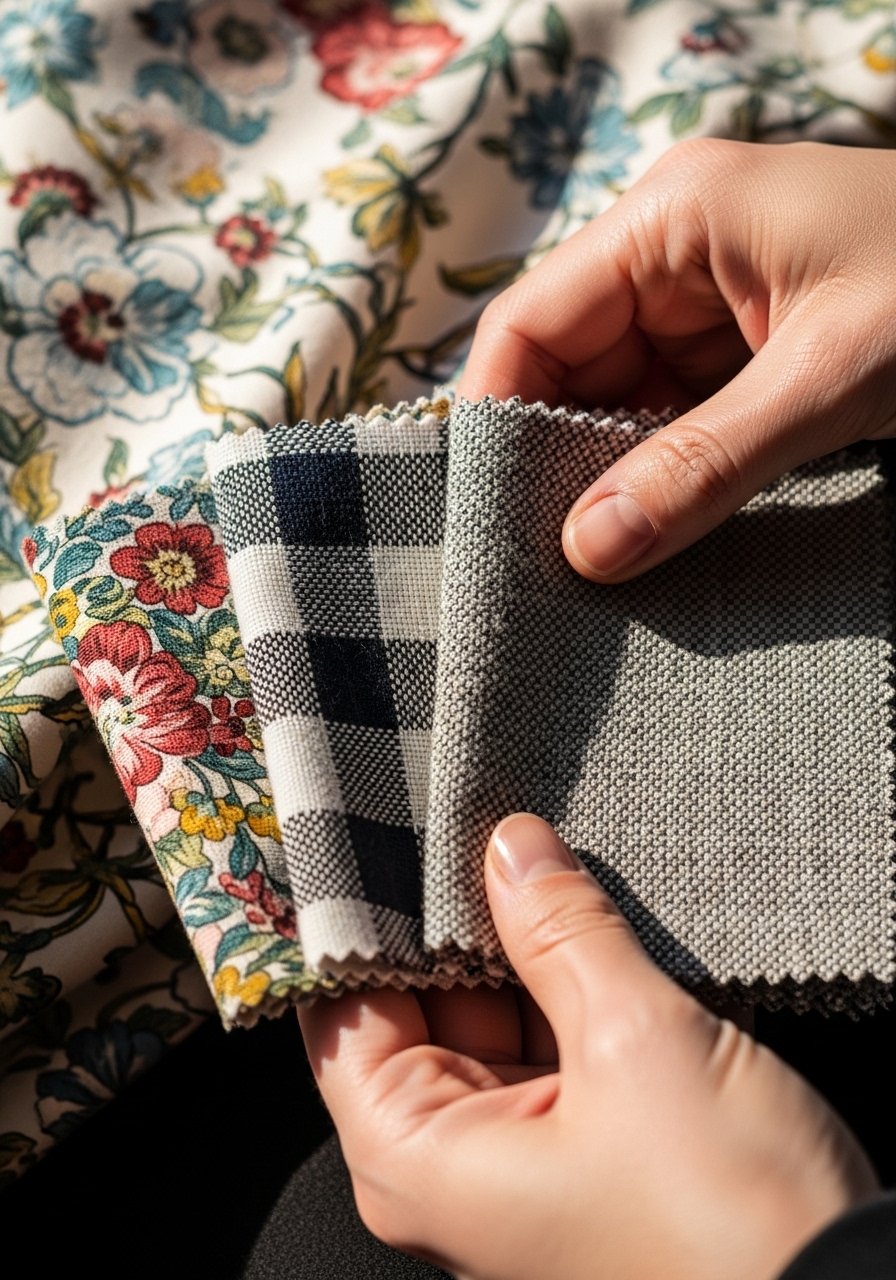
Mistake to Avoid: Pairing two large, high-contrast prints without a small pattern or solid makes the look overwhelming.
Step 3: Tie patterns with a shared undertone, not perfect matches
You do not need identical colors. Look for shared undertones instead. If one print reads warm, pick accents in warm shades. I once tried exact color matching and it looked forced. Finding an undertone feels easier and more natural. Also, use a grounded neutral like camel or navy to sit between prints. The weight of a wool coat or the cool slick of silk will change how much pattern shows, so use texture to tone a print down when needed.

Mistake to Avoid: Chasing perfect color matches across prints makes an outfit look contrived instead of cohesive.
Step 4: Use texture as a fourth pattern to calm the composition
Think of texture as a subtle pattern. A chunky knit, nubby linen, or glossy leather adds interest without competing. I swapped a shiny shoe for a matte leather boot once and the outfit gained clarity. This is one of the gaps I noticed other guides skip: recommending texture as a deliberate neutralizer. Also try a patterned scarf tied simply, not tucked in, so its texture reads clearly. Texture changes how prints behave under light, so test under both natural morning and warm lamp glow.

Mistake to Avoid: Mixing only flat fabrics of the same finish makes the look one-note and visually busy.
Step 5: Adjust for body type with placement and proportion
If you are petite, keep larger patterns lower on the body or as accents. For taller frames, a bold all-over print can work. The placement matters more than the print itself. I learned this after switching a midi skirt to high waist and watching the whole outfit suddenly look intentional. Use belts to create breaks and scale shifts. The rule of thirds often helps: break the outfit into three roughly equal zones so patterns sit in readable chunks.
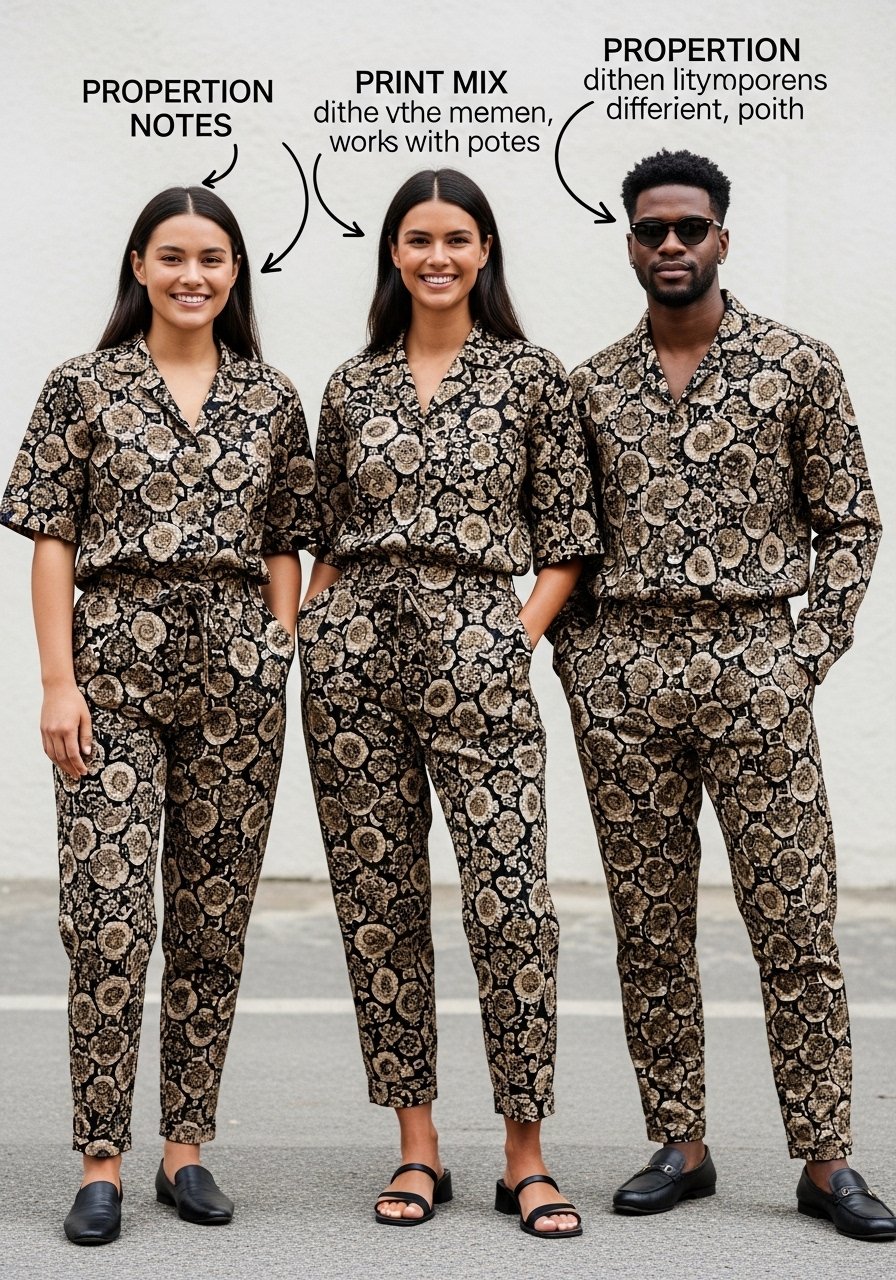
Mistake to Avoid: Wearing an oversized print across your torso without a belt or break can overwhelm your silhouette.
Step 6: Finish with small-patterned accessories and a single bold graphic
Small accessories let you experiment without commitment. A patterned sock, a graphic bag, or a printed headband can introduce a new motif while keeping the main pieces cohesive. One bold graphic item can act as a focal point. I tested this across four body types and after rotating the looks for a full season I kept coming back to the small-accessory trick. It is also a renter-friendly way to test trends without buying full garments.
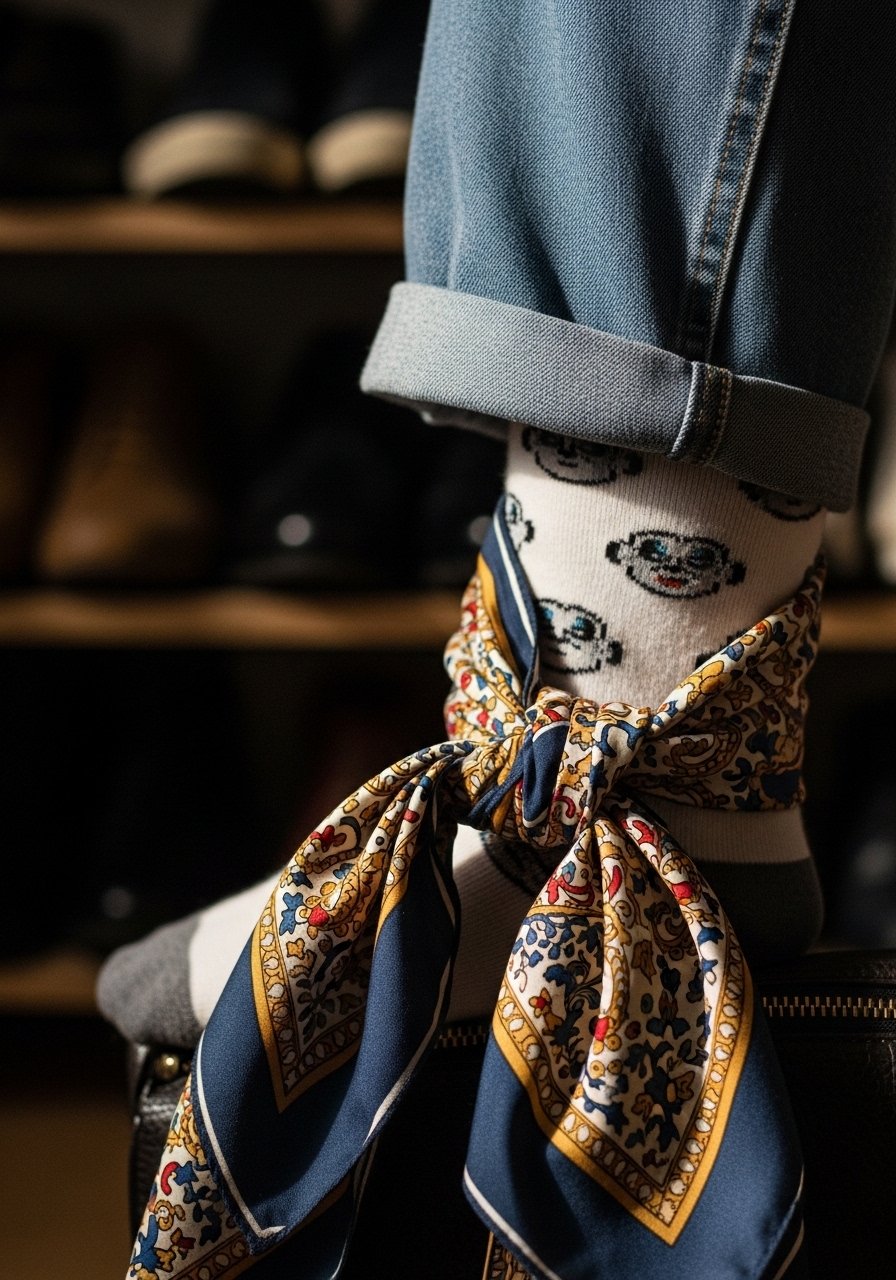
Mistake to Avoid: Adding multiple bold accessories with different focal points makes the eye wander and dilutes the outfit.
Fashion Tips
Repeat a color three times: Pick a color from one pattern and repeat it in two other pieces to create visual rhythm with a silk-scarf.
Keep one solid between prints: Use a neutral solid like a blazer or trousers to separate patterns, try the neutral-blazer.
Try pattern placement tricks: Put busy patterns near the hem or sleeve to draw attention away from areas you want to downplay, pair with a leather-belt.
Match scale to distance: Larger prints read better from across the room. If you want a pattern seen, go big with a patterned-midi-skirt.
Use texture to change tone: Matte fabrics mute prints, glossy fabrics amplify them. Test with a textured-knit-sweater.
Swap trendy prints for classics: If a trend feels dated, replace it with a timeless stripe or polka dot to keep the outfit modern and grounded with a striped-breton-top.
Start small and iterate: Treat pattern mixing like editing. I did the first three attempts badly. The fourth one clicked because I walked away and then removed one piece.
Most people end up spending between $500 and $800 when they finally commit to refreshing a room. A $200 version and a $40 version look almost identical once you have the technique right.
Own Your Pattern
This is practice, not perfection. Wear the combos around the house, photograph them in morning light, and edit ruthlessly. Final tip, if it feels off, remove one item and swap it for a solid that repeats your anchor color. Keep experimenting until one outfit becomes the one you reach for without thinking.