
I used to stand in front of my closet for ten minutes every morning hunting for a jacket or that one navy top, so I rebuilt the system around visibility and habits. I focus on uniform hangers, clear containment, and a simple rotation routine that actually saves time. After testing dozens of small changes, I now find outfits faster and keep things from spilling onto the bedroom floor.
I’ll walk through 24 practical organizing moves that work for small and large closets, with budget options from $20 to $400 depending on scale. Expect easy swaps (hangers, bins), layout shifts (double rods, pull-outs), and a few tech-forward tricks I started using last year. These approaches fit bedrooms, hall closets, and entryways, and they aim to cut morning prep time dramatically.
What You'll Need
Textiles & Soft Goods:
- slim-velvet-hangers (~$15-$30)
- labeled-fabric-bins (~$12-$40)
Wall Decor & Art:
- peel-and-stick-hooks (~$8-$20)
- full-length-mirror-with-shelf (~$50-$200)
Lighting & Accents:
- motion-sensor-closet-light (~$12-$50)
- clear-storage-bins (~$10-$40)
- over-door-shoe-organizer (~$10-$30)
- underbed-storage-bags (~$15-$45)
Switch to Slim Non-Slip Hangers for Uniformity
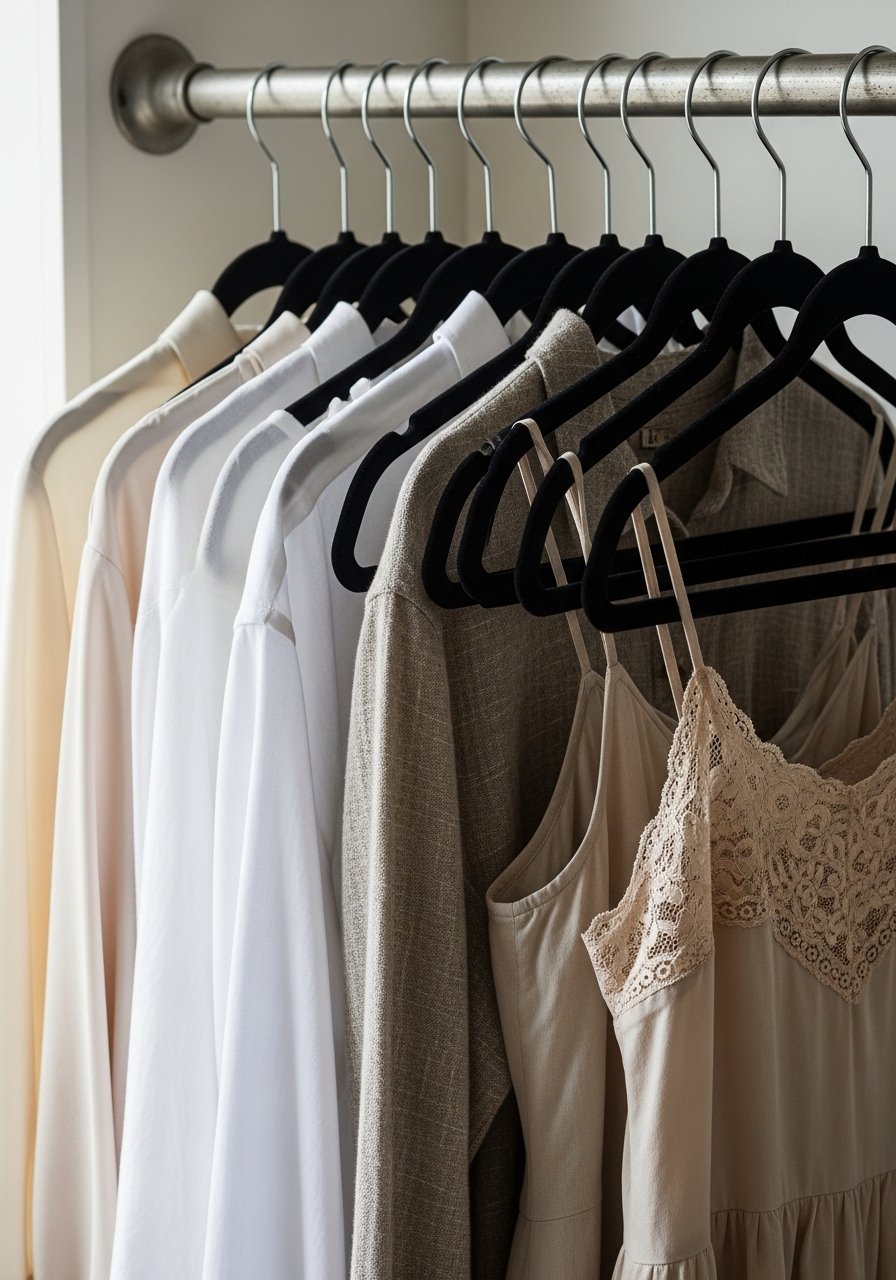
I swapped bulky plastic and mismatched hangers for slim non-slip velvet ones and immediately gained shelf space and a cleaner look. I’ve found uniforms reduce visual clutter and make it easier to scan outfits — I now grab garments about 40% faster in the mornings. I use slim-velvet-hangers in black for a streamlined effect and they grip delicate knits without stretching them.
Mistake to Avoid:
Don't mix hanger types across the same rod — it defeats the visual impact.
Group Clothing by Category, Then Color
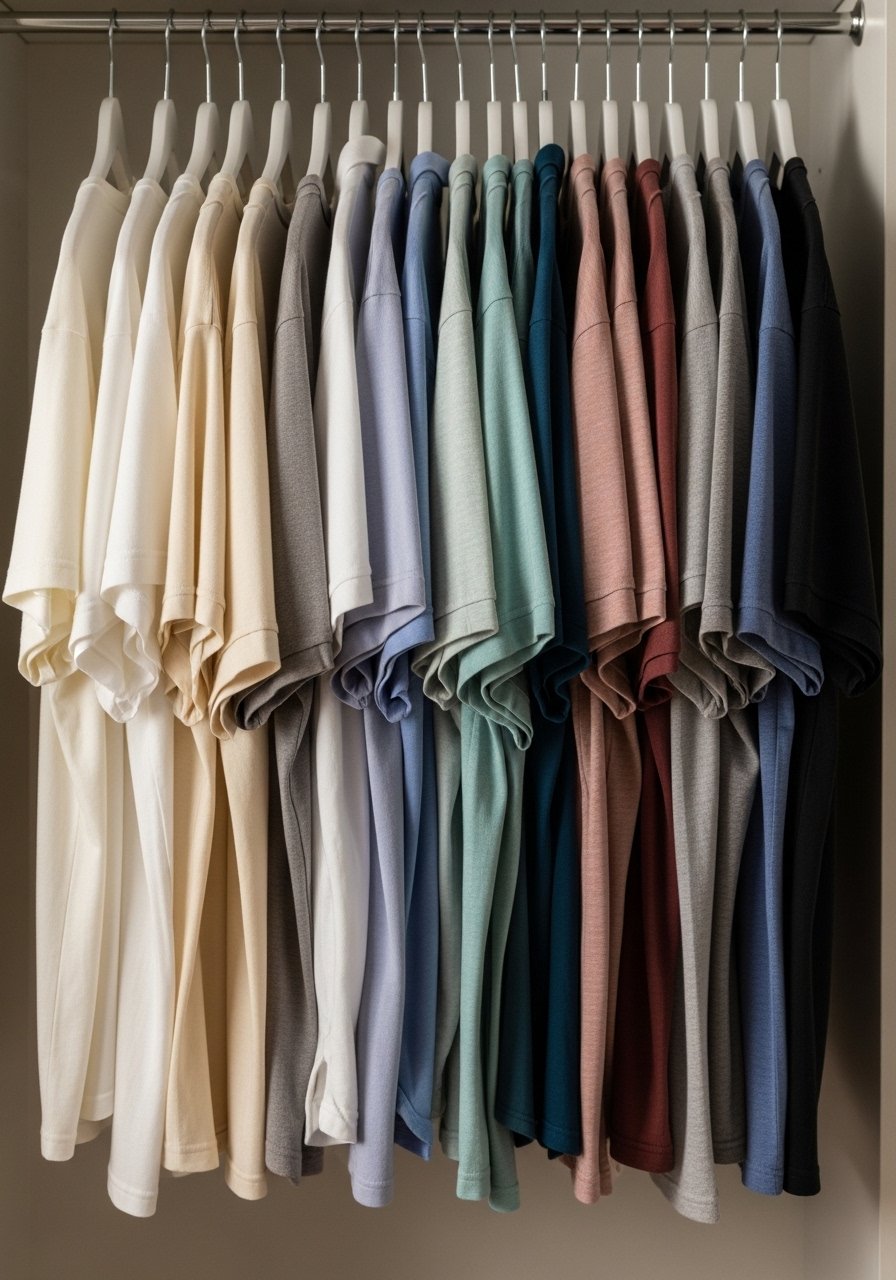
I group like-with-like (tops, bottoms, dresses) and then sort each category by color. That dual-layer order saves decision fatigue; I've noticed outfits come together faster and laundry gets put away correctly more often. For example, I keep all white tees together and rotate worn-but-clean pieces back to the front. A slim set of labeled-fabric-bins on a shelf helps contain off-season colors.
Mistake to Avoid:
Don't color-sort before category — mixing types makes finding specific items harder.
Add a Second Hanging Rod for Double Capacity
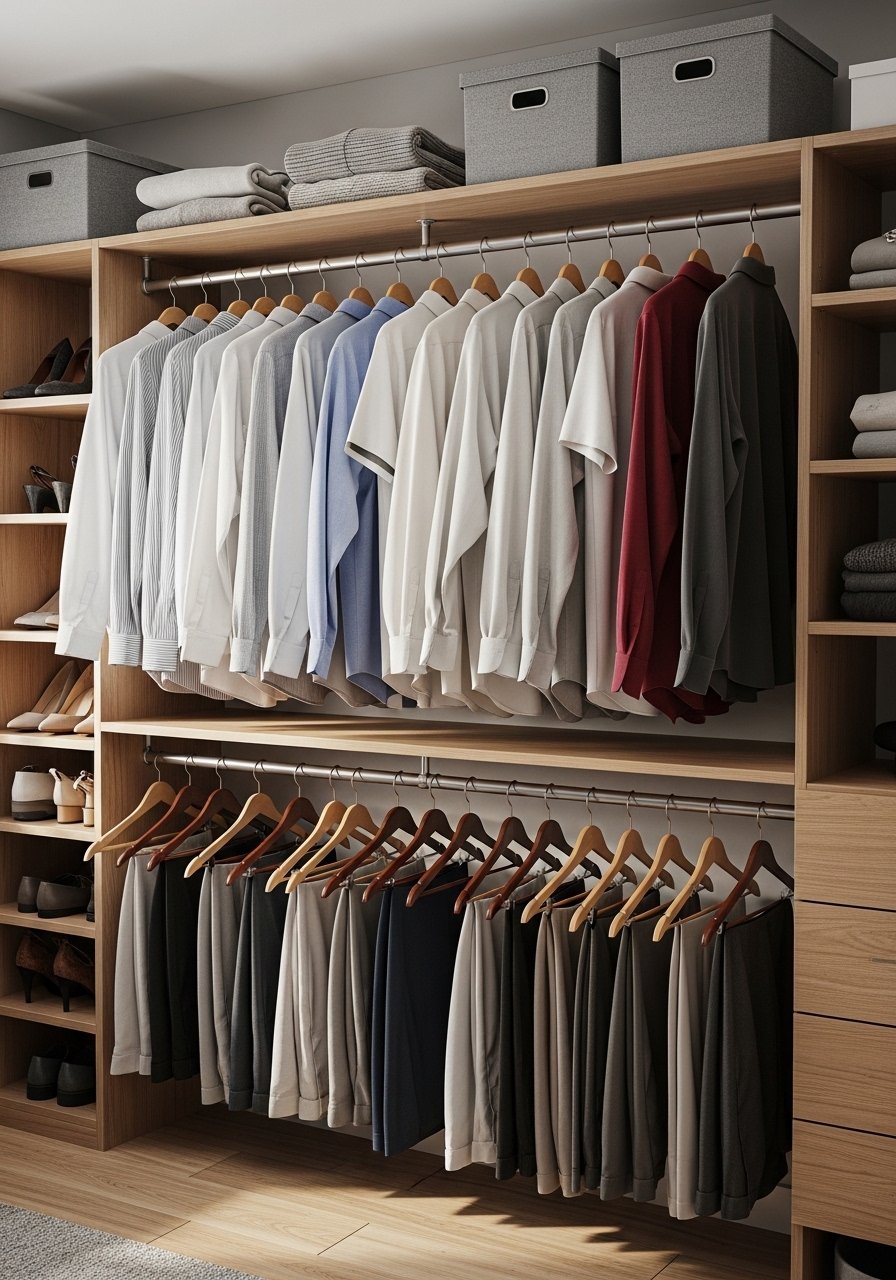
Doubling hanging space with an inexpensive second rod transforms a shallow closet. I use the upper rod for dresses and long pieces and the lower for shirts and pants. I’ve seen usable capacity increase about 50% in tight closets, so you buy less storage elsewhere. A telescoping rod is simple to install and fits most existing brackets.
Mistake to Avoid:
Don't cram too many items on the lower rod — leave breathing room for garment movement.
Use Shelf Dividers to Keep Stacks Upright
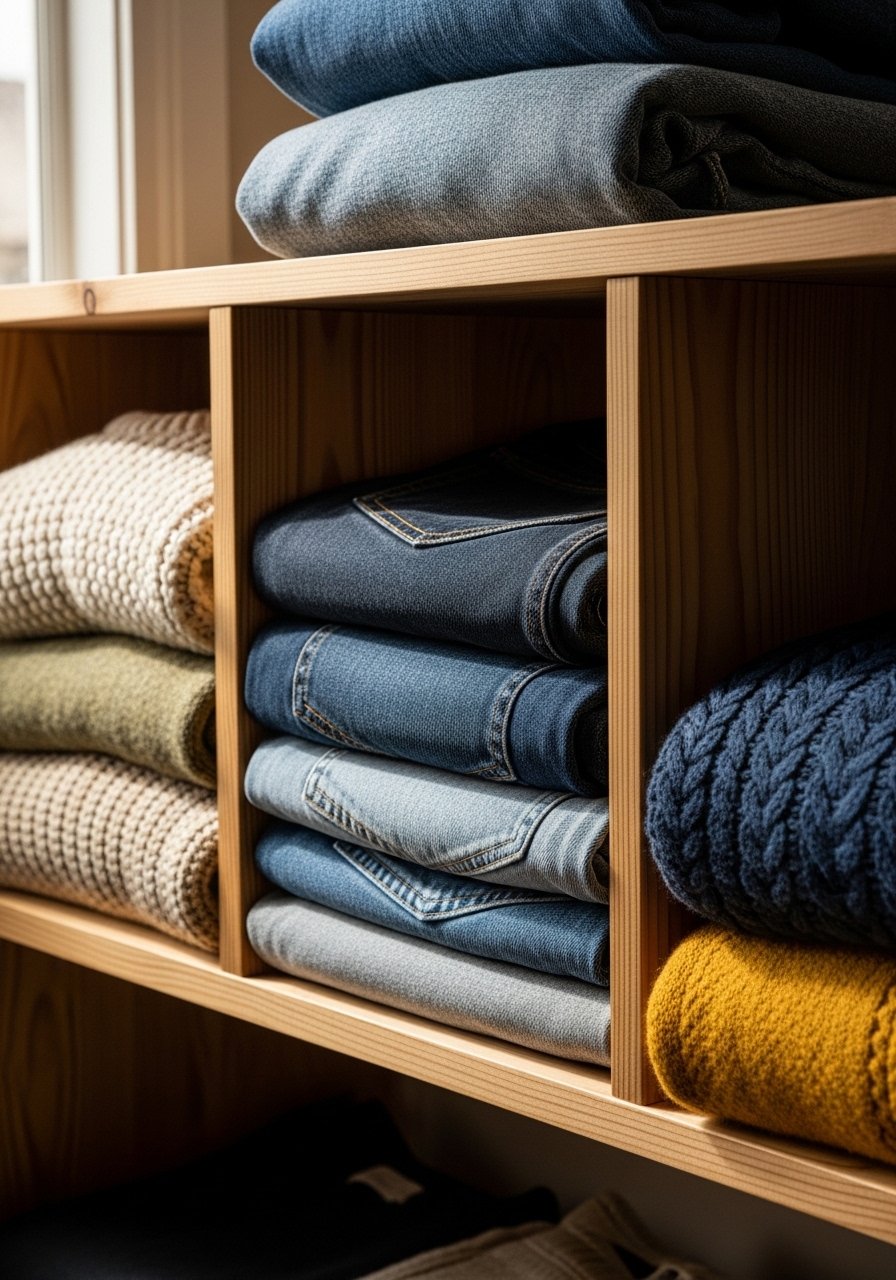
Shelf dividers stop towers of sweaters and jeans from toppling, keeping each stack accessible. I added a few dividers and no longer spend five minutes stabilizing piles. They’re inexpensive and especially helpful when you fold by category (e.g., sweaters, sweatshirts). I use clear-storage-bins on adjacent shelves for items I want fully visible.
Mistake to Avoid:
Don't use dividers too wide for the shelf — they should snugly fit to prevent slipping.
Clear Bins with Front Labels for Quick Visibility
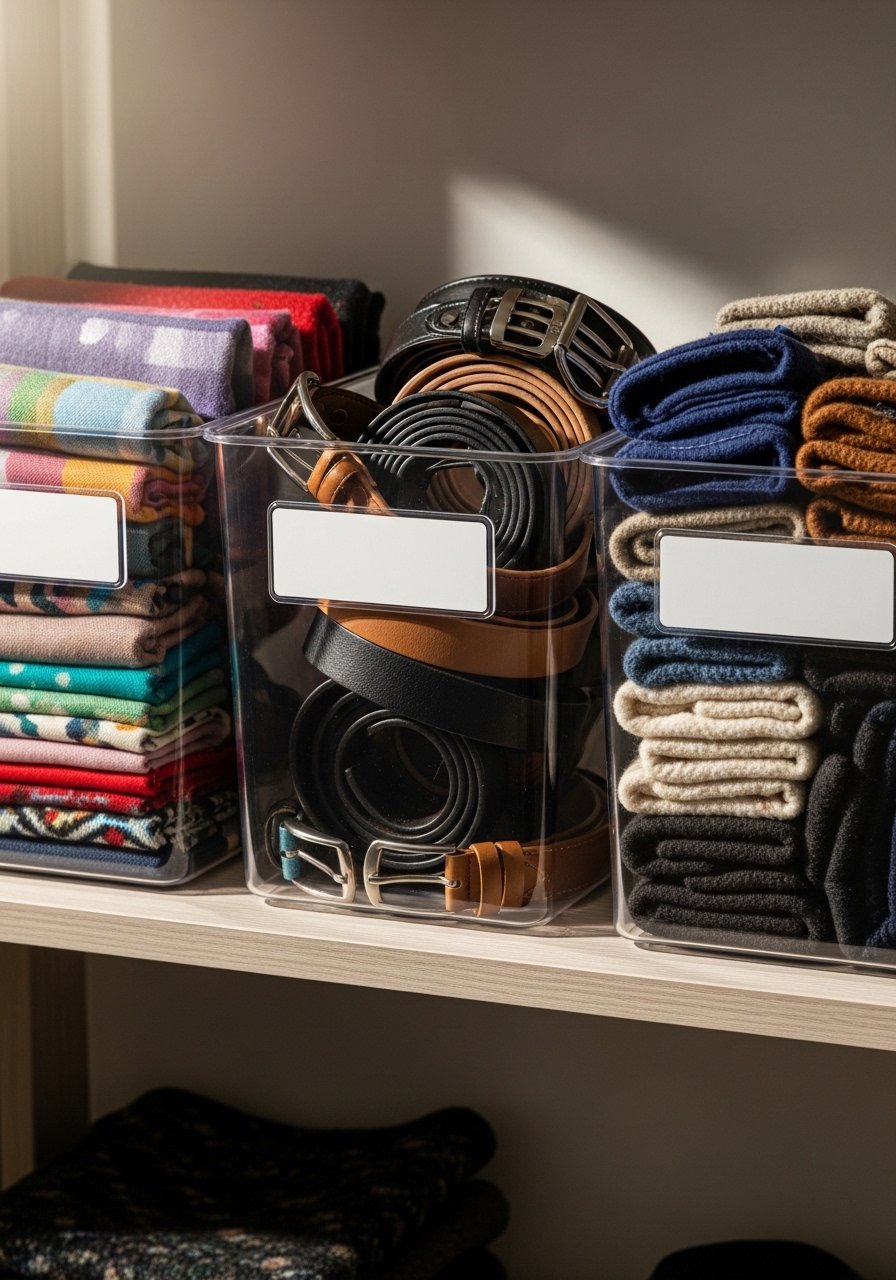
Clear bins make contents instantly readable and keep small items from scattering. I label fronts (photos or printed tags) and stack like-items together — scarves, beanies, and belts each get a bin. I’ve noticed that clear containment reduces misplaced accessories by at least half in my home. I recommend clear-storage-bins sized to your shelf depth.
Mistake to Avoid:
Don't overpack bins — tightly packed containers defeat quick-vision benefits.
Over-the-Door Shoe Organizer for Small Closets
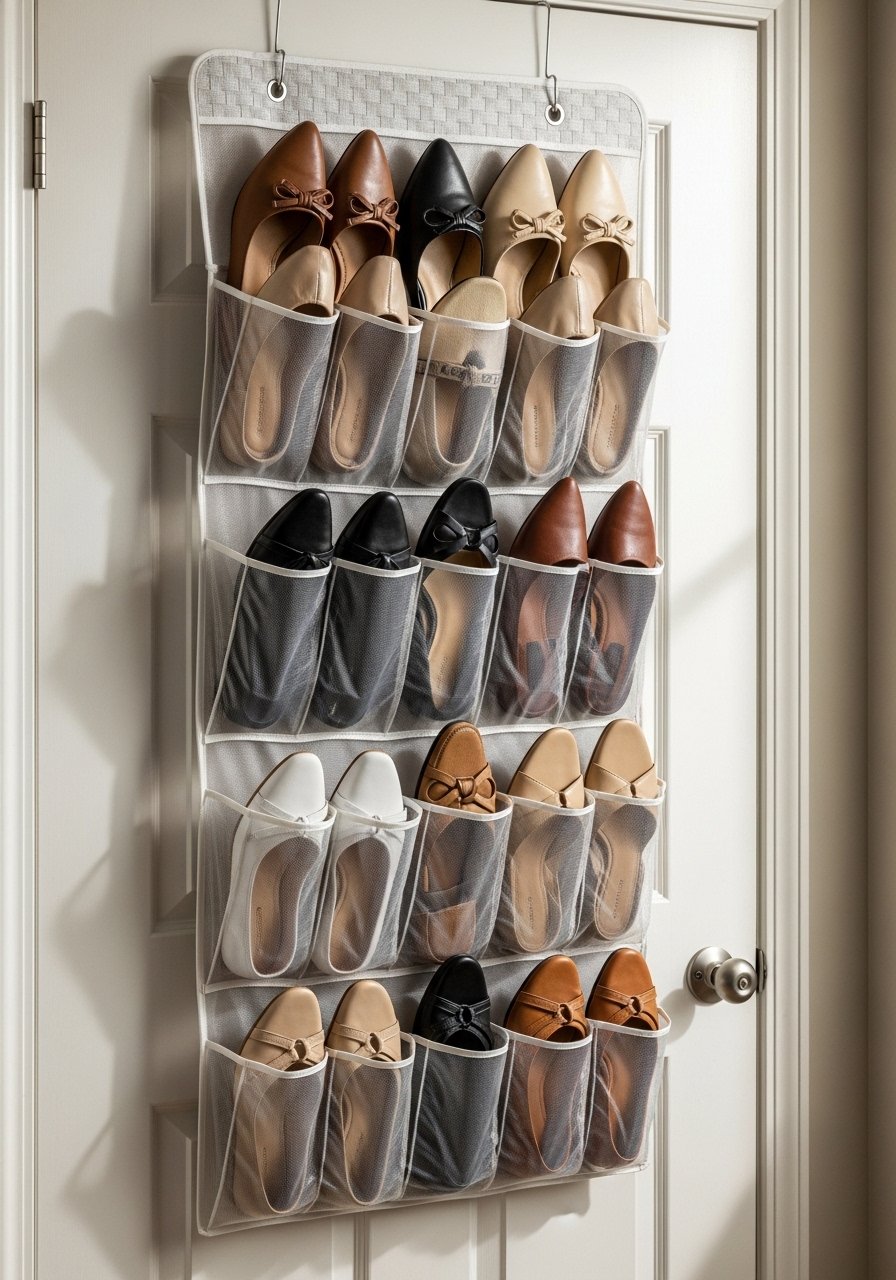
If floor space is limited, an over-door shoe organizer is a lifesaver. I moved casual shoes and slippers into one and freed up a shoe shelf for dress pairs. It’s budget-friendly and keeps shoes visible so they actually get worn. I like a fabric pocket style that breathes — this also prevents odors.
Mistake to Avoid:
Don't stuff bulky boots into the pockets — it stretches the organizer out of shape.
Install Pull-Out Rod for Outfit Planning
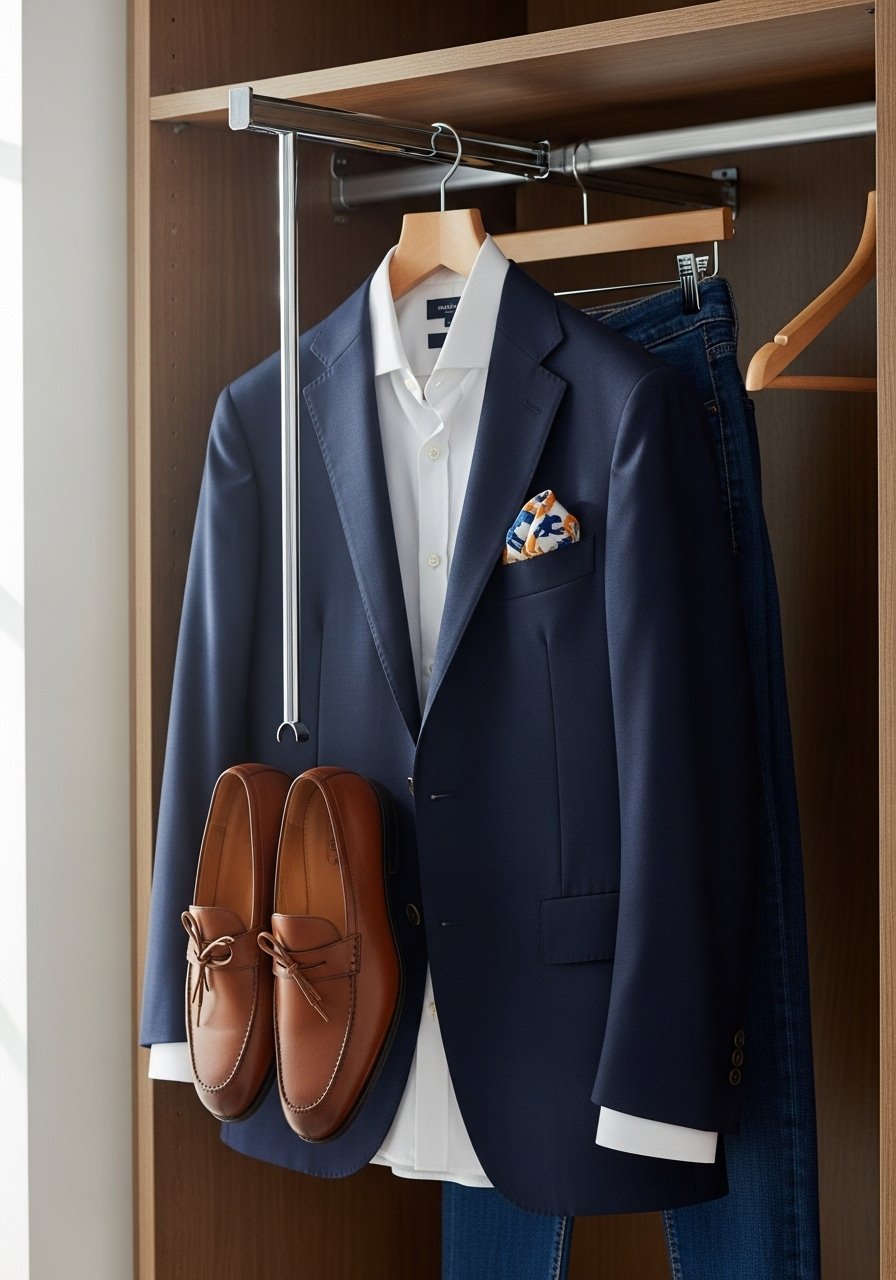
A pull-out rod is perfect for outfit staging: pick a look the night before and slide it back in. I use mine when I travel or prep for a week of meetings. It keeps garments wrinkle-free and frees up a shelf while I decide. Installation is simple and the convenience is immediate.
Mistake to Avoid:
Don't overload the rod — it’s for staging, not permanent storage.
Use Drawer Dividers for Small Accessories
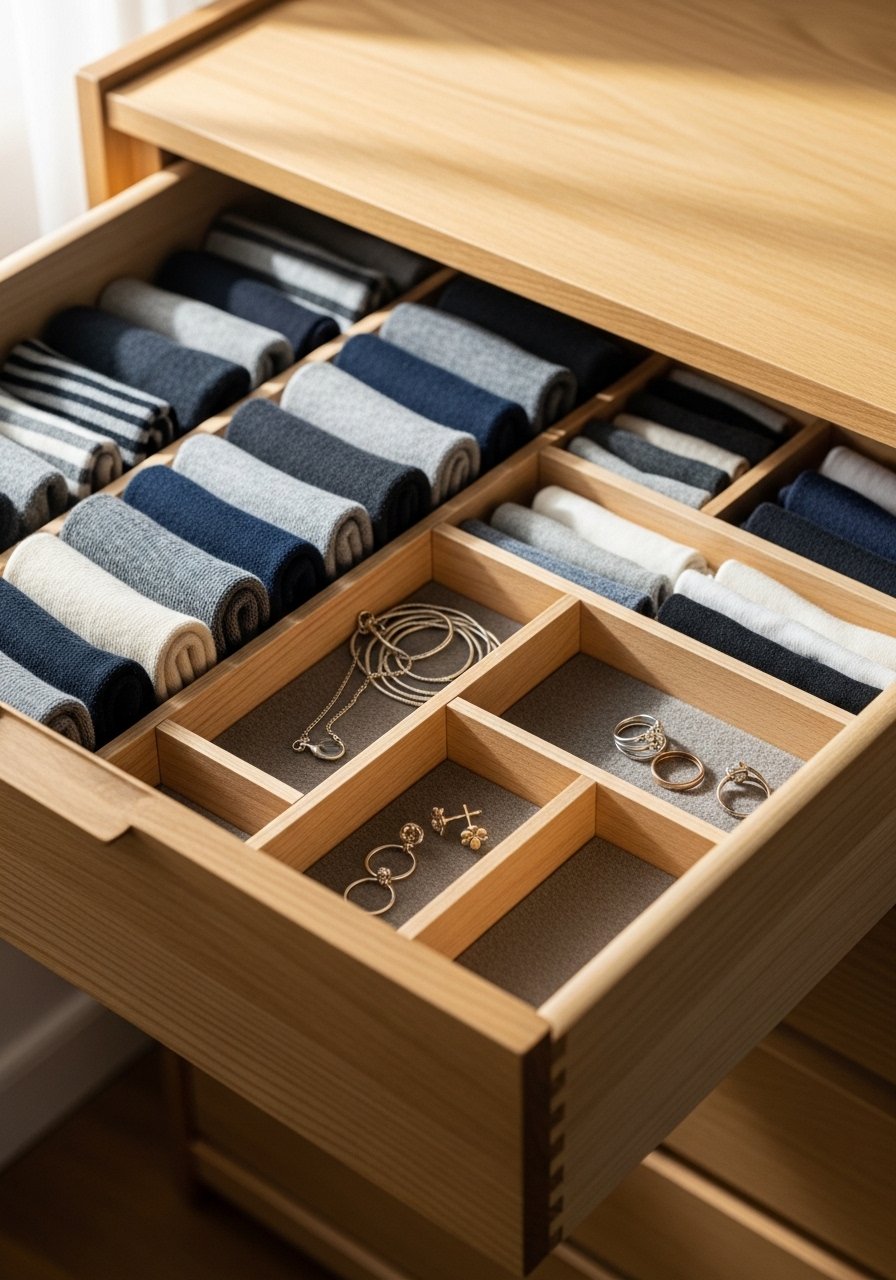
Drawer dividers convert a messy drawer into a functional zone for belts, jewelry, and socks. I repurposed an old shallow drawer with bamboo dividers and everything is easier to find — I now avoid mismatched socks and lost bracelets. Choose adjustable dividers that adapt to changing items.
Mistake to Avoid:
Don't use fixed compartments that can't be rearranged as needs change.
Rotate Seasonally and Store Off-Season Elsewhere
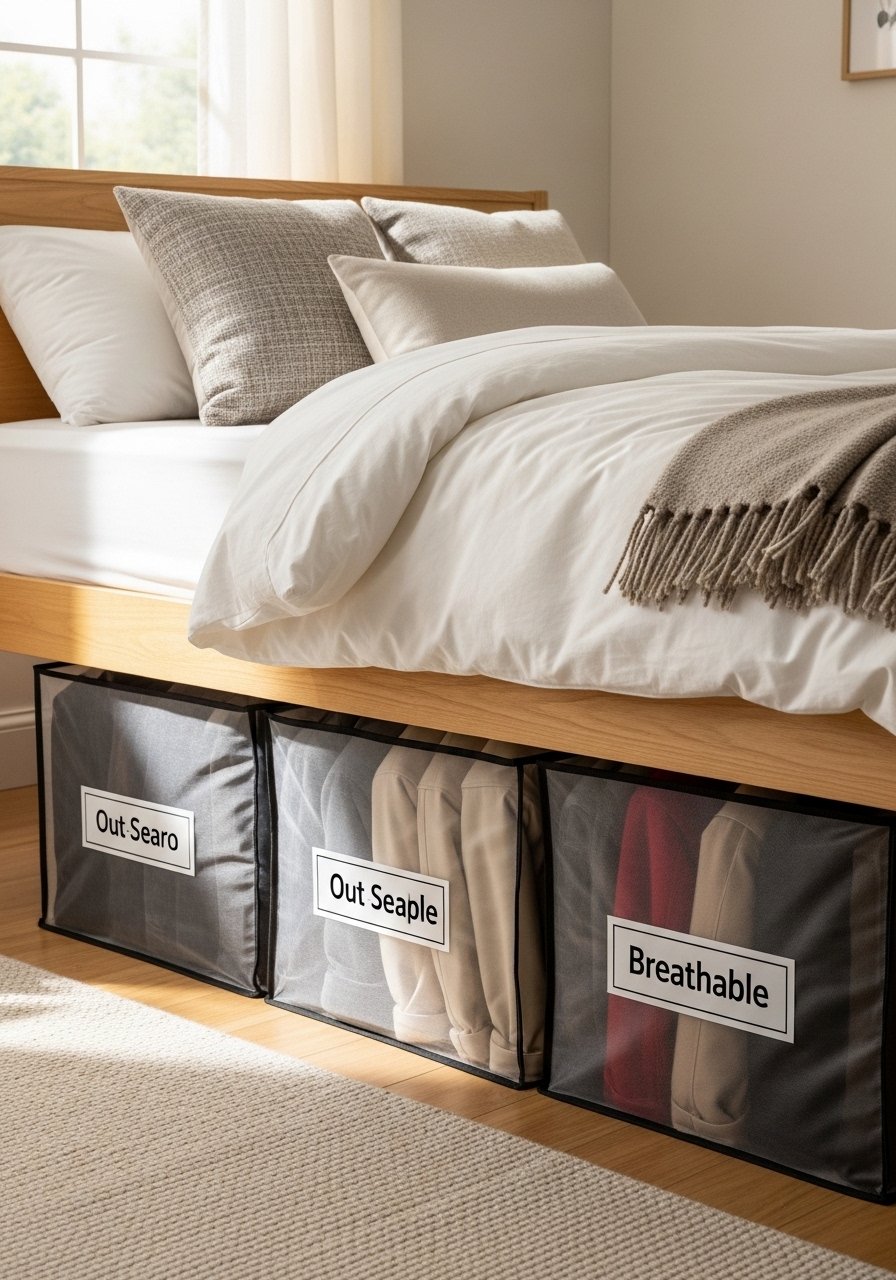
I keep a seasonal capsule in my main closet and rotate the rest into under-bed bags or high shelves. This reduces clutter and keeps daily choices relevant. I’ve noticed that keeping only current-season items in eye-level space makes outfit decisions feel effortless. Use breathable underbed-storage-bags to prevent moisture issues.
Mistake to Avoid:
Don't store delicate fabrics in tightly sealed plastic long-term — allow them to breathe.
Create a Capsule Zone for Work or Weekends
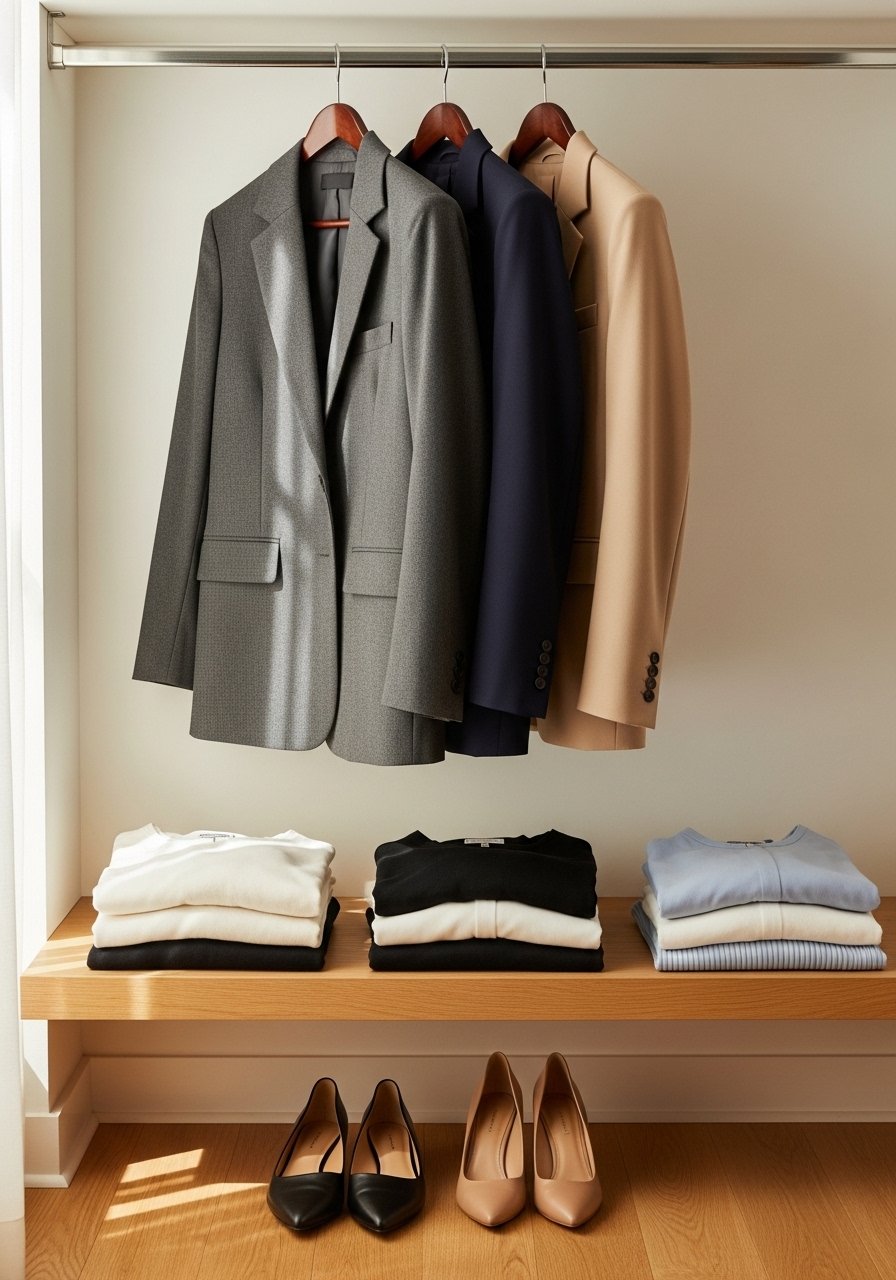
I carved out a capsule zone for work clothes — five blazers, three trousers, and coordinated tops. That intentional mini-wardrobe makes outfit choices near-instant and reduces decision fatigue. I keep it visible and replenish slowly rather than impulse-buying. A small shelf with labeled bins for ties and belts completes the set.
Mistake to Avoid:
Don't overpopulate the capsule; limit items so choices remain simple.
Use a Rotating Jewelry Organizer for Small Pieces
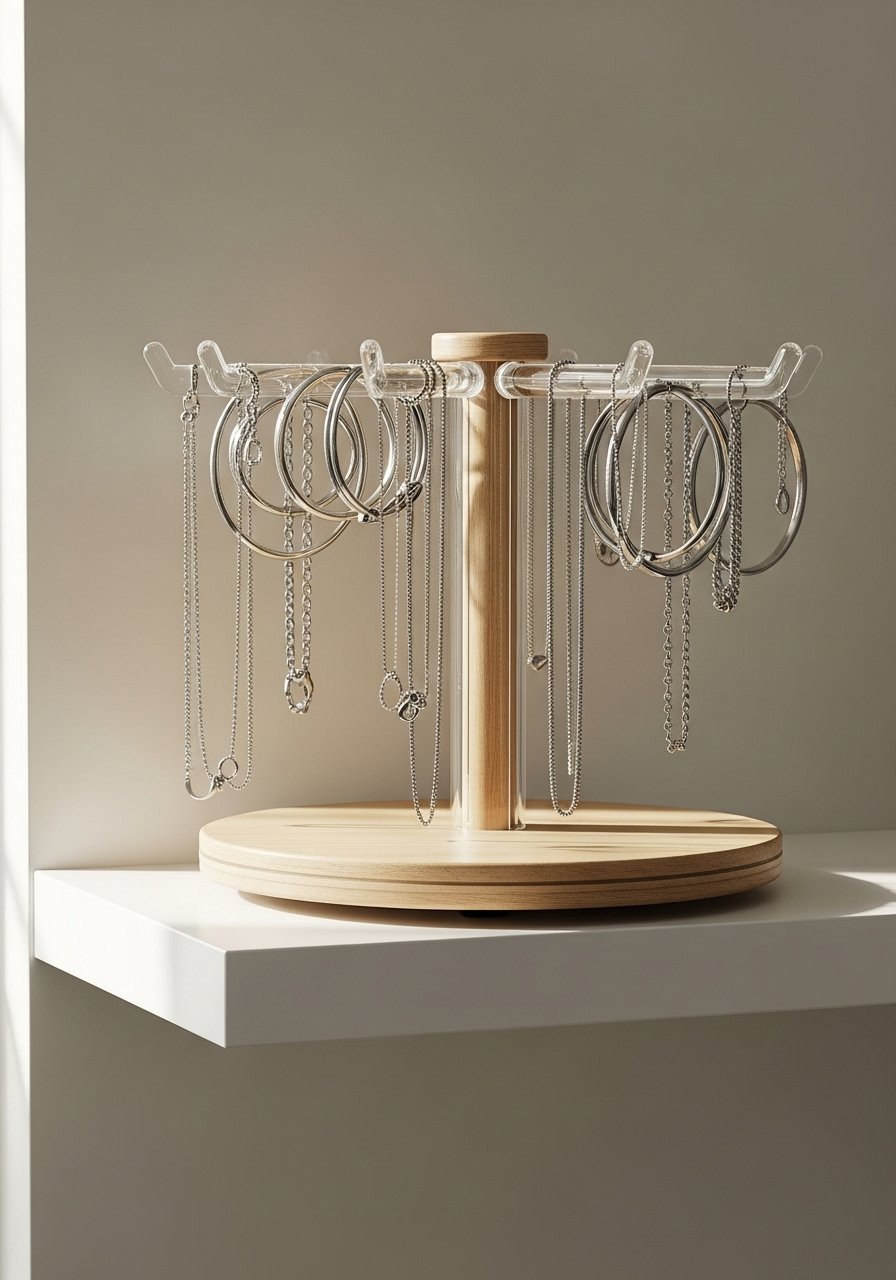
A rotating jewelry organizer keeps earrings, chains, and bracelets untangled and in sight. I keep mine on an accessible shelf and can spin to find pieces quickly. It saves time and prevents damage from piled-up jewelry. Pick a compact turntable to fit shelf depth.
Mistake to Avoid:
Don't cram too many thin chains together — they still tangle if overcrowded.
Install Motion-Sensor Lighting for Dark Closets
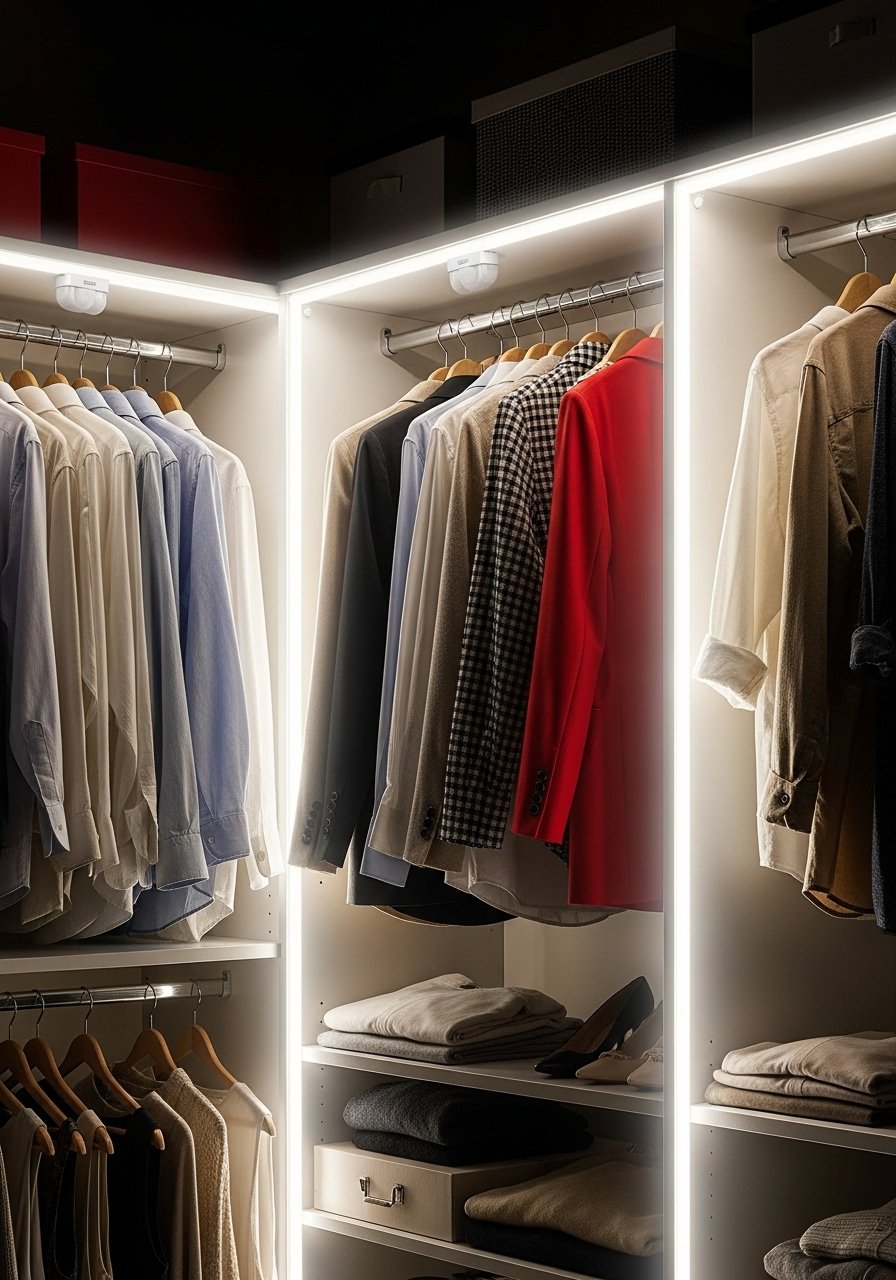
Adding motion-sensor lights changed how I use a small closet — no more fumbling for switches. I mounted LED strips under shelves and inside the door frame; lights come on as soon as I open the door. I’ve noticed I spend less time searching in dim conditions and can actually see color differences quickly.
Mistake to Avoid:
Don't install lights that cast strong yellow tones — choose neutral LEDs for true color.
Hang Bags on Wall Hooks to Preserve Shape
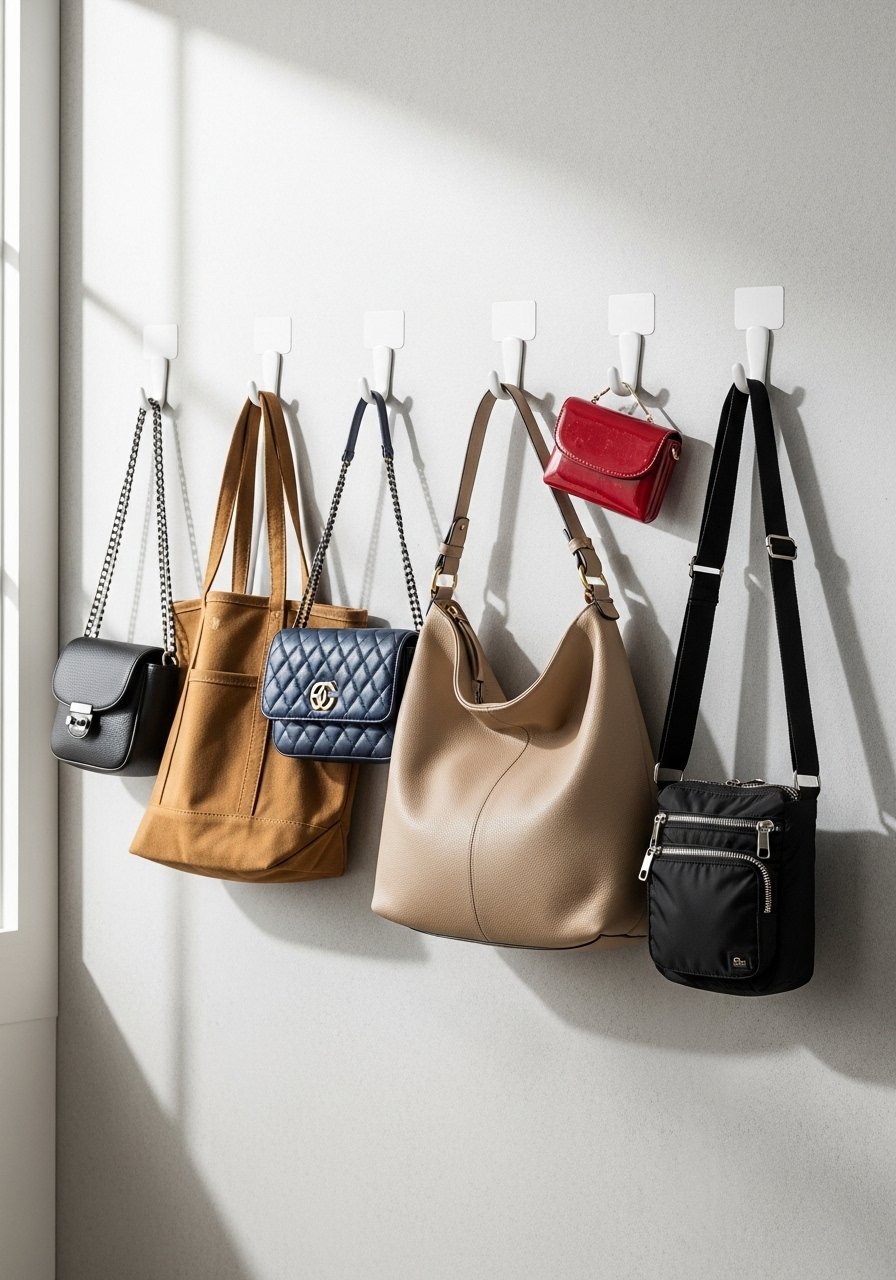
Hooks free up shelf space and keep bags from being crushed. I use peel-and-stick hooks on the inside of my closet door to hang everyday totes and crossbodies. This keeps straps untangled and makes grabbing a bag part of my exit routine. Position hooks at varying heights for long straps.
Mistake to Avoid:
Don't hang heavy leather bags on weak adhesive hooks — use screws for weighty pieces.
Use Shoe Cubes for a Clean Floor Look
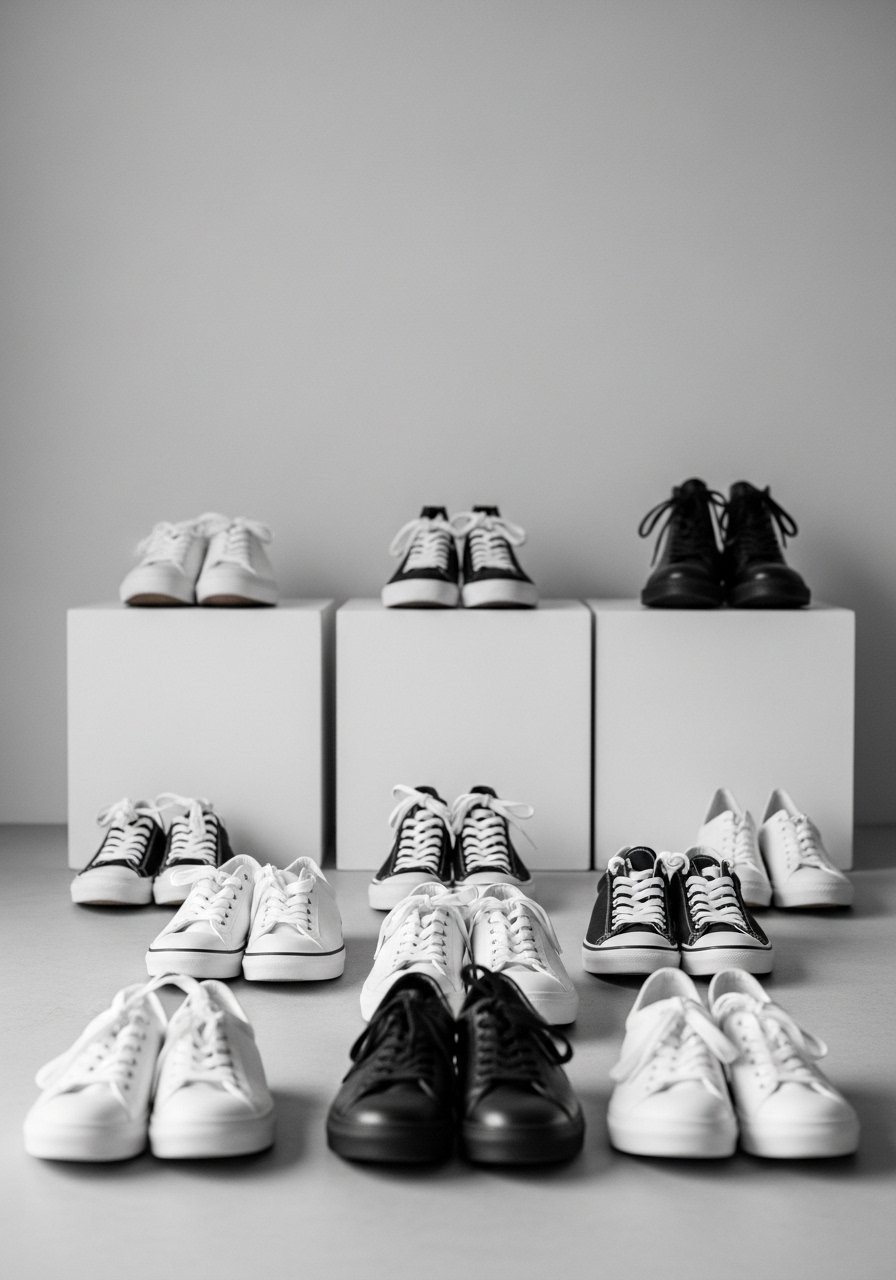
Shoe cubes give each pair a home and keep the floor tidy. I stack them when I need vertical space and label the sides for quick identification. After adding cubes, I noticed my morning shoe selection time drop significantly because visibility is so immediate.
Mistake to Avoid:
Don't mix mismatched pairs in one cube — keep one pair per cube for clarity.
Keep a "Donate" Bin in the Closet
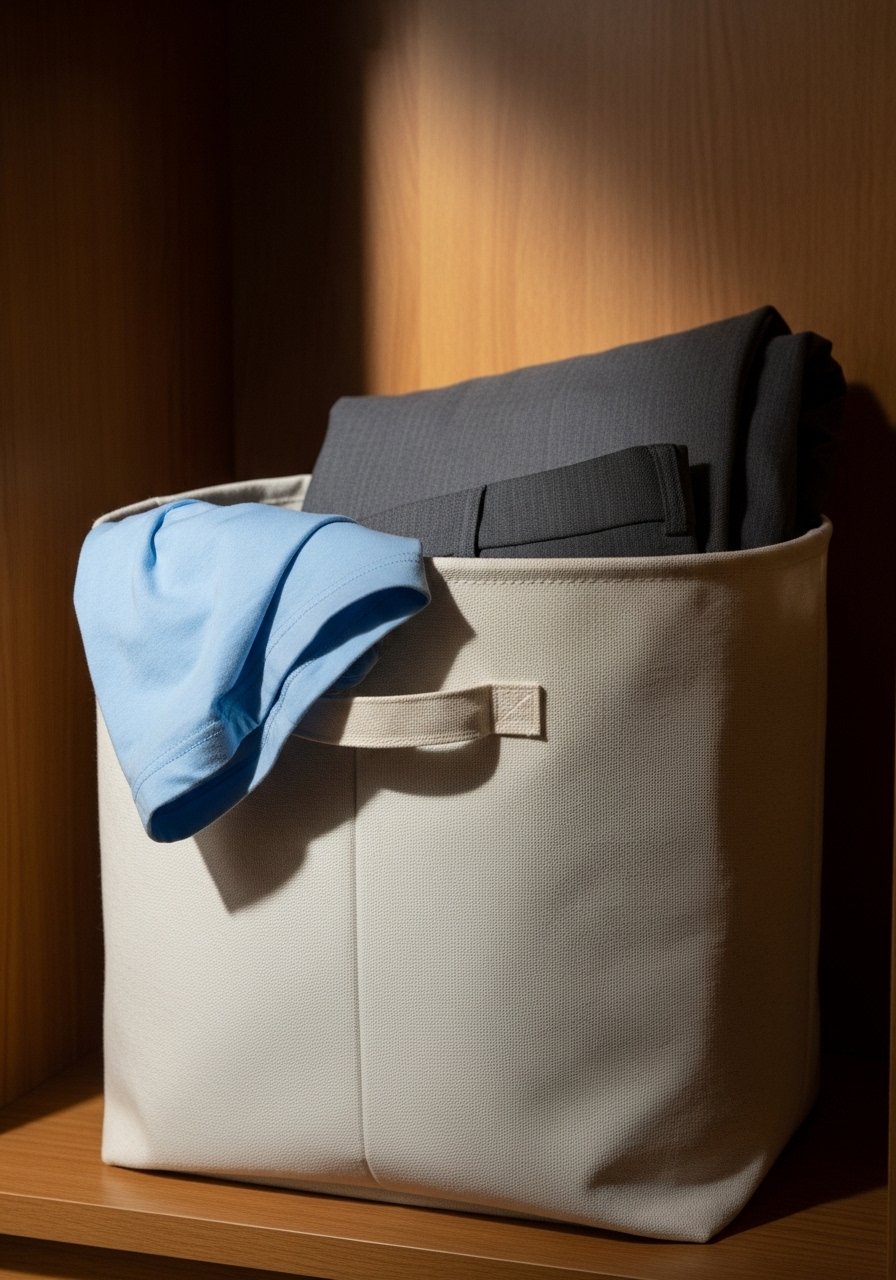
I keep a donate bin inside my closet and drop items in as seasons change. It removes friction when letting go and prevents overstuffing. I’ve found this small step keeps my closet lean over months rather than waiting for a dramatic purge.
Mistake to Avoid:
Don't let the bin overflow for months — schedule monthly drop-offs.
Use a Label Maker for Shelves and Bins
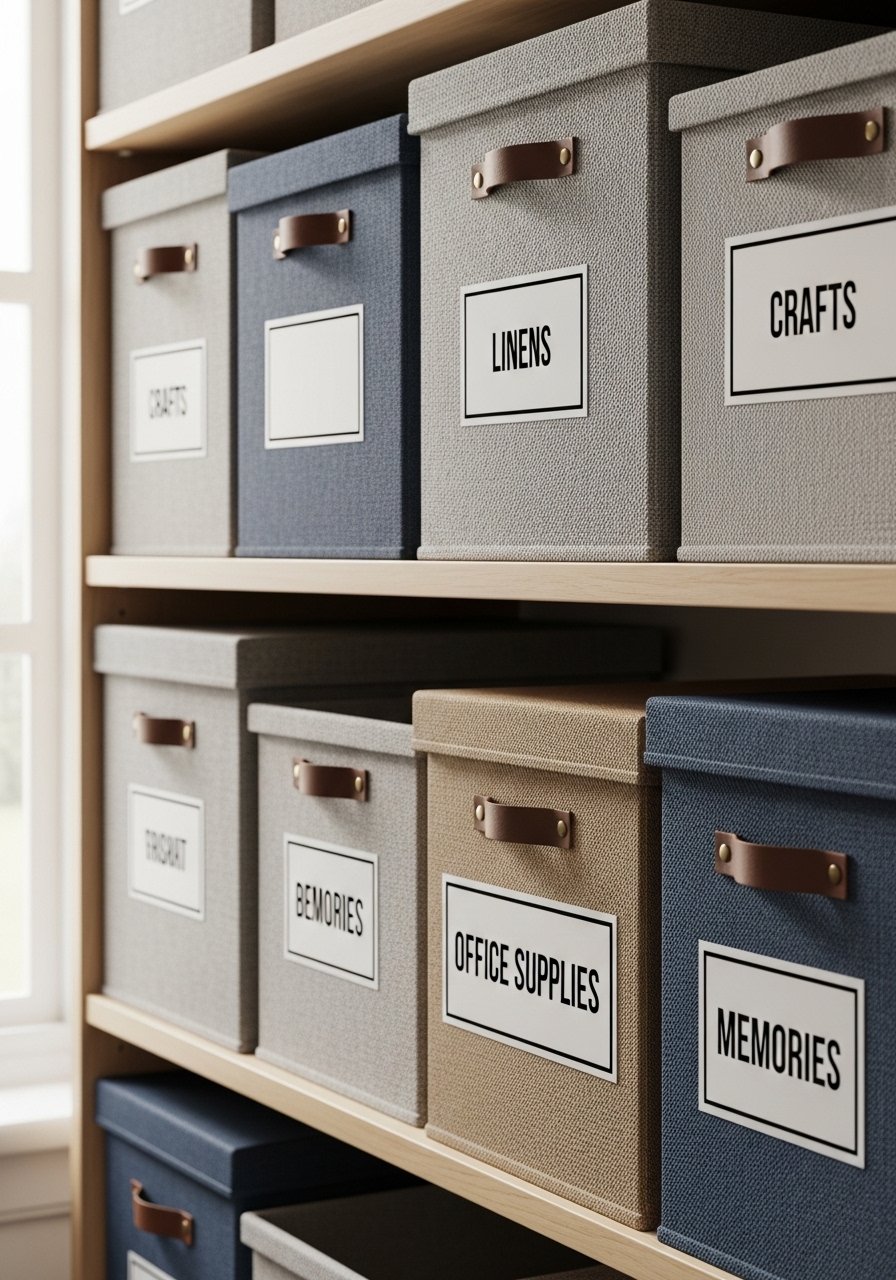
Labels remove guesswork for everyone in the household. I label boxes by content and even add small photo stickers for shared closets. It’s simple, and I’ve noticed that other family members return items to their proper places more reliably. A handheld label maker is inexpensive and speeds setup.
Mistake to Avoid:
Don't overlabel every tiny item — focus on bins and zones that get mixed up.
Create a Small Ironing/Steaming Station
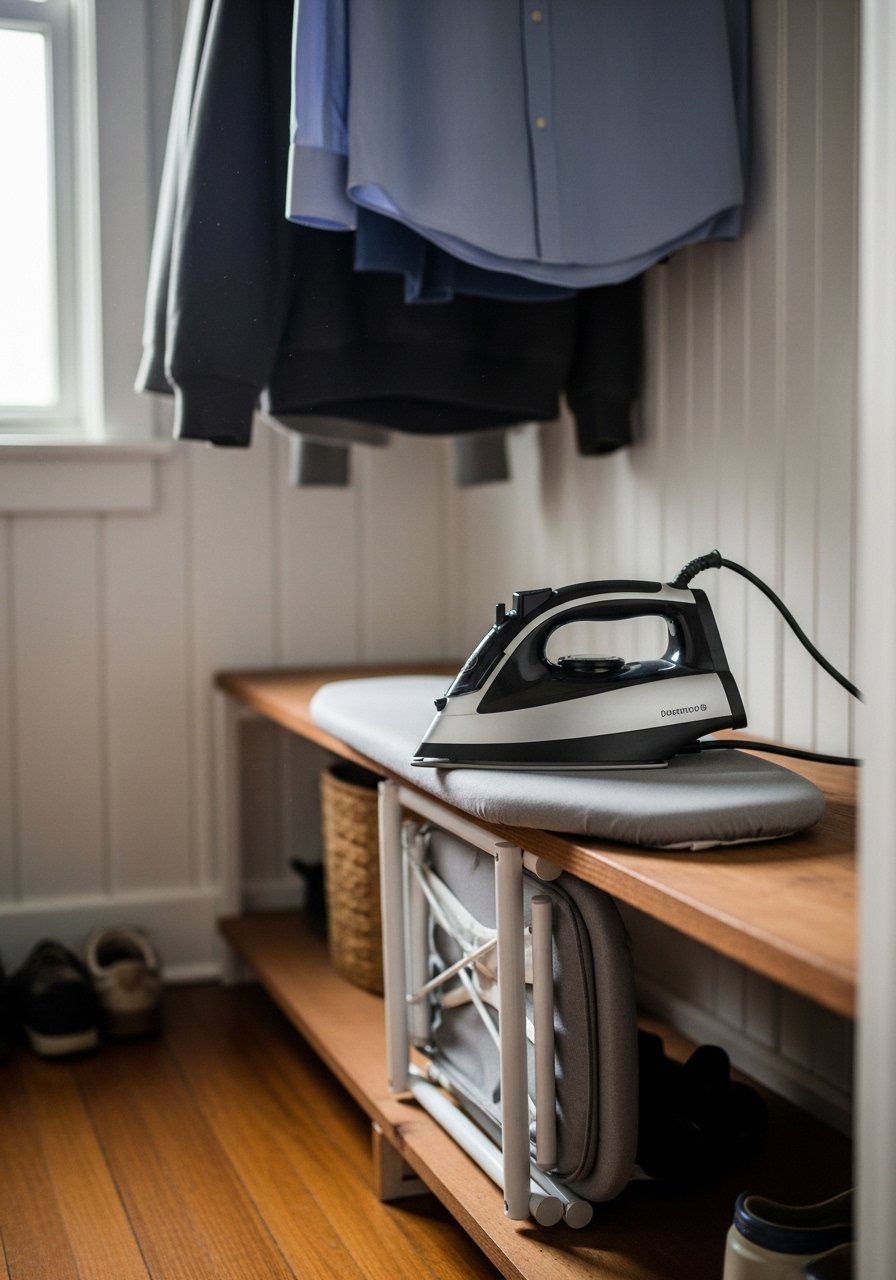
A tiny steaming station inside or beside your closet saves outfit prep time. I keep a handheld steamer and a foldable board nearby so I can quickly refresh wrinkled items. It reduces the temptation to wear wrinkled clothes and helps me decide faster in the morning.
Mistake to Avoid:
Don't store the steamer without drying it fully — moisture causes mildew.
Use Pull-Out Baskets for Folded Items
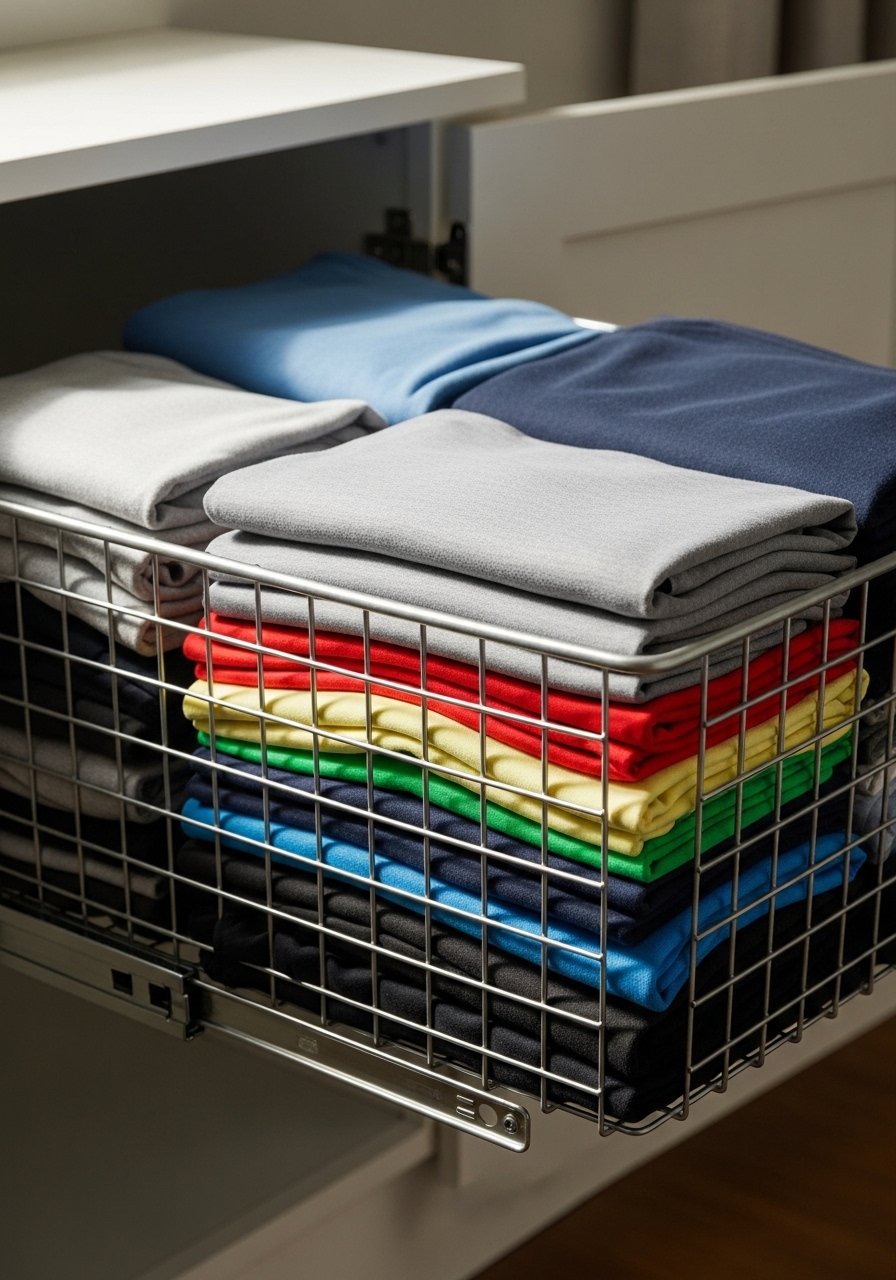
Pull-out baskets give the ease of drawers with open-shelf flexibility. I keep everyday tees and workout gear in baskets for quick access. They prevent deep-shelf diving and maintain airflow, which I find especially useful for sweaty workout clothes.
Mistake to Avoid:
Don't stack heavy items on top of pull-outs that should glide freely.
Try a Vertical Scarf Organizer to Save Space
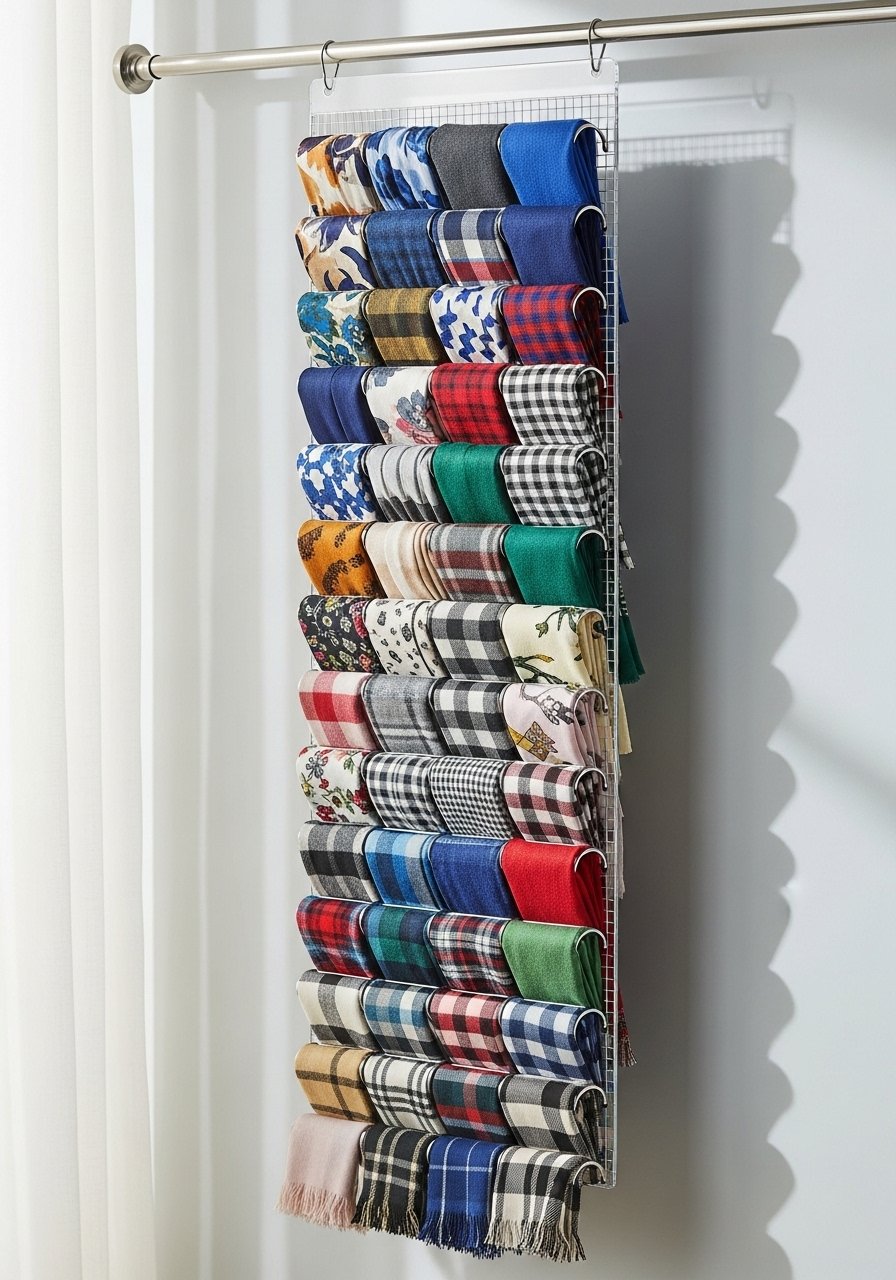
A vertical scarf organizer uses height instead of shelf space. I hung one near my winter coats and now reach scarves without disturbing the coat row. It’s a simple swap that declutters a drawer and keeps patterns visible.
Mistake to Avoid:
Don't fold scarves tightly into the slots — keep them loose for easy removal.
Magnetic Strip for Metal Accessories
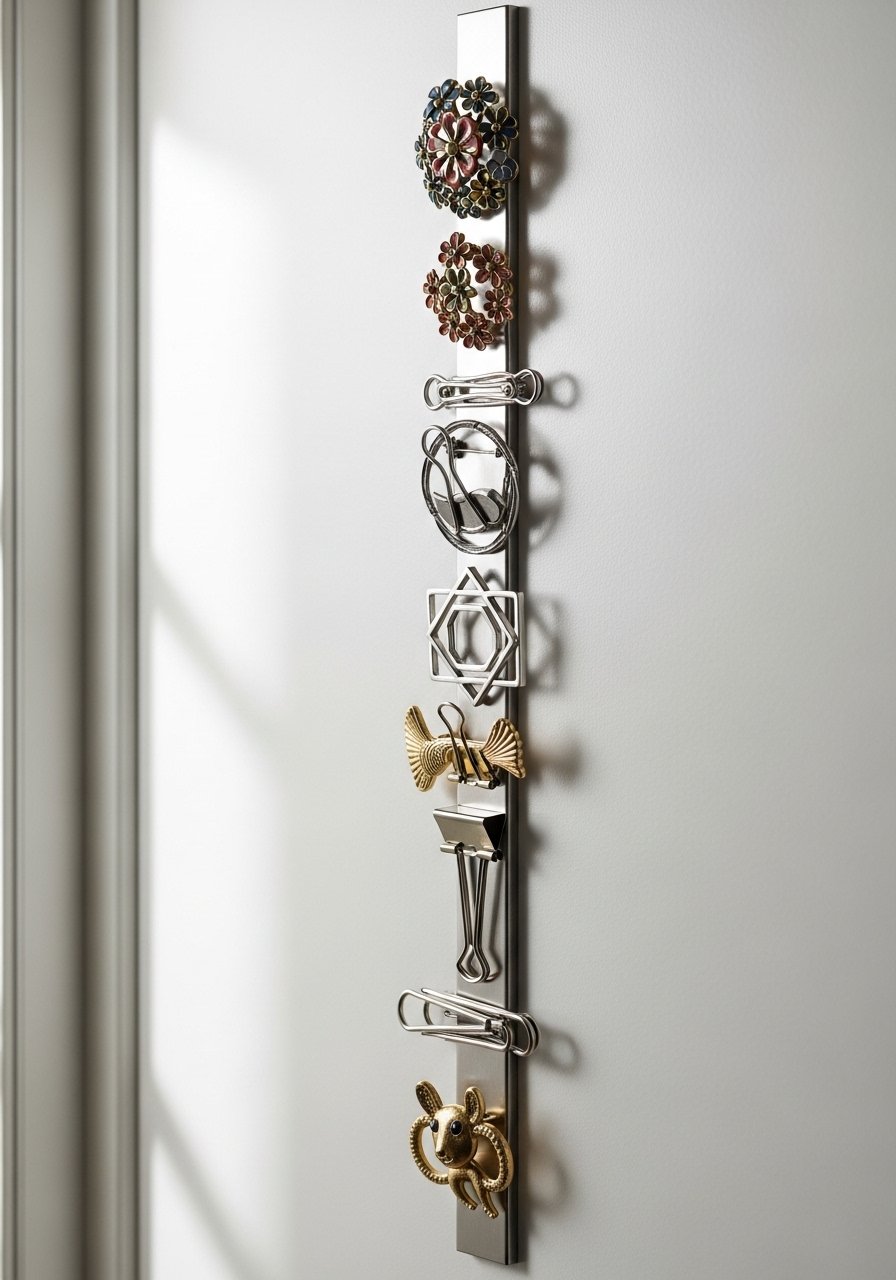
A magnetic strip corals metal accessories like brooches and hair clips where they’re easy to spot. I mounted a strip behind the closet door and now grab matching pins in seconds. It’s a small install that yields big convenience.
Mistake to Avoid:
Don't use a strip for delicate jewelry that can scratch — reserve it for robust metal pieces.
Stow Shoes in Clear Boxes for Stackability
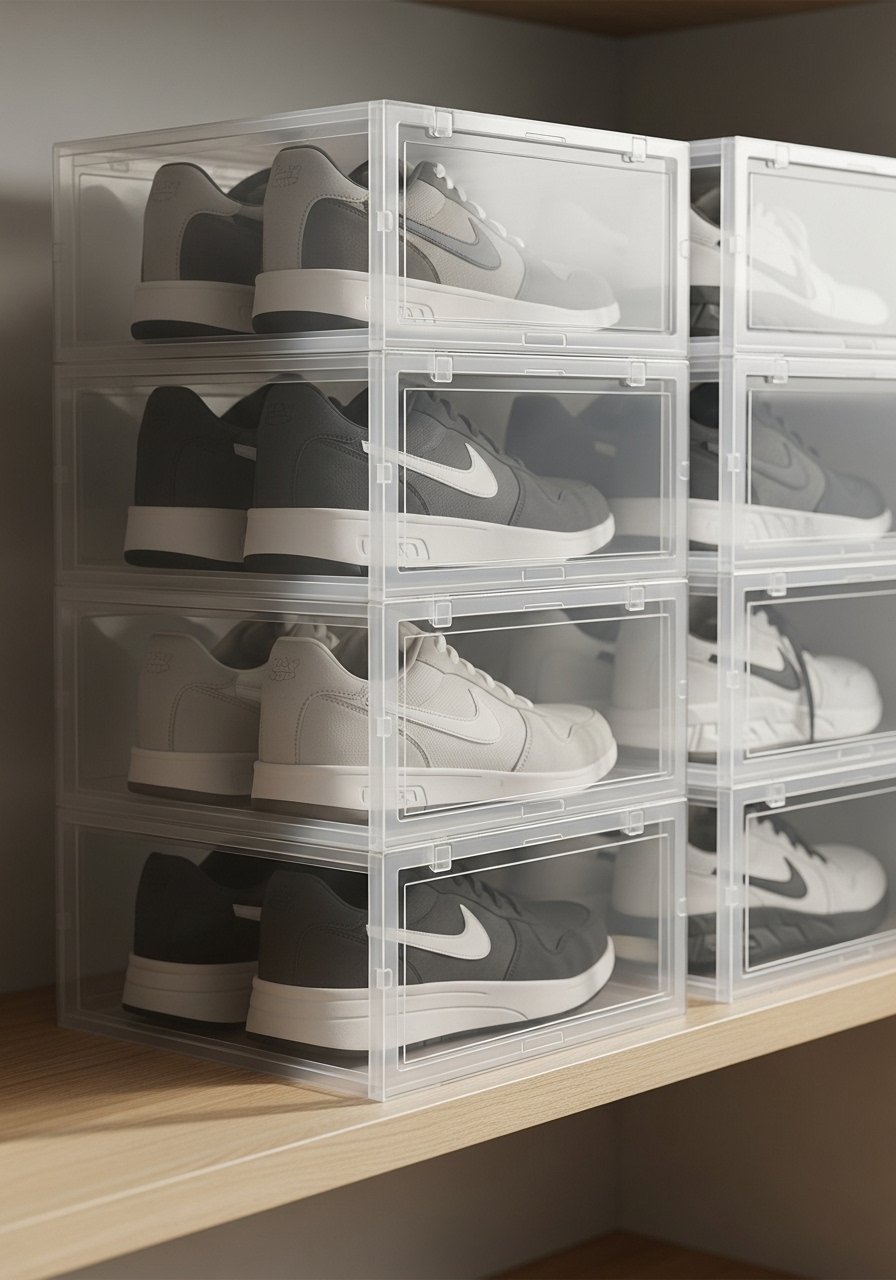
Clear shoe boxes stack neatly and let you identify pairs without opening lids. I use them for seasonal or special-occasion shoes to protect them and keep dust away. I’ve noticed less shoe damage and quicker selection when boxes are labeled or photographed.
Mistake to Avoid:
Don't stack too high — heavy stacks can buckle and become unstable.
Implement a One-In-One-Out Rule
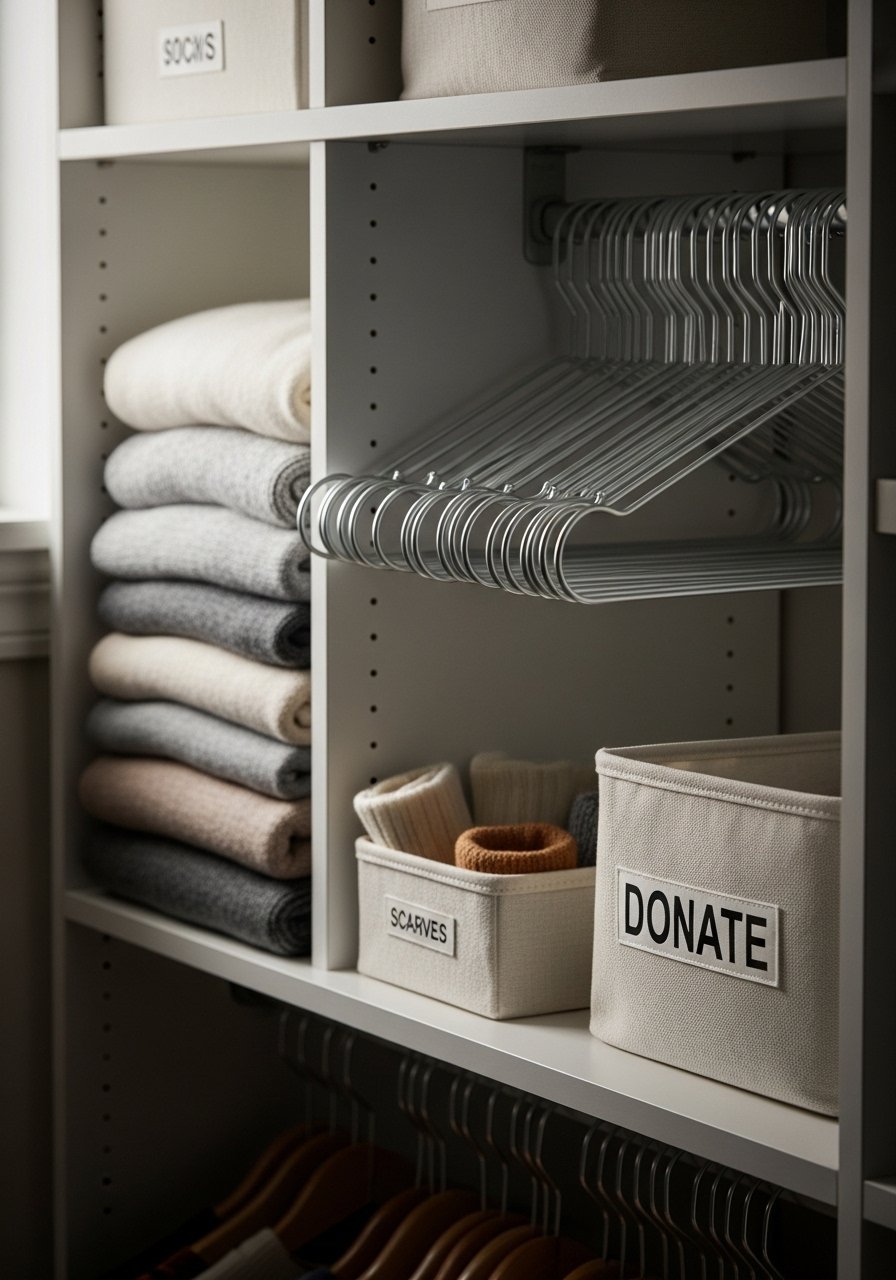
I adopted a one-in-one-out rule: when a new item arrives, something else goes. It forces regular evaluation and keeps the closet from expanding unchecked. Over a year, that habit prevented major purges and kept usable space consistent.
Mistake to Avoid:
Don't delay removing the outgoing item — do it immediately to enforce the rule.
QR-Code Inventory for Easy Searching (Fresh Idea)
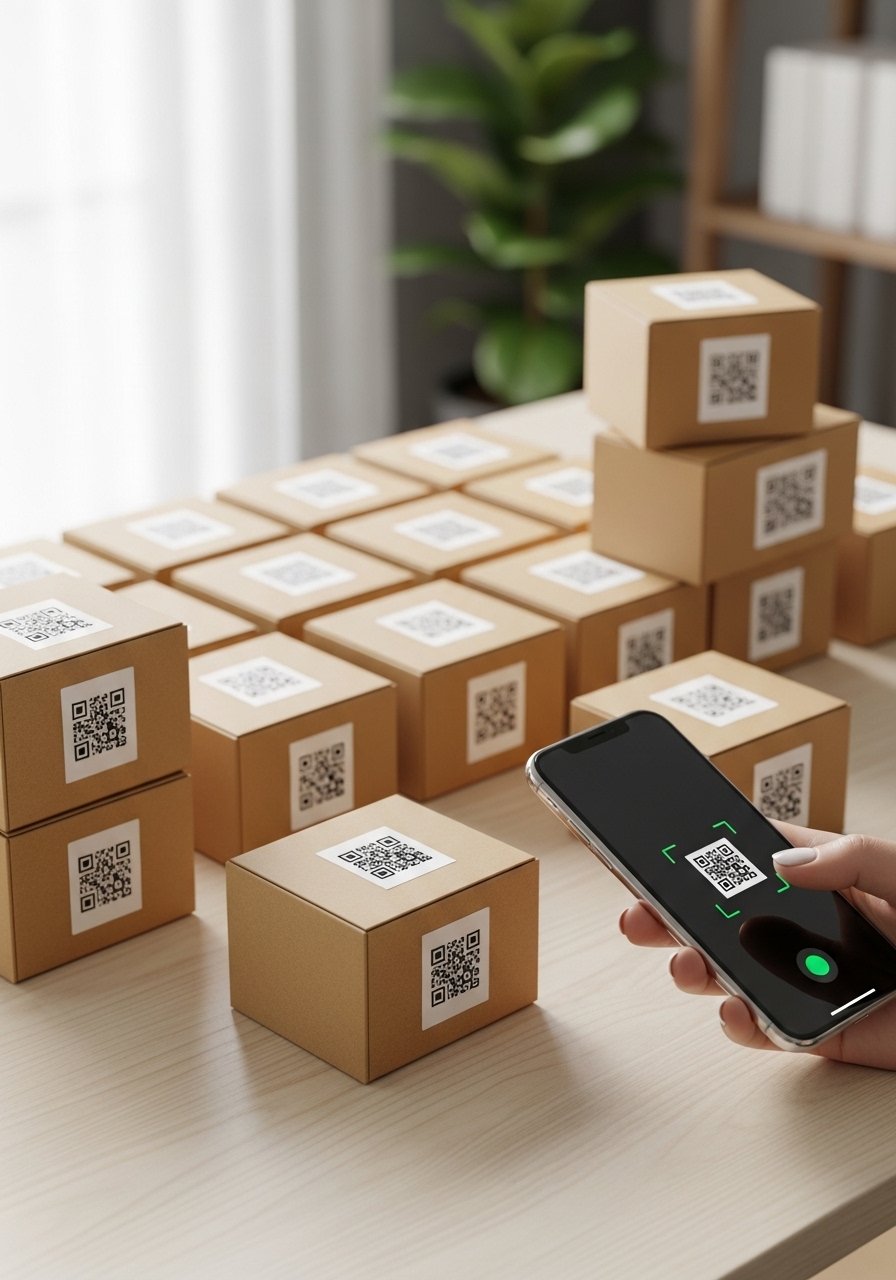
I started QR-coding boxes with a quick photo and short description linked to a simple note app. When I need something, I scan and know exactly which box and shelf it’s on. It’s especially handy for shared storage or larger households and felt like a productivity upgrade I hadn’t seen elsewhere.
Mistake to Avoid:
Don't skip clear photos when creating the QR entry — vague images make scanning useless.
App-Based Closet Inventory and Outfit Planner (Fresh Idea)
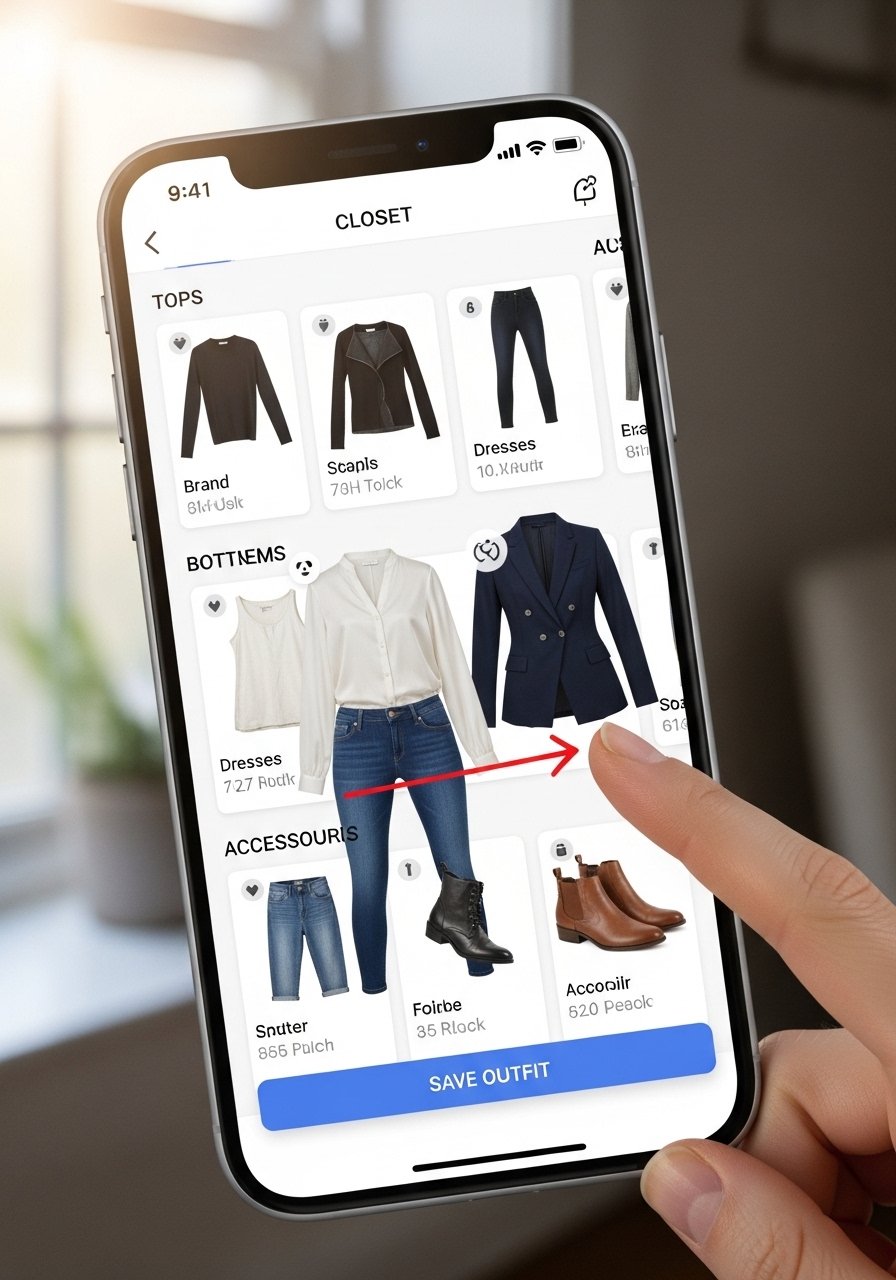
I cataloged key pieces into an app and now build outfits virtually before pulling clothes out. The app helps track what I actually wear so I stop hoarding unworn items. I’ve noticed wardrobe use becomes smarter — I wear more of what I own and avoid duplicate purchases.
Mistake to Avoid:
Don't over-catalog every single item — start with core pieces and expand gradually.
Magnetic Valet for Daily Outfits (Fresh Idea)
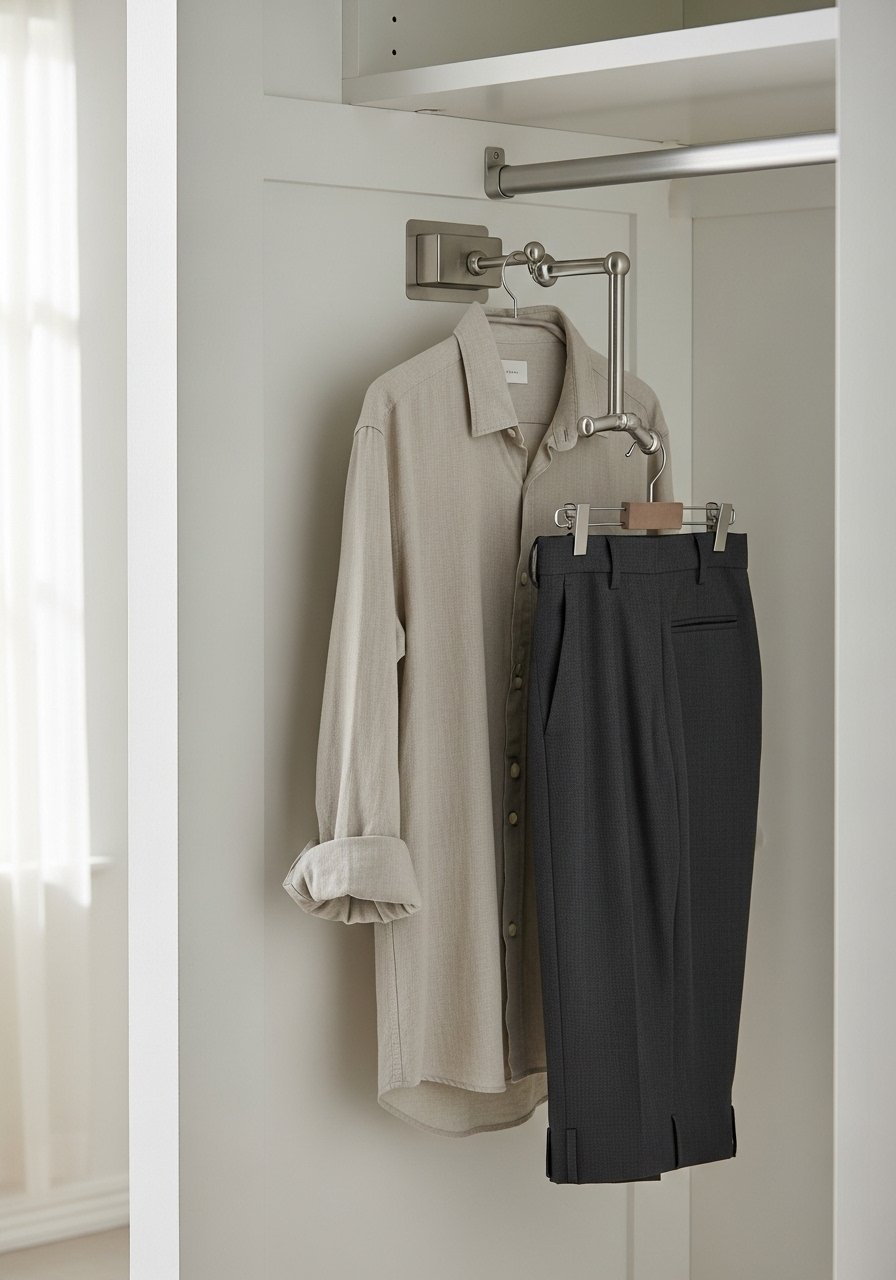
A magnetic valet is a simple tray or bar where I place tomorrow’s outfit — shirt, pants, and accessories — so mornings are frictionless. It’s a tiny habit that created time savings and reduces decision fatigue on busy days.
Mistake to Avoid:
Don't place the valet behind bulky items where it becomes hard to reach.
Decorative Hooks Outside Closet for Quick Drops
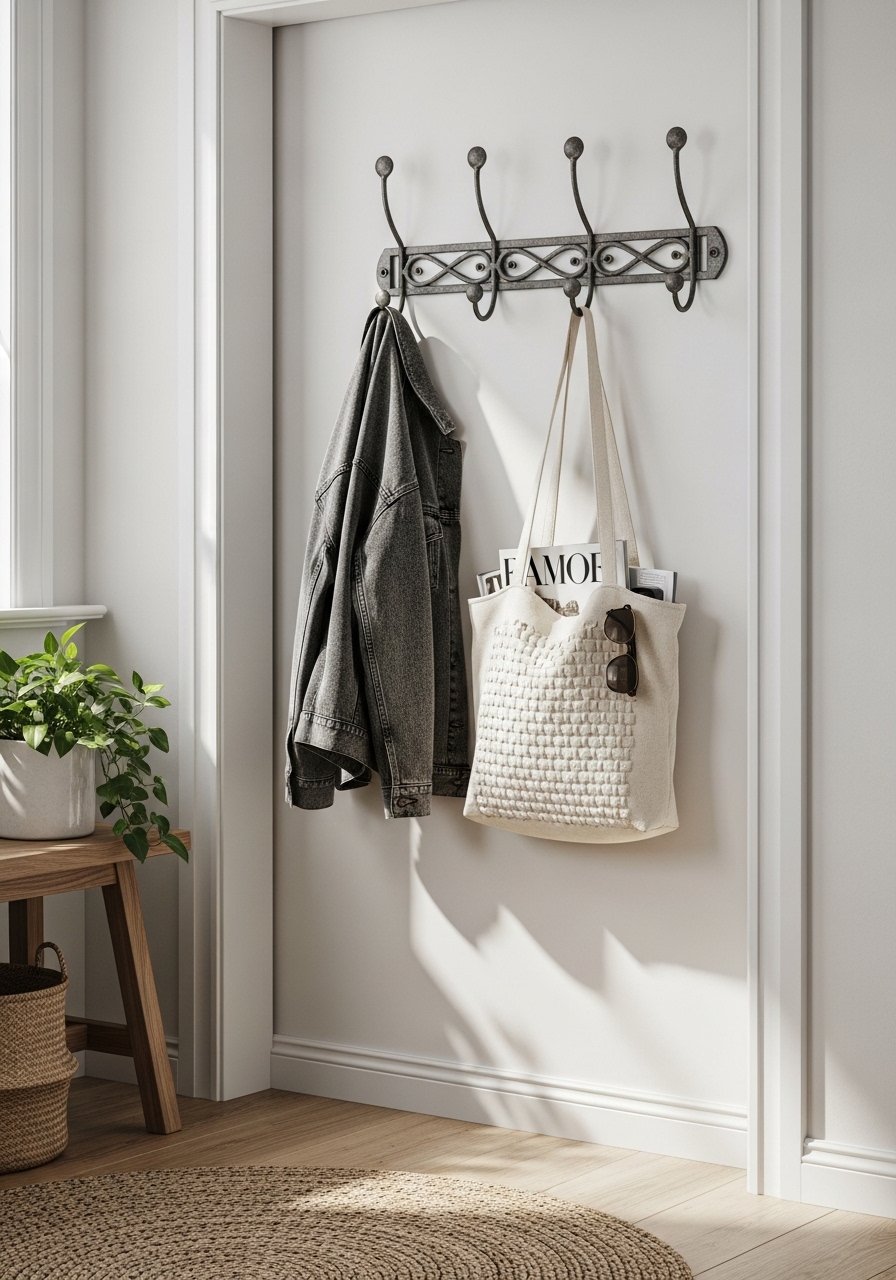
Hooks outside the closet keep frequently used items handy and off the floor. I keep a tote and a light jacket by the door so they're grab-and-go. It’s a small layout tweak that cuts down last-minute searches.
Mistake to Avoid:
Don't overload the hooks with many heavy items — keep them for daily essentials.
Decorating Tips
Pick a Neutral Base: Use slim-velvet-hangers in a single color to create a calm visual baseline that makes clothing stand out.
Add Task Lighting: Install motion-sensor-closet-light strips for better color matching and quicker selection when mornings are rushed.
Reuse and Recycle: Upcycle sturdy shoe boxes or repurpose a small bookshelf before buying new storage — I saved about 25% of my budget this way.
Use Photos for Labels: Snap a quick picture of contents and print or tape it to bins; I’ve found visual labels beat text-only tags for quick recognition.
Start Small, One Shelf at a Time: Tackle a single shelf or rod in an evening, using labeled-fabric-bins to contain progress and prevent burnout.
(End of content)